
What to Do With Too Much Zucchini
Too much zucchini in late July? How to store it, salt it, freeze it and cook it so it browns instead of steaming, and why one bitter piece matters.
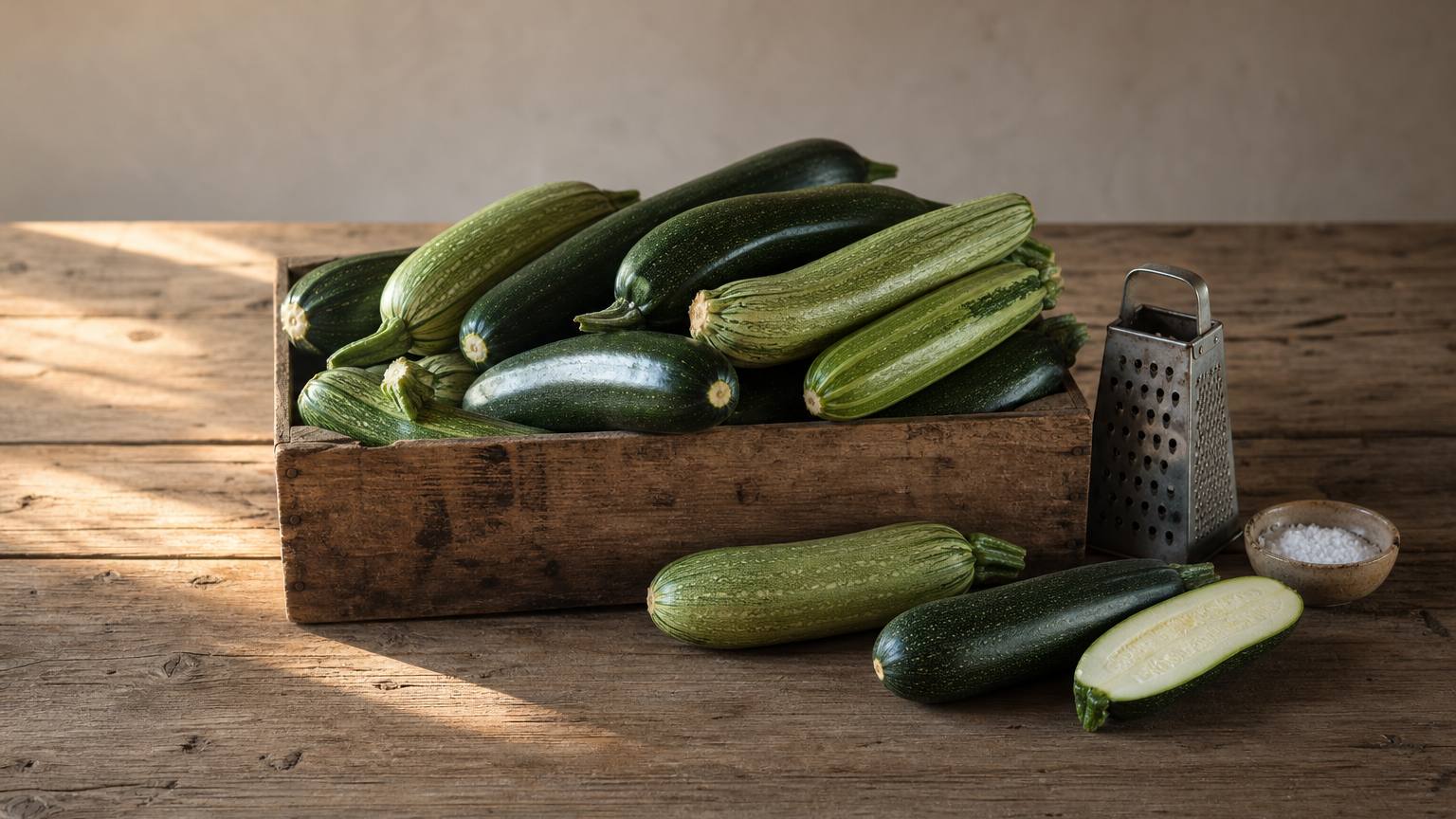
Two plants is one plant too many. By late July the courgettes that sulked all June are producing faster than anyone at your table wants to eat, and you have too much zucchini on the counter with a vague plan to make bread. The neighbours are not the answer either, since anyone who grows them is picking their own.
Nearly every complaint about zucchini traces back to how much water is in it. It shrivels or pits in storage depending on where you put it, and it steams rather than browns in the pan. Here is how to store it, cook it, freeze it, and check it before it goes in the pot.
Store it out of the coldest part of the fridge
Zucchini is a warm-weather fruit and it does not enjoy your fridge. UC Davis puts the ideal storage range for summer squash at 5°C to 10°C (41°F to 50°F) with high humidity, and notes that holding it below 5°C for more than three or four days generally causes chilling injury: pitted, water-soaked patches on the skin, discoloration, then faster decay once you take it out. Most home fridges run at or a little below that 5°C line, which is why a zucchini pushed to the back of a cold shelf for a week comes out looking bruised even though nothing hit it.
Leaving them out on the counter runs into the opposite problem. The same sheet calls water loss a serious and common postharvest problem for summer squash, with firmness dropping and shriveling setting in quickly once the fruit is off the vine, which is why the ideal storage humidity it lists is 95 percent. That points at the crisper drawer, the one part of a fridge built to hold humidity, loosely bagged rather than sealed shut. How cold a crisper actually runs varies by appliance, so if yours sits at the bottom of a very cold fridge, the door shelf may treat them better.
Two smaller things. UC Davis notes that green varieties yellow faster when exposed to ethylene, which ripening fruit gives off, so keep the courgettes away from the apples. And handle them gently, because that thin skin marks easily and every mark is somewhere rot can start.
Summer squash is ideally not stored longer than about ten days, so plan to cook your way through the pile inside a week.
Salt it, squeeze it, then cook it hot
Put slices into a lukewarm pan and they release liquid faster than it can evaporate. The pan temperature drops, the pieces sit in their own juice, and what comes out is grey and floppy instead of browned.
Salting first takes some of that liquid out of play. Toss grated or sliced zucchini with a pinch of fine salt and leave it ten minutes: the salt sets up an osmotic gradient that pulls water out of the cells, and it collects on the surface and in the bowl. Then squeeze it hard, in a clean towel or by the handful over the sink, because the point is getting the released liquid out rather than letting it sit there. Some of that salt stays in the vegetable, so taste before you season again in the pan. Our guide to how to salt food covers where timing changes the result.
Then cook it hot and in one layer. A crowded pan drops in temperature and the water coming out of the pieces pools faster than it can evaporate, so browning stalls until the surface dries out again. Two batches in a hot pan will beat one batch in a warm one.
Three ways to use too much zucchini at dinner
A dish that treats zucchini as a garnish will use one. These three Gourmate recipes are built around it, and each handles the water problem differently.

Mücver
Mücver are tender Turkish zucchini fritters with crisp, golden edges and a soft herb-filled center. Dill, mint, scallion, and salty feta give them a bright, savory flavor that is especially good with cool yogurt and a squeeze of lemon.
Ratatouille
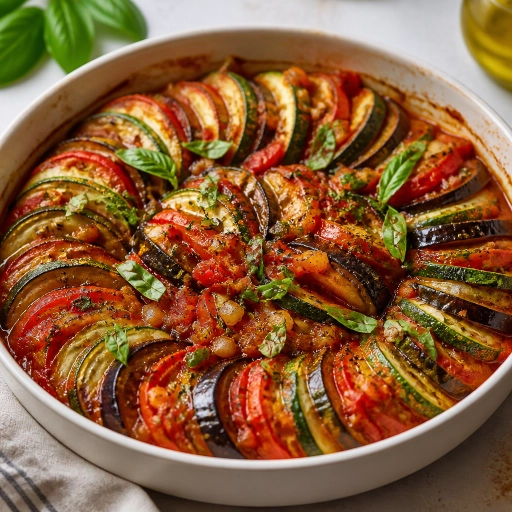
This ratatouille is tender, aromatic, and richly concentrated, with layers of zucchini, eggplant, and tomato baked over a savoury pepper-onion base. Herbs de Provence and basil give it the sun-soaked fragrance of southern France, while roasting deepens the sweetness of the vegetables.

Zucchini Pasta with Garlic, Lemon, and Tuna
Light, flavorful zucchini 'pasta' with juicy tuna, garlic, and fresh lemon. Quick to prepare, high in protein, and completely dairy-free — perfect for a fast low-carb dinner.
The Turkish mücver is the fastest route through a grated pile: 300 g of zucchini salted, wrung out and bound with feta, dill, mint and a little flour, then fried into fritters with crisp edges. About 30 minutes for two. For the recipe as written, Gourmate estimates roughly 440 calories and 17 g of protein a serving, an estimate that shifts with your feta and your pan. It contains gluten, dairy and egg.
Ratatouille is the slow one, and it takes the opposite approach to the water. Zucchini, aubergine and tomato go on in thin overlapping slices over a softened pepper and onion base, covered for twenty minutes so they steam, then uncovered so the liquid reduces rather than pooling. It is vegan as written, and the recipe notes the flavour is better a few hours on.
The zucchini pasta with garlic, lemon and tuna gets through the most: about 600 g for two, cut into ribbons or spirals, salted in a colander for eight to ten minutes, squeezed, then tossed through a hot pan for a few minutes only. It contains fish. If you are cooking around a diagnosed allergy, read the labels on every packet yourself rather than trusting a swap to make a dish safe.
Freezing works, but not for salads
If the pile outruns your week, freeze the rest, but decide first what the frozen version is for. Freezing forms ice crystals that damage cell walls and membranes, and a vegetable this wet loses much of its firmness in the process. Blanched and frozen zucchini works in soups, stews, sauces and loaves, not in anything you wanted to eat in slices.
The National Center for Home Food Preservation gives two methods. For slices, cut half-inch rounds and water blanch them for three minutes, cool them promptly, drain and pack with half an inch of headspace. For grated zucchini destined for a loaf, steam blanch small batches for one to two minutes until translucent, pack in measured amounts, then cool the containers in cold water before sealing and freezing. The blanching step is what inactivates the enzymes that would otherwise keep degrading flavour and colour in the freezer. Our guide to what freezes well covers the rest of the summer glut.
Taste a raw piece before you cook it
One habit is worth adding to the pile, whether it came from a garden or a shop. Every plant in the cucurbit family makes bitter compounds called cucurbitacins as a defence against being eaten, and cultivated varieties have been bred to keep them low. Sometimes the level comes back up. Nebraska Extension explains that mild bitterness in cucumbers and zucchini can come from heat, uneven watering or over-mature fruit, but that extreme bitterness in zucchini is genetically controlled rather than environmental, and can arise from seed saved off a plant cross-pollinated by a wild or ornamental gourd. In the case it recounts, one plant out of twelve from a single seed packet bore very bitter fruit while the others were fine, and it cites historical poisonings in which as little as 3 g was eaten.
Cooking does not fix it. France's food safety agency, ANSES, states that cucurbitacins are not destroyed by cooking and that eating them can bring on digestive pain, nausea, vomiting and diarrhoea, sometimes bloody, or dehydration severe enough to need hospital treatment. After a reported fatal poisoning in 2015, Germany's federal risk assessment institute advised treating an unusually bitter taste as a warning sign and tasting the raw vegetable before cooking it, then not using it if it tastes bitter. Both apply that to courgettes generally, not only to garden fruit.
So take a small piece off any zucchini before it goes in the pot, taste it raw, and spit it out if it is bitter rather than merely bland. Throw out that whole fruit and anything already cooked with it, and do not offer it to anyone else. If someone has swallowed a distinctly bitter piece, ring your local poison centre for advice rather than waiting to see what develops, because the fluid loss can be quick. Repeated vomiting, severe abdominal pain, blood in vomit or stool, faintness, marked weakness or collapse are reasons to call an emergency service instead.
Plan for the glut instead of fighting it
Three kilos of courgettes is a stock problem before it is a cooking problem, and the fix is the one that works for anything else already in the kitchen: write down what you have, then plan the week from that list instead of from a recipe you saw somewhere. Our guide to cooking with what you have sets out that habit in full.
Gourmate keeps a pantry list you can point recipe suggestions at, so what is already sitting in the drawer shapes the plan rather than getting remembered on Thursday.
Gourmate generates recipes across more than 30 cuisines and builds your week around what is already in your kitchen. Try it here.