
Korean Banchan: Five Side Dishes for the Table
Five Korean banchan to cook this week, from sesame spinach to braised tofu, with real timings, fridge storage rules and the sprout safety note.
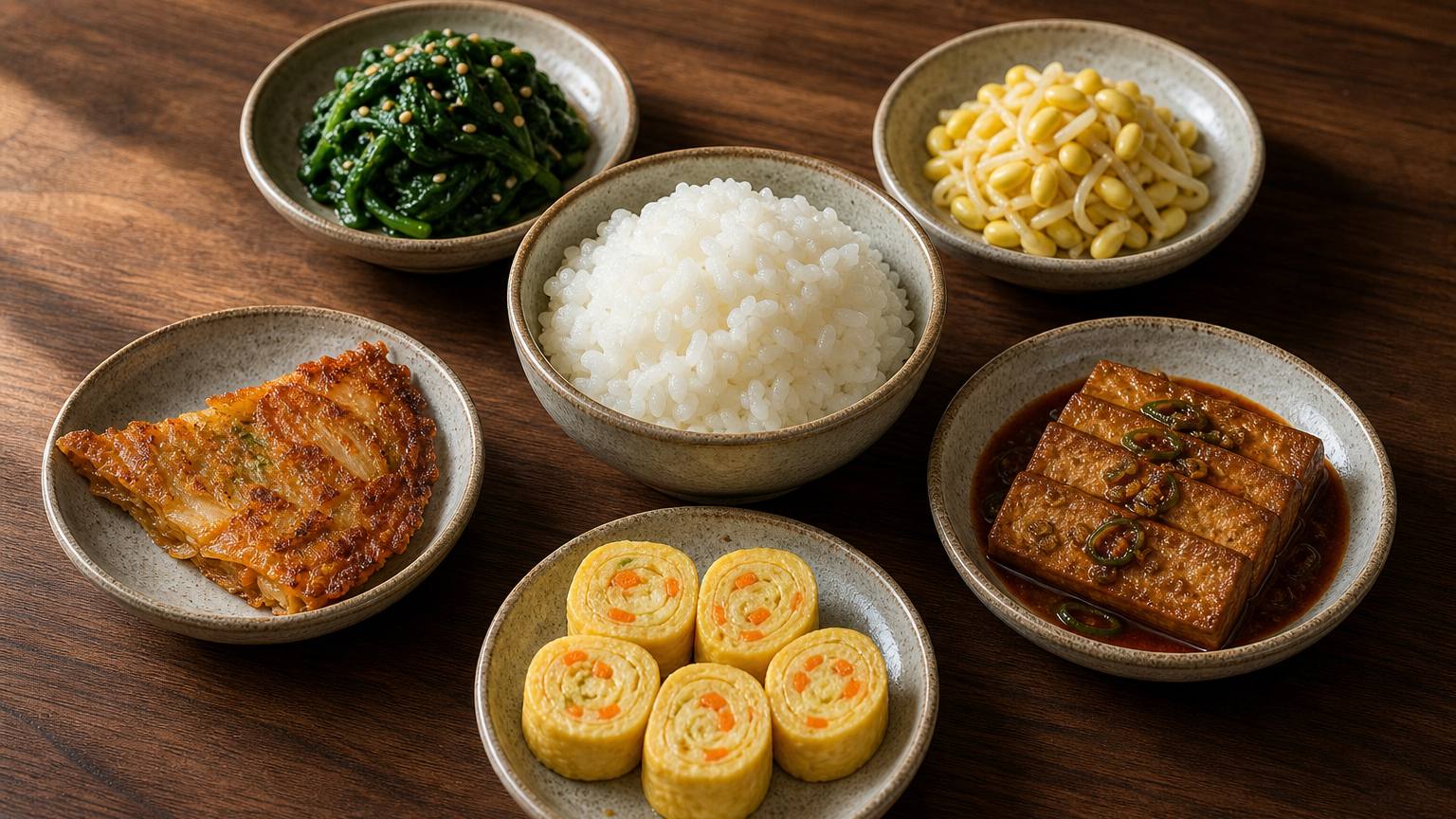
Five small bowls, one bowl of rice, and dinner is on the table. Korean banchan is the name for that ring of side dishes. By PBS SoCal's account of the tradition it accompanies any and every Korean meal, from a plain weeknight dinner to a ceremonial spread, and even pubs and street stalls put down one or two (PBS SoCal).
For a home cook the useful part is the timing. The five below run from ten to twenty minutes each, most are served cool rather than hot, and three of them keep for two or three days, so you can cook once and eat across the front half of a week.
What banchan actually is
Banchan describes a set of techniques more than a fixed menu. The same PBS piece sorts them by method: kimchi and jangajji for fermenting and pickling, namul muchim for lightly seasoned vegetables, bokkeum for quick sautés, jorim for braising in a seasoned sauce, and jjim for steaming. It also notes that a wider variety on the table reads as care, service and economic stability, which is why even a modest kitchen puts out several small dishes rather than one large one.
You don't need twelve. Five is generous, and more than most Tuesdays call for.
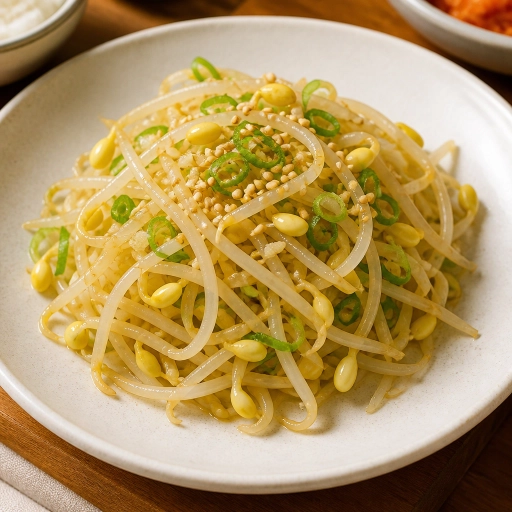
Kongnamul Muchim
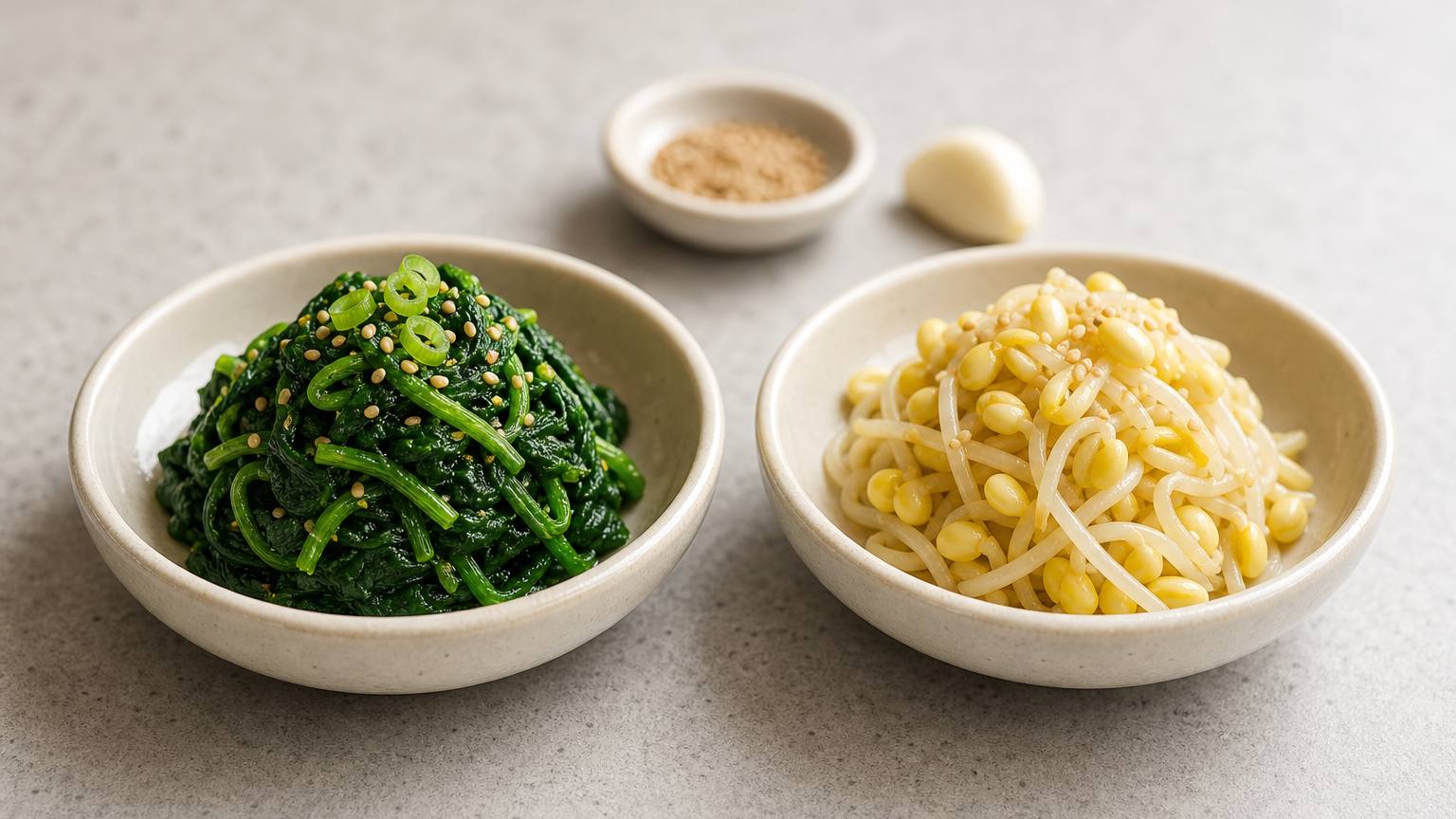
Kongnamul Muchim is a light, savory bean sprout salad with a clean crunch and nutty sesame aroma. Garlic, scallion, and soy sauce give it depth, while a quick blanch keeps the sprouts tender yet fresh. It's simple, fast, and especially satisfying as a cool side dish.
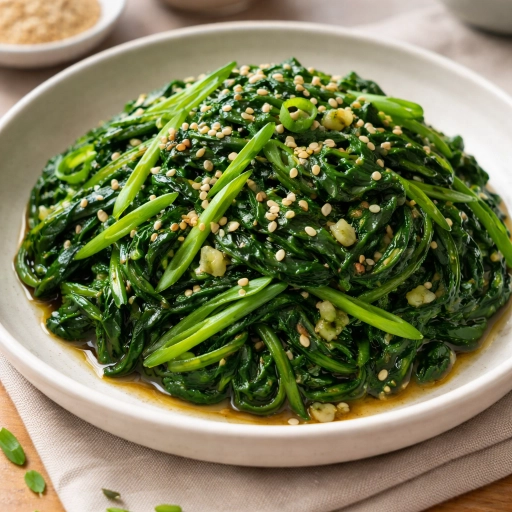
Sigeumchi Namul
Bright, tender spinach dressed in fragrant toasted sesame oil, garlic, soy and sesame seeds. Light, savory and refreshing, this banchan pairs perfectly with steamed rice and other Korean side dishes.
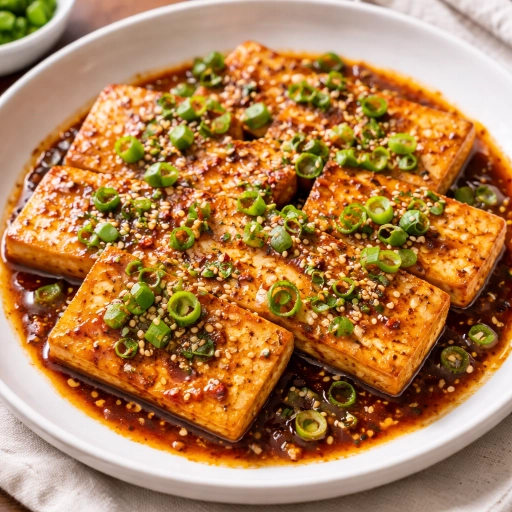
Dubu Jorim
Dubu Jorim is tender pan-fried tofu simmered in a bold, savory-spicy sauce until each slice is richly seasoned. The finish is glossy, garlicky, and fragrant with sesame and scallion, making it deeply satisfying despite its simple ingredients.
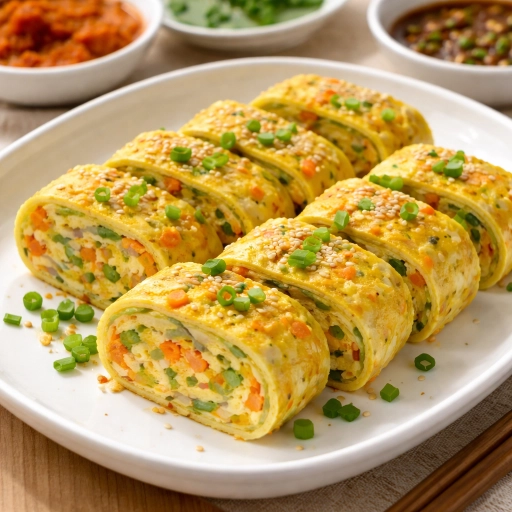
Gyeranmari
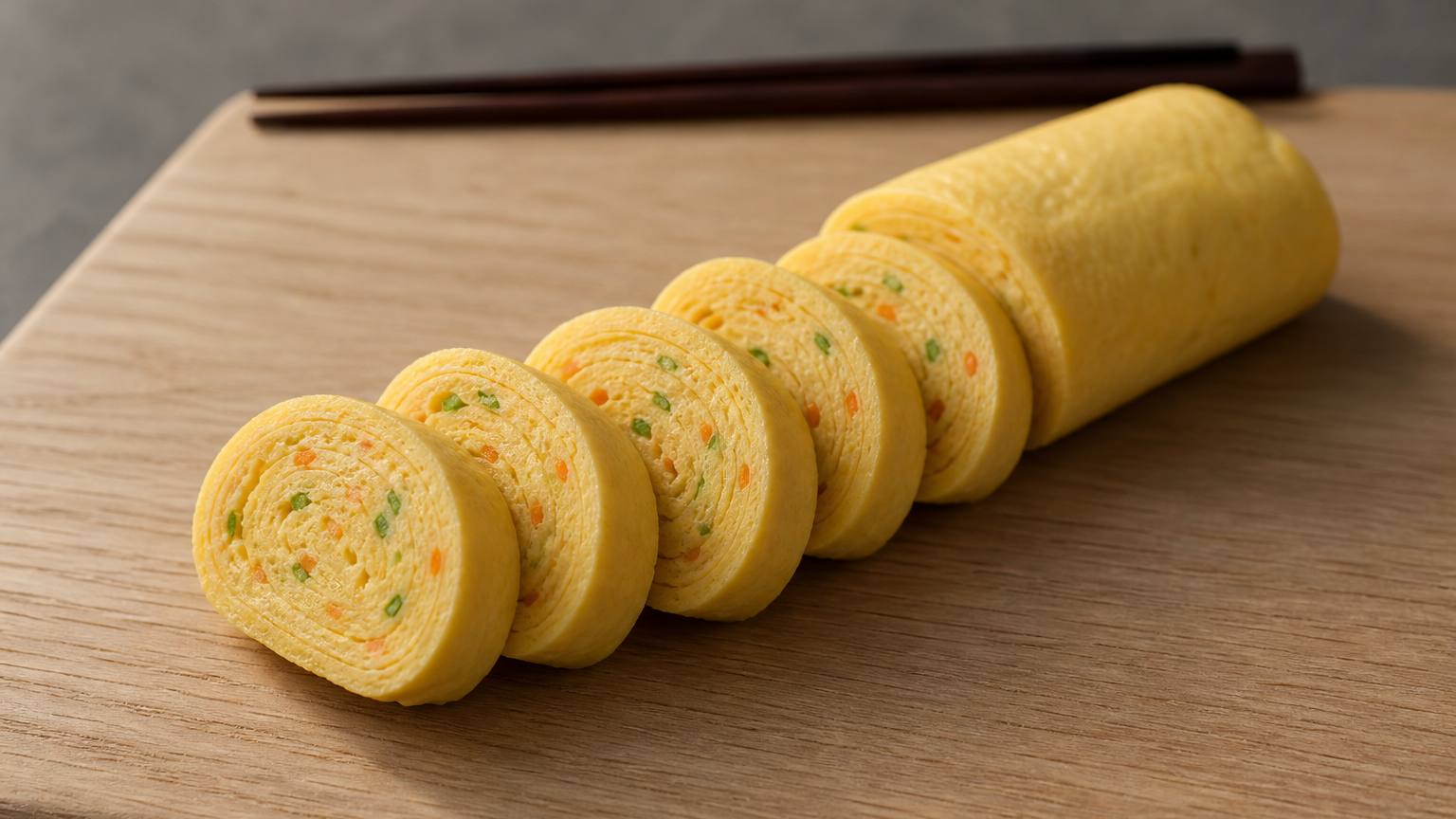
Tender, pale rolls of layered egg studded with finely diced carrot, scallion and onion. Cooked slowly and rolled into a compact log, then sliced into pretty rounds that are soft, mild and lightly seasoned.
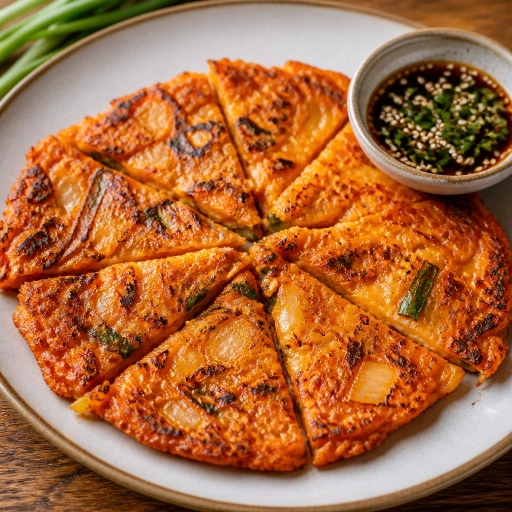
Kimchijeon
Kimchijeon is a crisp-edged, savory Korean pancake packed with tangy kimchi and sweet spring onion. The center stays tender while the outside turns golden and crackly, especially when dipped into a nutty sesame-soy sauce.
Start with two namul
Kongnamul Muchim is soybean sprouts, rinsed and picked over, blanched two to three minutes in properly boiling water until they lose their raw smell, then tossed while still warm with minced garlic, sliced scallion, soy sauce, sesame oil, toasted sesame seeds and salt. The card gives it ten minutes for two servings, about 67 calories a serving by Gourmate's per-serving estimates. Drain and squeeze gently first, or the dressing slides off the water still clinging to them.
Sigeumchi Namul is the same idea with spinach and it moves faster: 200 g of leaves in boiling water for twenty to thirty seconds, into ice water, then wrung out properly. That wringing is the whole dish. Skip it and you get a wet green puddle instead of a side dish. Fifteen minutes, two servings, about 95 calories each.
The two share their seasonings, so it's worth making them the same evening, though you'll want a pot, a colander and a bowl of ice water rather than the single bowl the ingredient lists suggest. If you want the reason toasted sesame and soy do so much work in so little volume, it's in our explainer on what umami is and where it comes from.
Add something braised
Dubu Jorim brings the protein and the only real sauce on the table. Four hundred grams of firm tofu, dried well and cut into eight slices about 1.5 cm thick, pan-fried two to three minutes a side in a large nonstick skillet, then simmered four to five minutes over medium heat in soy sauce, water, gochugaru, sesame oil and a little rice vinegar while you spoon the sauce back over the top.
The recipe puts active time at fifteen minutes for two servings, 227 calories and 16.4 g of protein each, and gives its keeping time as two days. Have the sauce mixed before the tofu goes in, because once the slices are browning you don't have four minutes to measure gochugaru.
The egg roll that fills lunchboxes
Gyeranmari is four eggs, finely diced carrot, onion and scallion, cooked in thin layers and rolled into a log that gets sliced into rounds. Keep the heat low so each layer sets pale rather than browning, and let a layer lose its wet sheen completely before you roll it over.
Twenty minutes, two servings, 238 calories and 13 g of protein each. The recipe rests the finished roll four minutes, which firms it enough to slice cleanly. The FDA puts egg dishes at 71°C (160°F) internally, and a set surface doesn't prove the middle got there, so slide a thermometer into the centre of the roll if you want to be certain rather than reasoning from the outside in (FDA).
When the kimchi goes sour
Kimchi that has fermented past the point you enjoy raw isn't spoiled. Korean kitchens cook over-ripe kimchi into fried rice, stew and pancakes rather than throwing it out. Sourness on its own is not a safety test, though: fuzzy or coloured mould, a smell that reads rancid or yeasty rather than sharp, a slimy texture, or a jar that has been dug into with a used fork all mean the batch goes in the bin.
Kimchijeon is the pancake version: 180 g chopped kimchi, 80 g plain flour, an egg, 70 ml cold water, 30 ml of the kimchi juice and spring onion, into a hot oiled pan, three to four minutes a side until the edges crisp and the centre is set rather than wet. Fifteen minutes, two servings, 307 calories each. Eat it immediately, while the crust still cracks. Reheated it's fine, but it isn't the same thing.
How to store Korean banchan safely
The keeping times come from the recipes, not from a general rule. Sigeumchi Namul and Gyeranmari each hold three days refrigerated, Dubu Jorim two, and Kimchijeon is a same-day dish. Kongnamul Muchim doesn't carry a stated keeping time, so treat it as a one-day dish. Get leftovers into the fridge within two hours of cooking, or within one hour if the kitchen is above 32°C, using shallow containers so they chill quickly instead of standing out to cool first. Keep the fridge at or below 4°C (40°F). The same two-hour limit applies to the spread itself once it's on the table.
The namul and the egg roll are meant to be eaten cold or at room temperature, so there's nothing to reheat. If you do warm the tofu or the pancake, take it to steaming hot right through rather than lukewarm. The sesame oil in the namul may look cloudy straight from the fridge, which the recipe notes as normal, and a few minutes on the counter clears it.
The sprouts get their own rule. Blanching for two to three minutes is a light cook, not a thorough one, and both the FDA and Germany's BfR advise that children, older adults, pregnant people and anyone with a weakened immune system avoid raw or lightly cooked sprouts. If someone at your table is in one of those groups, either boil the sprouts a full five minutes until they're soft and hot all the way through, or serve the spinach namul instead and skip the question.
On allergens, read your own labels. The two namul contain soy and sesame, and most soy sauce is brewed with wheat, so the gluten arrives with the bottle unless you swap in a tamari explicitly labelled gluten-free, which still contains soy. Dubu Jorim adds soy and sesame, Gyeranmari contains egg, and Kimchijeon carries gluten, soy, egg and sesame at once. Kimchi is the one to check by the jar rather than by category, since many commercial versions are made with fish sauce or salted shrimp and so carry fish or crustacean allergens that a vegetarian label wouldn't warn you about. Sesame protein survives cooking, so a sesame allergy means leaving the seeds and the oil out entirely rather than reducing them, and checking that knives, sieves, bowls, pans, boards and storage containers weren't just used for something else. If you're managing a diagnosed allergy or a medical diet, your dietitian's list beats any recipe tag.
Five small dishes plus rice feeds two people properly, and what's left turns Thursday into a plate you assemble rather than cook. That's the same logic behind batch cooking that doesn't bore you by Thursday, just in smaller bowls.
Gourmate scales any of these recipes to the number of people actually eating and lists the allergens it has detected in each one, which is a starting point for your own label check rather than a replacement for it. Try it here.