How to Salt Food So It Tastes Right
Bland food is usually under-seasoned, not under-spiced. Here's how to salt food in stages, pick the right salt, and taste as you go without overdoing it.
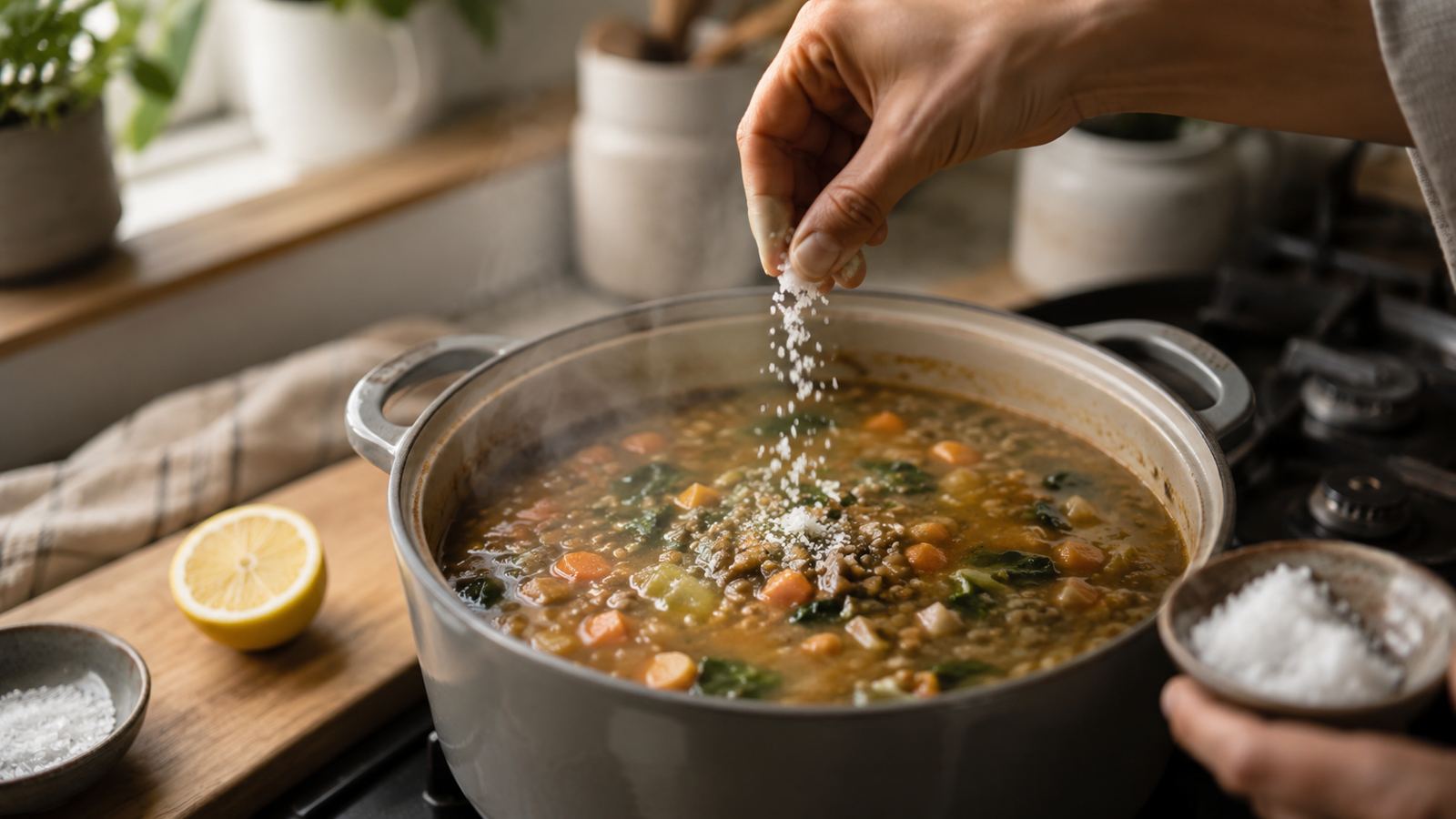
You followed the recipe. You measured everything. And the soup still tastes like it's missing something, so you reach for more herbs, more garlic, maybe a splash of hot sauce, when the thing it actually wanted was salt. Most bland cooking isn't short on spices or skill. It's just under-salted. Learning how to salt food comes down to three things: when the salt goes in, which salt you're using, and tasting often enough to stop at the right place.
What salt actually does
Salt's most useful trick is turning down bitterness. In a 1997 study in Nature, researchers showed that sodium suppresses bitterness more than it suppresses sweetness, which is why a small pinch makes coffee, tomato sauce, or a plate of bitter greens taste rounder rather than just saltier. That's also what people mean when they say salt "brings out" flavor: it clears bitterness out of the way so the sweet and savory notes register more. Salt also draws water out of vegetables like onions, eggplant, and cabbage, which is handy when you want them to soften down or shed liquid before they hit the pan.
How to salt food: start early, then taste
The most common mistake is saving all the salt for the very end. Salt added early has time to work into solid ingredients, so beans, potatoes, and pasta come out seasoned through instead of bland in the middle with a salty liquid around them. Salt a pot of beans at the start and each bean tastes of salt. Salt only at the end and the broth tastes seasoned while the beans stay flat. This is why pasta water gets salted before the pasta goes in, not after it's drained.
There's a limit to the "salt in layers" gospel, though. For a well-stirred soup or sauce, salt added near the end still dissolves and spreads evenly, so the exact timing matters less than people claim. The real reason to salt as you go is simpler: tasting at each stage lets you catch a dish while you can still fix it. Adding a little more is easy. Rescuing an oversalted pot is not.
Two Gourmate recipes show the pattern in practice. The Poulet rôti aux herbes works salt into a herb butter that goes under and over the skin, so the meat is seasoned before it ever roasts. The Linsensuppe mit Frankfurter salts the aromatics first, again with the lentils, then finishes with a splash of vinegar and a last taste. Open either and cook straight from the steps.
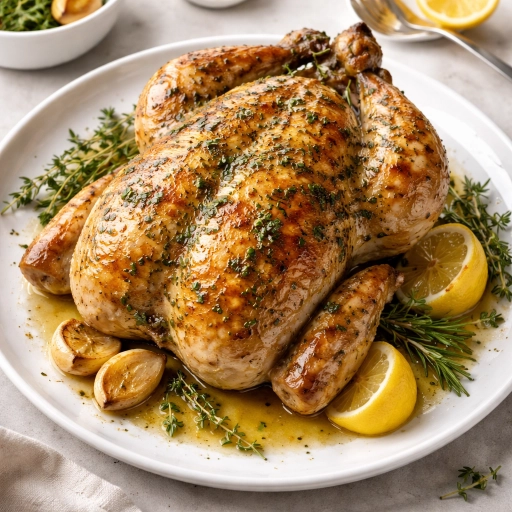
Poulet rôti aux herbes
This herb-roasted chicken has crisp, deeply golden skin and juicy meat scented with garlic, thyme, rosemary, and lemon. The herb butter bastes the bird from within and without, creating a classic French roast that feels elegant yet comforting.
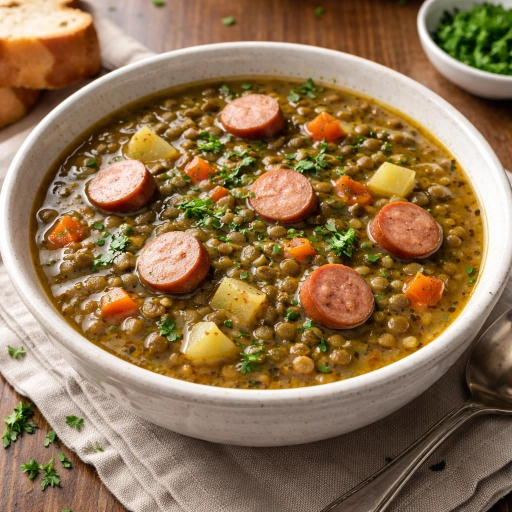
Linsensuppe mit Frankfurter
This comforting lentil soup is thick, warming, and full of rustic flavor from tender vegetables, earthy lentils, and gently seasoned frankfurters. A splash of white wine vinegar at the end lifts the whole pot, giving the soup the bright, traditional finish that makes it especially satisfying.
Not all salt measures the same
Here's the detail that quietly ruins a lot of home cooking: a teaspoon of one salt is not a teaspoon of another. Table salt packs into fine, dense grains, while kosher salt has bigger, airier crystals, so the same spoon of table salt holds close to twice as much salt as Diamond Crystal kosher by volume. Follow a recipe written for kosher salt using fine table salt, spoon for spoon, and you'll oversalt it badly. Pick one salt for most of your cooking, learn what a pinch of it feels like between your fingers, and you'll start seasoning by feel instead of by teaspoon. When you cook a bigger batch, taste again at the end: evaporation and salty ingredients like stock or cheese mean the salt rarely scales as neatly as the other amounts, something how to scale a recipe gets into.
When it's flat but not under-salted, reach for acid
Salt isn't the only thing that makes food taste dull. If a dish is already properly salted and still seems flat, the missing piece is often acid: a squeeze of lemon or a splash of vinegar. Acid does a different job from salt, so it won't rescue an under-salted pot. Taste first and make sure the salt is actually right. But once it is, a little acid sharpens everything and keeps a heavy dish from feeling one-note, the way that final splash of vinegar lifts the lentil soup above. If you cook mostly from whatever's already in the fridge and want more of these save-the-dish moves, how to cook with what you have covers the rest.
How much salt is too much
Cooking with salt on purpose and eating too much of it are different things. The FDA notes that Americans average about 3,400 mg of sodium a day, above the 2,300 mg daily limit it recommends, and that most of it comes from packaged and restaurant food, not the jar by your stove. So the salt you add to a home-cooked pot is rarely where the problem sits. If you have high blood pressure or a doctor has put you on a sodium-restricted diet, follow their guidance rather than general cooking advice, and lean harder on acid, herbs, and aromatics for flavor.
Let the recipe hand you a starting point
Seasoning by feel takes practice, and a good recipe gives you a starting point: how much salt to use and when to add it. In Gourmate, each generated recipe lists salt as a real amount in the steps, with a "to taste" nudge where it belongs, and step-by-step mode prompts you to season as you go instead of leaving it all to the last minute. If you're planning several dinners at once, building a healthy weekly menu pairs well with a pot you actually taste as it cooks.
The whole method fits in a line: salt your solids early, taste near the end, and reach for acid before you reach for more salt.
Gourmate builds your week from recipes that tell you how much salt to start with and when to add it, then leave the final pinch to you. Try it free.