
A Vietnamese Summer Menu for a Hot Evening
A Vietnamese summer menu for a hot evening: fresh goi cuon rolls, a crisp green papaya salad, smoky bun cha, and iced che ba mau to finish it off.
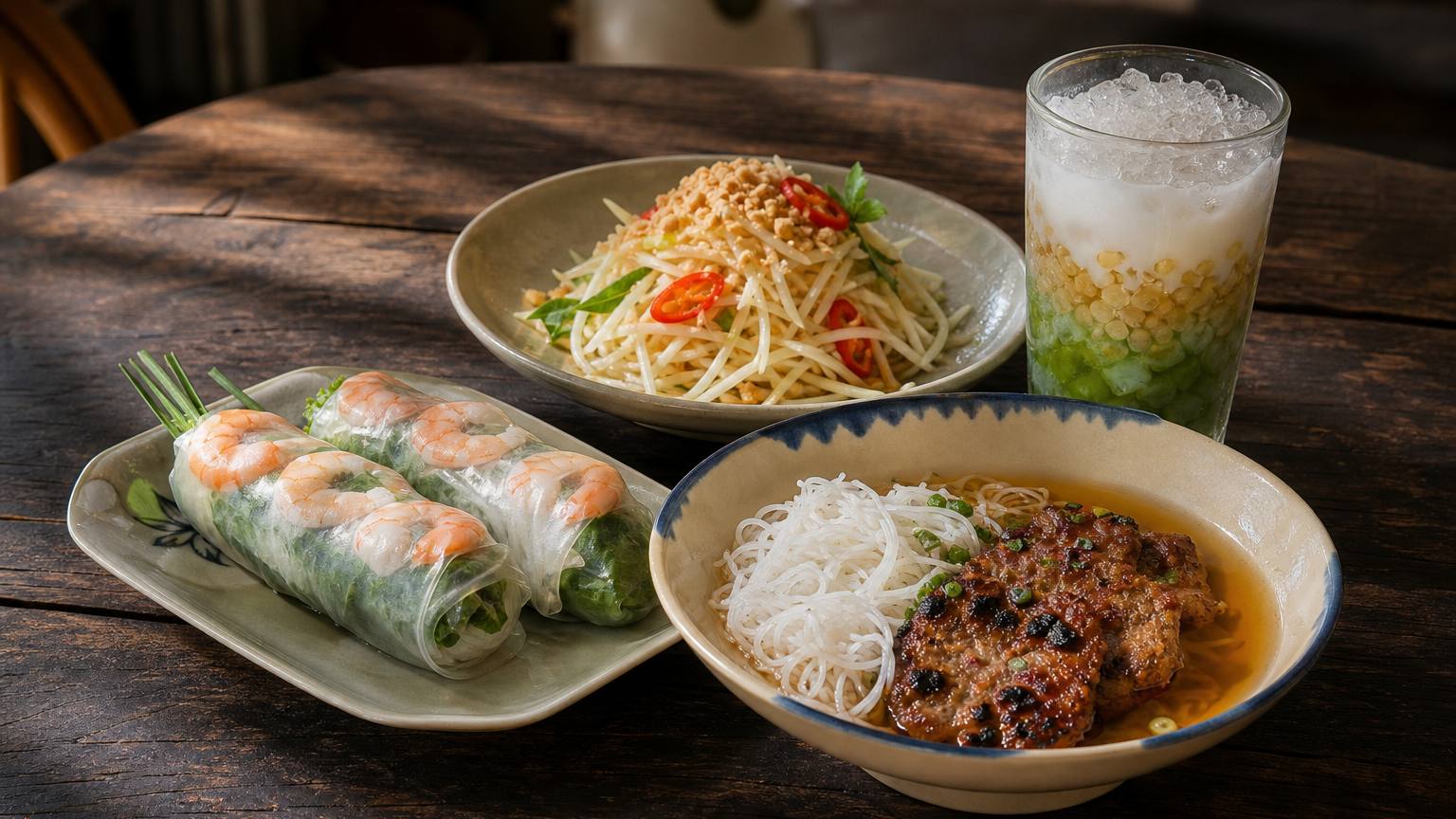
It's half past eight, still 30 degrees on the balcony, and there are four of you. Nobody wants a casserole. A Vietnamese summer menu is what I reach for instead: cold rice noodles, a plate of raw herbs in the middle of the table, dipping sauces instead of dressings, and a dessert served over crushed ice.
Four dishes make one evening's meal here, and the flavor comes from raw ingredients meeting an acidic, salty sauce at the last moment: lime, fish sauce, sugar, garlic, chili. Nothing reduces for an hour to taste of something.
The Vietnamese summer menu: four dishes
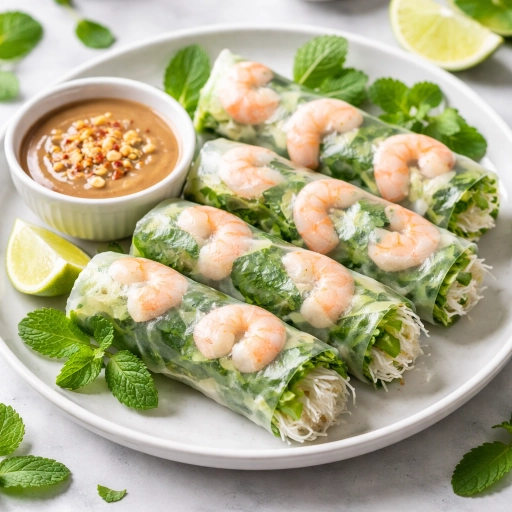
Gỏi cuốn
These fresh rice paper rolls are cool, tender, and full of contrast: sweet prawns, soft vermicelli, crisp lettuce and cucumber, and bright herbs in every bite. A rich peanut-hoisin dipping sauce adds a savoury-sweet finish that makes them satisfying while still feeling light.
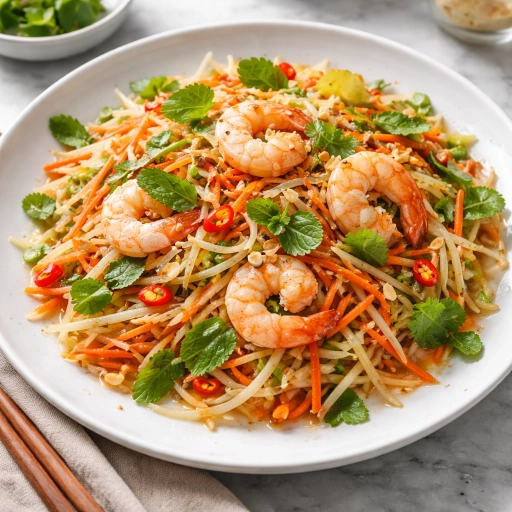
Goi Du Du
This salad is crisp, bright, and deeply refreshing, with cool green papaya and carrot tossed in a sharp-savoury nuoc cham dressing. Sweet shrimp, fragrant herbs, chili heat, and crunchy peanuts make it lively, light, and satisfying.
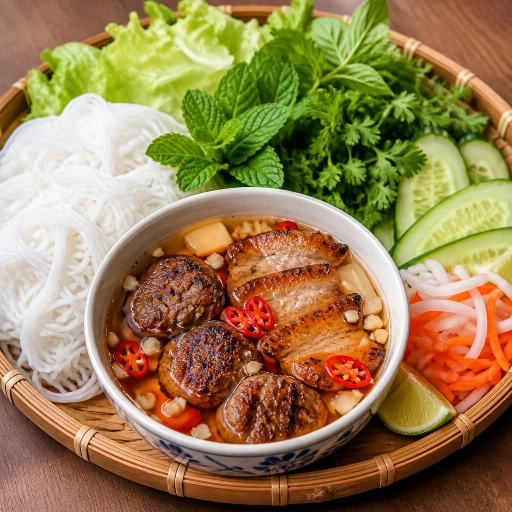
Bún Chả
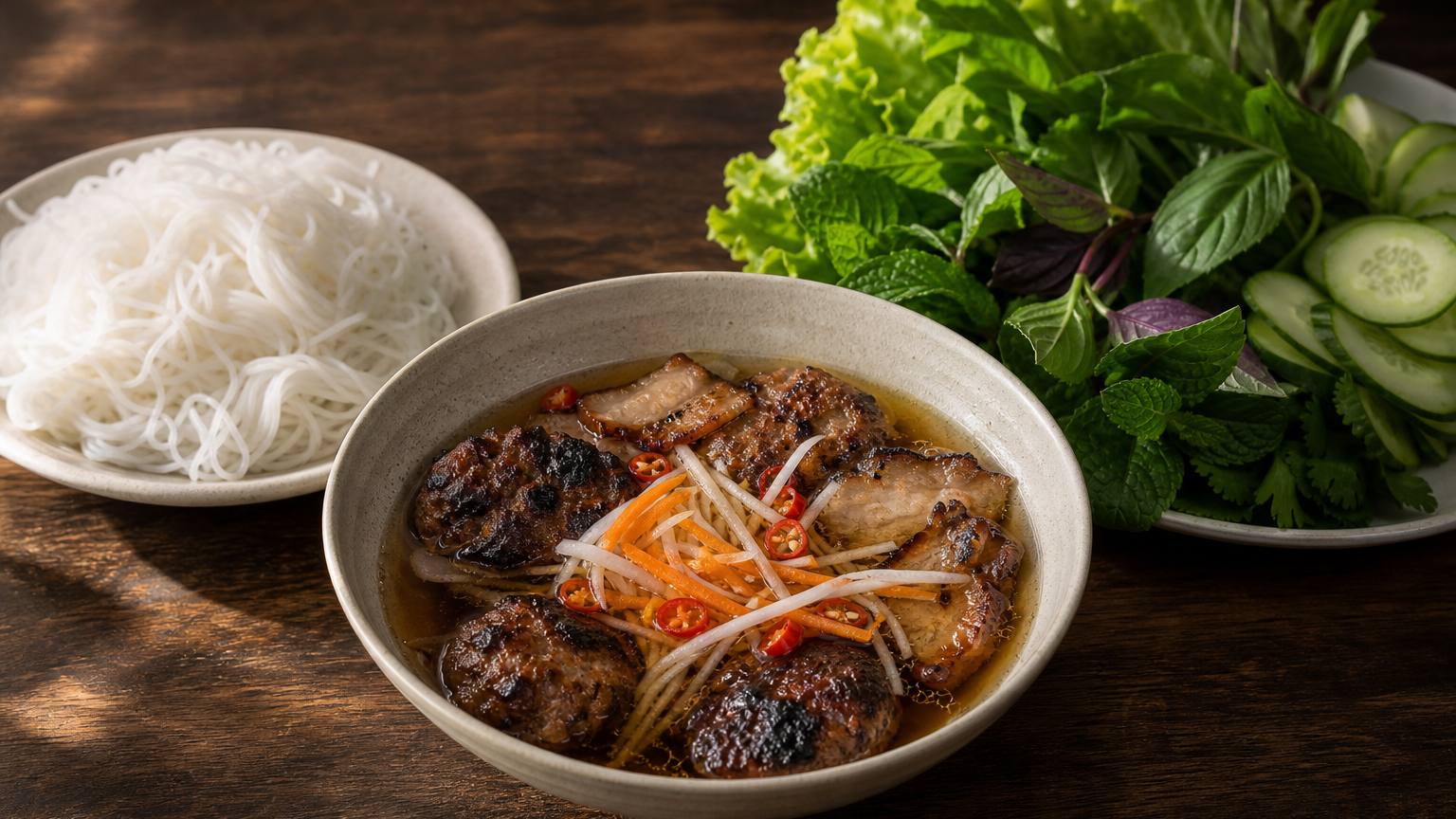
Bún Chả combines smoky, caramelised pork belly and tender pork patties with springy rice vermicelli, crisp vegetables, and a bright, savoury dipping broth. The result is light yet deeply satisfying, with sweet, sour, salty, fresh, and charred flavours in every bite.
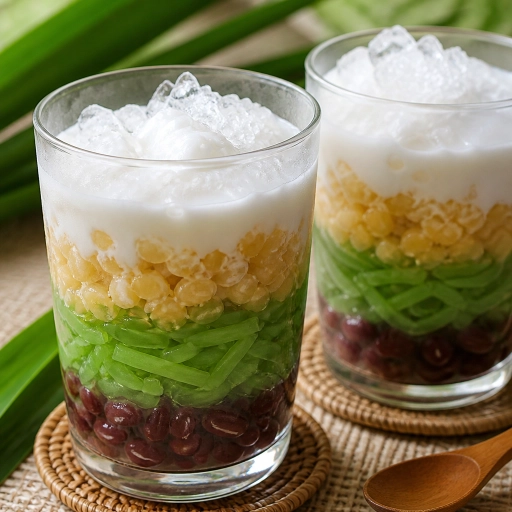
Chè Ba Màu
Chè Ba Màu is a refreshing layered dessert with soft mung beans, tender red beans, chewy green jelly, and fragrant sweet coconut milk over crushed ice. The result is creamy, cool, lightly floral, and beautifully colorful, with each spoonful offering a different texture.
Rolls, salad, a pork main, and something iced. Each recipe serves two, so double the quantities for four people and read the figures below as Gourmate's per-serving estimates.
This isn't a no-cook menu. The rolls boil vermicelli, the dessert simmers mung beans, and the pork wants a hot pan or the broiler; only the salad needs no heat. Run back to back the four times add up to about an hour and a half, so mix both dipping sauces first and start the mung beans early.
Two cold plates to start
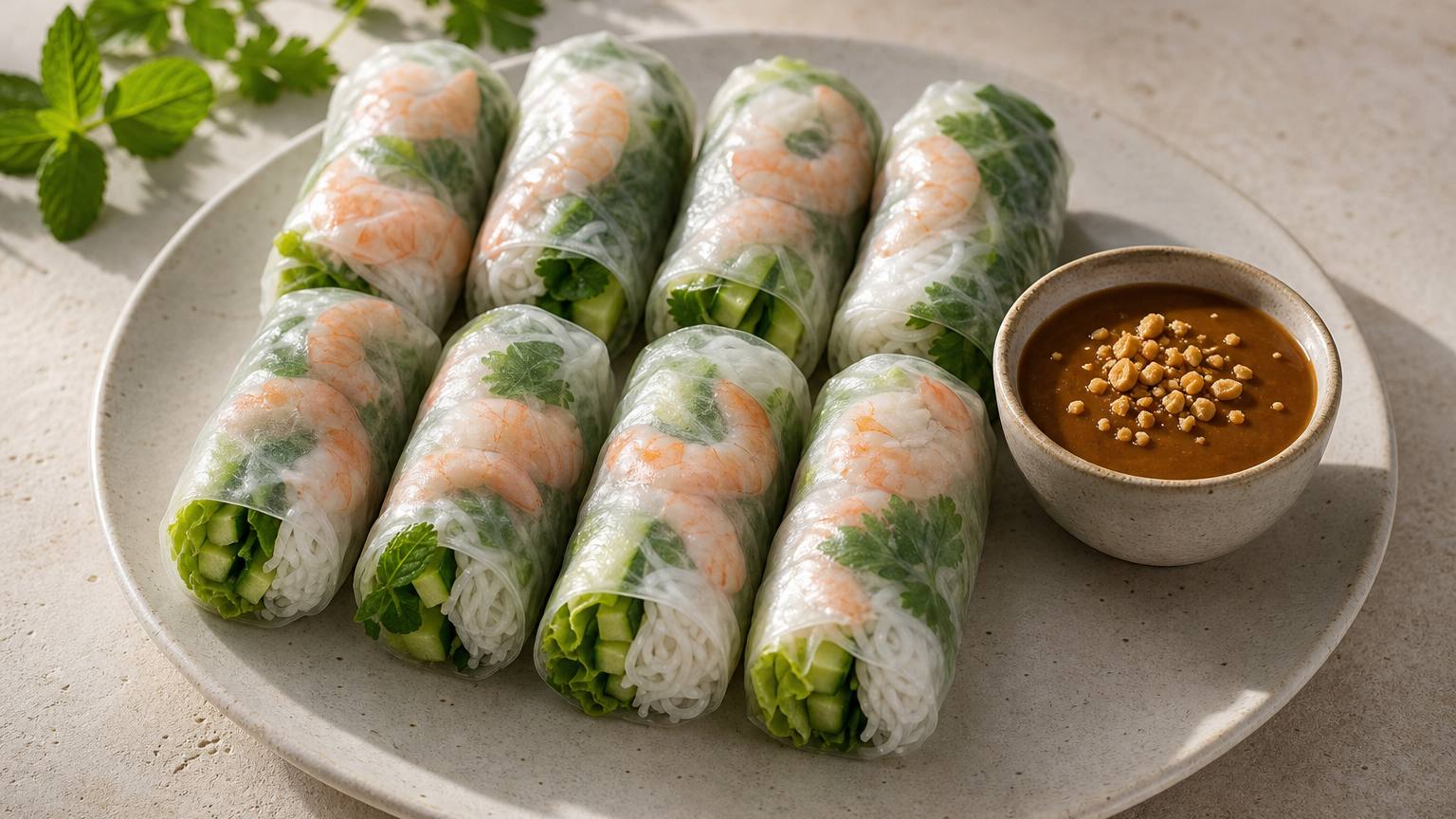
Gỏi cuốn are the fresh rice paper rolls: prawns, rice vermicelli, lettuce, cucumber, mint and coriander, wrapped tight and dipped in a hoisin and peanut sauce. The recipe lands at 15 minutes and about 356 calories a serving with 24 grams of protein. It gets there by calling for prawns you buy already cooked, so the only heat is a small pan of water for the noodles. If yours are raw, cook and cool them first.
Rolling is the part people worry about and shouldn't. Dip each wrapper into warm water for five to eight seconds, until it's pliable but still slightly stiff, then work fast: it keeps softening as you fill it, so one that already feels ready will be floppy by the time you fold. Don't overfill.
Gỏi đu đủ is the green papaya salad, the sharpest thing on the table: julienned green papaya and carrot tossed in nuoc cham with shrimp, mint, coriander, crushed peanuts and chili. Fifteen minutes, 263 calories a serving, 22 grams of protein. That timing assumes cooked shrimp again and a coarse grater or mandoline rather than hand-julienning, so use the guard, because green papaya is hard and the last of it is where people cut themselves.
Squeeze the shredded papaya in a towel if it looks watery, and dress it just before serving, since the salt draws liquid out and a salad left sitting in it goes limp. Add the herbs last and stop as soon as they're distributed.
The one dish worth turning on the heat for
Bún chả is a Hanoi dish, and it's the reason this menu isn't entirely cold. Pork mince gets shaped into small flat patties, sliced pork belly gets the same garlic, shallot, fish sauce and brown sugar treatment, and both go on a hot ridged pan or under the broiler until the edges caramelize. They then rest a minute or two in a sweet and sour dipping broth so the charred juices run into it. It's the biggest plate here, at 30 minutes and about 825 calories a serving with 37 grams of protein, and comes with its own pile of lettuce, mint, Thai basil and pickled carrot.
One caution the recipe's high-heat instruction understates: that marinade has brown sugar in it, and sugar blackens well before pork cooks through. In a pan, medium-high gives you char without a bitter crust. Under a broiler you can't turn the heat down, so drop the shelf instead and stay in the kitchen, because sugary edges go from caramel to carbon in under a minute.
The marinade is for the raw meat only. Mix the dipping broth in a separate bowl, pour away whatever the pork sat in, and wash your hands after shaping the patties before you touch the herb platter.
One sauce runs through two of the dishes
Nuoc cham turns up twice on this menu: fish sauce, lime juice, sugar, garlic, water, usually chili. In the papaya salad it's the dressing; in bún chả it's a looser, sweeter version you dunk noodles into. It should read salty, sour and sweet at once, and slightly too strong on its own, because noodles and herbs are about to dilute it. Fish sauce brands differ enough in saltiness that the same measured amount lands very differently, so hold back the last of it and taste.
Fish sauce is fermented anchovy, so fish runs through the whole meal. Some brands are made with shrimp too, or on shared equipment, so if anyone at the table has a shellfish allergy, the declaration on the bottle is the only thing that settles it.
Chè ba màu, or ice as a course
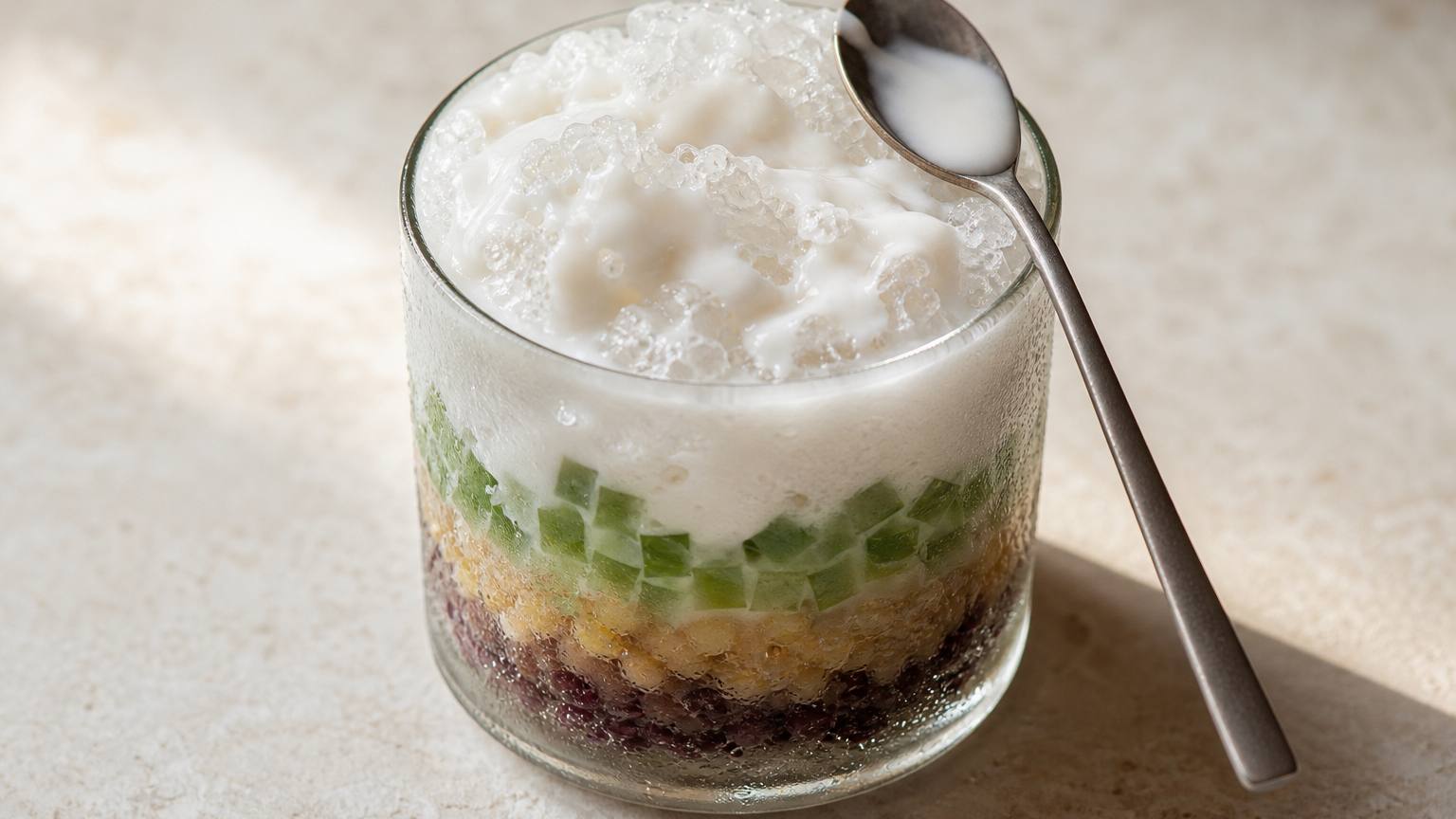
Chè ba màu means three-color sweet soup, sold by street vendors and dessert shops across Vietnam: layered mung beans, red beans and green pandan jelly under crushed ice and sweet coconut milk. It serves two at about 418 calories and 8.9 grams of fiber a serving, and uses no animal ingredients, though jarred jelly and canned beans are worth a label check.
It takes 30 minutes, most of it simmering split mung beans until they're soft enough to mash but not soupy. Five minutes off the heat takes the steam out, but they still go into the glass warm to room temperature, which is how the dish is usually served. For a properly cold one, cook the beans earlier and chill them in a shallow container rather than leaving them out.
Assemble in glasses, ice last, coconut milk poured over at the table. Then everyone stirs it into a mess, which is correct. Beans, jelly and coconut milk all keep in the fridge, so the only part that can't wait is the ice, and you'll want an ice crusher or a capable blender.
Temperatures, allergens, and a warm balcony
Pork is where to be precise. The USDA puts whole cuts, meaning your sliced belly, at 145°F (63°C) with a three-minute rest, and ground pork, meaning your patties, at 160°F (71°C) with no rest needed. Thin belly slices get there fast; the patties are the ones to check with a thermometer rather than by color. Use separate boards and tongs for raw and cooked.
The rest of the menu is eaten cold or raw, so keeping things cold does the work. The lettuce, herbs, cucumber, papaya and carrot go in uncooked, so wash them properly: raw produce isn't sterile even when it looks clean. Cooked prawns and shrimp are ready-to-eat foods, so keep them at 4°C (40°F) or below and put the finished rolls and dressed salad back in the fridge if they aren't going straight out. Outside, the USDA gives perishable food two hours, or one hour once it's above 32°C (90°F). At 30 degrees you're on the two-hour clock, but bring things out in batches anyway rather than letting one platter sit in the warm.
Allergens here run across dishes rather than sitting on one plate. Prawns and shrimp put crustacean shellfish in two of the four, fish sauce puts fish in two, and peanuts appear in both the rolls' dipping sauce and the papaya salad, so a peanut allergy rules out half the menu. Hoisin brings soy and, in most brands, wheat, so the rolls aren't reliably gluten-free even though rice paper and vermicelli are. For a serious allergy, cook that person's dish first on clean equipment, give it its own board, knife and serving spoon, and read every label yourself, because an ingredient swap alone doesn't make a shared kitchen safe.
The same logic drives a summer mezze spread, and there's a wider case for cooking when it's too hot to face the stove. This menu gets through a startling amount of mint and coriander, so keeping fresh herbs from wilting is worth a read first.
Want a summer menu built around what you actually like eating? Gourmate generates recipes like these to fit your taste and your week. Download Gourmate.