
Which Cooking Oil to Use for What
Seed oils are trending and olive oil gets blamed for smoking. Which cooking oil to use for frying, roasting and dressings, and why smoke point isn't all.
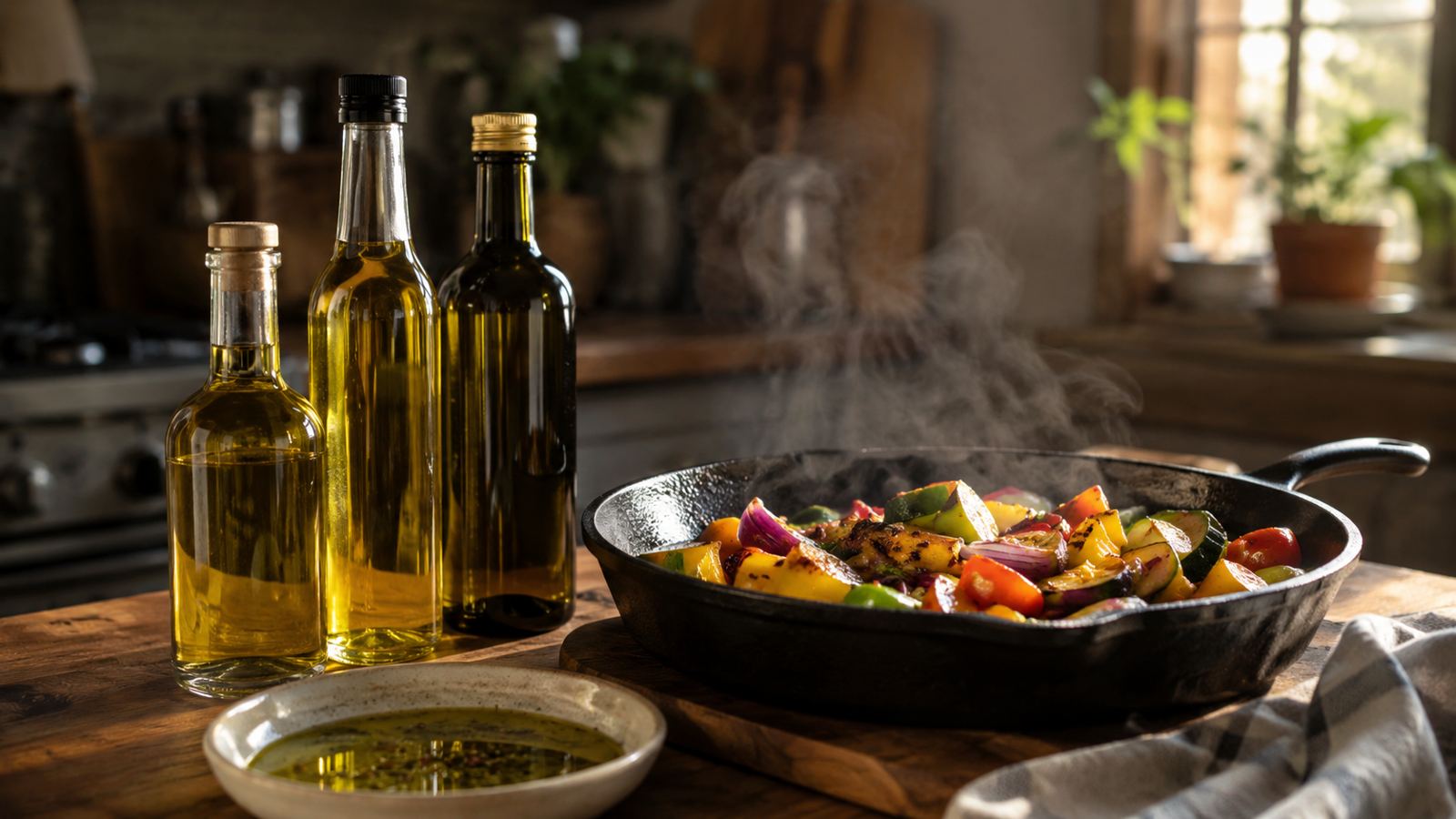
Most of us own three or four bottles and use one for everything. The good olive oil gets poured into a screaming-hot pan where its flavor burns off, while the neutral stuff sits in the cupboard. Then a video tells you seed oils are poison and you're not sure what's left to fry in. Choosing a cooking oil is simpler than the internet makes it sound. It comes down to two questions: how hot are you cooking, and do you want to taste the oil or not.
Once you know those two answers, the choice is usually obvious. For high heat you want an oil that stays stable in the pan. For a dressing you want one whose flavor you can actually taste. A lot of everyday cooking falls between the two, and there the gap between a good olive oil and a neutral one is small.
What smoke point tells you, and what it doesn't
The smoke point is the temperature where an oil starts to visibly smoke and break down, giving off a harsh smell and off-flavors. Push an oil past it and you lose the taste of your food along with some of the oil's better qualities. As a rough rule, the more refined an oil is, the higher its smoke point, because refining strips out the little bits that scorch first (Cleveland Clinic).
That makes smoke point a handy guide for matching oil to heat, but it isn't the same thing as how well an oil holds up. Smoke point marks where an oil starts to smoke. Heat stability is about how much it breaks down and oxidizes over a longer or repeated cook, and the two don't always line up. The quoted numbers also vary a lot between sources, since they depend on how fresh and how refined a given bottle is. Treat them as ballpark. For a normal sauté you're usually well under any oil's smoke point; a screaming-hot empty pan is where people actually overshoot it.
The everyday oils and what each is for
A neutral oil is your workhorse for most hot cooking. Refined canola, sunflower, and grapeseed oils are mild, with high smoke points that suit searing, stir-frying, and shallow frying. You don't want to taste them, which is the point when the flavor is coming from the food. Sunflower comes in more than one type: the high-oleic version handles sustained heat better than the standard kind, though for a quick sear at home the difference is minor. Long, hot deep-frying is harder on any oil, so if you fry a lot, change it regularly rather than reusing one bottle forever.
Olive oil is the one worth keeping in two grades. A regular or light olive oil handles everyday roasting and sautéing fine. A good extra virgin oil is better saved for places where its flavor shows: drizzled over vegetables at the end, stirred into a dressing, wiped across warm bread. Extra virgin oil is fine to cook with, and a sound all-round stovetop oil whose fats and antioxidants hold up reasonably well to pan heat (Cleveland Clinic). What you lose over heat is some of the delicate flavor you paid for, so save the best bottle for raw uses and match the grade to the job.
Butter browns beautifully and tastes of itself, but its milk solids scorch at a lower temperature than oil. Pairing it with a splash of neutral oil, the way many pan recipes do, dilutes the butter so the burnt flavor is less concentrated, but it doesn't really stop the solids browning. If you want butter flavor at higher heat, clarified butter or ghee, with the milk solids removed, is the honest fix; or sear in oil and add a knob of butter near the end. Toasted sesame oil and unrefined nut oils like walnut work best at the end. Their flavor is the whole reason to buy them, and it fades or turns harsh over sustained heat (refined versions take more heat but lose the point). A few drops of toasted sesame stirred into a finished stir-fry is fine; a whole pan of it on high heat is a waste.
Which cooking oil for frying, roasting, and dressing
Here's the short version, sorted by what you're actually doing.
- High heat (searing, stir-fry, deep or shallow frying): a refined neutral oil, or refined avocado or light olive oil. You want an oil that stays stable when hot and doesn't carry a strong flavor.
- Roasting and everyday sautéing: regular olive oil or a neutral oil. Both take oven and pan heat comfortably.
- Raw or finishing (dressings, drizzles, dips): your best extra virgin olive oil, or a nut or toasted sesame oil, added off the heat where the flavor survives.
You can watch the logic in a single skillet dinner. The Crispy Chicken Vegetable Skillet starts with a spoon of neutral oil in a properly hot pan, so the chicken browns instead of steams, then finishes with a few drops of sesame oil stirred in off the direct heat, where its aroma survives. A cold dish works the other way round: the Green Salad with Poached Egg and Tuna Vinaigrette leans on olive oil raw, whisked into the vinaigrette where you taste every note of it.
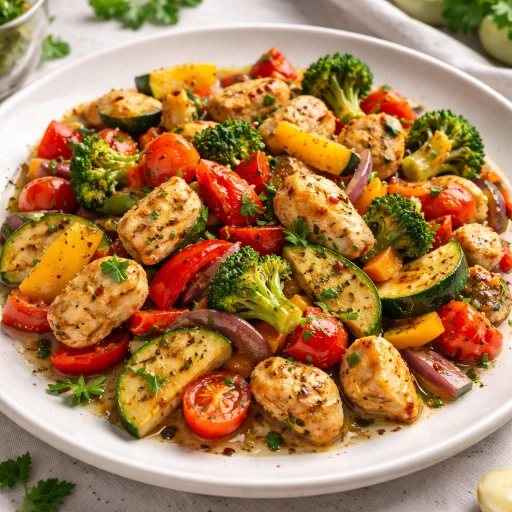
Crispy Chicken Vegetable Skillet
A crispy, dairy-free skillet with tender fried chicken pieces and a colorful vegetable mix. Quick to prepare, aromatic, and ideal for a low-carb dinner in under 30 minutes.
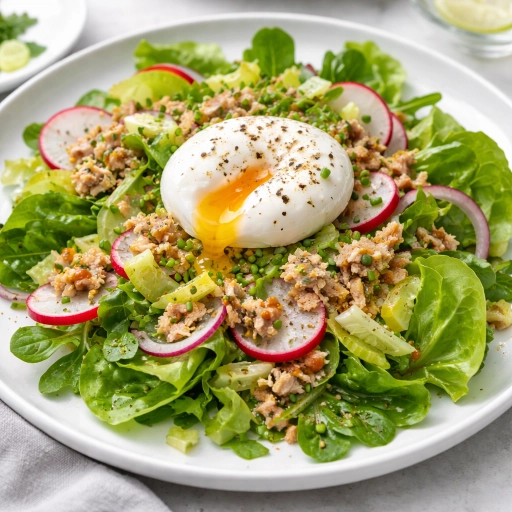
Green Salad with Poached Egg and Tuna Vinaigrette
A light, crisp salad that becomes a satisfying meal with a tangy tuna vinaigrette and creamy poached eggs. Fresh onion, celery, and radishes add crunch, while the vinaigrette ties everything together.
The seed oil question
You can't talk about oil right now without the seed oil argument coming up. The worry, roughly, is that oils like canola, sunflower, and soybean are high in an omega-6 fat called linoleic acid, which the body can turn into compounds involved in inflammation, so the claim goes that seed oils drive inflammation and disease.
The evidence doesn't back that up. Reviews of the human research find no consistent link between higher linoleic acid intake and higher inflammation markers, and swapping saturated fat for the polyunsaturated fat in these oils is associated with lower heart-disease risk (Johns Hopkins Bloomberg School of Public Health). A 2026 review in Nutrition Today concluded that the balance of evidence supports seed oils as healthful replacements for saturated fats (Nutrition Today); the idea that they are toxic is largely a social-media phenomenon rather than a finding from that research. Much of the seed oil people eat comes through ultra-processed and fried restaurant food, which is worth eating less of anyway. Used in normal amounts for home cooking, the oil in your own bottle isn't something the current evidence flags as a risk. If you have a specific health condition or a doctor has given you dietary guidance, follow that over anything a cooking article or a video tells you.
Keeping oil from going off
Oil doesn't last forever. Heat, light, and air turn it rancid, which shows up as a stale, putty-or-old-crayon smell and a flat, faintly bitter taste (different from the pleasant pepperiness of a fresh extra virgin oil). Store bottles in a cool, dark cupboard rather than next to the stove, keep the cap on, and buy oils you cook with less often, like walnut, in small bottles you'll finish. Under normal home storage, rancidity is mostly a quality problem rather than a safety one, but it drags down whatever you cook in it, so an off-smelling bottle is worth pouring out. The same habit that keeps fresh herbs from turning to slime applies here: buy for how you actually cook, and store it right.
Let the recipe pick the oil
A lot of the guesswork goes away when a recipe just names the oil and the moment to use it. The skillet above calls for neutral oil to sear and sesame oil to finish, and the salad calls for olive oil in the dressing, so you're not guessing mid-cook. In Gourmate, generated recipes name the oil in the ingredient list and use it at the right moment in the steps, whether that's a hot pan or a cold bowl. Nutrition figures like the fat per serving are Gourmate's estimate and shift with the exact oil and amount you use, so treat them as a guide rather than a fixed number. If you'd rather cook from whatever's already open, cooking with what you have covers working around a near-empty cupboard, and getting the salt right matters more to most dishes than which oil you reached for.
So: keep a neutral oil for the hot pan, a good olive oil for the plate, and don't let a smoke-point chart be the only thing deciding for you.
Gourmate plans your week from recipes that name the right oil for each step, from the sear to the drizzle. Try it free.