
Cold Sesame Noodles, Ready in About Ten Minutes
Cold sesame noodles are the no-fuss answer to a hot evening: chewy chilled noodles in a nutty sesame sauce with cucumber, on the table in about ten minutes.
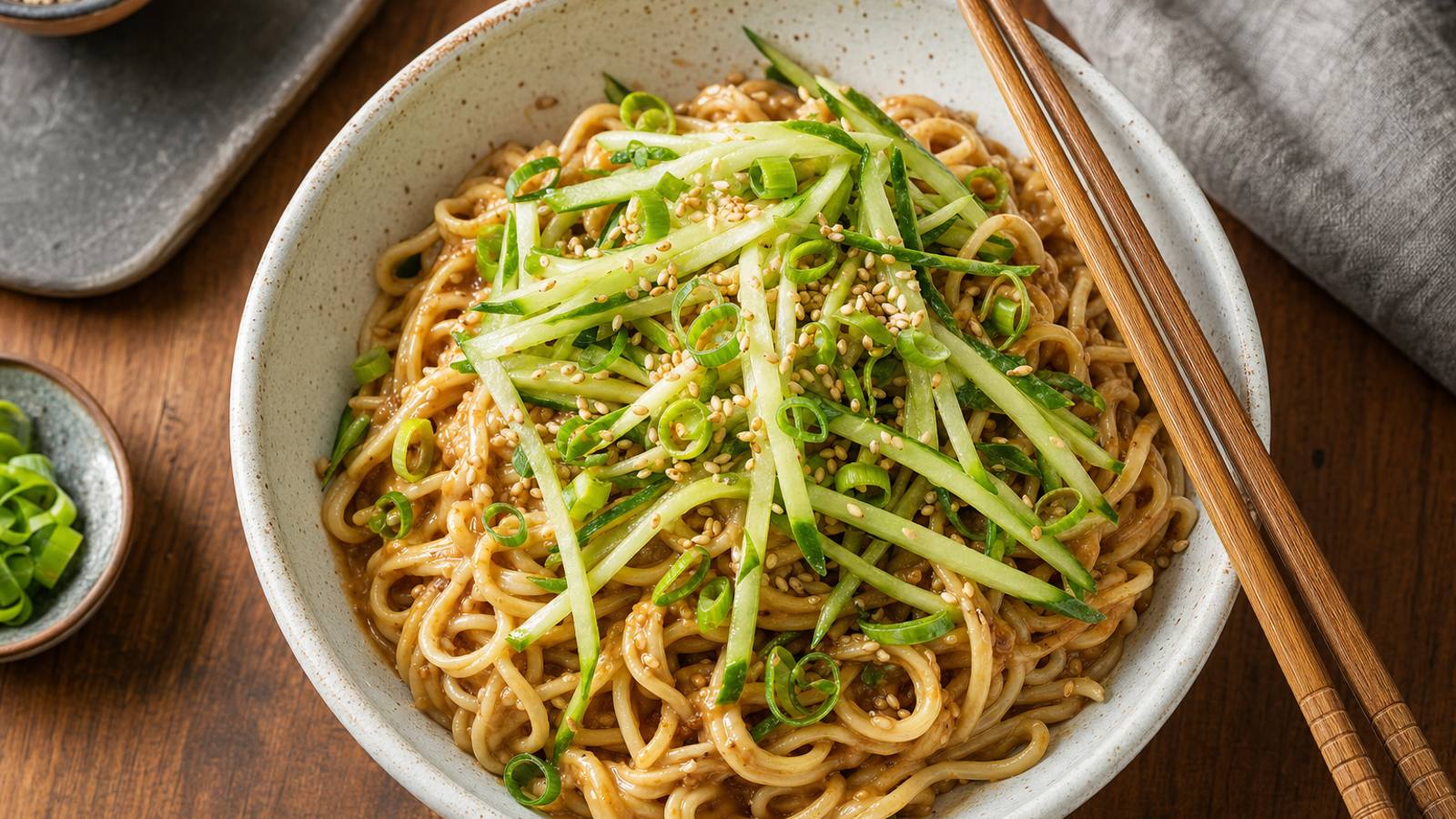
When it's too hot to stand over a stove, cold sesame noodles are the dish I keep coming back to. You boil noodles for a few minutes, rinse them cold, and toss them in a nutty, savory sauce you stirred together while the water heated. No simmering pot to babysit, no oven warming up the kitchen. Cold sesame noodles belong to the wider family of Chinese and Taiwanese cold-noodle dishes known as liang mian, and a good bowl is chewy, cool, and gently spicy.
Once the water's boiling, it's about ten minutes of actual work, and you only turn on one burner. That's the appeal on a July weeknight: a proper dinner that doesn't heat up the kitchen.
What makes the sauce
Get the sauce right and the rest is just texture and freshness around it. At its heart is Chinese sesame paste, which is not the same as the tahini you'd stir into hummus. Chinese sesame paste is ground from toasted white sesame seeds, so it's usually darker, thicker, and more roasty than tahini, which tends to be paler and milder, though tahini varies a lot by brand (The Woks of Life). If you swap in tahini because that's what you have, the sauce still works. Expect a milder result, and maybe add a splash of toasted sesame oil to make up the difference.
From there you're building balance: light soy for salt, rice vinegar for a little sharpness, chili oil for heat and color, a small hit of garlic, and just enough maple syrup or sugar to round the edges. Sesame paste starts out stiff and grainy, so whisk in the cold water slowly and keep going past the point where it looks broken. It loosens into something pourable and glossy. If it ever gets too thick again after sitting, a teaspoon of cold water brings it back.
The only heat is the noodles
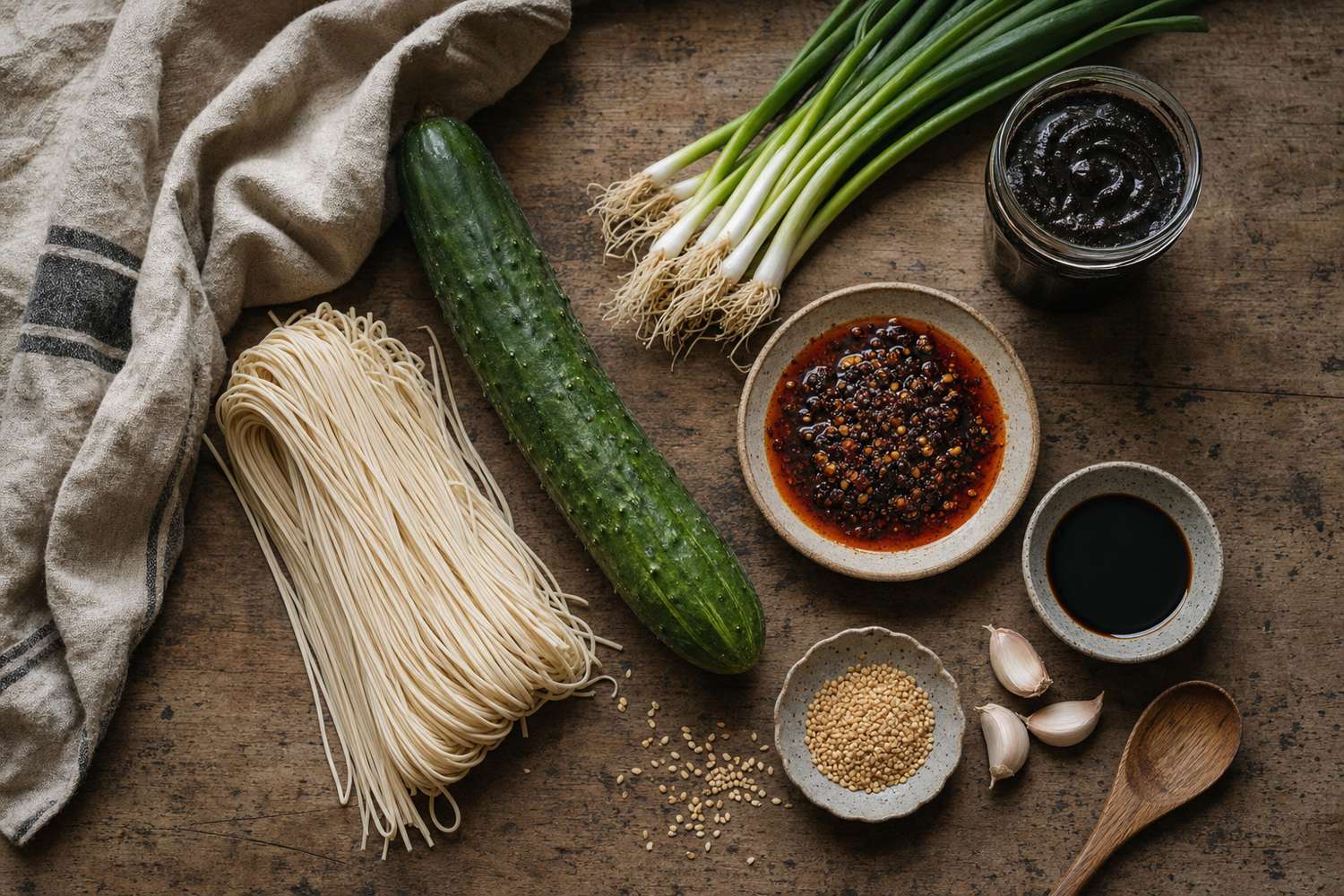
You do boil the noodles, so this isn't strictly a no-cook dish, but that's the only burner you turn on. Thin wheat noodles or fresh alkaline noodles both work well. Follow the package time and pull them just before they're fully soft, since dried and fresh noodles cook at different speeds.
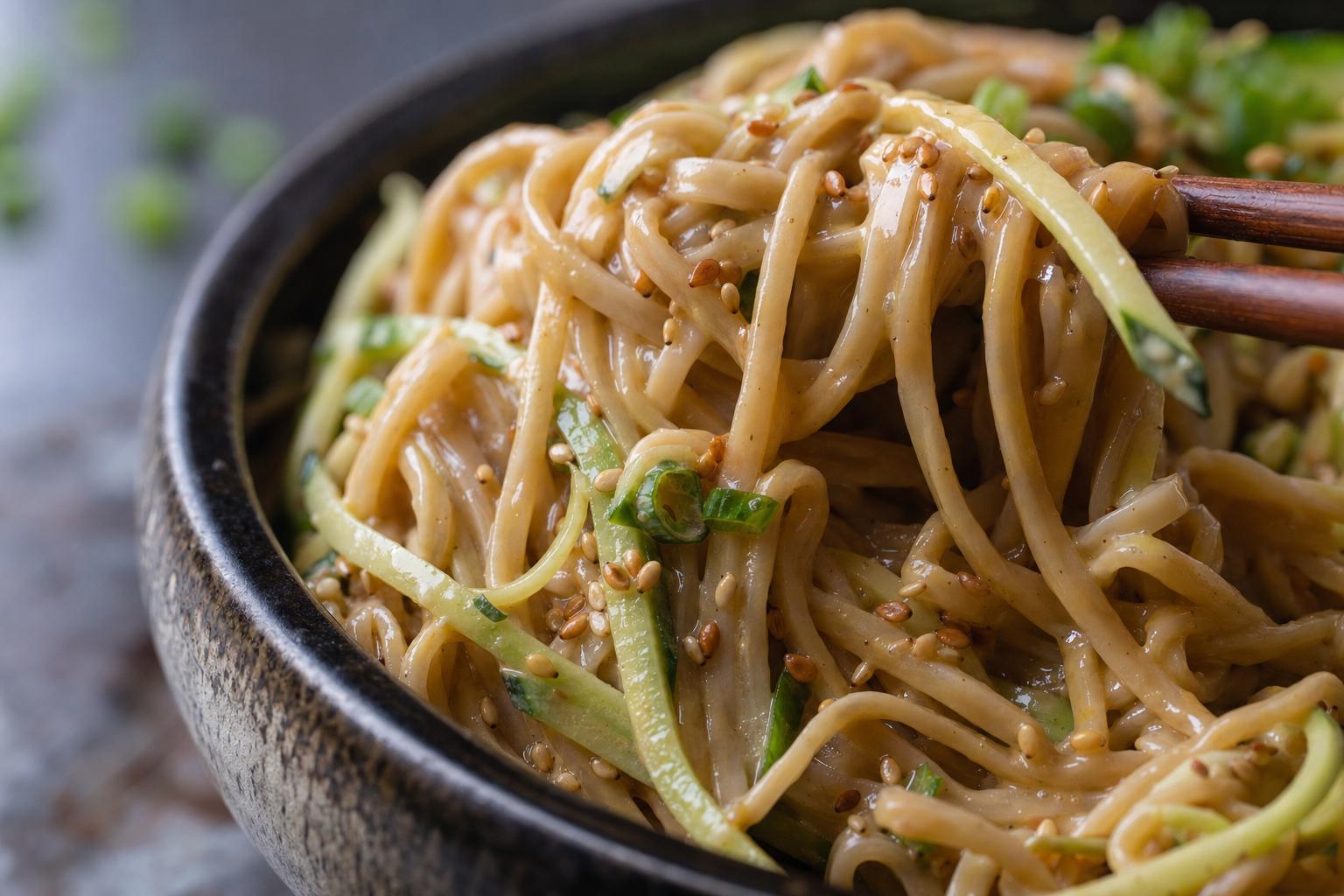
Then rinse the drained noodles under cold running water until they're fully cool. The cold shock stops the cooking so they don't turn mushy, and it rinses off the surface starch that would otherwise glue the strands into a clump (The Kitchn). For a hot bowl of pasta you'd never do this, because you want that starch to grab the sauce. For a cold noodle dish you want the opposite: separate, bouncy strands a thick sauce can coat. Drain them really well, a minute or two in the colander with a few shakes, or the sauce slides off instead of clinging.
How to make cold sesame noodles
This recipe serves two. Gourmate lists it at about nine minutes of prep and cooking, so figure fifteen or so once you count the water coming to a boil. Each bowl works out to roughly 460 calories with 14 grams of protein by the app's estimate, which shifts with the exact noodles, the paste, and how heavy-handed you are with the chili oil. Here's the shopping list:
- 160 g dried wheat noodles, 120 g cucumber, 20 g scallion
- 45 g Chinese sesame paste, 30 ml light soy sauce, 15 ml chili oil, 10 ml rice vinegar
- 6 g garlic, 5 ml maple syrup, 30 ml cold water, 5 g toasted sesame seeds
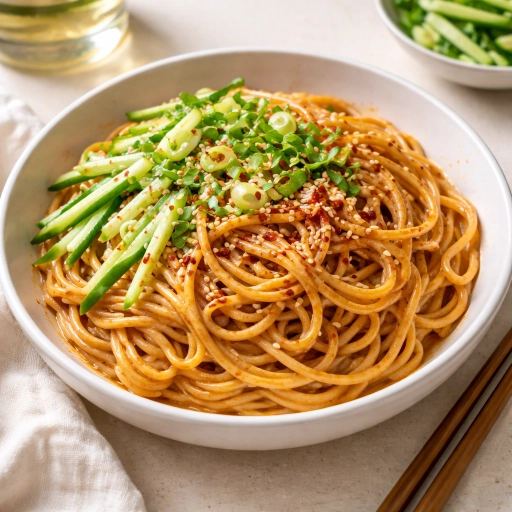
Liang Mian
Liang Mian is a fast, refreshing bowl of chilled noodles coated in a silky sesame sauce with soy, garlic, and chili oil. Crisp cucumber and fresh scallion lighten the rich dressing, giving you a dish that is cooling, savory, nutty, and gently fiery all at once.
Put a pot of water on to boil. While it heats, julienne the cucumber, thinly slice the scallion, and grate the garlic. Whisk the sesame paste with the chili oil, rice vinegar, maple syrup, and water until smooth and pourable, then stir in the garlic. Add the soy a little at a time and taste as you go, since it's a salty sauce and brands differ, so you may not want all of it. Cook the noodles until just tender following the package, then drain and rinse under cold water until fully cooled. Drain them thoroughly, add them to the sauce, and toss until every strand is coated, loosening with a teaspoon or two of water if it looks stodgy. Divide into two bowls and top with the cucumber, scallion, and toasted sesame seeds. Eat right away, while the noodles are cold and the cucumber is crisp.
Ways to change it up
The base recipe is vegan, and it takes additions well. For more protein, shredded poached chicken or pan-seared tofu both sit happily on top, though the chicken means turning on a second pan and the dish is no longer vegetarian. Blanched beansprouts or thin ribbons of carrot add crunch alongside the cucumber. If you like it nuttier, stir a spoon of smooth peanut butter into the sesame paste, but flag it clearly for anyone at the table, since that turns a sesame dish into a sesame-and-peanut one and peanut is a separate serious allergen.
For heat, chili oil with the sediment stirred in gives a deeper, more Sichuan-leaning flavor than the clear oil alone. Go easy the first time and add more at the end, because you can always spoon on extra but you can't take it back out. My one rule: keep the cucumber. The cool crunch against the rich sauce is what stops the bowl feeling heavy, and it's the first thing I miss when I skip it.
Allergens and keeping it
This dish contains gluten from the wheat noodles, soy from the soy sauce, and sesame from the paste and seeds. Sesame is worth calling out on its own: as of January 2023 it's recognized in the United States as the ninth major food allergen, so packaged foods have to declare it, but a bowl you make at home carries no label (FDA). If you're cooking for someone with a sesame allergy, this isn't the dish to adapt around. For a gluten allergy, rice noodles and a certified gluten-free tamari can stand in, and use a sesame paste labelled suitable too, since cross-contact happens. Check each product for the specific person rather than assuming, and read the labels yourself every time.
These noodles are best the moment you make them, when the strands are cold and springy. If you make them ahead, refrigerate within two hours of cooking, or within an hour if your kitchen is above 32°C, keep them below 4°C, and eat them within a day, since the sauce tightens and the texture softens over time. Toss chilled noodles with a splash of cold water to bring back the gloss before serving. Wash the cucumber and scallion well, because raw produce isn't sterile, and use clean equipment. Cooling the dish quickly and keeping it cold matter more than anything else here.
If you're building a run of no-sweat summer meals, this slots in next to other quick summer dinners and the wider case for cooking when it's too hot to face the stove. And the note about finishing with sesame oil off the heat is the same logic behind which cooking oil to use for what.
Want the full recipe with amounts, timings, and the option to scale it for a crowd? Open Liang Mian in Gourmate and save it to your week.