
How to Eat the Rainbow: Cooking by Color
Eat the rainbow by cooking across color groups so each meal spans more plant pigments. Here's how to build colorful plates, plus three recipes.
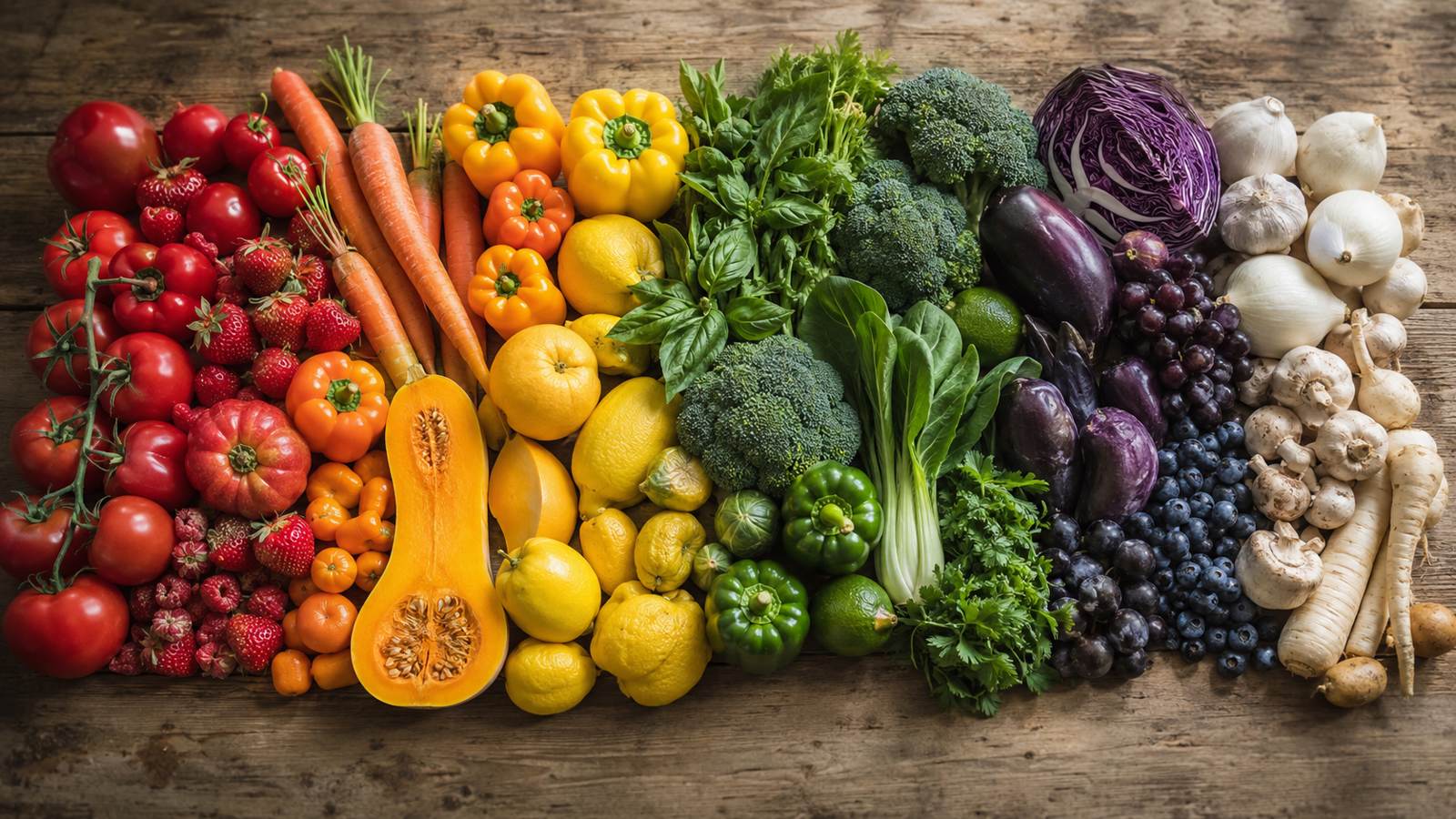
Look at what you cooked last week and there's a good chance it was mostly one color. Beige pasta, brown meat, green salad if you were being good. That is common, and separately, the CDC reports that only about 1 in 10 US adults eat the recommended amount of vegetables. The usual advice, "eat more vegetables," is vague enough to ignore. Trying to eat the rainbow is more concrete: get a few different colors of plant food onto the plate, and use color as a quick cue for buying and cooking a wider range of produce.
What eat the rainbow actually means
Plant pigments do several jobs, from photosynthesis to protecting the plant from strong sun. Many of those pigments are themselves phytonutrients, the plant compounds nutrition research keeps looking at. Because different pigments show up as different colors, a plate with three or four colors usually spans a wider set of those compounds than a plate of one. As the dietitians at MD Anderson frame it, the color is a signal: red, orange, green, blue, and white each point to a different group of plant compounds.
Color is a shopping cue, not a full measure of how nutritious a food is. White cauliflower carries plenty of vitamin C, and two green vegetables can differ a lot. What color does well is nudge you toward variety, which is harder to track directly. You don't have to memorize which pigment does what. You just notice when the plate is all one shade and add something that isn't.
What each color brings
Here's the rough map. Treat it as a shopping cue, not a chemistry exam.
- Red: tomatoes, red peppers, strawberries, watermelon. The red often comes from lycopene or anthocyanins.
- Orange and yellow: carrots, squash, sweet potato, citrus. These carry carotenoids, some of which the body converts to vitamin A.
- Green: spinach, broccoli, peas, herbs. Green means chlorophyll, usually alongside folate and lutein.
- Blue and purple: blueberries, red cabbage, eggplant. The color here is mostly anthocyanins. Beets are the odd one out: their deep red comes from a different pigment group called betalains.
- White and brown: garlic, onions, mushrooms, cauliflower. These don't share one pigment, but onions and garlic carry their own sulfur compounds, and mushrooms bring their own set.
Researchers who reviewed the studies on these pigments found the picture still developing: different pigments have been linked to different effects, and the strength of the evidence varies by pigment (umbrella review, 2022). So treat "eat the rainbow" as a sensible habit that leans on solid general advice to eat more plants, not as a claim that any single color does something specific for you.
Why variety helps more than any single superfood
No one food covers everything, so the useful move is range rather than a hero ingredient. Diet diversity has been linked to gut health in particular: an analysis from the American Gut Project found that people who reported eating more than 30 different plant types a week had more diverse gut bacteria than those eating 10 or fewer, as summarized by the World Cancer Research Fund. It's an association rather than proof, and what seems to matter is the spread of minimally processed plant foods, not variety for its own sake. Thirty still sounds like a lot until you count the small stuff: herbs, spices, nuts, seeds, beans, and whole grains all count, not just vegetables.
Color is a shortcut to that spread. Counting 30 plants is hard to keep up. Getting four colors on tonight's plate is something you can see, and over a week the tally climbs on its own.
How to build a colorful plate without overthinking it
Start at the store, not the stove. If your basket is green and beige, add one red thing and one purple thing before you check out. You can't cook color you didn't buy, so this is where most of the difference is made.
At home, lean on dishes that already hold several ingredients: a stir-fry, a grain bowl, a tray of roasted vegetables, a salad. Each takes whatever colors are in the fridge. Roast a mixed tray and you cover three or four colors in one pan, which fits neatly into building a healthy weekly menu rather than deciding fresh every night.
Color is a habit for everyday eating, not a treatment. It won't offset a diet that's mostly ultra-processed, and it won't address a specific medical need. If you're managing a condition, a restriction, or a child's limited diet, a doctor or registered dietitian should guide that. For most people, more color simply means more plants, which is also one of the easiest routes to getting more fiber.
Three colorful recipes to start with
These three between them cover a lot of the spectrum: red and purple beets, orange carrots, green rocket and zucchini, plus beans and grains. Each opens to a full recipe you can cook from.
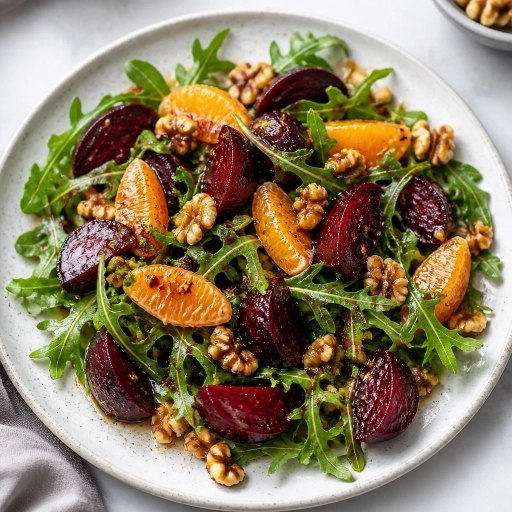
Roasted Beet and Walnut Salad
This salad combines sweet roasted beets, peppery rocket, juicy orange, and crunchy walnuts with a glossy balsamic vinaigrette. It is bright, earthy, and satisfying, with enough richness from the walnuts and olive oil to work as either a starter or a light main.
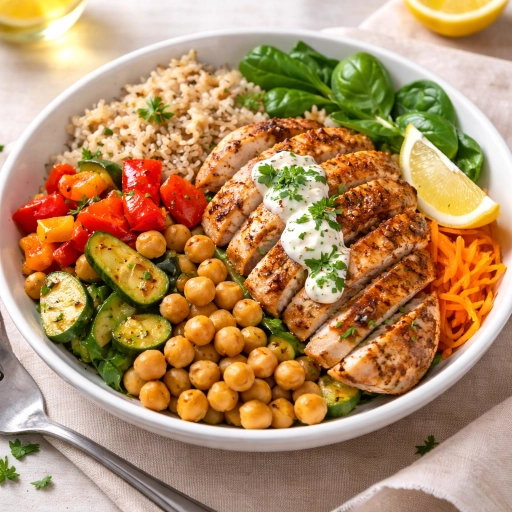
Colorful Chicken Rice Bowl
This colorful bowl provides protein-rich chicken, fiber-rich whole grain rice, and plenty of vegetables for steady energy before or after workouts. A fresh yogurt-lemon dressing adds Mediterranean flavor and keeps the dish light.
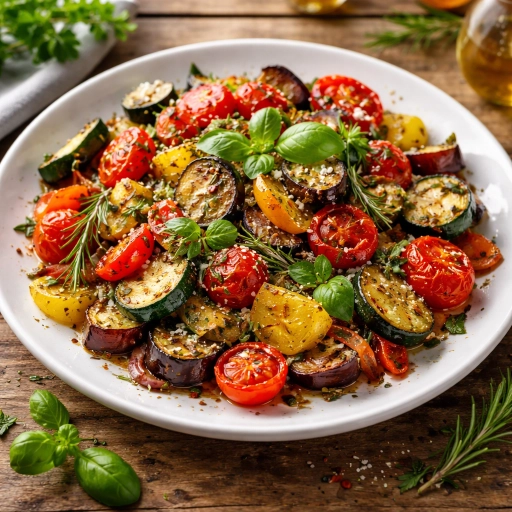
Roasted Vegetables with Herbs
Juicy roasted vegetables with aromatic herbs and a splash of lemon. A straightforward, dairy-free dish that works as a side or a light main course.
The Roasted Beet and Walnut Salad puts several colors on one plate: deep red beets, orange segments, peppery green rocket, and walnuts for crunch. Wear gloves peeling the beets unless you want pink hands. The Colorful Chicken Rice Bowl stacks carrots, red pepper, zucchini, and spinach over whole grain rice with a lemon-yogurt dressing, and Gourmate estimates it at around 9 g of fiber per serving, though that shifts with your exact ingredients and portion. The Roasted Vegetables with Herbs is the low-effort option: red pepper, tomato, eggplant, and red onion on a single tray, dairy-free, good hot as a main or cold the next day.
Where color stops being a useful guide
Color is a starting cue, not the whole story. It only helps when the colors come from real produce, beans, grains, nuts, and herbs rather than dyes or candy. Cooking changes some pigments too: tomatoes give up more usable lycopene once cooked, while long boiling can leach water-soluble compounds out of greens, so a mix of raw and lightly cooked makes sense. Whole foods also give you the fiber and the surrounding compounds together, which a single extracted supplement doesn't, though supplements have their place for diagnosed deficiencies your doctor is treating.
You don't need to get this exact. Buy a color you didn't plan to, cook it into something you'd eat anyway, and keep doing it. That is a simpler way to reach more variety than chasing whatever food is being called a superfood this month.
Gourmate builds your weekly plan and shopping list around real recipes, so getting a few more colors onto the plate is one less thing to think about. Try it here.