
Classic Summer Pudding, a No-Bake Berry Dessert
A classic summer pudding recipe: ripe berries and tart currants pressed into juice-soaked bread, chilled into a crimson dome. No oven, just a bowl and time.
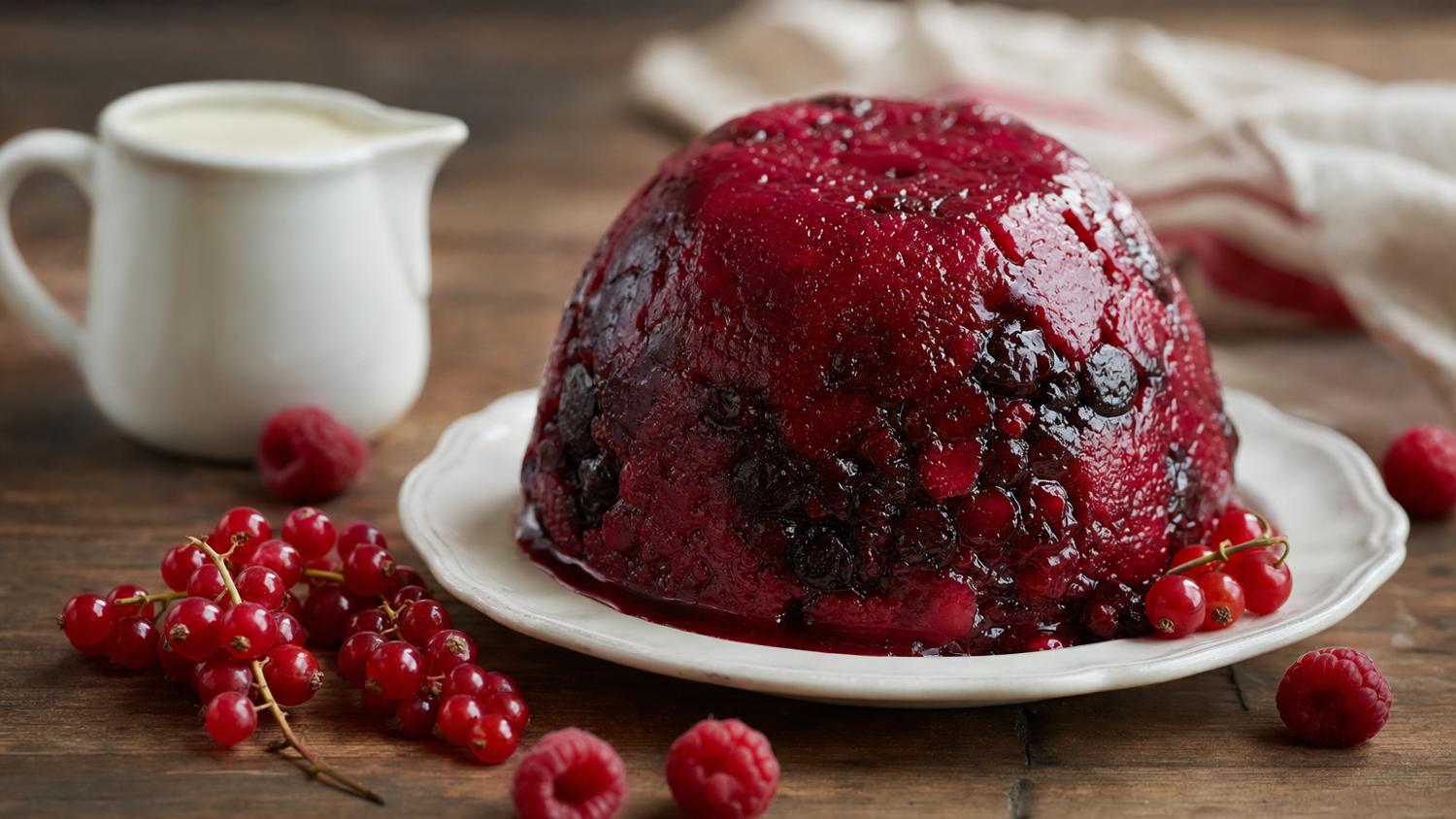
A summer pudding is proof that you can make something impressive without turning on the oven. You line a bowl with soft white bread, cook a pile of summer berries until they release their juice, then pack the fruit inside and chill it under a weight. The bread drinks in the juice and stains a deep crimson, and after a proper chill you can turn the whole thing out as a domed pudding. Most of the work is waiting.
It is an old dish. Recipes for what was called "hydropathic pudding" appear from the 1860s, a lighter option for health-spa guests who were kept off rich pastry, and the name summer pudding shows up in print by the early 1900s (Wikipedia). It is still one of the best ways to use a glut of ripe fruit.
How it sets without baking
There is no flour or gelatin here. The pudding holds its shape because the bread lining, once it has soaked up the syrup and been pressed and chilled, firms into a shell around the fruit. The brief cook matters too. Three to four minutes at a simmer is enough for the currants to soften and give up their juice, without cooking the fruit down to jam. Pressing forces out the air pockets and packs the fruit against the bread. The longer you chill it under a weight, the more cleanly it turns out.
The berries worth using
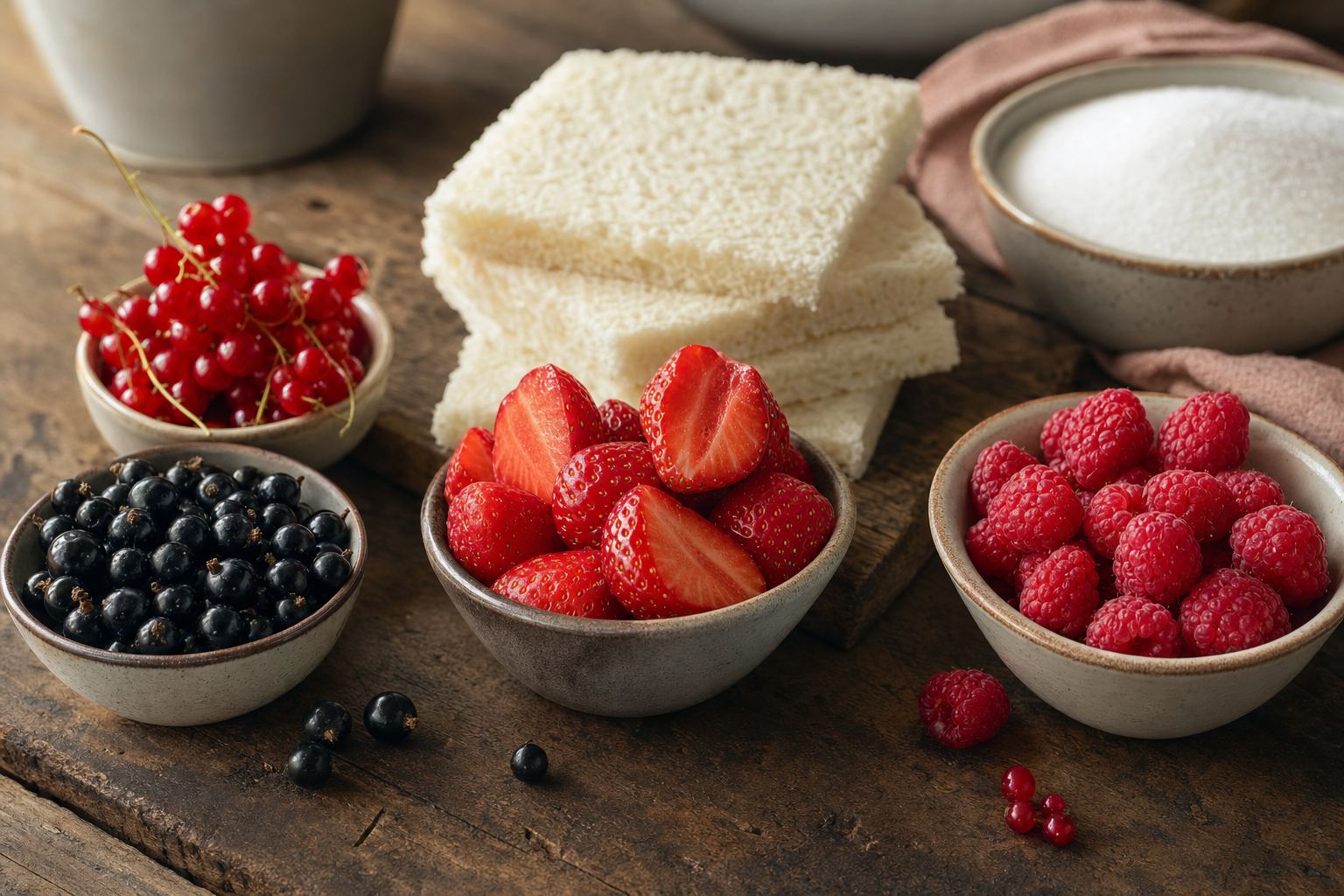
Currants give a summer pudding its character, and midsummer is when they show up. In the UK, redcurrants start ripening in June and blackcurrants run from about mid-July into August (The Blackcurrant Foundation). Their tartness balances the sweeter strawberries and raspberries and deepens the color. Leave the currants out and the result tastes sweeter and, to me, a little flat.
Use fruit that is ripe but still firm, not the soft berries at the bottom of the punnet. Out of season, frozen mixed berries work well since you cook them briefly anyway. If you use frozen fruit, hold back the added water at first and let the berries release their own juice before you decide whether you need it. Taste the syrup before you assemble: it should be a touch sweeter than you want the finished pudding, because the bread tones it down.
How to make summer pudding
This version makes two generous single puddings and comes together in about 30 minutes, plus chilling. In the recipe the numbers work out to roughly 376 calories a serving, though that shifts with your bread and how much cream you pour. Here is the shopping list:
- 150 g strawberries, 100 g raspberries, 75 g redcurrants, 75 g blackcurrants
- 60 g caster sugar and 30 ml water for the syrup
- 5 slices soft white sandwich bread, crusts removed
- 60 ml pouring or lightly whipped cream, to serve
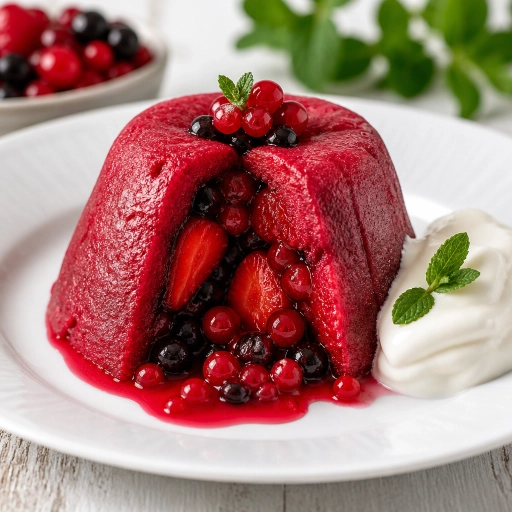
Summer Pudding
Summer Pudding is a jewel-bright British dessert made by lining a bowl with soft white bread and filling it with gently cooked summer berries. As it rests, the bread drinks in the sharp-sweet juices, turning beautifully crimson and creating a soft, fragrant pudding that is especially good with cream.
Line two basins, ramekins, or teacups (around 250 to 300 ml each) with cling film, leaving an overhang. Cut a disc of bread for each base and strips for the sides. Simmer the berries, currants, sugar, and water for three to four minutes until the juice runs red, then lift the fruit out with a slotted spoon and keep the syrup in the pan, setting aside two to three tablespoons of it for later. Dip each piece of bread in the warm syrup so it stains through but does not fall apart, then line the bases and sides, overlapping the strips so no pale gaps show. Pack the fruit in, spoon over a little syrup, and cap with more dipped bread. Fold the cling film over and weight each one. To turn a pudding out, remove the weight, unfold the film, set a plate over the top, invert, lift off the mould, and peel away the film.
Getting the set right
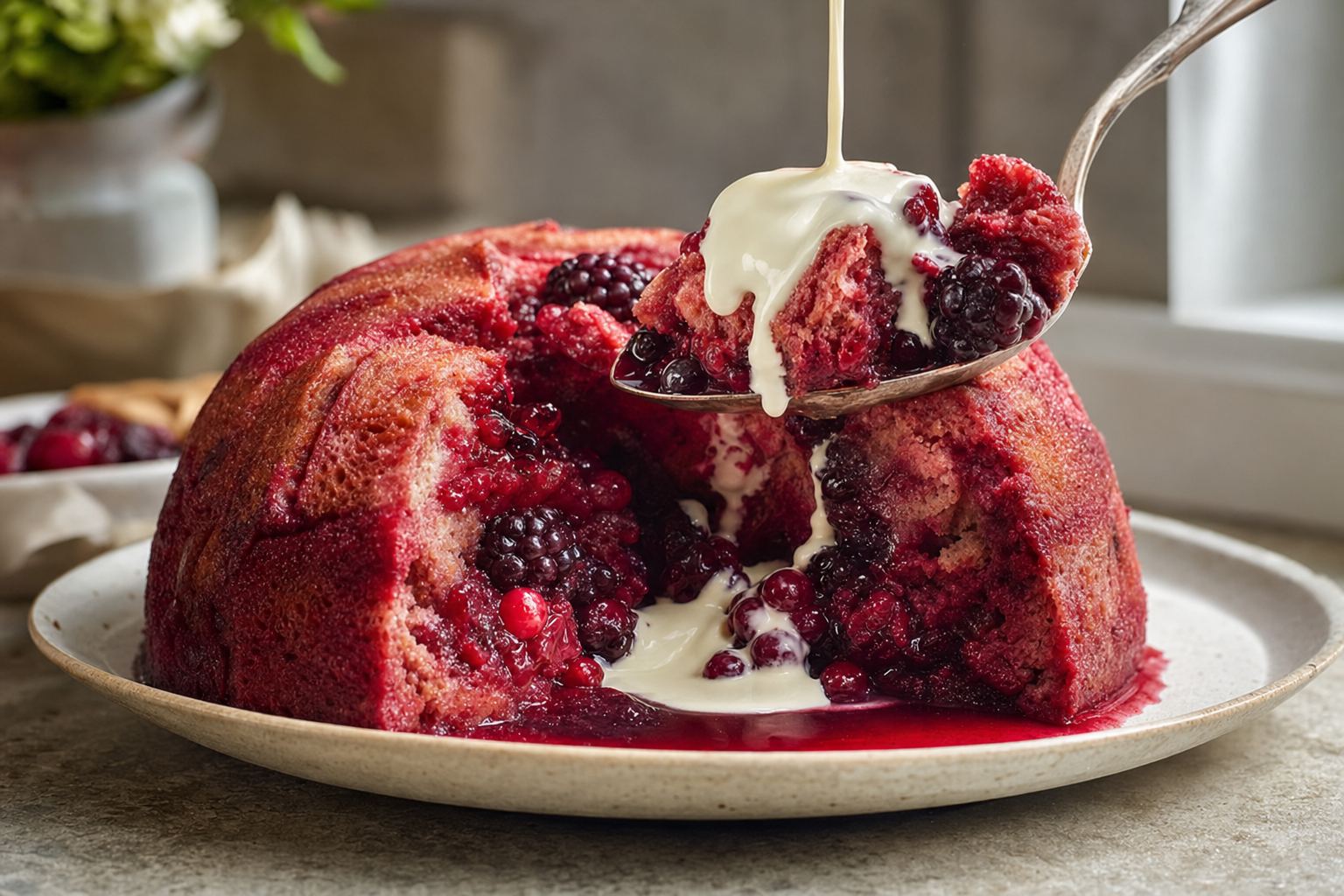
The chill is what decides the texture. Ten minutes under a weight gives you a soft pudding you eat straight from the dish with a spoon, and it will not hold a clean shape if you tip it out. For the domed, sliceable version most people picture, chill it under the weight for several hours, or ideally overnight, so the bread sets fully against the fruit. If you want to turn one out for guests, plan a day ahead.
When you unmould, check for any patches where the bread stayed pale and brush them with the syrup you set aside. It covers the gaps and gives the surface a glossy finish.
Serving, allergens, and keeping it
Cold cream, poured or lightly whipped, is the traditional partner and a good foil for the sharp fruit. This is a dessert, so enjoy it as a treat, and if you are watching sugar for medical reasons, a dietitian is the right person to ask.
A summer pudding contains gluten from the bread and dairy from the cream. For a milk allergy, leave the cream off or serve a dairy-free alternative. For a wheat or gluten allergy, do not assume any loaf is safe: use bread confirmed suitable for that person's allergy, and bear in mind that gluten-free bread soaks up syrup and holds together differently, so the pudding may come out softer. Wash the berries, keep the finished pudding in the fridge, and eat it within a day or two while the bread is at its best. There is no raw egg or meat here, so the main things to get right are clean fruit, clean equipment, and prompt chilling.
If a whole domed pudding feels like more than a weeknight needs, it slots easily into a warm-weather spread. Serve it after a cold bowl of gazpacho, or as the make-ahead finish to a summer grilling menu when the grilled peaches feel like one dish too many.
Want the full recipe, a shopping list, and the option to scale it up for a crowd? Open Summer Pudding in Gourmate and save it to your week.