
Classic Gazpacho Recipe, and Two Summer Riffs
A classic Spanish gazpacho recipe: ripe tomatoes, cucumber, pepper and sherry vinegar blended cold, plus melon and beetroot riffs for hot days.
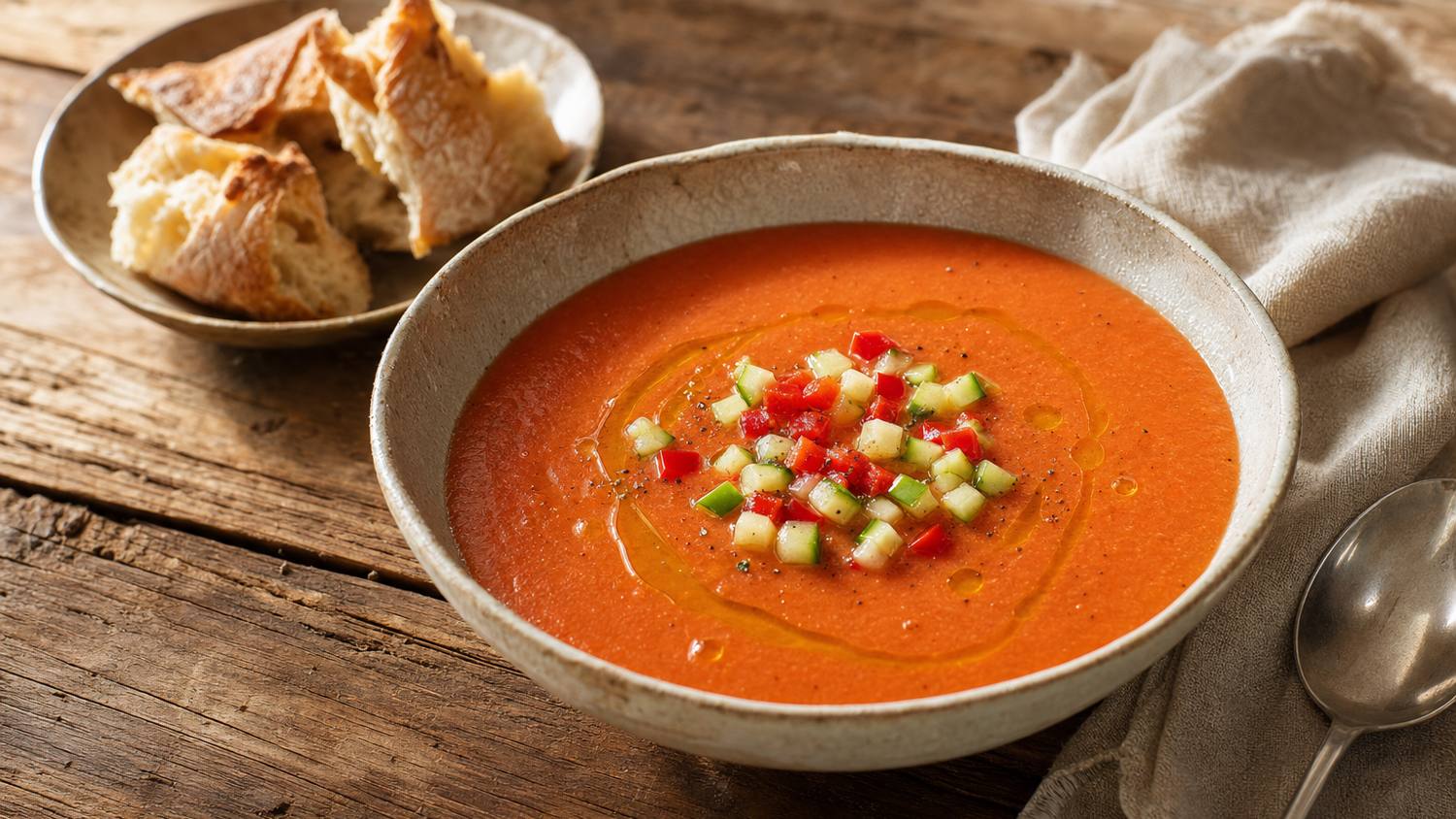
There's one dinner that gets better the hotter it is outside, and you make it without turning on a single burner. Gazpacho is a cold tomato soup you blend and eat straight from the fridge. On a July evening when the kitchen is already too warm, this classic gazpacho recipe asks for ten minutes of chopping, one minute in the blender, and nothing else. It serves two as a light meal and takes about fifteen minutes start to finish.
It rests on two things: ripe tomatoes and a good pour of olive oil.
What gazpacho actually is
Gazpacho started long before the tomato did. The dish traces back to Andalusia in southern Spain, where field workers made a simple soup from stale bread soaked in water with olive oil, vinegar, garlic and salt, then whatever fresh vegetables the season offered. The bright red version most people picture only appeared after tomatoes and peppers arrived from the Americas and worked their way into Spanish kitchens, becoming the summer staple it is today (Andalucia.com).
That history explains the two things that still hold the soup together: bread for body, and the balance of oil against vinegar. Skip the bread and you get tomato juice. Keep it, and you get something silky enough to feel like a real dish.
The classic gazpacho recipe
Gazpacho
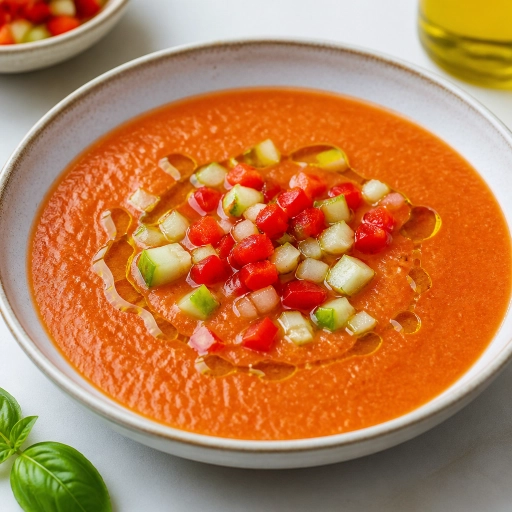
Gazpacho is a cold, silky tomato soup that tastes intensely fresh, bright, and summery. Sweet ripe tomatoes, cucumber, pepper, garlic, sherry vinegar, and olive oil blend into a refreshing dish that is simple to make yet deeply satisfying.
Serves two. About ten minutes of prep, no cooking, and a short chill if you have time.
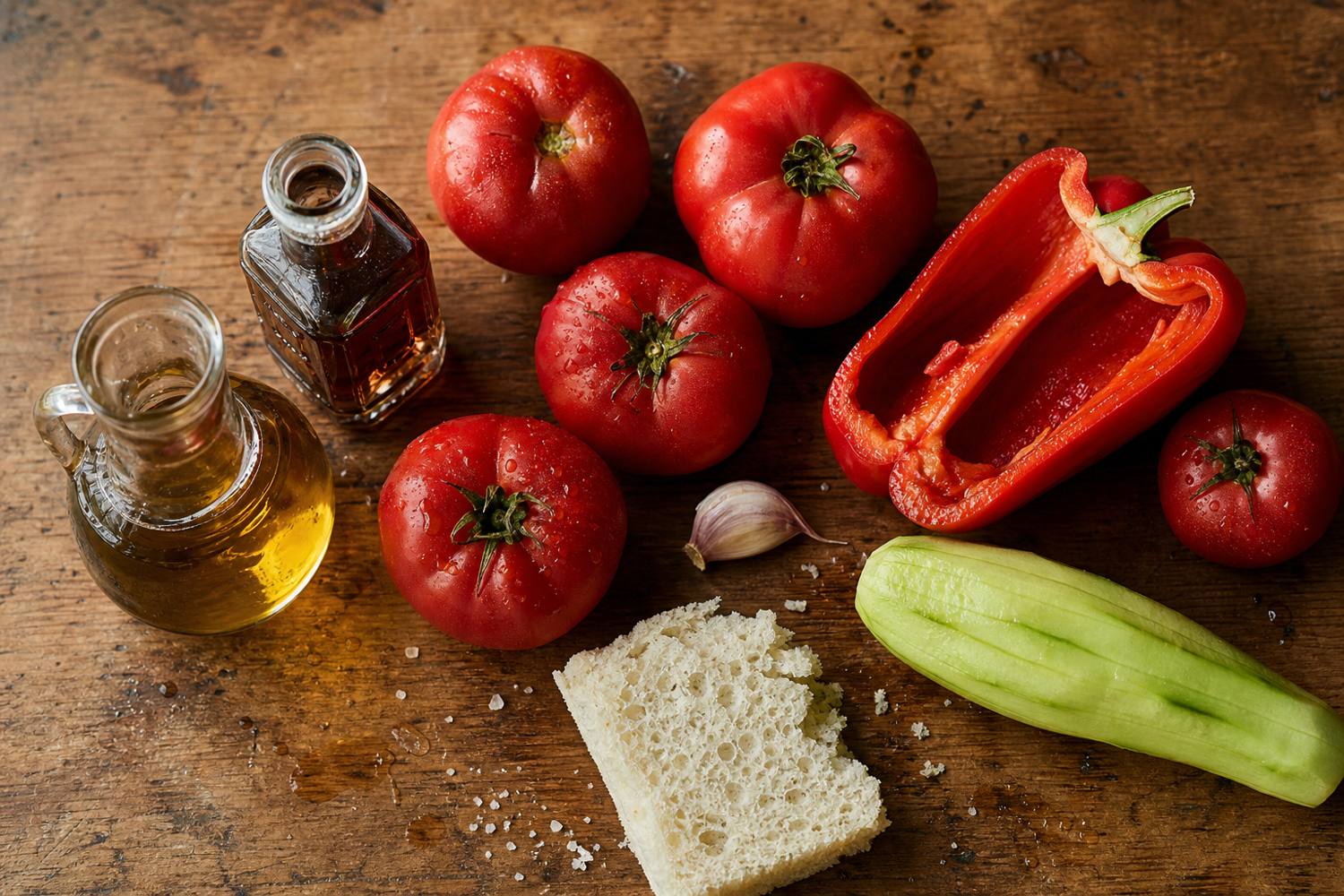
You need 500 g of ripe tomatoes, 150 g cucumber (peeled), 100 g red bell pepper (seeded), one small garlic clove, 30 g of stale white bread with the crust off, 120 ml cold water, 20 ml sherry vinegar, 30 ml extra-virgin olive oil, and about 4 g of fine salt with a pinch of black pepper. For the top, keep back 40 g of cucumber and 30 g of red pepper cut into a fine dice, plus a little more oil to drizzle.
Start by roughly chopping the tomatoes, cucumber, pepper and garlic. Soak the bread in the cold water for a minute so it goes completely soft, which is what gives the finished soup its traditional body. Tip everything into a blender, soaked bread and its water included, and run it on high for one to two minutes until it's completely smooth. Taste it: it should be bright, savory and just tangy, so adjust with a little more salt or a few drops of vinegar. For a silkier result, push it through a fine sieve with the back of a ladle, which is optional but very traditional. Serve it cold in chilled bowls, topped with the diced cucumber and pepper and a thread of olive oil.
A serving comes to around 234 calories with roughly 4 grams of protein and 4 grams of fiber, per the recipe. It's light on its own, so serve it with bread and a few olives, or add a hard-boiled egg on the side if you want it to hold you longer.
Why ripe tomatoes decide everything
Nothing here cooks, so the tomato has nowhere to hide. A pale winter tomato makes a pale, flat soup, which is why this is a dish for the weeks when tomatoes are cheap, heavy and actually fragrant. If yours taste a little dull, a pinch more salt and a few extra drops of sherry vinegar pull them forward.
The olive oil matters almost as much, and it does a second job beyond flavor. As the blender runs, it breaks the oil into tiny droplets suspended through the soup, which is what turns a thin puree into that velvety, faintly creamy texture without any dairy. That's why you blend for a full minute or two rather than just pulsing. A longer blend also aerates the soup slightly, lightening the color toward the classic coral rather than deep red.
One honest trade-off: peeling the cucumber gives you a smoother, milder soup, but you lose a little fiber and that fresh green edge. If your blender is powerful, leave the skin on and accept a flecked, slightly greener result. I go back and forth depending on the cucumber.
Two summer riffs: melon and beetroot
Once you've got the method, the base swaps out easily, and both of these keep the cold-soup format while going somewhere new.
Gazpacho de Melon
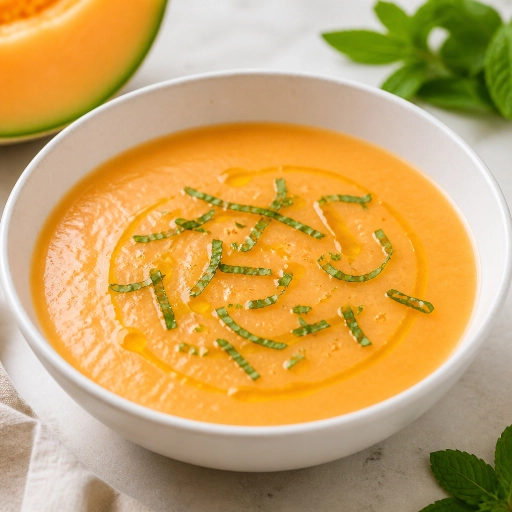
This Gazpacho de Melon is a cool, silky Spanish-style soup that blends sweet ripe cantaloupe with crisp cucumber, mint, and sherry vinegar. It is light, fragrant, and deeply refreshing, with fruity freshness balanced by olive oil richness and a clean acidic lift.
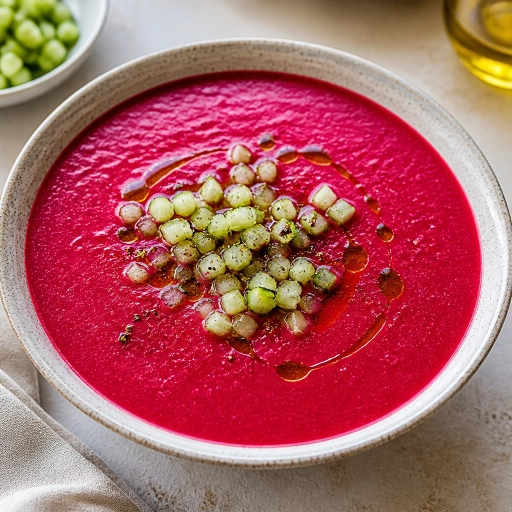
Gazpacho de Remolacha
This gazpacho de remolacha is smooth, bright, and cooling, with the sweetness of beetroot balanced by ripe tomato, cucumber, and a sharp touch of sherry vinegar. It is light yet satisfying, with a striking ruby color and a clean, fresh finish.
The melon gazpacho is the sweet one. It blends ripe cantaloupe with cucumber, fresh mint, a little sherry vinegar and olive oil, with ice to keep it cold, and its recipe comes in around 197 calories a serving. It uses no bread, so it's free of gluten. Use a fragrant, properly ripe melon or the whole thing tastes watery. Open its card for the full method and quantities.
The beetroot gazpacho is earthy and deep ruby, built on cooked beetroot with tomato, cucumber and pepper behind it. Reach for plain, unseasoned cooked beetroot rather than the pickled kind, since vacuum-packed beetroot is sometimes packed in vinegar. It uses far less oil and its recipe lands around 109 calories a serving, the lightest of the three. Both riffs are vegan, like the original, and each links to its full recipe in the cards above.
If you're building a run of meals for a heatwave rather than a single bowl, our guide to hot-weather meal planning covers how to keep a whole week feasible when nobody wants to stand over the stove. And for a summer main that still leans on peak tomatoes and a hot oven, the summer vegetable galette sits at the other end of the same season.
Keeping a raw, cold soup safe
Gazpacho is entirely raw, so the usual raw-produce basics matter more than they would in a cooked dish. Tomatoes, cucumbers and peppers aren't sterile, so wash them well, use clean equipment and a clean board, and don't let sloppy handling ride along into the blender, since chilling won't undo contamination that's already there. Once it's made, treat it like any perishable food and keep it cold. The USDA's guidance is to hold perishable food at 40°F (4°C) or below and to not leave it out longer than two hours, dropping to one hour once it's above 90°F (32°C), which is easy to hit at an outdoor lunch in July (USDA FSIS). Keep the jug in the fridge between servings rather than on the counter, and use it within about two to three days. A rest of at least half an hour in the fridge also sharpens the flavor, so it's worth making ahead.
On allergens, the classic contains gluten from the bread and sulfites from the sherry vinegar. The tomato and pepper in the classic and beetroot versions are nightshades, which some people are sensitive to, though that's a sensitivity rather than a common allergen, and the melon riff has neither. For a gluten-free classic, leave out the bread and cut the water back a little, or use a small piece of gluten-free bread, and expect a slightly thinner body. The melon riff skips bread already. These swaps are fine for a preference, but for a diagnosed allergy read the label on every bottle and packet yourself, since vinegars and breads vary, and don't lean on a single substitution to make a dish safe.
Serve it in small glasses as a starter, or in bowls with bread and olives for a light lunch. Either way it's worth making a double batch, since it keeps for a couple of days and only gets better in the fridge.
Want more recipes built around what's ripe and what you feel like eating? Gourmate generates cookable recipes across more than 30 cuisines, sized for your table. Download Gourmate.