
A Tuscan Dinner Menu You Can Cook Ahead
A three course Tuscan dinner menu from three new recipes: sage and garlic beans, a peppery Chianti beef braise, and a lemon pastry cream tart.
Three courses sounds like a lot of work until you look at when the work actually happens. In this Tuscan dinner menu, the beef braise and the tart are both made the day before, which leaves one pan of beans and about half an hour of cooking on the night. Three new recipes, all Tuscan, all written for a home kitchen.
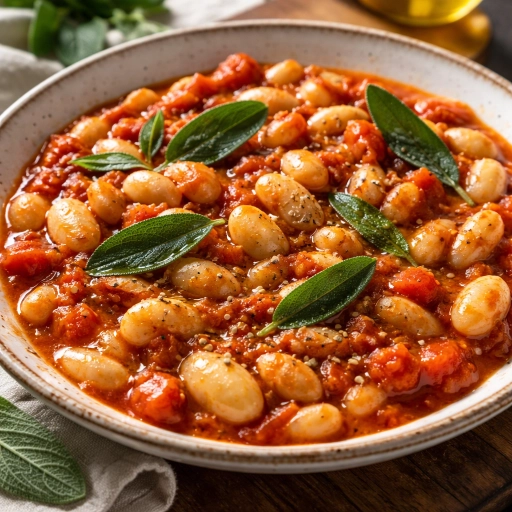
Fagioli all'Uccelletto
Creamy but whole cannellini beans stewed in fragrant olive oil with whole garlic and plenty of fresh sage, brightened by a little tomato. Serve warm or at room temperature with crusty bread for a simple, classic Tuscan bite.
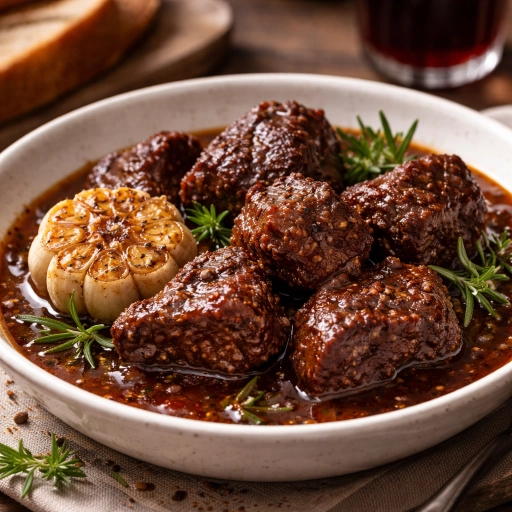
Peposo dell'Impruneta
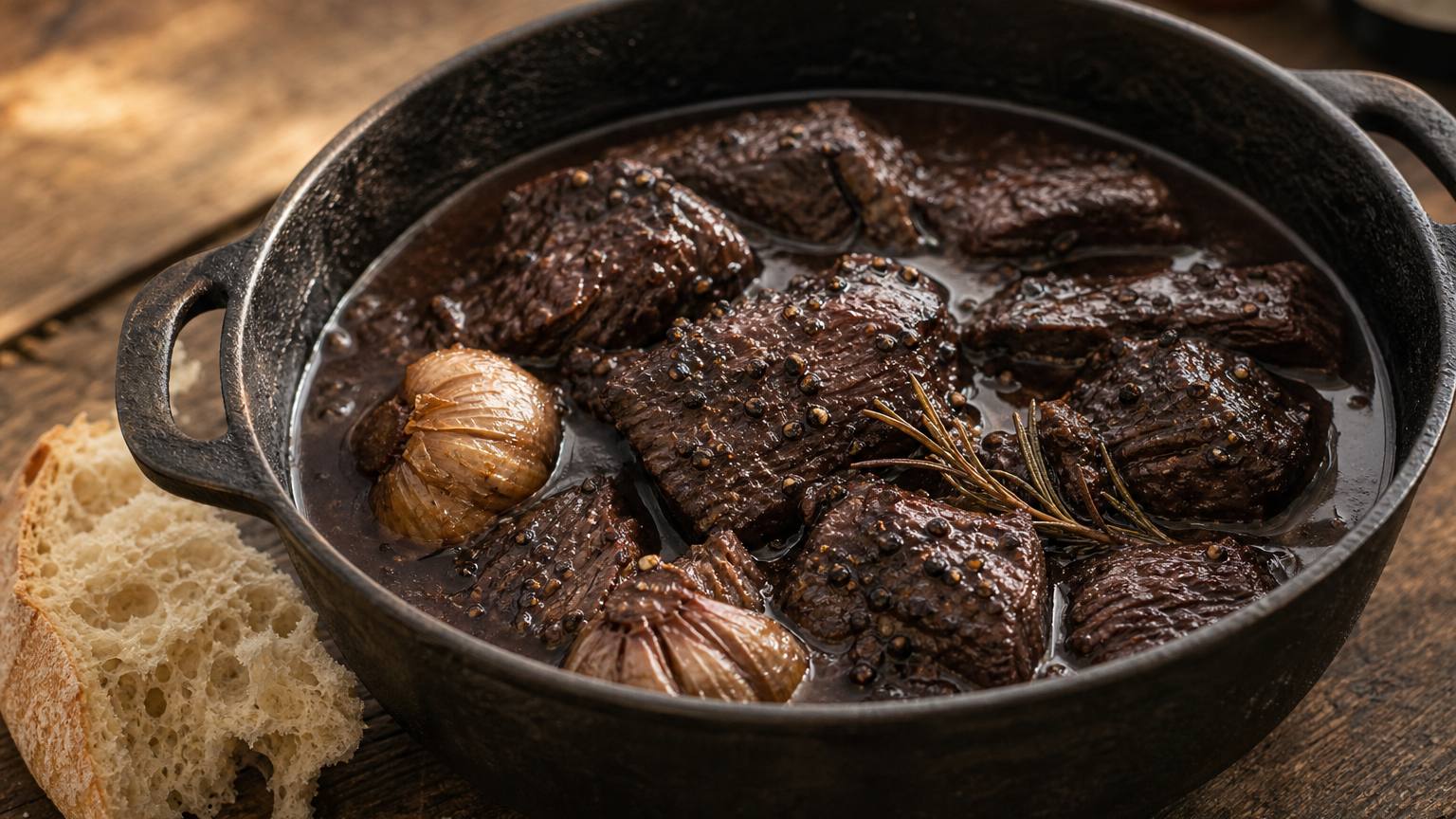
A rustic Tuscan braise of large beef chunks slowly cooked in red wine with whole garlic, rosemary and a very generous coarsely cracked black pepper. The long, low cook yields spoon-tender meat and a dark, concentrated, peppery sauce, perfect with plain bread or soft polenta.
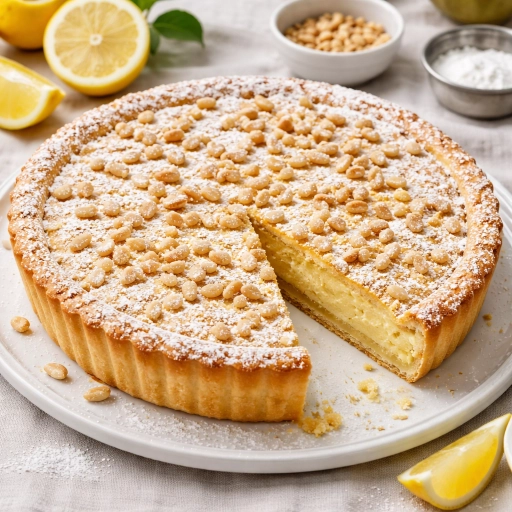
Torta della Nonna
A crisp sweet shortcrust shell filled with silky lemon-scented pastry cream, covered with a second pastry layer, toasted pine nuts and a veil of icing sugar. Make-ahead friendly and ideal chilled.
Start with beans, not a cheese board
Fagioli all'Uccelletto is the antipasto. Cannellini beans, four whole garlic cloves, ten or twelve sage leaves, three tablespoons of olive oil and about 120 g of passata, cooked together in a wide pan. It serves four and runs about 30 minutes, ten of them prep, at roughly 265 calories a serving on Gourmate's per-serving estimate.
The order matters more than the ingredient list. Garlic and sage go into the oil first, over medium-low heat, for two or three minutes until the garlic is pale gold and the sage crisps a little. Skip that and you get warm beans in tomato instead of a Tuscan dish. Burn the garlic and the whole pan tastes bitter.
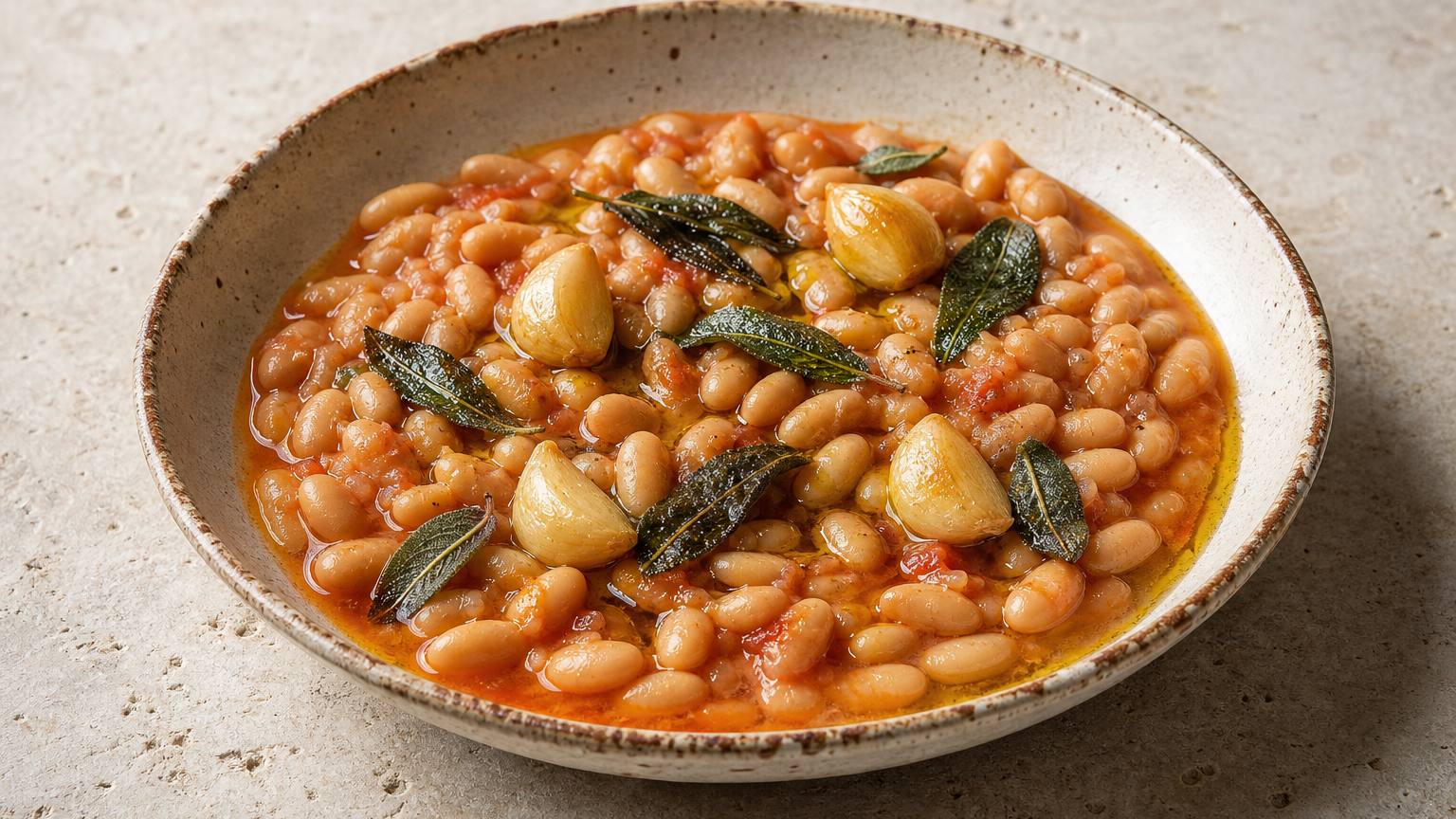
Rather than stirring, which breaks the beans, press two or three against the side of the pan with a spoon. Their starch thickens the sauce and the rest stay whole. It's served warm or at room temperature, so it can sit while you deal with the table.
The recipe is written around tinned beans, with a dried-bean version in the notes (250 g dried, soaked overnight, drained, then simmered in fresh water for 45 to 75 minutes). Either way it's vegan, and Gourmate flags no allergens in it.
Peposo: no browning, no soffritto, three hours
The main course is Peposo dell'Impruneta, and it asks less of you than the beans do, despite taking three and a half hours. No browning step, no soffritto, no stock. Put 1.2 kg of beef shin or chuck, cut into 4 to 5 cm chunks, in a heavy lidded pot with two whole heads of garlic, trimmed across the top and left in their skins, and three rosemary sprigs. Add three heaped tablespoons of coarsely cracked black pepper, roughly 30 g, which is the point of the dish. Pour over about 800 ml of Chianti or another dry Tuscan red, enough to nearly cover the meat. Lid on, 160°C conventional or 140°C fan, three hours.
The dish comes from Impruneta, the terracotta town outside Florence, where kiln workers cooked cheap beef in wine at the mouth of furnaces already running day and night to fire bricks and tiles (Juls' Kitchen). The pepper is usually explained as cover for meat past its best.
Check it at two and a half hours rather than assuming three. The meat should break with the edge of a spoon while still holding together in chunks. If it's tender but the sauce is thin, lift the meat out and keep it covered while you reduce the liquid on the hob, then return it.
Then cool it fast. A full pot of hot braise cools slowly enough to sit for hours in the range where bacteria multiply, so divide it between shallow containers and refrigerate within two hours rather than leaving the pot out overnight. Reheat until it's steaming hot right through, not warm at the edges. The sauce thickens overnight and the pepper loses its raw edge.
The listed 1,170 calories a serving includes the 100 g of bread or soft polenta the recipe serves the beef on, not just the meat and sauce.
The wine does not fully cook off
This dish is cooked with 800 ml of wine, and the alcohol doesn't disappear. USDA retention figures put a simmered or baked dish at roughly 25 percent of its original alcohol after an hour and around 5 percent after two and a half hours (Idaho State University). Peposo braises under a lid, which traps evaporating alcohol and pushes retention above what those open-cooking numbers suggest. Either way it isn't zero.
That matters for anyone avoiding alcohol entirely, for someone in recovery, and for a pregnant guest, which is why Gourmate marks this recipe as cooked with alcohol. Say what's in it rather than assuming it cooked away. Our guide to what makes a recipe pregnancy-safe covers how those judgements get made.
Torta della Nonna has to wait
Torta della Nonna is a sweet shortcrust shell filled with lemon pastry cream, covered with a second pastry layer, scattered with pine nuts and dusted with icing sugar. It serves six at around 560 calories a slice.
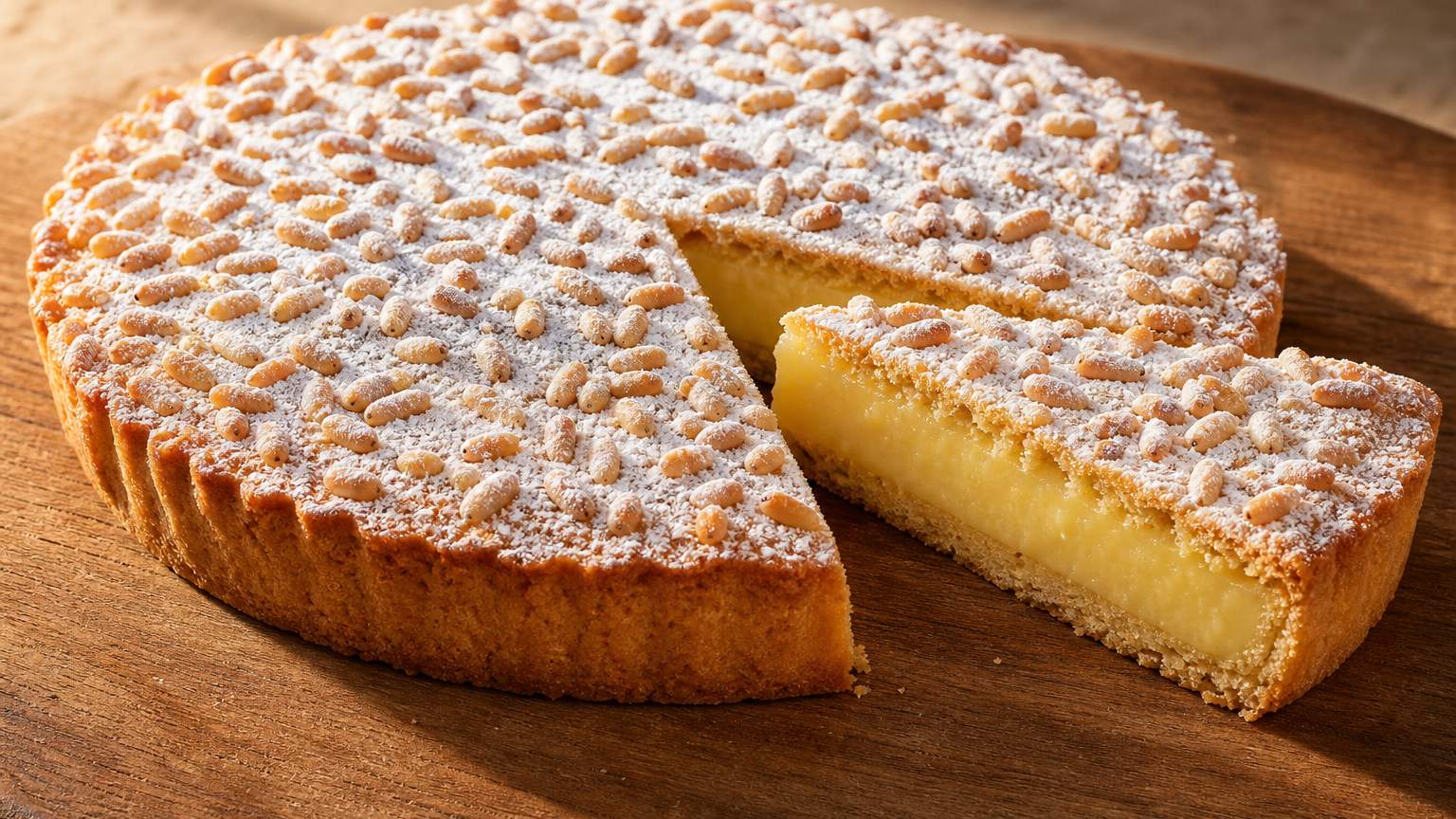
The custard decides everything. It has to reach 82 to 85°C on an instant-read thermometer, stirred constantly, and bubble briefly so the cornflour and yolks cook through. Below that it stays loose and the slices slump. Strain it, press cling film onto the surface, then chill it two hours before it goes near the pastry.
The shell gets a two-stage blind bake, weights in for 15 minutes and out for another 8 to 10, until it's pale gold and dry to the touch. A damp shell will not survive half a litre of pastry cream. Then the chilled cream goes in, the reserved third of the dough goes over the top, the pine nuts go on, and the whole thing gets a short final bake, 10 to 12 minutes at 170°C, enough to set the lid and toast the nuts without cooking the custard twice.
After that it waits, and the listed two hours doesn't cover the waiting: at least another two hours in the fridge, ideally overnight, before you cut it. This is a fresh dairy and egg custard, so refrigeration is a food safety requirement rather than a texture preference, and leftovers go back in the fridge.
Timing a Tuscan dinner across two days
Day one: chill the pastry cream and the dough, then bake, assemble and refrigerate the tart overnight. Put the peposo in the oven whenever suits, cool it in shallow containers, refrigerate. Day two: reheat the beef until it's hot right through, make the beans in the half hour before people sit down, dust the tart just before you cut it.
One thing to watch. The beans and the peposo each serve four while the tart serves six, so feeding six means scaling the first two courses up. Neither dish resents that, but a wider pot reduces liquid faster and seasoning doesn't multiply neatly, so taste again at the end. Our guide to scaling a recipe properly covers where the maths breaks.
For bread, Tuscan loaves are traditionally made without salt, for reasons still argued over: salt taxes, salt shortages, both get offered (Great Italian Chefs). The local food is built around it, and a plain loaf does sit more quietly beside salty, peppery, oily dishes. With a salted loaf, pull back on the salt in the beans, for reasons our piece on how and when to salt food gets into.
Allergens and substitutions
The beans carry no flagged allergens and are vegan as written. The peposo's gluten flag comes from the bread served alongside, not the braise, so polenta takes gluten out of the dish itself. That isn't the same as coeliac-safe: cornmeal is often milled alongside wheat, so a diagnosed diner needs a certified packet and a clean pan.
The tart carries gluten, dairy, egg and tree nuts. The nut flag is the pine nuts, botanically seeds but treated as tree nuts under US allergen labelling. Swapping in almonds or hazelnuts changes which nut is present without removing the problem, so for a nut allergy leave the topping off entirely. The custard can't lose the dairy and egg without becoming a different dessert.
If you're cooking for a diagnosed allergy, read the packets yourself, including the icing sugar, which sometimes carries added starch. Brands vary and shared equipment matters, so a substitution list is a starting point rather than a guarantee.
The thing I like about this menu is that the most impressive dish is also the laziest. Peposo asks you to buy the right cut, crack a lot of pepper, then leave the kitchen, which is not the usual trade.
Gourmate can scale any of these three recipes to your table, translate them, and flag the allergens and alcohol before you cook.