
A Turkish Dinner Menu, Soup to Rice Pudding
A four course Turkish dinner menu for the home kitchen: red lentil soup, spiced köfte with sumac onions, a herby bulgur salad and baked rice pudding.
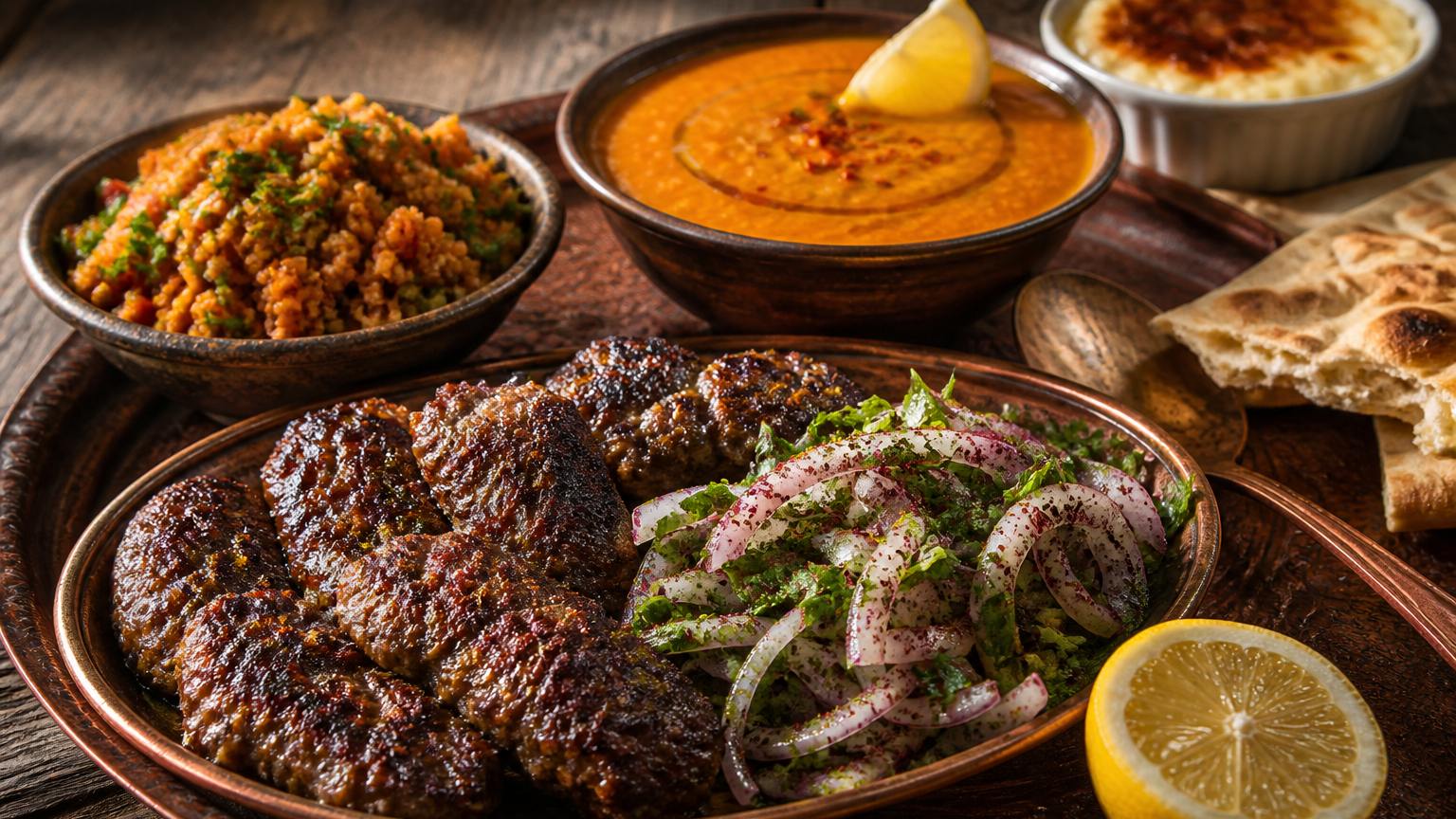
Dinner in a Turkish home rarely arrives as one plate. This Turkish dinner menu follows that rhythm across four courses: a velvety red lentil soup to start, spiced köfte with a sharp sumac onion salad, a herby bulgur salad alongside, and a baked rice pudding to finish. Three of the four are quick, and only the köfte really wants your attention at the stove.
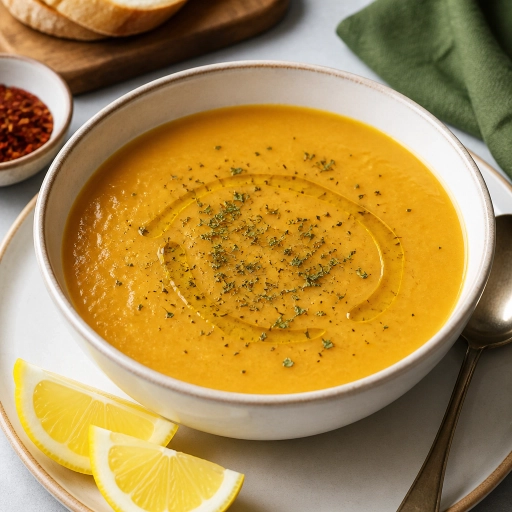
Mercimek Çorbası
This classic lentil soup is smooth, velvety, and deeply comforting, with the natural sweetness of onion and carrot balancing earthy red lentils. Cumin adds warmth, dried mint brings a fragrant lift, and a squeeze of lemon makes the whole bowl taste bright and lively.
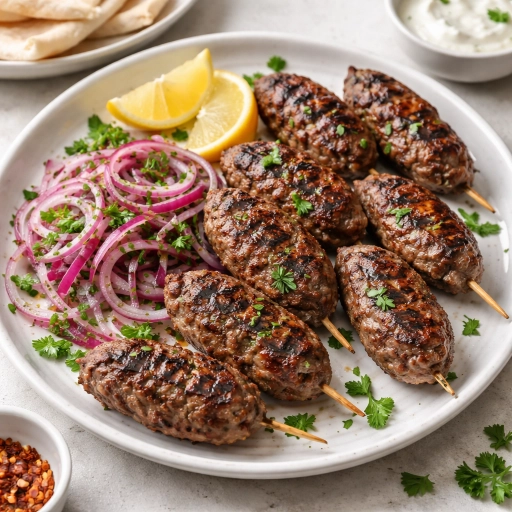
Kofte
These kofte are juicy, lightly smoky, and warmly spiced with cumin, coriander, and chili, with a tender interior and crisp browned edges. The sharp, lemony sumac onion salad cuts through the richness of the meat and makes the plate taste bright and balanced.
Start with mercimek çorbası
Mercimek çorbası is the red lentil soup you find in most lokantas, and the simplest thing on this menu. Soften 120 g of onion and 80 g of carrot in olive oil without browning them, stir in 140 g of rinsed red lentils with cumin and sweet paprika, then add 900 ml of water and simmer for 15 minutes until everything collapses. Blend it smooth with a stick blender, or vent the lid and work in batches if you use a jug, since sealed hot soup can force the lid off, then finish off the heat with dried mint and a good squeeze of lemon. It serves two, takes about 30 minutes, and lands near 343 calories a serving on Gourmate's per-serving estimate, with close to 13 g of fibre.
The lemon is not a garnish. Squeezed in at the table, its acidity lifts the earthy lentils and gives the bowl its clean Turkish finish, so serve wedges alongside rather than stirring it all in. The soup is vegan with no flagged allergens, and it reheats to steaming if you make it ahead, loosened with a splash of hot water. Lentils are one of the cheapest ways to push fibre up, which our guide to eating more fibre gets into.
Köfte, the course that needs the stove
Köfte is the main, and the one dish here built on raw meat. Mix 200 g of minced lamb with 200 g of minced beef, grated onion squeezed bone-dry, garlic, parsley, cumin, coriander, Aleppo pepper and paprika, then knead it hard for two or three minutes until it turns sticky and cohesive. A good pinch of salt and that kneading are what let the köfte hold together without egg or breadcrumbs, and leaving out the breadcrumbs is what keeps them gluten-free. Shape eight ovals about 2 cm thick and sear them in a hot pan or over charcoal. A sumac onion salad, red onion tossed with sumac, parsley and lemon, cuts the richness. It serves two at roughly 42 g of protein a serving.
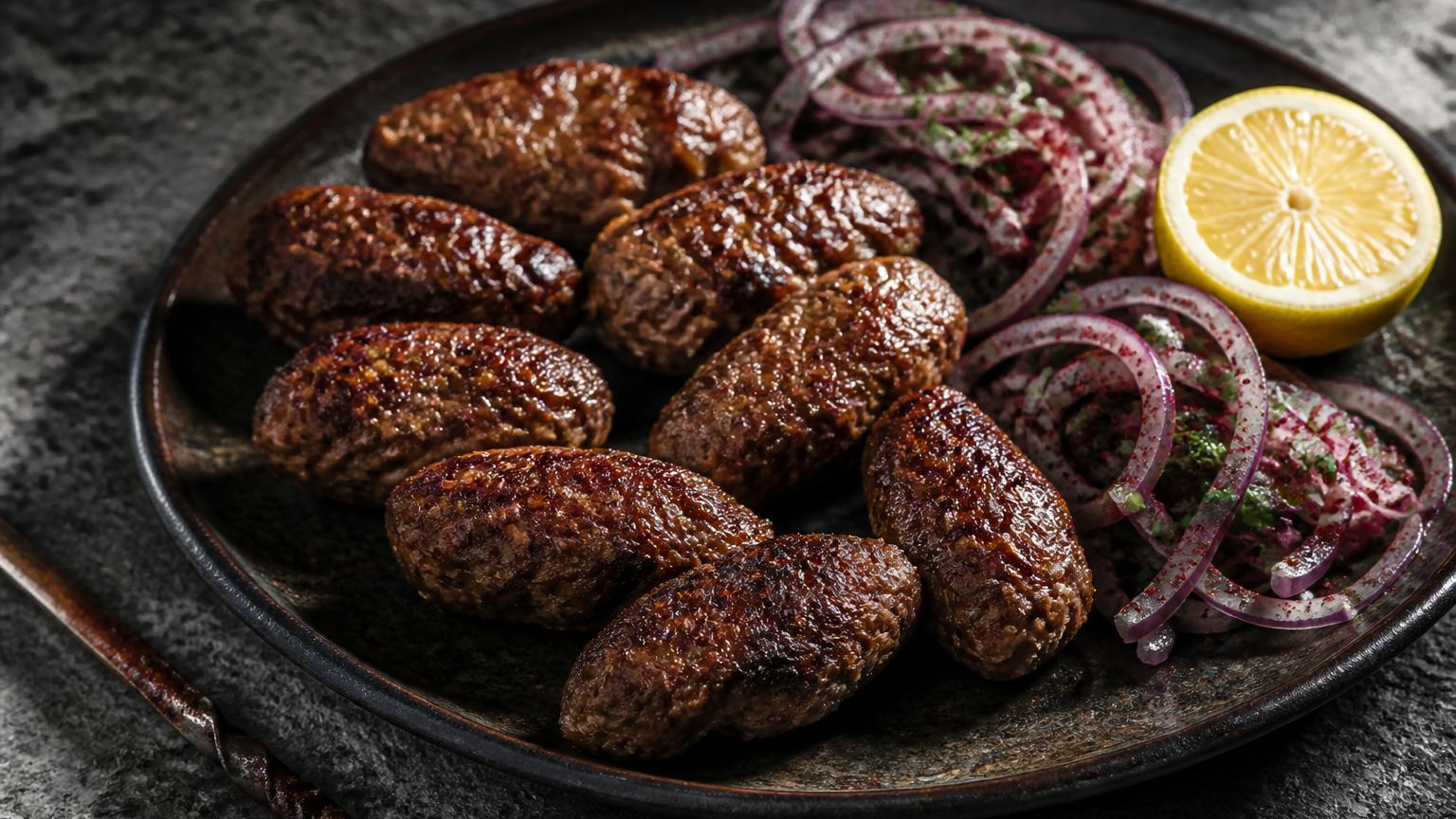
Minced meat needs to be cooked right through, because grinding spreads any surface bacteria all the way in. The USDA puts the safe minimum for ground meats at 71°C (160°F), so probe the thickest köfte rather than judging by colour, which is unreliable in spiced meat. If the outsides brown before the middle reaches temperature, turn the heat down and give them longer. Handle the raw mince on its own board, and wash your hands, the bowl and the board in hot soapy water before they touch the salad or anything served raw. Do not set cooked köfte back on the raw plate or reuse the thermometer probe without washing it. A hot pan matters too: a cool one makes the köfte stick and weep instead of browning.
Kısır, the herby bulgur salad alongside
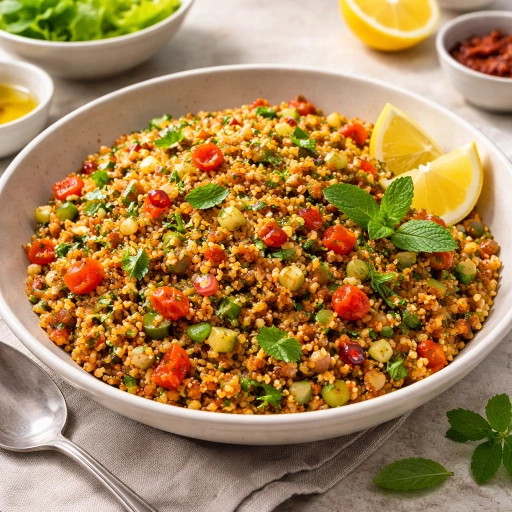
Kısır is the make-ahead course. Fine bulgur needs no stove, just 160 ml of boiling water poured over 120 g of grains and eight minutes under a plate until it swells and softens. Fork it loose, then rub in tomato paste, red pepper paste, olive oil, pomegranate molasses, lemon, cumin and Aleppo pepper until the grains turn evenly red. Fold through spring onions, parsley, mint, diced cucumber and seeded tomato. It serves two, takes about 15 minutes, and sits near 342 calories a serving, with around 8 g of fibre.
The pomegranate molasses is what makes it read as Turkish rather than generic tabbouleh: it brings a sweet-sour depth that lemon alone does not. Kısır is happiest at room temperature and keeps for up to about two hours out of the fridge, so it can be mixed before the köfte goes on; refrigerate it if the wait runs longer, since it holds raw tomato and cucumber. It is vegan, and its one flagged allergen is gluten, since bulgur is cracked wheat.
Sütlaç to finish
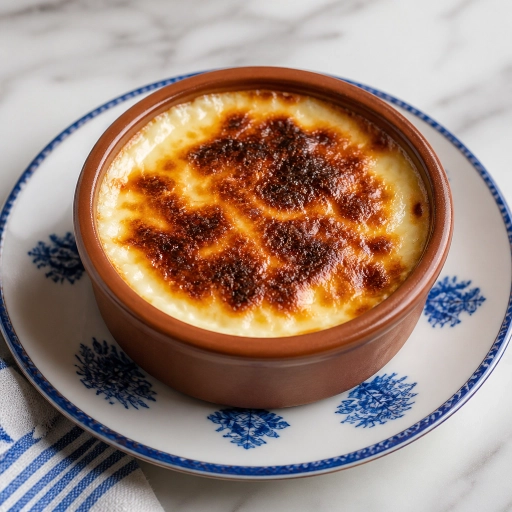
Sütlaç is baked Turkish rice pudding, and it is the course to start early because it is best cold. Simmer 50 g of short-grain rice until tender, add 600 ml of whole milk with sugar, then thicken with a cornstarch slurry and vanilla until it just coats the spoon. Divide it between two lightly buttered, broiler-safe ramekins, set them in a tray of hot water, and put them under the oven's hot top grill (the broiler) for three to six minutes until the tops blister deep gold. It serves two at about 334 calories a serving.
Watch the grill the whole time, because the top goes from pale to burnt in under a minute at that heat, and the water bath is there to slow the pudding cooking through while the surface colours. This is a fresh milk custard, so treat leftovers like any dairy dish: refrigerate them promptly rather than waiting for them to cool fully, and eat within two days. It is vegetarian and contains dairy, and it can be made a day ahead and chilled, which takes a whole course off your hands on the night.
Cooking the Turkish dinner menu in order
The trick is to work backwards from the köfte, which has to be eaten hot. Make the sütlaç earlier in the day and chill it. Mix the kısır an hour or two ahead and leave it covered at room temperature. Get the soup simmering, blend it, and keep it hot, stirring now and then, bringing it back to steaming if it has sat. Cook the köfte during the soup course, or bring the soup and köfte out together, so they reach the table hot rather than cooling while everyone starts on soup. Each recipe serves two, so a table of four means doubling: the soup and kısır scale cleanly, but köfte are better cooked in batches than crowded into one cold pan.
One honest note: this is a menu with a lot of fresh herbs, and limp parsley ruins the köfte salad and the kısır both. Buy them the day of, or store them well, which our piece on keeping fresh herbs covers.
Allergens and who each dish suits
Across the four courses the flagged allergens are gluten, from the bulgur in the kısır, and dairy, in the sütlaç. The soup and the köfte carry neither: the köfte is gluten-free as written because it uses no breadcrumbs, though a coeliac diner should check the spice blends were not milled with wheat, and the soup is vegan. That makes the soup and kısır a solid vegan pair for anyone skipping the meat, though the sütlaç cannot lose its dairy without becoming a different dessert.
Read the jars, though. Red pepper paste and pomegranate molasses vary by brand, and some carry cross-contact warnings a bare ingredient list will not show. Keep the raw-meat board and its utensils well away from the salad and the pudding, since those are eaten without further cooking. Season with an eye on the whole meal, too, because the soup, the köfte and the salty pepper paste stack up fast, which our guide to how and when to salt food gets into.
What I like about this menu is that its centrepiece, the köfte, is also its fastest dish. The soup, the salad and the pudding are all patient, so the only thing you cook to order is the one that tastes best straight off the heat.
Gourmate can scale any of these recipes to your table, translate them, and flag the allergens before you cook.