
A Spanish Tapas Menu You Can Cook at Home
A four dish Spanish tapas menu for the home kitchen: garlic tomato bread, a thick potato tortilla, crisp patatas bravas and sizzling garlic prawns.
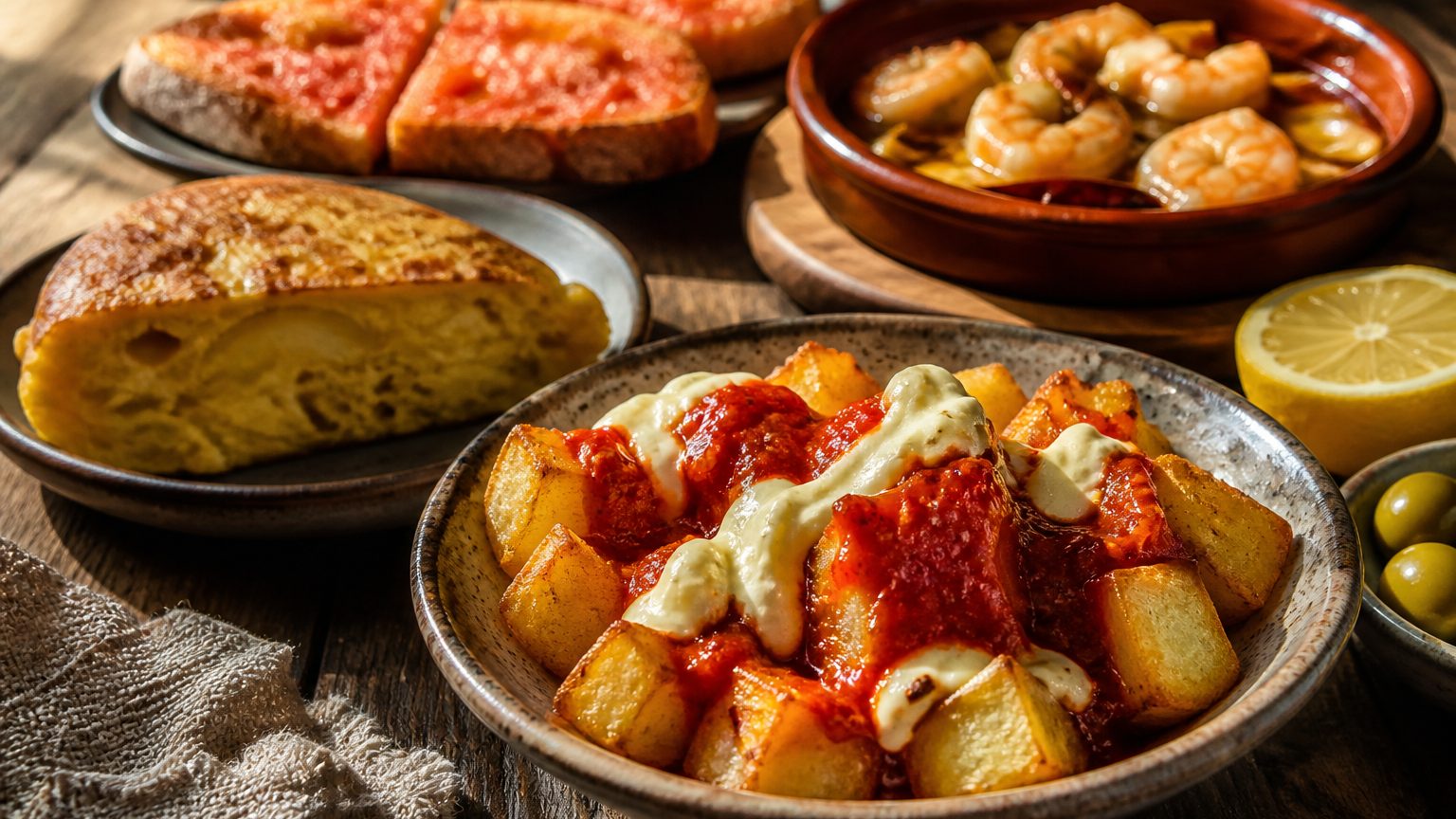
A tapas night is a few small plates arriving in whatever order they finish. This Spanish tapas menu is four dishes built for a home kitchen: garlic-rubbed tomato bread you make in minutes, a thick potato tortilla you can cook hours ahead, crisp patatas bravas with two sauces, and garlic prawns that reach the table still sizzling.
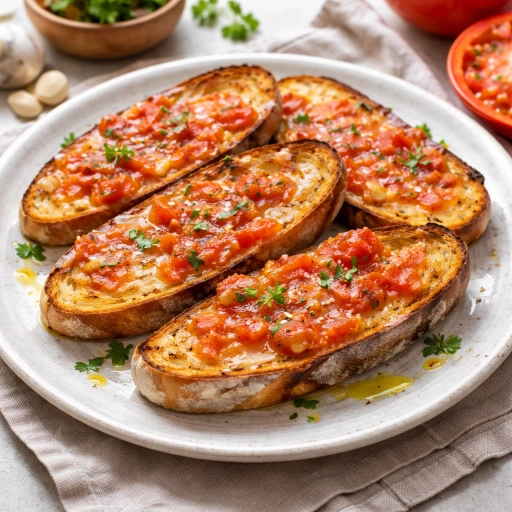
Pan con Tomate
Crisp rustic bread is rubbed with garlic and ripe tomato until the crust becomes juicy and fragrant. Extra-virgin olive oil and flaky sea salt complete this simple, intensely flavorful tapa.
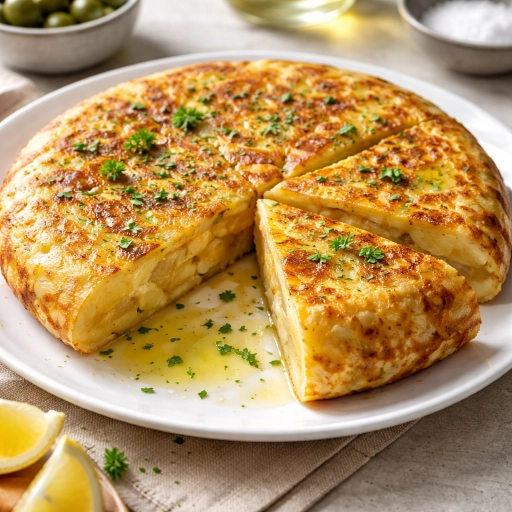
Tortilla Española
This classic Tortilla Española is thick, tender, and deeply savory, with silky potatoes and sweet onion bound in softly set egg. Slow-cooking the potatoes in olive oil gives the tortilla its rich flavor and luscious, creamy interior.
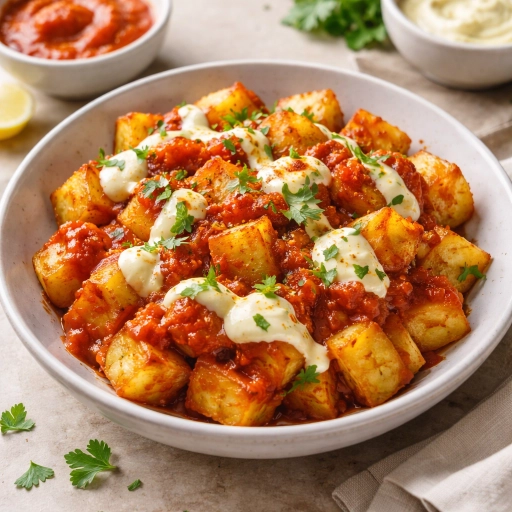
Patatas Bravas
Patatas bravas combines crisp-edged potatoes with a smoky, slightly spicy tomato sauce and a rich garlicky alioli. This version is designed for beginners and uses a quick parboil plus high-heat roasting to deliver classic tapas flavor in about 30 minutes.
Gambas al Ajillo
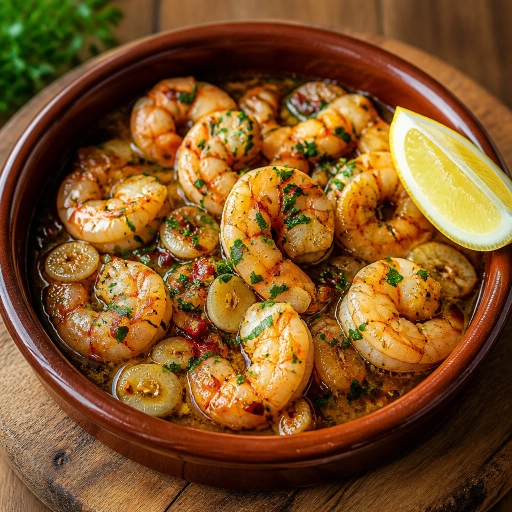
These prawns arrive glossy and sizzling in fragrant olive oil, infused with sweet garlic, gentle chilli heat, and a touch of smoky paprika. The result is fast, bold, and deeply savory, with plenty of delicious oil for spooning over each bite.
Start with pan con tomate
Pan con tomate, or pa amb tomàquet in Catalan, is the base the rest of the table leans on. Toast four slices of rustic country bread until the edges crisp, rub each hot slice with a cut clove of garlic, then rub the cut face of a ripe tomato straight onto the bread so the pulp and juice soak into the crust. Finish with a good drizzle of extra-virgin olive oil and a pinch of flaky salt. That is the whole dish: vegan, about eight minutes, and roughly 220 calories a serving for two on Gourmate's per-serving estimate, a figure that moves with how much of the oil ends up on the plate.
The tomato has to be ripe or there is nothing to rub in, which is why a late-summer one is best here. If yours is firm, grate the cut face over a bowl, discard the skin, and spoon the pulp on instead. Sturdy bread with an open crumb holds up; soft sandwich bread turns to paste. The recipe's one flagged allergen is gluten, from the bread, though a packaged loaf can also carry sesame, milk or soy, so read the label.
Tortilla española is the make-ahead one
The tortilla española is the make-ahead anchor, just as good warm or at room temperature. Slice 400 g of waxy potatoes and 120 g of onion thin, then cook them gently in 120 ml of olive oil over medium-low heat for 16 to 18 minutes until soft and barely coloured, not fried hard. Drain them, reserving the oil, fold the warm potatoes into five beaten eggs, and rest that for five minutes so the potatoes drink up some egg. It serves two, runs about 45 minutes, and lands near 554 calories a serving.
The flip is the part that takes nerve. Cook it in a 20 cm pan until the sides are set but the middle still moves, then cover the pan with a flat plate wider than its rim, hold it down with an oven glove, invert the tortilla onto the plate, and slide it back to brown the second side. Spanish cooks often leave the centre slightly creamy, which means the egg is soft-set rather than fully cooked. FoodSafety.gov advises cooking eggs until the white and yolk are firm to guard against Salmonella, so cook it right through, until the centre is set and no longer runny, for anyone pregnant, over 65, under 5, or immunocompromised, or use pasteurized eggs to keep the softer set with less risk. Made ahead, it is safest cooled and refrigerated rather than left out: keep the total time at room temperature under two hours, or one hour above 32°C, and take it from the fridge shortly before serving.
Patatas bravas: crisp potatoes, two sauces
Patatas bravas is the loud one. Parboil 500 g of cubed potatoes for four minutes, shake them in the colander to rough up the edges, then roast at 230°C for 20 to 22 minutes until the corners are deeply crisp. The salsa brava is smoked paprika, a little hot paprika, passata and sherry vinegar; the trick is to add the passata the moment the paprika hits the oil, off the fierce heat, because paprika scorches fast and hot oil spits when the cool sauce goes in. It serves two, at around 534 calories a serving.
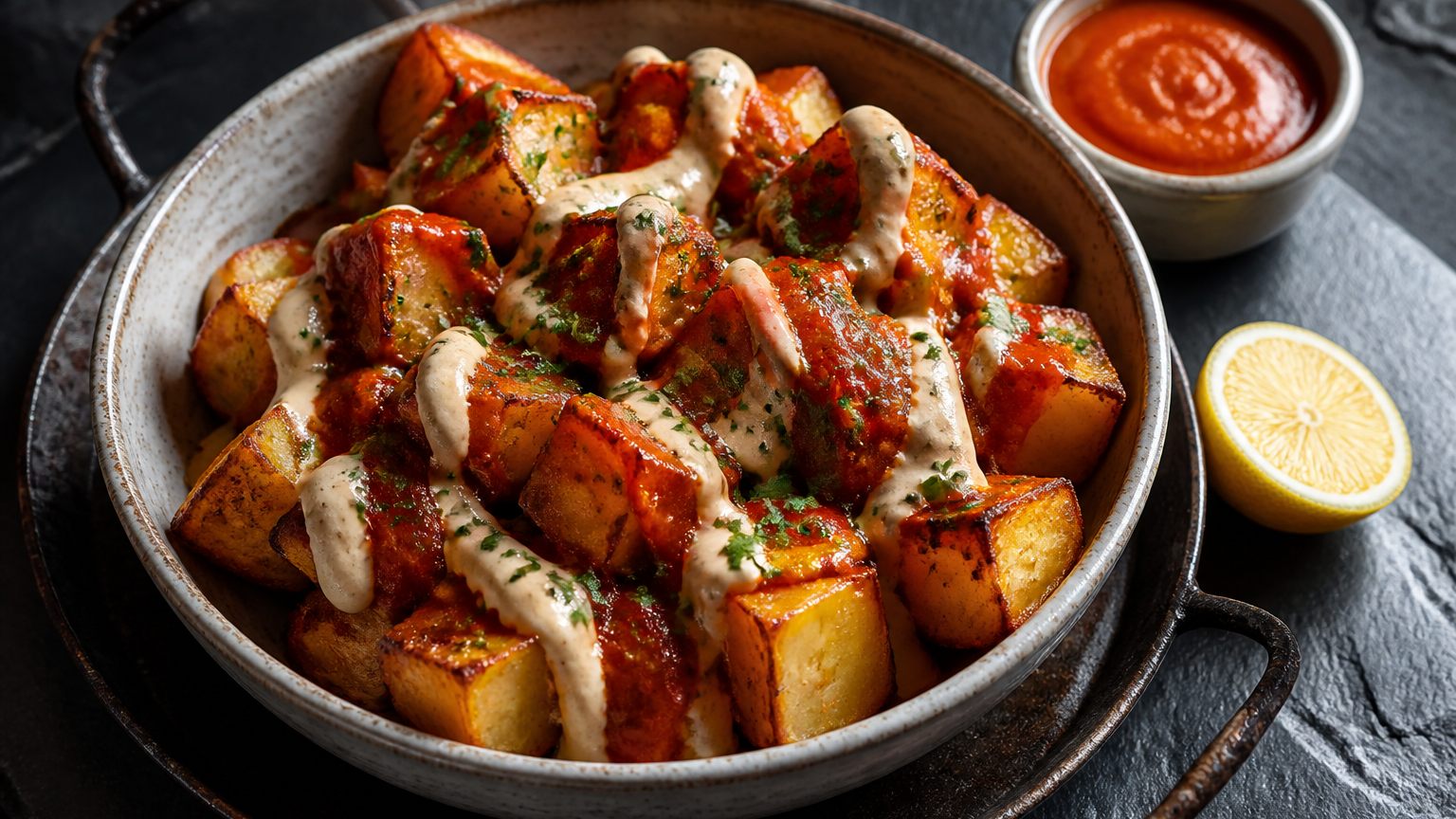
The alioli is where to slow down. The tapas-bar version whisks a raw egg yolk with grated garlic, lemon and olive oil, and raw egg carries a Salmonella risk, so use a pasteurized egg, keep the alioli refrigerated until you serve it, and skip it for anyone pregnant, elderly, immunocompromised, or feeding young children. The recipe's own shortcut sidesteps that: stir commercial mayonnaise, made with pasteurized egg, with grated garlic and lemon instead. That removes the raw-egg risk, though the mayonnaise still contains egg and sometimes mustard. Our note on Salmonella in the kitchen covers where the risk actually sits.
Gambas al ajillo in ten minutes
Gambas al ajillo is the dish you cook last, because it takes about ten minutes of active cooking and wants to be eaten at once. Have everything to hand first, since it moves fast: pat 250 g of raw peeled prawns very dry and season them, then warm 60 ml of olive oil with thinly sliced garlic over medium-low heat until the garlic is pale gold and fragrant. Do not let it brown, or the oil turns bitter. Stir in the chilli flakes and smoked paprika for ten seconds, nudge the heat up to medium-high, and add the prawns in a single layer: 45 to 60 seconds on one side, another 30 to 45 on the other, until they are pink, opaque all the way through and lightly curled. It serves two, at about 317 calories a serving.
Prawns are crustaceans, one of the major allergens, so flag it first at a shared table. Handle the raw prawns on their own board and wash your hands, the board and the knife in hot soapy water before they touch anything else. Frozen prawns need thawing in the fridge or under cold running water, never on the counter, then patting properly dry, or they steam in the oil instead of searing. Serve it straight from the pan, garlic oil spooned over, on a trivet, since the pan and handle stay fierce.
Putting the Spanish tapas menu together
The order follows the timings. Make the tortilla ahead; if it is more than two hours before you eat, refrigerate it and bring it back to room temperature near serving. Roast the bravas potatoes and build both sauces while they cook, but keep the potatoes undressed and sauce them only as you serve, or they soften. Toast the pan con tomate at the last minute, because the tomato turns it soggy within minutes. Cook the gambas right before everyone sits down, and keep any raw-egg alioli in the fridge until then. Each recipe serves two, so a table of four or six means scaling up: a tortilla is easier cooked as two pans than one wide one, and more prawns want a bigger pan or a second batch.
One honest trade-off: a tapas spread is far more washing up than a single main, with the oven, several pans and a whisk all going at once. The payoff is that the tortilla, made entirely ahead, takes the pressure off the last half hour.
Allergens and substitutions
Across the four plates you have gluten, egg and crustaceans, so it is worth saying which dish carries what. The pan con tomate is vegan but contains gluten from the bread; a coeliac diner needs certified gluten-free bread and a clean toaster, since a shared one carries wheat crumbs. The tortilla and the bravas both rely on egg, the bravas through the alioli, which a vegan mayonnaise removes to leave crisp potatoes and a vegan brava sauce. The gambas are crustaceans, one of the costliest to get wrong: a separate board is not enough at a shared table, so use separate serving spoons, and a severe shellfish allergy is reason to skip prawns entirely.
Read the packets either way. Packaged smoked paprika and mayonnaise can carry cross-contact warnings, and sherry vinegar often contains sulfites, none of which show up in a bare ingredient list. Season carefully across the spread, too, since salted bread, briny prawns and the smoky sauces stack up fast, which our guide to how and when to salt food gets into.
The thing I like about this menu is that the hardest dish, the tortilla, gets finished first and forgotten. What is left for the last half hour is toast, a tray of potatoes and ten minutes of prawns, a calm way to put four Spanish plates on one table.
Gourmate can scale any of these recipes to your table, translate them, and flag the allergens before you cook.