
Indian Dinner Menu: Dal, Sabzi, Rice and Raita
A five-dish Indian dinner menu built the way an everyday plate is, with the real timings, the pans it needs, allergen notes and the leftover rice rule.
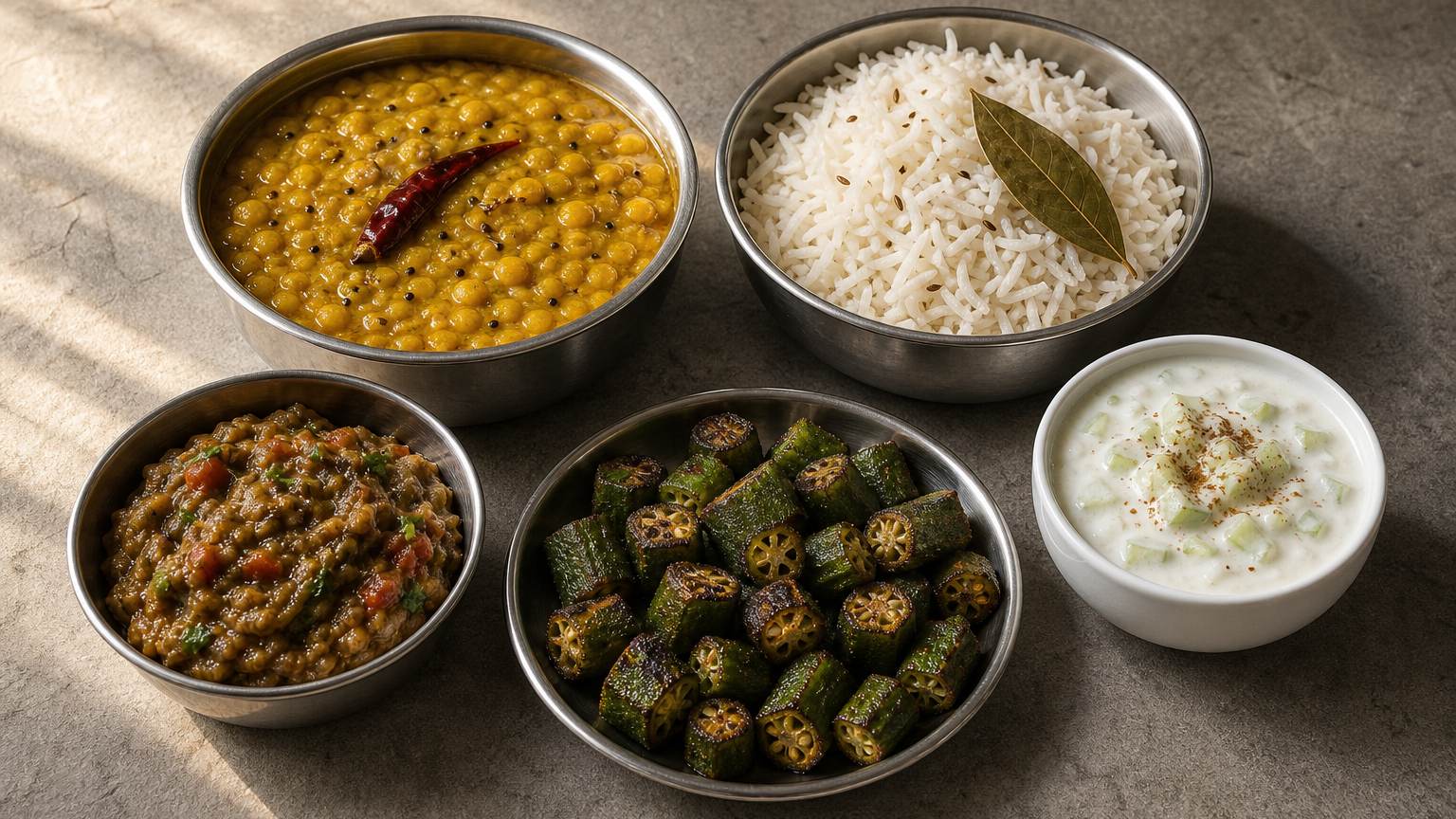
There's an aubergine going soft in the drawer, a bag of okra bought on impulse, and a packet of chana dal at the back of the cupboard. That's most of an Indian dinner menu already. India has no single everyday plate, but the shape of a home dinner across the north is recognisable: four or five small dishes that each do a different job, landing on the table together.
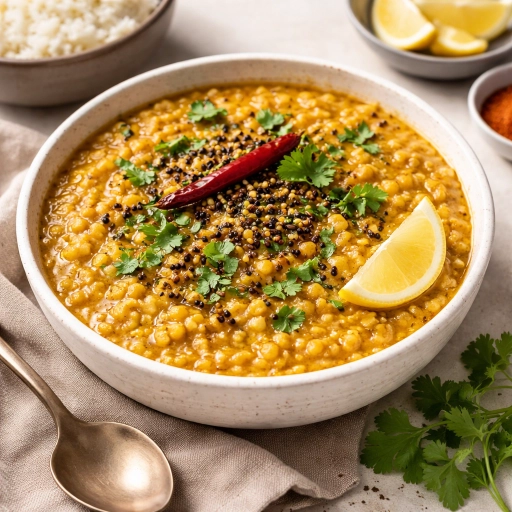
Chana Dal Tadka
Chana Dal Tadka is a comforting bowl of yellow split lentils simmered until tender, then enriched with a savoury onion-tomato masala and a fragrant tempering of mustard, cumin, and asafoetida. The result is earthy, gently spiced, and deeply satisfying, with bright freshness from coriander and lemon at the end.
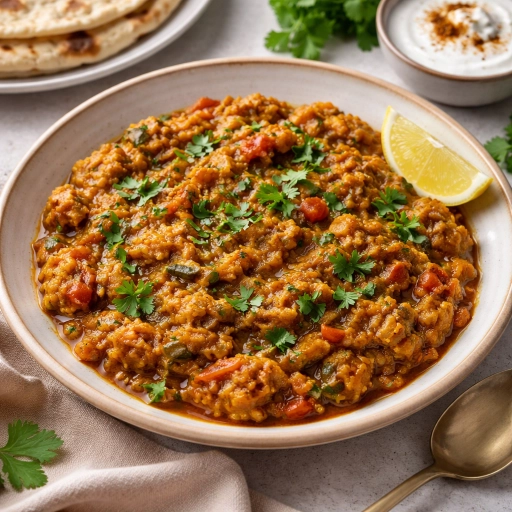
Baingan Bharta
Baingan Bharta is a soft, smoky eggplant mash folded into a fragrant tomato-onion masala with ginger, garlic, and warm spices. The finished dish is savory, lightly spicy, and brightened with cilantro and lemon, making it comforting yet lively.
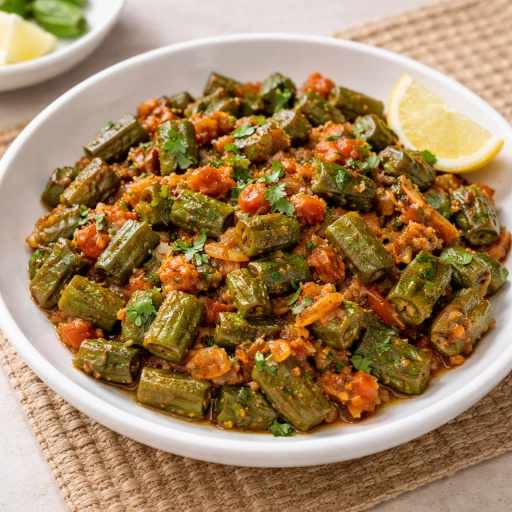
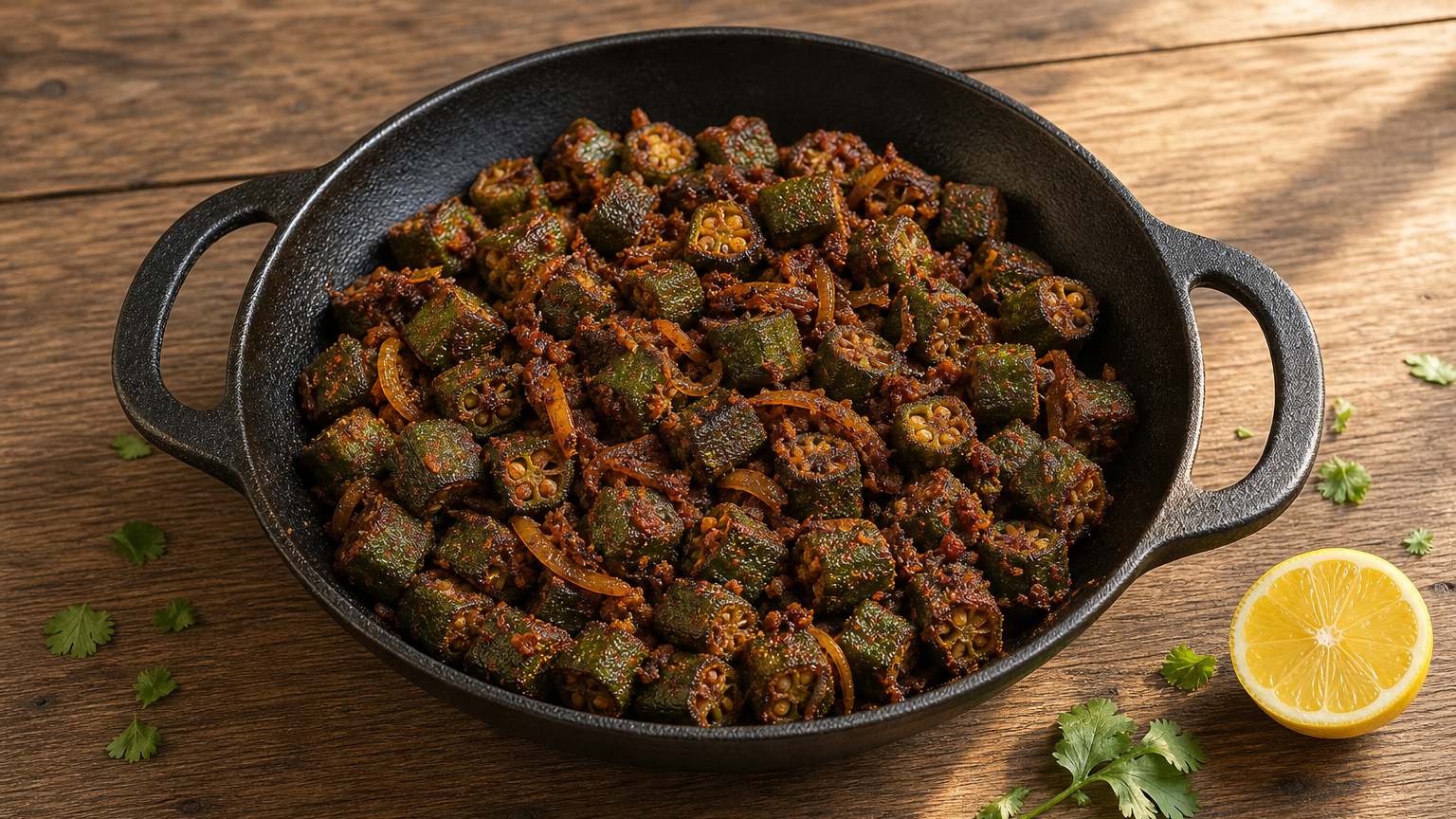
Bhindi Masala
Bhindi Masala is a fragrant, savory okra stir-fry with sweet onions, soft tomatoes, and warm spices clinging to every piece. This version stays relatively dry and intensely flavorful, with tender okra, a bright finish of lemon, and just enough heat to keep it lively.
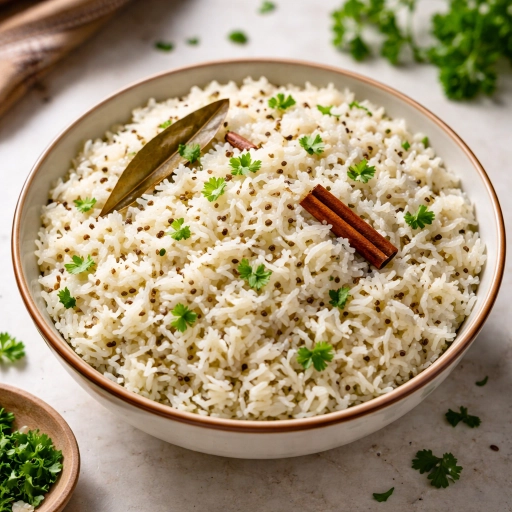
Jeera Rice
Light, separate basmati grains lightly perfumed with toasted cumin and a hint of bay and cinnamon. Simple, unadorned and designed to sit alongside dals and vegetable curries without overpowering them.
How an everyday plate is built
A dal carries most of the protein and gives the plate something spoonable. One or two dry vegetables bring texture, because everything on the plate being soft is the fastest way to make a meal boring. Rice or roti carries the rest. Something cold and sour gives you a break from the spice.
Each recipe below is written for two, and every calorie and gram figure is Gourmate's per-serving estimate at that serving count.
The dal does the heavy lifting
Chana Dal Tadka simmers 180 g of split Bengal gram in 700 ml of water with turmeric for 22 to 25 minutes, salted only for the last five, until the grains are tender but still holding their shape. Separately, onion softens, then garlic, ginger and green chilli, then 150 g of chopped tomato with ground coriander and chilli powder, cooked until the oil separates at the edges. That masala goes into the dal.
The tadka comes last. Mustard seeds crackle in hot oil, cumin, asafoetida and a dried chilli follow for ten to fifteen seconds, and the lot goes over the pot. Take that pan off the heat before you pour, hold it low, keep your face back and never let water near it, because hot fat and popping seeds spit. Aroma compounds in whole spices are fat-soluble and volatile, so blooming them at the end puts the smell in the bowl instead of letting it cook off.
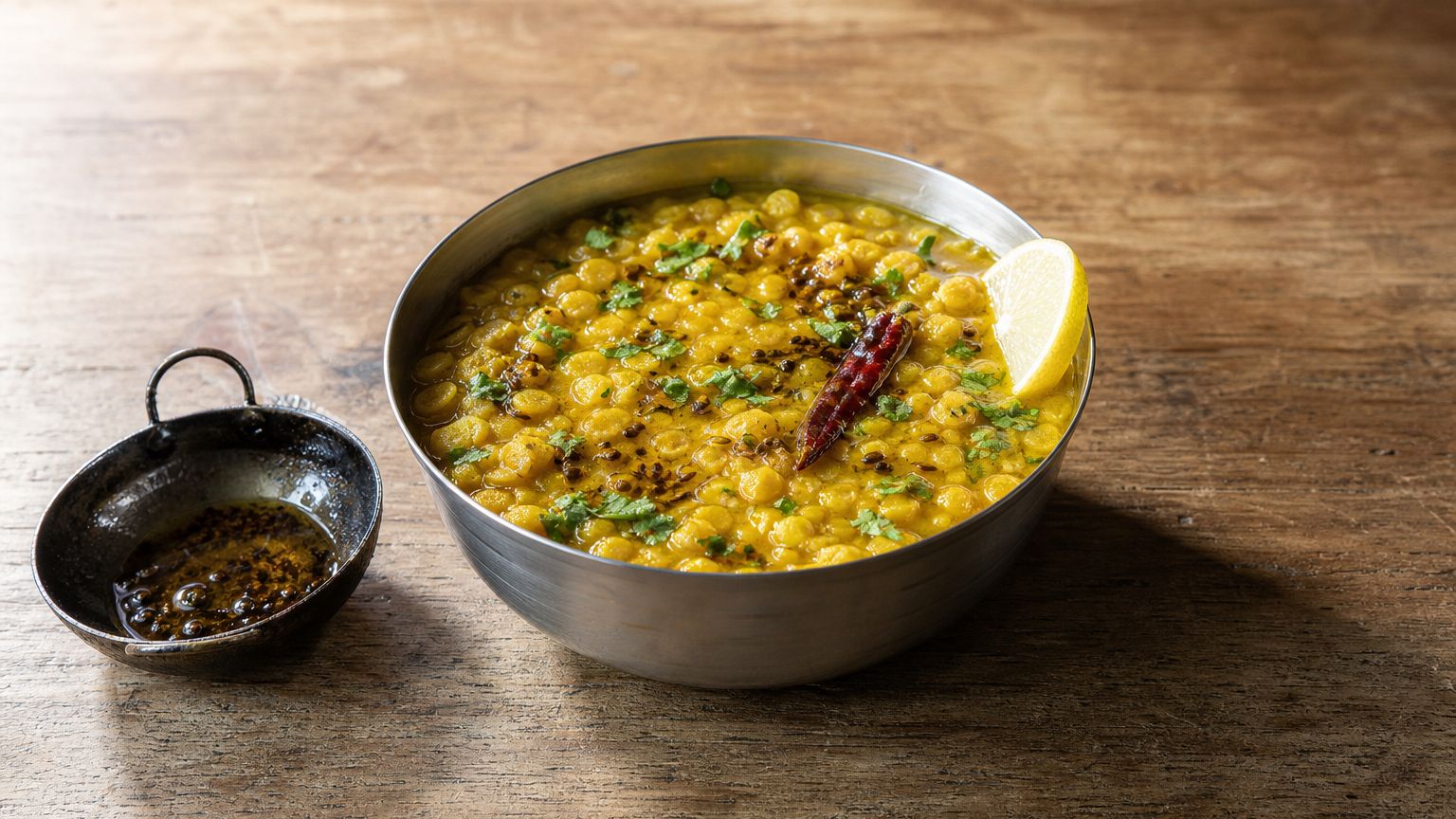
Thirty minutes total, eight of them prep, and Gourmate's per-serving estimates come to 484 calories with 20.2 g of protein and 14.9 g of fibre, which is a lot of fibre for one bowl (more on that). The recipe skips soaking to hit that timing, so judge the dal by the grain rather than the clock. Older dal and hard water both push it past 25 minutes.
One label to read: powdered asafoetida is bulked out with a carrier, often wheat flour and sometimes rice flour. The packet decides whether this dal is gluten-free.
Two vegetables, one masala base
Baingan Bharta is the smoky one. A 500 g aubergine gets pricked all over, rubbed with oil and put under a hot grill or broiler for 12 to 15 minutes, turned every few minutes until the skin blackens and the flesh collapses. Prick it first, because a whole aubergine builds steam and can burst. Let it cool enough to handle, peel off the charred skin, mash the flesh coarse rather than pureed, and fold it into a tomato-onion masala finished with garam masala and lemon. Thirty minutes, about 186 calories a serving.
Bhindi Masala is the dry one, and its method is a fight with okra's texture. The mucilage that makes okra slippery is a water-soluble polysaccharide that swells on contact with water (Popular Science). So the pods get washed and dried thoroughly before they're cut, the 400 g goes into a wide pan in as close to a single layer as you can manage, and the lid stays off for the six to eight minutes it takes the edges to blister. Cover it and you steam it, and you get the slippery texture okra gets blamed for. Around 178 calories a serving.
The snag: both dishes run on the same onion, tomato and ground-spice base, so cooking them back to back can taste like one idea served twice. If it's just two of you, pick the one whose vegetable looks better and double it. Both lean hard on cumin, coriander and garam masala, which is a good reason to check how old those jars actually are, since ground spices fade faster than whole ones.
Rice and raita finish the Indian dinner menu
Jeera Rice is deliberately plain. Basmati rinsed three or four times until the water runs nearly clear, soaked 15 minutes, drained. Cumin seeds toast in ghee for 20 to 30 seconds with a bay leaf and a small piece of cinnamon, the rice goes in to get coated, then 225 ml of water, a tight lid, eight minutes on the lowest heat and five minutes off it. Don't lift the lid and don't stir. About 396 calories a serving. The ghee makes it a dairy dish. Neutral oil works in its place, though you lose the nutty smell ghee gives the cumin.
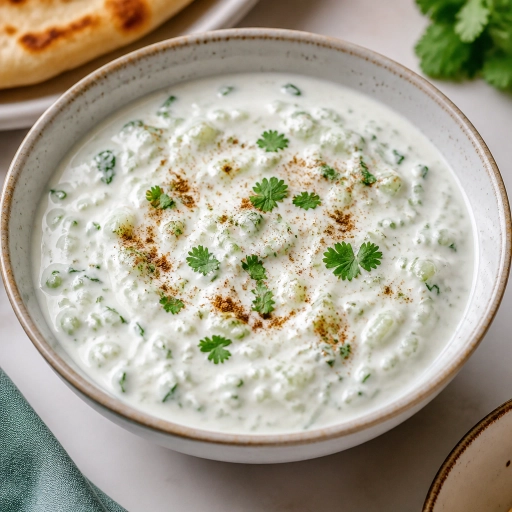
Raita takes ten minutes and no heat at all. Grate 120 g of cucumber, squeeze the water out through a clean towel or a sieve, and stir it through 250 g of thick plain yogurt with ground cumin, dried mint, chopped coriander and salt. Skipping the squeeze is how you end up with a thin puddle instead of a spoonable bowl. About 100 calories a serving, doing the same job a bowl of cool yogurt does in a summer mezze spread.
What this actually takes to cook
Not one pan. You need a grill or broiler for the aubergine, a saucepan with a lid for the dal, a wide skillet for the okra, a small pan for the tadka, a second lidded pot for the rice and a bowl for the raita. Four burners helps.
Each recipe's own total is 30 minutes, which only adds up to two hours if you cook them one after another. Most of the dal's 22-minute simmer and all of the aubergine's time under the grill are unattended, so stacking them brings the whole plate closer to an hour. It's still not a fifteen-minute weeknight dinner.
Order matters more than speed here. Aubergine under the grill and dal on to simmer first, rice next, okra last, since it's the one that goes soft if it sits. The raita stays in the fridge until everything else is on the table.
You don't have to cook all five. Dal, rice and raita is dinner.
Allergens, storage and the leftover rice rule
Dairy shows up twice: the yogurt in the raita and the ghee in the rice. Swap in a plant yogurt and a neutral oil and nothing on the table needs dairy, though plant yogurts are usually soy, oat or nut based, so that swap can trade one allergen for another. The dal's tadka contains black mustard seeds, and mustard is one of the 14 allergens that must be declared on food labels in the EU and UK (EUFIC). Gluten's likeliest route in is the asafoetida, though any packaged spice blend can carry a cross-contact warning. If you're cooking for a diagnosed allergy, read the packets yourself and take your allergy specialist's advice over anything you read in an article.
The raita is the only uncooked dish. Wash the cucumber, use a clean board and knife, keep the bowl in the fridge at or below 5°C rather than on the table all evening, and eat it the same day.
Then the rice, which has its own rule. Uncooked rice carries spores of Bacillus cereus that survive boiling, and the toxin they can produce at room temperature is heat-resistant, so reheating does not undo bad storage. The Food Standards Agency advises chilling leftover rice as fast as you can and ideally within an hour, keeping it no more than a day, reheating it until it's steaming hot the whole way through, and never reheating it twice (Food Standards Agency).
None of the dal, bharta or bhindi recipes states a keeping time. Split the dal between shallow containers so it cools fast instead of sitting warm in one deep pot, get all three into the fridge within two hours, eat them within three days, and reheat until steaming hot the whole way through.
Gourmate builds your week around the ingredients you already have, so the okra and the aubergine end up in a meal you planned for. Try it here.