
How to Make Quick Pickles From Almost Anything
Quick pickles turn a drawer of leftover summer vegetables into a jar worth opening. The Extension brine ratio, the safety line, and how long it keeps.
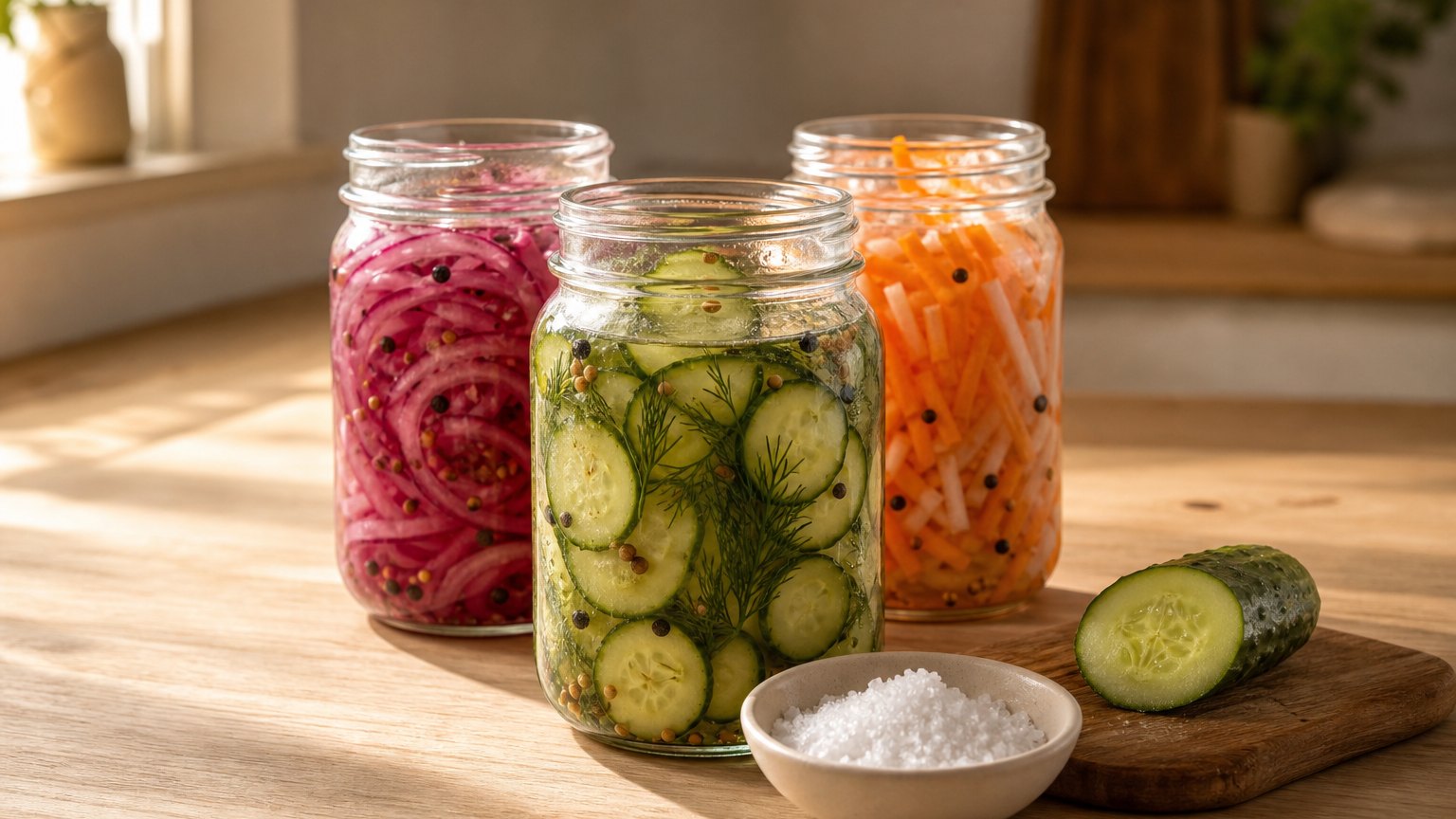
Open the vegetable drawer at the end of July and you mostly find halves. Half a cucumber, three radishes, the back end of a red onion, a handful of green beans nobody got to. Quick pickles turn that pile into something you will actually eat, and the work is about ten minutes of chopping and boiling.
Before the flavourings, though, it helps to know which kind of pickle you are making, because two very different things share the name.
Refrigerator pickles are not canned pickles
Pickling preserves food by lowering its pH to 4.60 or below. Below that line, any Clostridium botulinum spores sitting on the vegetables cannot germinate into the cells that produce botulinum toxin, which is why the acid is doing more here than supplying the sour taste (University of Minnesota Extension). Salt does part of that work through osmosis: water moves out of the vegetable pieces, and acid moves in the opposite direction, dropping the pH inside them.
Fresh-pack pickles, sometimes called quick-process, go through a boiling water canner and come out shelf-stable. Refrigerator pickles skip the canner, so they do not, and Minnesota Extension warns that plenty of recipes labelled "quick pickled" are actually describing the fridge kind. That is the kind below. Acidity is one control on a jar like this and continuous refrigeration is the other, so it stays at or below 4°C the whole time it is in the house, however sharp the brine tastes.
How to make quick pickles that hold their crunch
NC State Extension publishes one refrigerator brine and a short list of vegetables to use it on (NC State Extension). The sour version is 3 cups white or cider vinegar, 3 cups water, 3 tablespoons canning or pickling salt and 2 tablespoons sugar, which fills up to four pint jars. Bring it to a boil, let it boil for two minutes, then take it off the heat.
Wash and cut the vegetables, pack them snugly into clean jars, add up to two tablespoons of herbs and spices per jar, and pour the hot brine over to within half an inch of the rim. Lid the jars, refrigerate, and give the flavour a day or two before you open one. The sweet version of the same brine keeps the vinegar and water and changes the rest: 2 tablespoons salt and 1½ cups sugar.
Minnesota Extension is explicit that in pickled and acidified foods the sugar balances sourness and does nothing for safety, unlike its role in a fruit spread, where it lowers water activity. The acid is the part to leave alone, which means vinegar labelled 5 percent acidity and proportions taken from a recipe that has been tested, rather than vinegar and water adjusted by eye. The National Center for Home Food Preservation is direct about why: the level of acidity in a pickled product is as important to its safety as it is to taste and texture (NCHFP). If the result is too sharp for you, change the sugar and the spices instead of the ratio.
Which vegetables take to a fridge pickle
The six NC State names for this brine are onions, cucumbers, asparagus, parsnips, radishes and pea pods, none of which need cooking first. Stay inside that list rather than treating one brine as a licence for the whole drawer. The National Center does have tested recipes for pickled carrots, beets, peppers, cauliflower, green beans and okra, but those are canning recipes with their own proportions and processing times, not a different way of filling this jar.
Two selection rules are worth borrowing from Minnesota Extension. Use produce that is in season, because it is firmer and makes a better pickle, and leave out pieces with cracks, holes or heavy bruising, since that damage is an entry point for contamination. For cucumbers, skip the wax-coated ones sold for salads: the coating interferes with acidification. Fruit should go in slightly under-ripe so it stays firm.
The small details that decide texture
Assuming the ratio is right, a few smaller choices decide whether the jar comes out crisp or sad:
- The blossom end. Cut and discard a 1/16 inch slice from the blossom end of fresh cucumbers. It can carry an enzyme that softens pickles (NCHFP).
- The salt. Use canning or pickling salt. Anti-caking agents in other salts can cloud and darken the brine, and iodized salt can darken the pickles.
- All vinegar, no water. The water is doing a job. Minnesota Extension notes that an undiluted vinegar brine can leave the produce too soft and the taste too sour.
- Firming agents. Alum, pickling lime and calcium chloride exist, but Minnesota is clear that fresh, in-season produce plus the right amount of acid does not need them.
- The pot. Keep the brine out of copper, brass, iron and galvanized metal. The acid reacts with all of them.
Whole and fresh spices also beat dried ones, which can cloud the liquid, and adding them per jar rather than to the pot distributes them evenly. For cucumbers there is one optional extra step: dry brining, where you coat the cut pieces in pickling salt and chill them for several hours before the brine goes on. Minnesota Extension says that draws water out of the cell walls and can improve crispness, and some tested cucumber recipes build it in. For how salt behaves in cooking more generally, how to salt food covers the rest.
How long the jar keeps, and when to bin it
NC State says to use them within two weeks. Because there is no heat treatment, the jars themselves matter more than they would in canning: sterilize them before filling, since nothing later in the process will kill what you sealed in.
Do not reuse a brine that has already held vegetables. The vegetables absorb the vinegar solution, which makes them acidic and leaves the liquid less so, and that leftover brine is no longer at a reliable acidity for a second batch.
Treat the two weeks as a maximum, not a target you can quietly overshoot, since nothing here is doing the work a canner would have done. And none of the usual checks can tell you a jar is still safe, only that it clearly is not. Throw out the batch, without tasting it, if you see mould of any colour, a bulged or leaking lid, unexpected fizzing, a smell that reads musty or yeasty rather than sharply vinegary, or vegetables that have gone slimy. Cloudiness on its own is not a verdict, since hard water, dried spices and anti-caking agents all cause it, but new cloudiness alongside any of those other signs is.
The same applies if the cold chain breaks: a jar left on the counter overnight, or one that sat through a fridge failure while you were away, goes in the bin rather than under your nose. Serve with a clean fork each time, which prevents a problem rather than detecting one.
Three dinners a jar improves
Pickles get recommended as a fix for almost any plate, which oversells them. They do their best work next to rich, fatty or one-note food, and very little for a dish that already has acid in it.
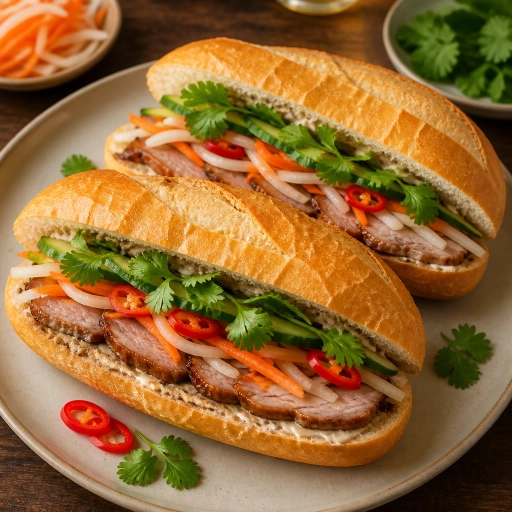
Bánh mì
This bánh mì is a perfect balance of crisp bread, rich pâté, savoury pork belly, cool cucumber, and sharp quick pickles. Fresh coriander and chilli bring brightness and heat, making each bite crunchy, juicy, and deeply satisfying.
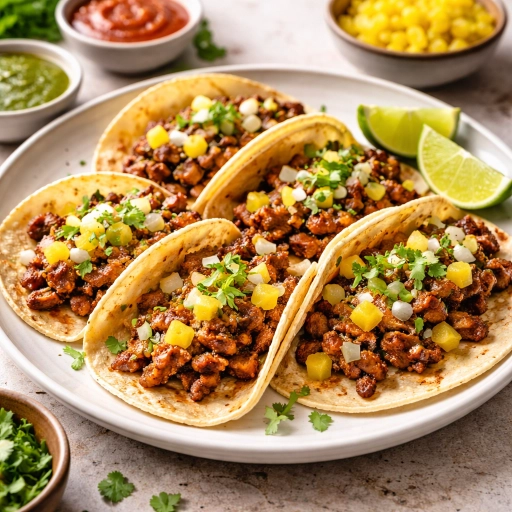
Tacos al Pastor
These tacos al pastor are smoky, tangy, and lightly sweet, with thin slices of pork seared until caramelised at the edges and finished with juicy pineapple. Wrapped in warm corn tortillas and topped simply with onion, cilantro, and lime, they deliver the classic taquería balance of savoury, bright, and fresh.
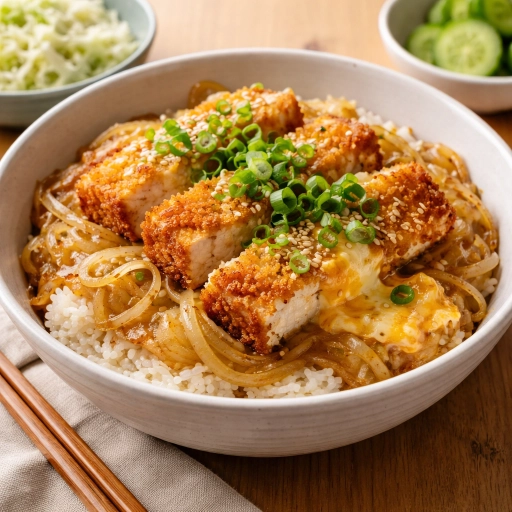
Tofu Katsudon
Golden, crunchy tofu meets silky egg, sweet onion, and glossy rice in this deeply comforting bowl. It has all the cozy appeal of katsudon, but with a lighter, modern twist that still feels generous and special enough for tonight's dinner.
The bánh mì builds the pickle into the recipe. Its đồ chua is julienned daikon and carrot in rice vinegar, water, sugar and salt, and the recipe says even ten minutes of sitting gives you something bright and crunchy enough to carry pâté and pork belly. It is built on liver pâté and mayonnaise, and Gourmate flags a raw-egg risk on it, so check it against your own guidance before eating it in pregnancy.
Tacos al pastor go the other way: the recipe finishes with raw diced white onion, cilantro and lime, and a jar of pickled red onion slots into that role if you have one open. Tofu katsudon needs the contrast most, since crisp panko tofu, soft egg and sweet soy broth over rice all pull the same way, and the recipe's own notes suggest pickled cucumber alongside for that reason.
None of this fixes a glut on its own. Pickling is one answer, freezing is another, and our guides to too much zucchini and what freezes well cover the rest of the drawer.
Planning the week around what you already have is easier with a little help. Try Gourmate and let it build the plan around your pantry.