
Back to School Meal Planning Without the 6pm Panic
Back to school meal planning that survives a real term week: dinners matched to the calendar, lunches that get eaten, and the cold-pack rule from the USDA.
Term starts in a few weeks and the meal that breaks first is not breakfast. It's the stretch between four and seven in the afternoon, when one child has swimming at five, a lunchbox needs filling for tomorrow, and nothing has been taken out of the freezer. Back to school meal planning is mostly a scheduling job. The recipe you pick on Sunday has to fit the twenty-five minutes that Tuesday leaves you.
So start with the timetable rather than the cookbook.
Plan the week from the calendar, not the recipes
Write the week's fixed points down first. Football until half six on Monday, a late shift on Wednesday, nothing at all on Thursday. Then match the cooking to the slot: the fifteen-minute dinner on the football night, the pot that simmers on Thursday, and reheating on the night you get home last.
It's an obvious step and an easy one to skip, because the plan gets made in a calm moment and cooked in a rushed one.
Leave one evening unplanned. Something usually moves, and a week with a gap in it absorbs the change.
Back to school meal planning runs on repeat dinners
Term-time cooking gets easier when a few dinners are fixed. Four or five you can make without reading anything: tacos, a pasta bake, a stir-fry, a traybake, soup and bread. Writing them on the fridge is what makes them usable, because the evening question becomes which one rather than what.
A rotation sounds duller than it eats, mostly because the sides and the sauces change even when the format doesn't. Tacos with different fillings are not the same dinner twice. If you cook in bulk at the weekend, the same trick applies to the components rather than the finished plates, which we get into in batch cooking without getting bored.
The shopping gets simpler too, since a week built from familiar dinners has a list you can mostly predict.
Three dinners that fit a school night
Here is what that looks like as actual food.
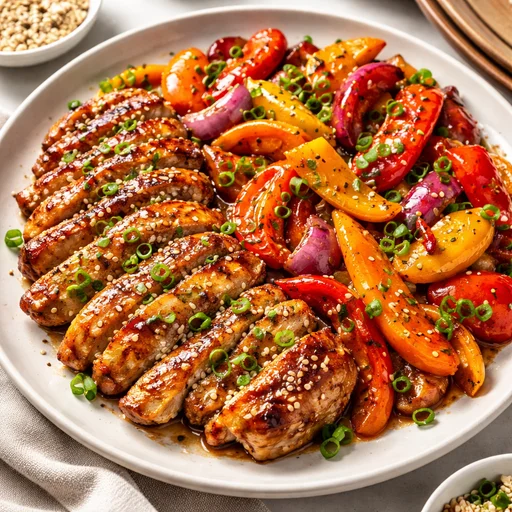
Sheet-Pan Yakiniku-Inspired Chicken and Vegetables
This Sheet-Pan Yakiniku-Inspired Chicken and Vegetables is a one-tray wonder that combines tender, juicy chicken with colorful vegetables, all coated in a sweet-savory glaze. Perfect for weeknight dinners, it’s simple to make and bursting with flavor.
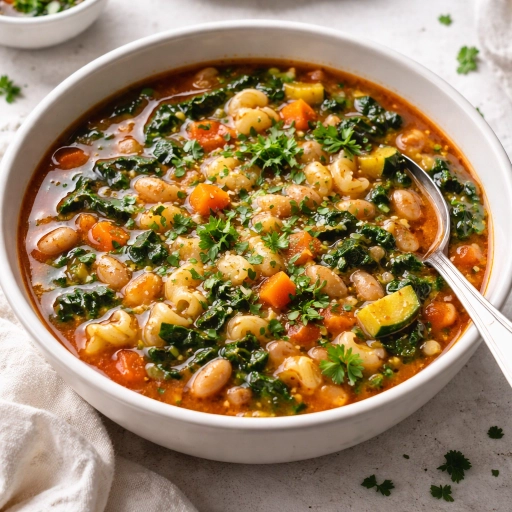
Minestrone
Minestrone is a hearty, rustic vegetable soup packed with tender cannellini beans, small pasta, zucchini, carrot, celery, and tomato-rich broth. This vegan version is bright, comforting, and satisfying without being heavy, with the pasta cooked directly in the soup for extra body.

Frittata di Zucchine e Peperoni
This frittata is light yet satisfying, with tender eggs wrapped around sweet red pepper, delicate zucchini, and creamy tangy goat cheese. Fresh basil adds a bright herbal finish, while the oven-baked method gives it a gently puffed, golden top.
The sheet-pan chicken and vegetables is the busy-night option: chicken thighs and vegetables on one tray with a soy, ketchup and honey glaze, roasted in twenty to twenty-five minutes, four servings. The minestrone is the Thursday pot, also four servings, and it reheats into a thermos the next day. Gourmate's estimate for it is around 9.7 g of fibre per serving, which moves with the pasta you use and how big you make the bowls. The frittata is written for two, so double it for a bigger table: six eggs, whatever vegetables are going soft, and slices that pack cold.
Pack less than you think, and pack what gets eaten
Lunchboxes tend to come home with something still in them. One 2023 study weighed home-packed lunches from a single third-grade class on Long Island across five consecutive days, 118 lunches in total, around 24 a day. The lunches arrived with an average of 639.6 kcal and the children ate 430.6 of them, a 32.7 percent drop in calories. Fibre did slightly worse, at 65 percent consumed. Sugar-sweetened drinks, mostly fruit juice, were in 61 percent of the lunches, and 94.6 percent of the drink that was packed got drunk. That is one class of eight and nine year olds at one school, so read it as a snapshot rather than a national figure.
The study measured what came back, not how to change it, so the next two ideas are ours rather than its findings. Try packing smaller amounts of more things for a week and see what returns; there are plenty of reasons food comes back, from the portion to the twenty minutes the lunch break actually lasts, and the only way to tell them apart is to change one thing at a time. If the juice is finished every day while the sandwich isn't, that's a reason to look again at what's in the box.
Giving a child part of the decision is worth trying too. Let them choose between two options you're happy with, and put an unfamiliar item next to familiar ones instead of negotiating at 7am. Our guide to meal planning for picky eaters goes further into cooking one dinner for a table that disagrees.
None of this is a substitute for medical advice. Persistent refusal of whole food groups, weight loss, or a growth curve that flattens are reasons to book an appointment with your paediatrician. Coughing, gagging or difficulty swallowing at meals should be assessed rather than worked around. Repeated vomiting or a child who won't take fluids can dehydrate quickly, so those need same-day advice, and choking that affects breathing is an emergency.
Two cold sources, every school day
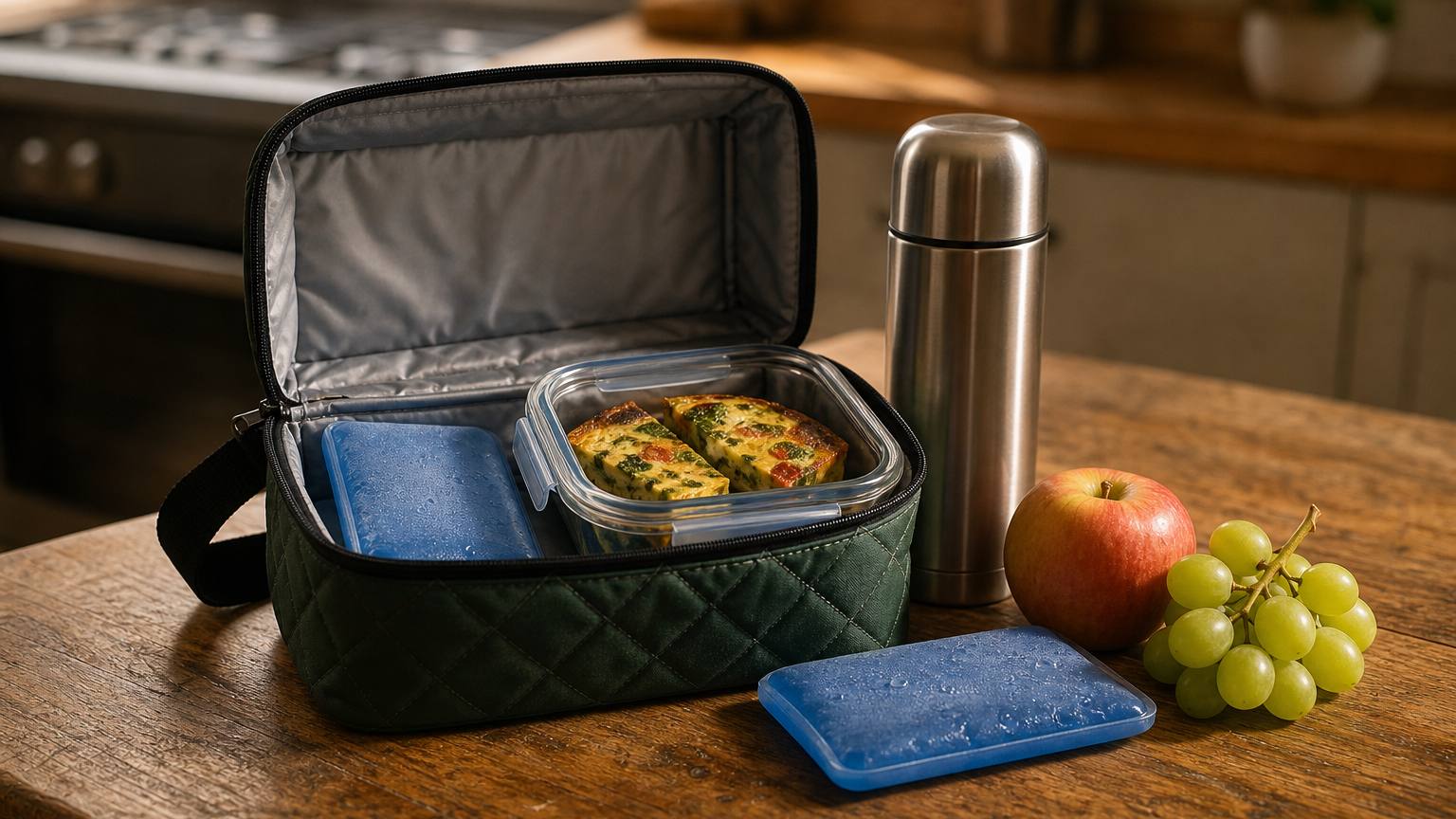
A packed lunch spends four or five hours out of the fridge before anyone eats it. Bacteria multiply fastest between 40°F and 140°F (4.4°C and 60°C), and the USDA's guidance on keeping bag lunches safe is specific about the fix: an insulated soft-sided bag, and at least two cold sources with anything perishable, either two frozen gel packs no smaller than 5 by 3 inches, or one gel pack plus a frozen bottle of water. Put them above and below the food rather than beside it. The cold packs are for the journey; if there is a fridge at school, the bag goes in on arrival, left open so cold air can reach the food.
Three details from the same page are easy to get wrong. Perishable food shouldn't sit out more than two hours, or one hour once the room is above 90°F (32°C), which is worth remembering in a warm September. Sandwiches can be made and frozen the night before, and FSIS advises leaving mayonnaise, lettuce and tomato out of the ones you freeze, for quality rather than safety reasons, so add those in the morning. For hot food, fill a thermos with boiling water, let it stand a few minutes, empty it, add piping hot soup, and keep it closed until lunch; 140°F (60°C) or above is the target you're aiming to hold. FSIS also says to throw out leftover food and used packaging after lunch rather than repacking any of it for tomorrow.
Some food needs no cold source at all:
- Whole fruit and vegetables
- Hard cheese
- Canned meat and fish, unopened
- Bread, crackers, peanut butter and jam
Check your school's rules before the peanut butter goes in, since some have a policy against nuts.
Write the plan down where everyone can see it
Half the work here is deciding and making the list, and neither survives being kept in one person's head. A sheet of paper on the fridge is enough: five dinners, which night each one lands on, and the shopping written out once.
Gourmate does the same job in the app. You pick the number of days and which meals to include, set the servings, add a theme if you have one, and then keep or discard each suggested dish before any recipes are generated. Diet type, allergens and disliked ingredients are set once and applied to what it generates, though for a serious allergy you should still read labels yourself, since the app can only work from the ingredients it knows about.
Either way, give it a week. Drop the dinner that didn't happen and the lunch that came back untouched, and rebuild from what's left.
Gourmate plans your week around your household, your tastes and your restrictions, then turns the finished plan into one grouped shopping list. Try it here.