
How to Cook Corn on the Cob So It Stays Sweet
How to cook corn on the cob without losing the sweetness: what two extension services say about timing, the salted water argument, and four working methods.
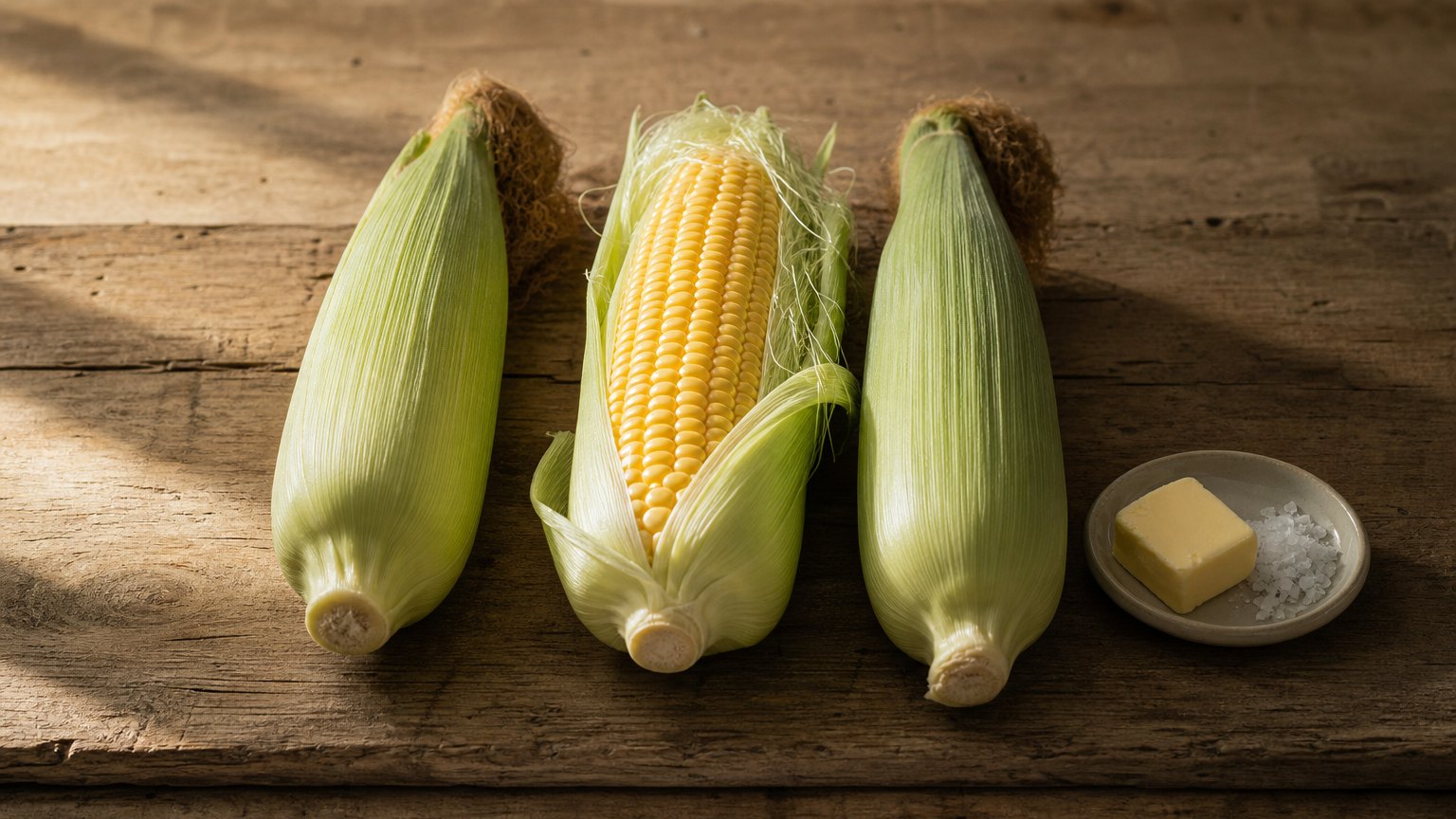
Six ears go in the bag because it is late July and they are cheap. You cook four that night and they are excellent. The last two, on Thursday, taste starchy and flat.
Shucked ears go into boiling water for three to five minutes by Purdue Extension's instruction, or six to eight by Nebraska's, and that is most of what there is to say about how to cook corn on the cob. What the extension guidance spends the rest of its words on is everything before that: how the ear was picked, cooled and stored.
What happens between the field and the pot
The part of sweet corn you eat is a seed, and a seed keeps respiring after it is picked. Purdue Extension states the consequence plainly: the sugars in corn begin to convert to starch very quickly, which is why they advise buying only what you can eat in a few days (Purdue Extension).
Respiration runs faster as the produce gets warmer, and UC Davis's postharvest fact sheet puts numbers on the difference. Sweet corn held at 0°C (32°F) respires at 30 to 51 ml of CO2 per kilo per hour. At 25°C (77°F) the same measurement is 282 to 435 (UC Davis Postharvest). The sheet attributes the vegetable's fast decline to exactly that: a high rate of respiration and the conversion of sugars to starch. Its storage recommendation is 0 to 1.5°C at 95 to 98 percent humidity, and even at those temperatures it says standard sweet corn should not be held longer than seven days including transit.
The variety changes those numbers. The same sheet reports super sweet (sh-2) corn stored at 0°C for up to 21 days with generally acceptable market quality. That is hydrocooled, iced, commercial storage rather than anything a domestic fridge reproduces, and a sign at a market stall rarely names the type anyway.
Nebraska Extension gives the home version: keep the ears in their husks in plastic wrap or a bag in the refrigerator, and cook them within one to two days for best quality (Nebraska Extension).
What to look for when you buy
Nebraska's selection rule is green husks, fresh silks and tight rows of kernels. UC Davis adds the marker growers use for maturity: for fresh market, kernels should be plump and milky when squeezed, and not doughy.
If the tip looks dry or has insect damage, cut the end off the ear rather than rejecting the whole thing, and rinse the ears under cool running water before they go near heat. Buy them in the husk when you have the choice, since that is also how the extension guidance says to store them.
How to cook corn on the cob, four ways
The timings below come from those same two extension services, which do not give the same numbers for the same job.
- Boil. Purdue brings a large pot to the boil with a tablespoon of salt, adds the shucked ears and gives them 3 to 5 minutes. Nebraska covers the pot, drops to medium and cooks for 6 to 8 minutes.
- Steam. An inch of water under a basket, ears above it, 7 to 10 minutes (Purdue).
- Microwave. Purdue leaves the husks on and gives 4 to 6 minutes on high, then lets the ears cool before the husk and silk come off. Nebraska gives 5 minutes unshucked or 4 shucked.
- Grill. Nebraska preheats to 400 to 450°F, shucks the ear or leaves one or two inner layers of husk on, then grills 8 to 12 minutes, turning every 2 to 3 minutes to char each side. Purdue peels the husk back, removes the silk, oils the ear, folds the husk over and wraps it in foil for about 15 minutes, or soaks part-shucked ears and grills them covered for about 20.
Both services attach the same instruction to their numbers: cook until the kernels are tender. Pull an ear at the early end of the range and try it rather than running the clock to the far end. The grill choices are not interchangeable either. Nebraska's method is written around charring each side, while Purdue's foil-wrapped one is not, so pick by the result you want rather than by the timing.
The salted water argument
Purdue's boiling instruction puts a tablespoon of salt in the water. America's Test Kitchen ran the comparison and came out the other way, reporting that kernel skins were tougher after salted water, an effect they first pinned on calcium in an anti-caking agent and then saw again with calcium-free kosher salt (America's Test Kitchen).
That is one comparison against one instruction, on one set of ears, so it is not the last word on either side. It is also a question you could settle at your own stove in one evening with two pots. Salting at the table avoids it entirely, and corn is one of the few things I would rather season at the plate than in the pot, which is close to the opposite of the advice in how to salt food for almost everything else.
When there are more cobs than dinner
Kernels come off a cooked or raw ear with a sharp knife, never a serrated one. Hold the ear firmly at the tip and shave down at the base of the kernels without cutting into the cob. Purdue puts the yield at about three quarters of a cup per ear, which is enough to judge how many cobs a recipe calling for loose kernels will take.
Timing tightens once the kernels are off. Purdue gives raw cut corn a day or two in the fridge before it sours, and about four to five days for cooked corn cut off the ear. The USDA's general limit for cooked leftovers is three to four days, so take the shorter figure, and get cooked corn into the fridge within two hours, or within one hour if the kitchen is above 32°C (90°F) (USDA FSIS).
For anything longer, freeze it, and blanch it first. The National Center for Home Food Preservation water-blanches corn on the cob by diameter: 7 minutes for small ears of 1¼ inches or less, 9 minutes for medium ears between 1¼ and 1½ inches, 11 minutes for anything larger, then cools them promptly and completely to avoid what it calls a cobby taste. For whole kernel corn the blanch is 4 minutes, after which you cool, drain and cut the kernels at about two thirds of their depth (NCHFP). Our guide to what freezes well covers the rest of the drawer.
Two Gourmate recipes that want kernels rather than whole cobs:
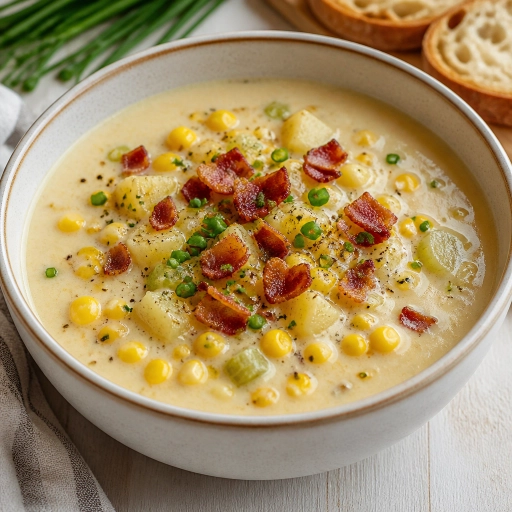
Corn Chowder
This corn chowder is creamy, savory, and lightly sweet, with tender potatoes and bursts of juicy corn in every spoonful. Crispy bacon and fresh chives on top add smoky crunch and brightness, making it cozy and satisfying without being complicated.

Sayur Bening Bayam
Sayur Bening Bayam is a delicate, comforting soup with a crystal-clear broth, sweet bursts of corn, and tender spinach. It is clean-tasting, gently aromatic, and perfect as a light side dish or simple healthy meal.
Corn Chowder calls for 300 g of kernels, roughly three ears, and has bacon, dairy and wheat flour in it, so read the ingredient list if anyone at the table avoids those. Sayur Bening Bayam takes 100 g into a clear Indonesian broth with garlic, shallot and bay leaf. If you would rather bake than boil, the summer vegetable galette takes about two ears.
Purdue lists sweet corn as available July through September. Inside that window, cook it within a day or two of buying it and you will not have to think very hard about the pot.
Gourmate builds your week around what is in season and what is already in your kitchen, then turns it into one grouped shopping list. Try it here.