Pad Thai: How to Cook Thailand's Classic Noodle
How to make Pad Thai at home: the tamarind sauce, wok technique, and prawns that make Thailand's most iconic street-food noodle. Ready in 15 minutes.
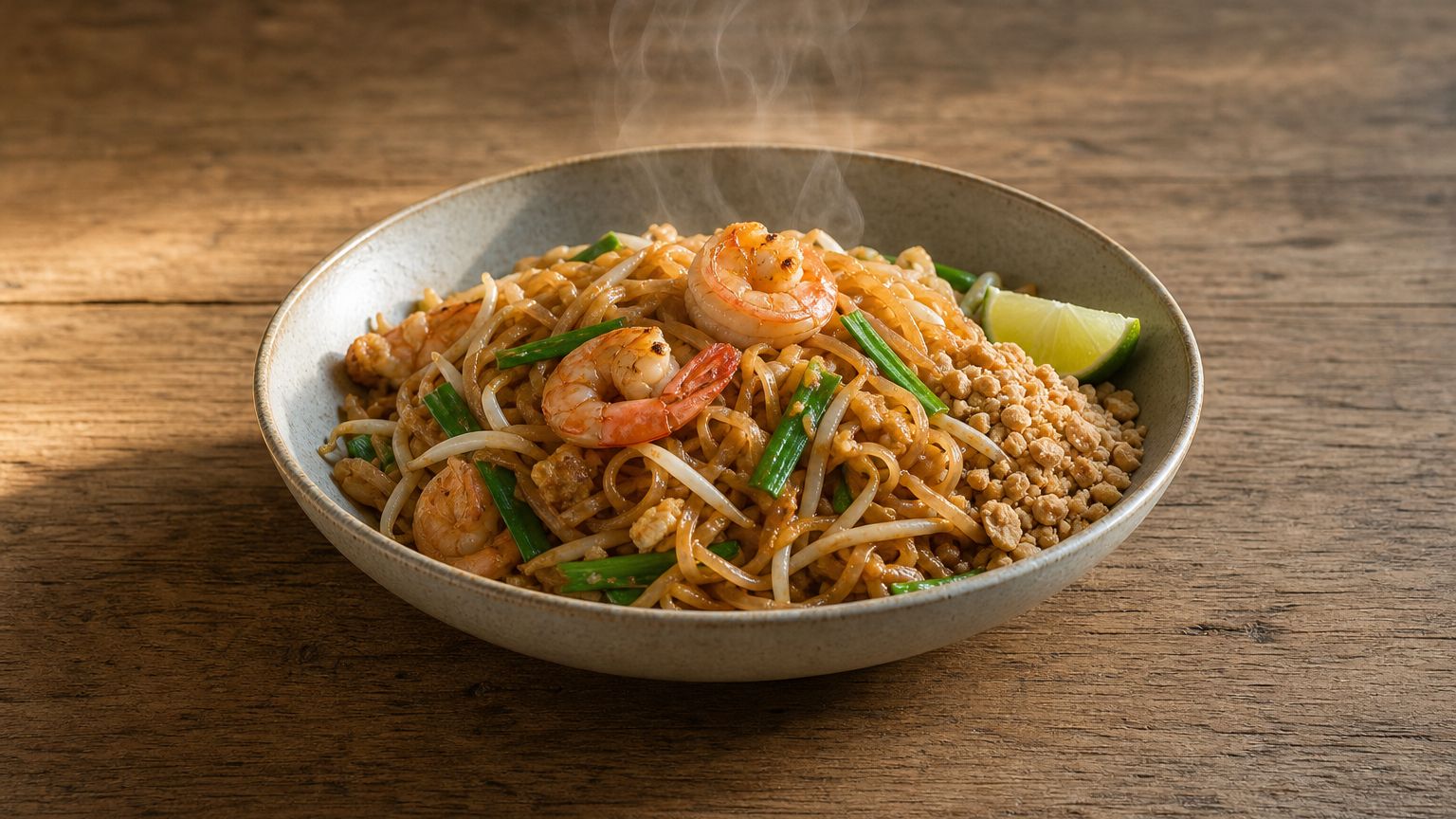
Most versions you've eaten from a takeaway box were probably decent. A few were great. The gap between the two comes down to three things: a tamarind sauce made from the right ingredients, a pan that's properly hot, and the confidence to move fast once the heat is on.
Where the dish comes from
Pad Thai is often presented as ancient street food, but its national identity is fairly recent. Food historians generally trace the dish's rise to a government campaign in the 1930s and 40s under Field Marshal Plaek Phibunsongkhram, when rice noodles were promoted as a cheaper, more widely available staple than rice. The dish spread through Bangkok on street carts and became one of the country's most recognised foods by mid-century.
The result is a dish that's affordable and fast, not complicated. It reflects Thai flavour principles (the balance of sweet, sour, salty, and savoury in one bowl) combined with Chinese-influenced stir-frying technique. The prawns and egg are the protein. The peanuts and bean sprouts handle texture. The lime comes at the table.
The sauce: where most home versions go wrong
The sauce is four things: tamarind paste, fish sauce, palm sugar, and a small amount of water. Get that ratio right and the dish tastes like Pad Thai. Use substitutes, and it doesn't.
The common substitution is swapping tamarind for lime juice and extra sugar. That produces something sweet-sour, but the wrong kind. Tamarind has a deep, slightly fruity tartness that lime can't replicate. The bigger mistake is using ketchup, which shows up in quite a few Western-adapted recipes. It turns the noodles orange and tastes of tomatoes, which Pad Thai never has.
Tamarind paste is available in most Asian food shops and in many large supermarkets. It keeps for months in the fridge once opened. Palm sugar has a mild caramel note that white sugar doesn't quite match; if you can't find it, soft brown sugar is a workable substitute.
Mix the sauce in a bowl before you start cooking and taste it. It should hit sweet, sour, and salty at the same time. If it seems flat, add a small amount more tamarind. Set it aside. You'll add it all at once in the pan.
The noodles: soaking, not boiling
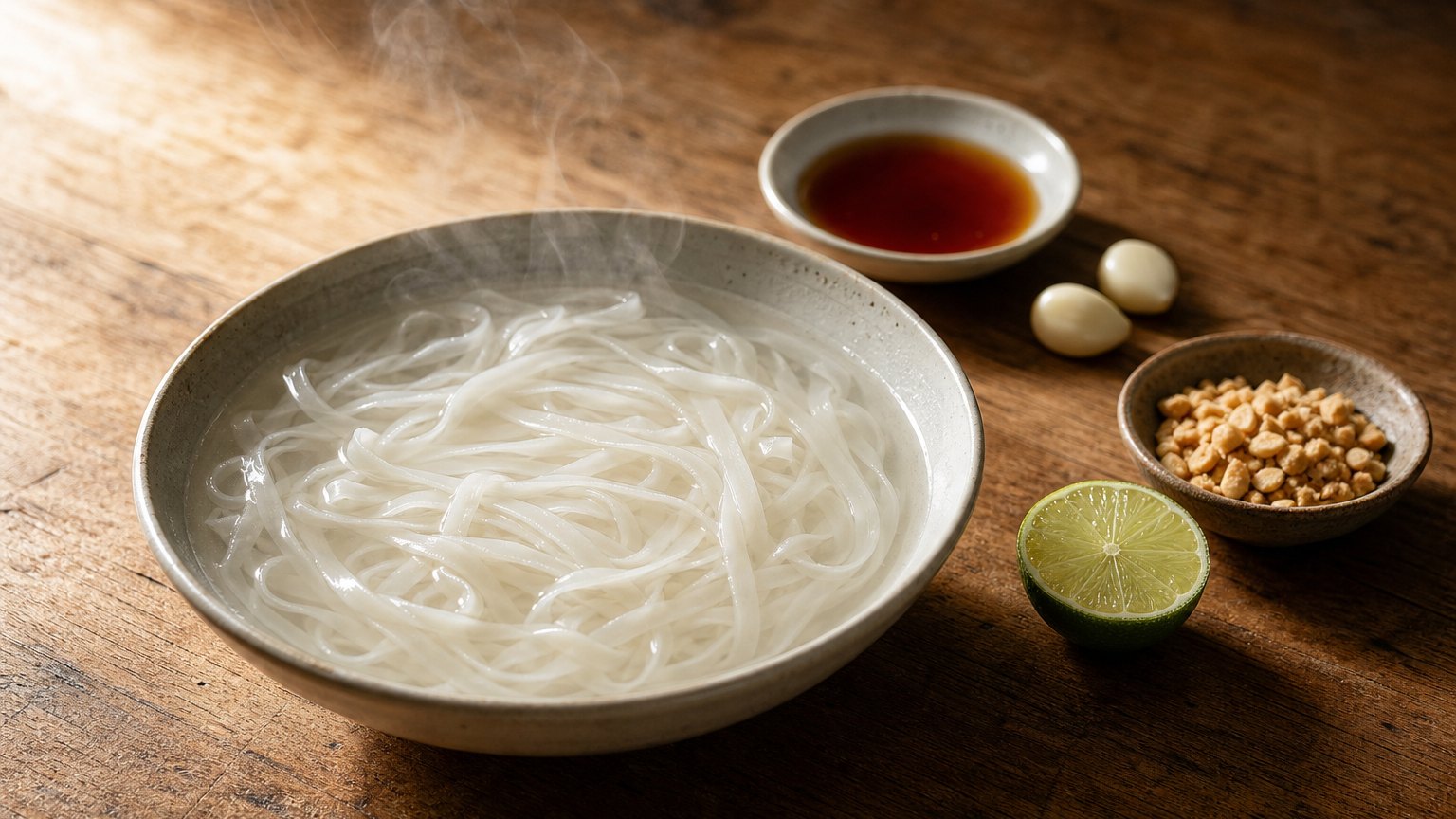
Dried flat rice noodles, labelled sen lek or 3mm, are what you want. You don't boil them. You soak them in very hot water for about 6 minutes until they're pliable but still slightly firm, then drain them well.
They finish cooking in the wok, absorbing the sauce as they go. If they're already fully cooked from boiling, they turn to mush in the pan. Starting slightly underdone and finishing in the sauce is how you get that chewy, springy texture that makes the dish satisfying.
The 6-minute soak runs in parallel with your prep. Start the water, put the noodles in, then complete all the rest of your prep: chop the garlic and spring onions, cut the tofu, measure out the peanuts. Have everything ready before the noodles come out of the water. Pad Thai cooks in about 7 minutes once the pan is hot, and there is no moment to chop anything mid-cook. For another noodle dish that soaks rather than boils, the cold sesame noodles post follows the same approach.
How to cook Pad Thai: the wok and the sequence
You need a wok, or the widest, heaviest pan you own, preheated until it's very hot. Wok cooking works by flash-frying: the intense heat browns the outside of ingredients while the interior stays tender. A pan that's only warm steams everything instead, and you end up with soft, grey prawns and noodles that stick.
The sequence:
- Oil in the hot pan, then prawns. Stir-fry for 1 to 2 minutes until turning pink and opaque throughout, not just on the surface. The flesh should feel firm when pressed, not soft and translucent. Push everything to one side.
- Tofu in for about a minute to pick up colour. Push to the same side.
- A splash of fresh oil, garlic in for about 10 seconds until fragrant. Don't let it brown. Pour in the beaten eggs and scramble briefly until just set.
- Drained noodles and sauce in. Toss and stir constantly for 1 to 2 minutes, lifting and turning so the sauce coats evenly. If the pan looks dry before the noodles are ready, add a small splash of water. You're looking for noodles that are glossy, separate, and just tender.
- Most of the bean sprouts and spring onions in for 20 to 30 seconds. Off the heat.
Plate immediately with the reserved bean sprouts, spring onions, peanuts, lime wedges, and a pinch of dried chili flakes. Gourmate estimates 595 calories and 34 grams of protein per serving for two.
Pad Thai
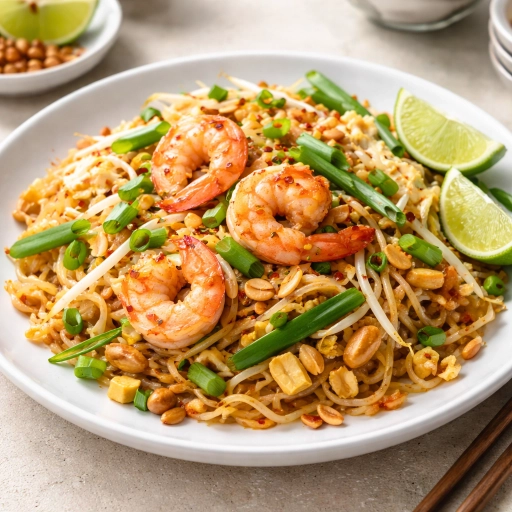
Pad Thai is a fast, vibrant noodle stir-fry with chewy rice noodles, juicy prawns, soft egg, crisp bean sprouts, and the signature tang of tamarind. Finished with peanuts, lime, and chili, it is balanced, comforting, and bright in every bite.
Adjusting at the table
In Thailand, Pad Thai rarely arrives as a finished, fixed plate. The standard table setup includes lime wedges, dried chili flakes, a small pinch of granulated sugar, and extra fish sauce in a small dish. Each person seasons their own portion.
This is worth doing at home. The dish comes out of the wok with a baseline balance, but your own preference might sit elsewhere. Someone who likes it sharper squeezes more lime. Someone who prefers it sweeter adds a pinch of sugar. It takes 30 seconds to lay those four things out.
For a vegetarian version, swap the prawns for extra firm tofu or sliced mushrooms. Replace the fish sauce with a vegetarian fish sauce (often made from fermented soybeans or seaweed; most Asian food shops carry it). The sauce will taste noticeably different, but the structure of the dish works. Check the label on vegetarian fish sauce too: some brands include soy, wheat, or other allergens.
Allergens and safe cooking
Pad Thai as written contains five major allergens under EU and UK food law. The prawns are crustaceans (one of the 14 listed categories). The fish sauce contains fish. Peanuts are a legume, not a tree nut, but they are their own separate major allergen category. The eggs and the firm tofu (soy) are the remaining two. Rice noodles are naturally gluten-free, but check the label on your fish sauce because some brands include wheat.
For cross-contamination: keep raw prawns and anything that touches them (board, knife, plate) completely separate from the tofu, peanuts, lime, spring onions, and garnishes. Wash your hands immediately after handling raw prawns and before moving on to other ingredients.
Two raw-food risks apply here. Raw prawns carry bacteria including Vibrio species, which thorough cooking destroys. Cook them until the flesh is opaque all the way through and firm to the touch, not just pink on the surface. Raw eggs carry a Salmonella risk. The scramble in step 3 should produce a fully set white and a thickened yolk. Anyone who is pregnant, over 65, under 5, or immunocompromised should have fully set eggs; pasteurised shell eggs are an option if you prefer a looser result.
The reserved raw bean sprouts served on top carry their own microbial risk. Wash them under cold running water before use. Anyone pregnant or immunocompromised should blanch them briefly or skip them.
Refrigerate leftovers promptly, within 2 hours of cooking, in a covered container. They keep for up to 2 days at or below 4°C/40°F. Reheat in a hot pan with a splash of water until piping hot throughout.
Want more Southeast Asian weeknight ideas? Gourmate builds a personalised meal plan around your tastes and the time you actually have. Find out how the recipe discovery works and what it takes into account.