
Fermented Foods: What They Are and How to Cook With Them
What fermented foods actually do, which ones still have live cultures when you eat them, and three recipes that use miso, kimchi, and yogurt.
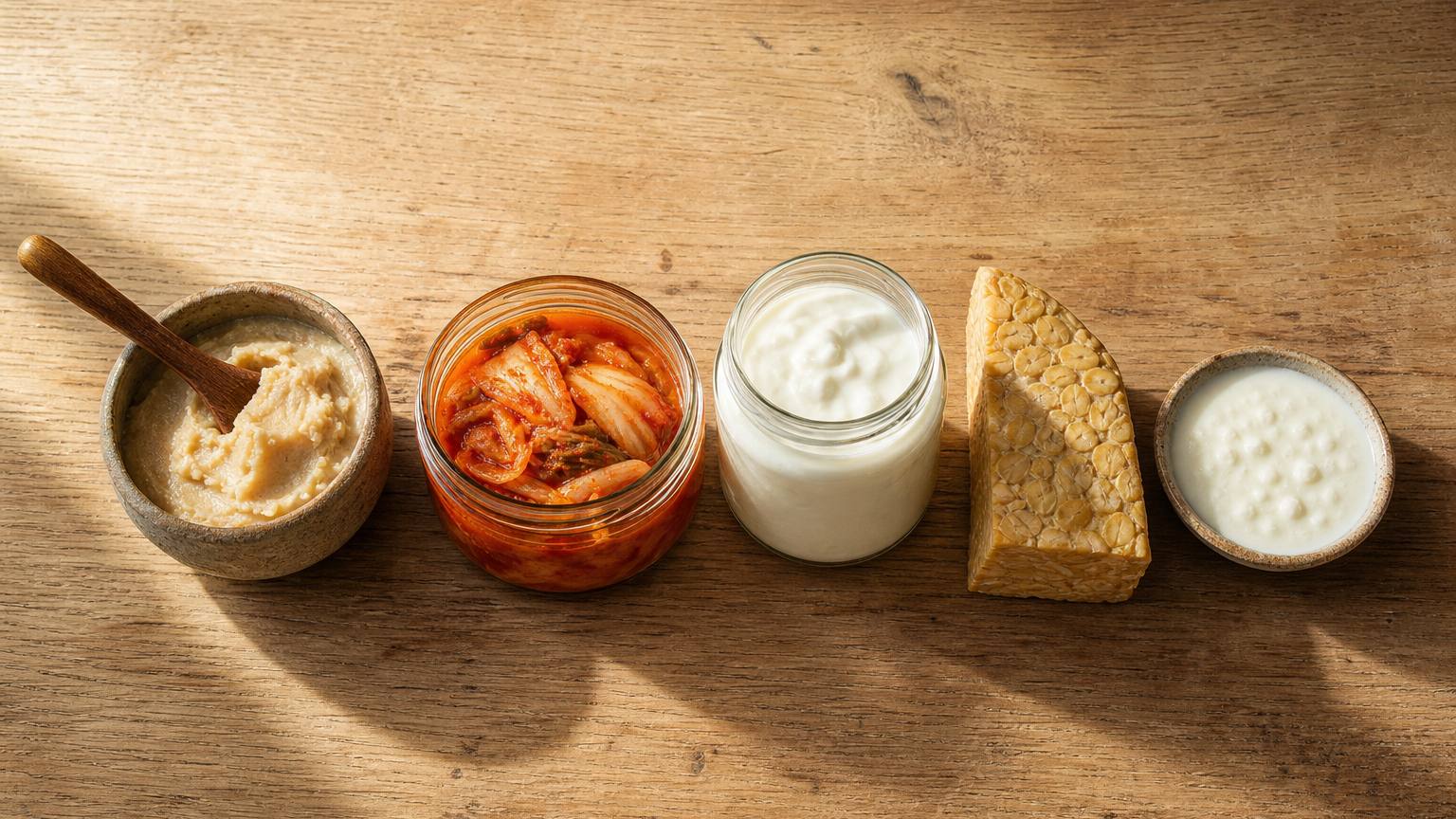
Walk into any health food shop and the word "fermented" appears on labels next to marketing language about gut health and microbiomes. The claims can sound vague. But fermentation is a specific and measurable process, and the research on what it does to the people eating the results has got more concrete in recent years.
What fermentation means in the kitchen
Fermentation is the conversion of sugars and starches by bacteria, yeast, or moulds into acids, alcohols, carbon dioxide, or some combination of the three. The acid drops the pH of the food, which inhibits most harmful bacteria and creates the sour or tangy flavour you recognise in yogurt, kimchi, sourdough, and pickles.
Three main types matter for cooking. Lactic acid fermentation (used for yogurt, kefir, kimchi, sauerkraut, and miso) produces lactic acid from sugars, dropping the pH and inhibiting most spoilage and pathogenic bacteria. Alcoholic fermentation (beer, wine, sourdough) produces ethanol and carbon dioxide. Mold fermentation (miso, tempeh, some aged cheeses) uses specific moulds to break down proteins and fats, producing enzymes and flavour compounds. All three produce distinct flavours and textures.
Which fermented foods still have live cultures
This is the distinction that the marketing rarely makes clear. A lot of fermented foods are processed or cooked in ways that kill the bacteria before they reach you. Most commercial beer is filtered or pasteurised. Sourdough is fermented, but baking kills the yeast and bacteria. Vinegar-pickled cucumbers are sometimes labelled as "fermented" even when they're just acidified with vinegar and never actually fermented at all.
Fermented foods that typically do still contain live bacteria:
- Plain yogurt and kefir: the bacteria are alive up to the end of the shelf life, provided the product says "live cultures" or "live active cultures" on the label. Greek yogurt is just strained yogurt, more concentrated. Kefir is fermented with a wider community of bacteria and yeasts and has a thinner, pourable texture.
- Unpasteurised kimchi and sauerkraut: sold from the refrigerated section, not shelf-stable. If it's in a sealed jar on a room-temperature shelf, it has either been pasteurised or acidified with vinegar. The refrigerator version continues to ferment slowly, which is why a jar of kimchi gets more sour and complex over weeks.
- Miso: a fermented paste of soybeans plus salt and a grain, broken down by the mould Aspergillus oryzae. White and yellow varieties are younger and milder; red miso has fermented longer. Look for unpasteurised or "non-heat-treated" on the label; pasteurised miso has a longer shelf life but no live organisms.
- Tempeh: pressed, fermented soybeans bound by a white mould. Firmer than tofu, with an earthier flavour. The fermentation breaks down the phytic acid in soybeans, which can make minerals like iron and zinc more available compared with plain cooked soybeans. Cook it before eating, as with any raw protein.
- Some kombucha: live strains are present in properly made kombucha, but commercial versions vary. Check the label for whether it has been pasteurised.
What doesn't carry live bacteria: commercially canned sauerkraut, most shelf-stable hot sauces, beer and wine, sourdough after baking, and anything that has been boiled or heated to pasteurisation temperatures.
What the research says
Most of the interest in live fermented foods centres on the gut microbiome: the community of trillions of bacteria, fungi and other microorganisms that live in the large intestine and affect how you digest food, produce certain vitamins, and regulate parts of your immune system.
A 2021 randomised trial published in Cell (Wastyk et al., 2021) put 36 adults on either a high-fermented-food diet or a high-fibre diet for 10 weeks. The fermented-food group showed consistent increases in gut microbiome diversity and decreases in 19 inflammatory proteins measured in blood; the high-fibre group showed neither effect in the same time window, though the researchers note that fibre's effects may take longer or depend on a different starting microbiome.
A 36-person trial over 10 weeks can establish a direction and generate hypotheses, not settle a question. The biomarker changes are a signal, not a confirmed clinical benefit. What the study does provide is experimental data in humans, which is a step beyond the observational research that preceded it. Take the finding as a reason to pay attention to fermented foods, not a prescription.
The glutamate released during fermentation is part of why miso and aged cheese taste so savoury, a topic covered in more depth in the what is umami post.
A practical note on heat
Most lactic acid bacteria in fermented foods lose viability when held above roughly 50-55°C for more than a short period, though exact tolerances vary by organism and exposure time. This doesn't mean you should avoid cooking with them, but it does change which benefits apply.
For yogurt and kefir: eat them cold or at room temperature to keep the cultures intact. Stirring yogurt into a sauce that has been taken off the heat and left to cool for a few minutes preserves more bacteria than adding it to a pan that is still simmering.
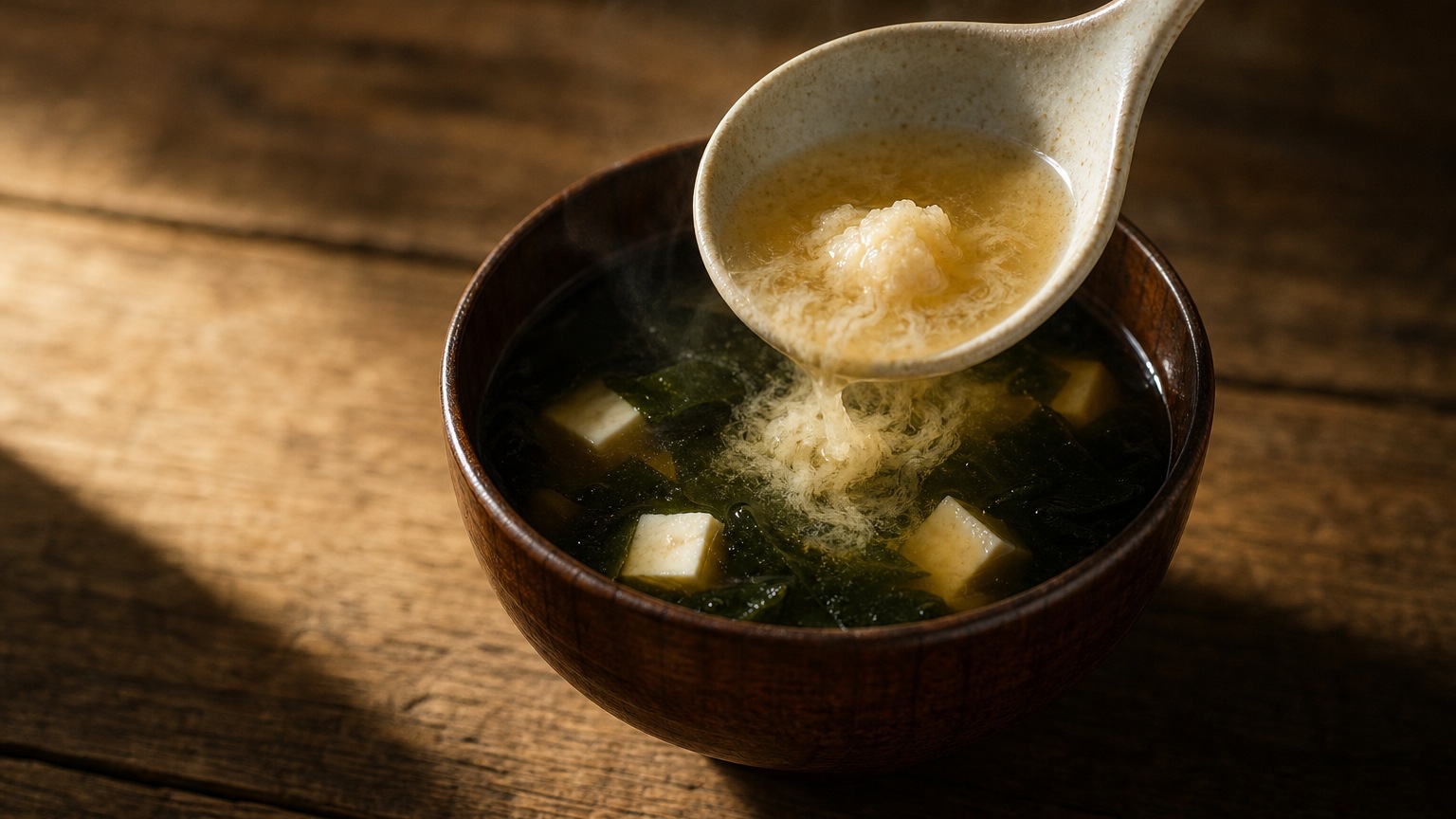
For miso: it's worth adding off the boil. The instruction in many Japanese recipes to "dissolve miso into a ladleful of hot broth and stir back in off the heat" exists for this reason: it keeps the aroma fresh and preserves whatever probiotic character remains. The Miso Soba Soup in the recipe below notes this explicitly.
For kimchi: cooking fully fermented kimchi into a pancake or stir-fry kills the bacteria, but the flavour of well-fermented kimchi in cooked form (sharper and more complex than fresh) is one of the best things to do with a jar that has been sitting in your fridge for a few weeks. The Korean banchan guide covers this use in more detail.
For tempeh: cook it thoroughly before eating. The fermentation gives it its distinctive texture and improves nutrient availability, but tempeh is sold raw.
A note on allergens and sodium
Several fermented foods carry major allergens. Yogurt and kefir contain dairy; reducing lactose through fermentation does not make them safe for a dairy allergy. Miso and tempeh contain soy; some miso also contains barley or wheat, so check the label if you're avoiding gluten. The Kimchijeon recipe below contains gluten, soy, egg, and sesame from its dipping sauce.
Miso, kimchi, and sauerkraut also contain substantial salt. People managing hypertension, kidney disease, or a low-sodium diet should use them in smaller quantities and check the nutrition label on commercial products, since sodium content varies widely by brand.
Unpasteurised fermented foods (live kimchi, sauerkraut from the refrigerator section, raw-milk cheeses) carry a small but real risk from pathogens that pasteurisation would destroy. The risk is low for healthy adults but meaningful for pregnant people, children under five, adults over 65, and anyone immunocompromised. For those groups, pasteurised versions or fully cooked uses (such as stir-fried kimchi) are a safer choice.
Three recipes to start with
Each of these recipes uses a fermented ingredient as a main flavour component, not a garnish. The nutrition figures are Gourmate's per-serving estimates; they will shift with exact brands and quantities.
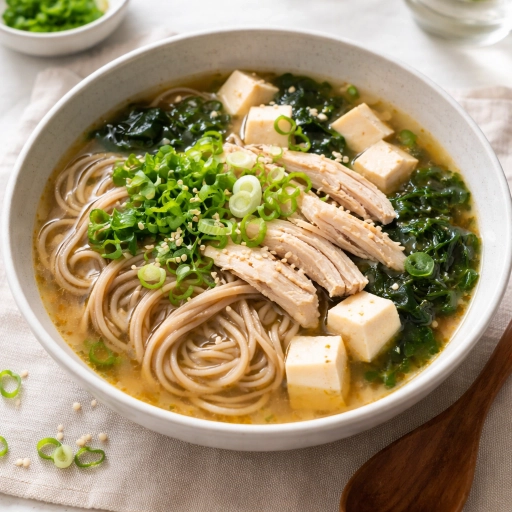
Miso Soba Soup
This light, comforting bowl combines earthy soba noodles with tender chicken, silky tofu, and delicate wakame in a savory white miso broth. It is quick to make, gently aromatic, and satisfying without feeling heavy.

Kimchijeon
Kimchijeon is a crisp-edged, savory Korean pancake packed with tangy kimchi and sweet spring onion. The center stays tender while the outside turns golden and crackly, especially when dipped into a nutty sesame-soy sauce.
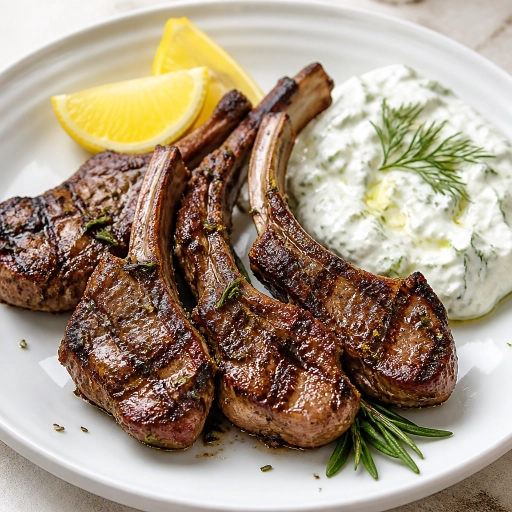
Paidakia me Tzatziki
These lamb chops are quickly grilled until deeply browned outside and juicy within, then paired with cool, garlicky tzatziki. The combination of rosemary, oregano, lemon, and rich lamb makes the dish bold, fresh, and satisfying while staying keto-friendly.
Building them into the week
The practical barrier for most fermented foods isn't preparation time, it's keeping them in stock. A jar of miso lasts months. A jar of kimchi keeps for weeks. Plain yogurt is on most shopping lists already. Once any of them is in the fridge, working them into a meal takes minutes, not a recipe change.
A spoon of miso dissolved into broth, a spoonful of yogurt alongside something spiced, a small pile of kimchi next to rice in the morning. None of those require a dedicated shopping trip.
If you want to build more of these into your weekly meals without planning around them specifically, Gourmate finds recipes that fit your existing taste preferences and what's already in your kitchen. See how the recipe discovery works.