
Flour Types Explained: Which One to Use for What
All-purpose, bread, cake, whole wheat, spelt, rye: what makes each type different and which one your recipe actually needs. A practical baking guide.
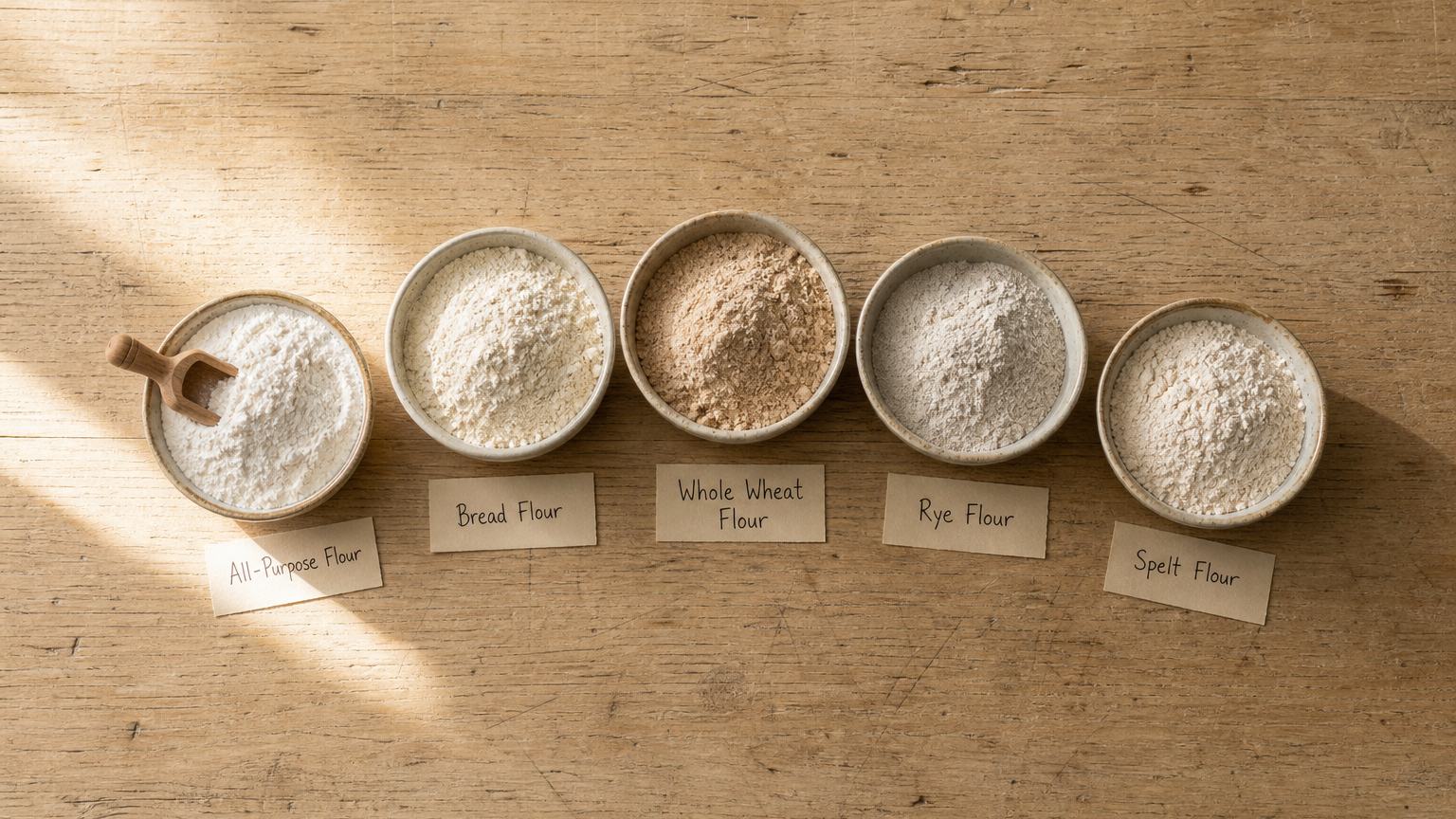
Flour is flour until it isn't. Use bread flour in a delicate cake and you get a tough, chewy result. Use cake flour in a bread dough and the gluten never develops enough to trap gas properly. The protein content (which determines gluten development) varies significantly between flour types, and that difference is what most baking recipes are actually designed around.
Here's what each major type does and when to use it.
What protein content means for baking
When flour is hydrated and worked, the proteins glutenin and gliadin bond together to form gluten: the elastic network that traps bubbles of carbon dioxide from yeast or baking powder and gives baked goods their structure.
More protein = more gluten potential = more chew and more structure. Less protein = less gluten = more tender and delicate.
Different types of baked goods want different textures, which is why flour types exist.
All-purpose flour
The workhorse. Protein content typically 10-12%, which makes it versatile without being extreme in either direction. Suitable for cakes, biscuits, pancakes, quick breads, cookies, and simple yeast breads. It won't produce the best bagel or the most tender chiffon cake, but it works adequately for most home baking.
In Germany, flour types are classified by ash content (minerals remaining after combustion), not protein content directly. Type 405 has the lowest ash content and produces the finest, palest flour, comparable in behaviour to US cake/pastry flour. Type 550 is slightly darker and stronger, close to US all-purpose in practical use for many pastries and light breads. Higher numbers (812, 1050) indicate more mineral content and a darker, more flavourful flour, good for rustic breads. The type number does not by itself tell you the protein content, which varies by wheat variety and mill.
Bread flour
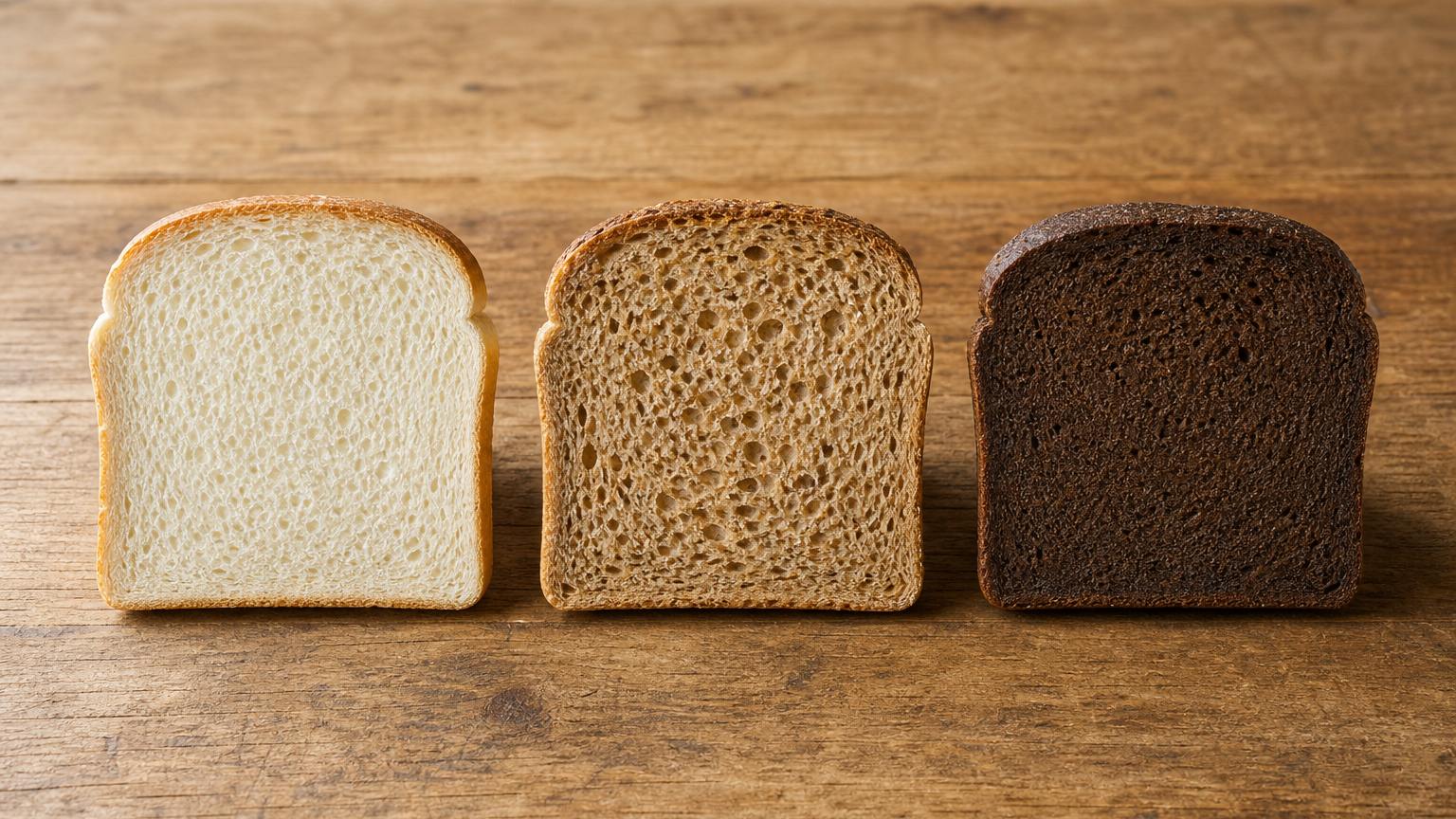
Higher protein, typically 12-14%, sometimes higher. Designed for yeast breads: the extra gluten gives the dough enough strength and elasticity to expand with the gas produced by yeast, trapping it before it escapes. Use it for sandwich loaves, sourdough, pizza dough, and bagels. Using bread flour in a cake makes the crumb noticeably tough.
In Germany, Type 812 or Type 1050 provide similar protein levels and mineral content, and are the standard choice for most everyday German bread baking.
Cake flour and pastry flour
Low protein (7-9%), often bleached (in the US) or finely milled from soft wheat. The lower gluten development keeps cakes and pastries tender. Chiffon cakes, angel food cakes, and delicate biscuits particularly benefit. Not common in European supermarkets, but you can approximate it by replacing a small proportion of all-purpose with cornstarch (roughly 15-20% of the total flour weight).
Whole wheat flour
Made from the whole grain including the bran and germ. Higher in fibre, minerals (particularly iron and magnesium), and has a nuttier, earthier flavour. The bran in whole wheat physically cuts gluten strands, which is why whole-wheat-only breads are denser than white bread. A common approach: replace 30-50% of the white flour in a bread recipe with whole wheat and leave the rest as white, for better structure without losing the whole grain contribution.
In Germany, Vollkornmehl (whole grain) is widely available for wheat, spelt, and rye.
Spelt flour (Dinkelmehl)
A variety of wheat with a different protein structure from modern bread wheat. Gluten in spelt is generally considered more fragile and water-sensitive than standard wheat gluten, which means spelt doughs can become sticky and weak if overworked or too wet. Handle it gently, and reduce the hydration slightly compared to a wheat recipe. The flavour is nutty and slightly sweet. Available as both white and whole-grain varieties.
Spelt is not gluten-free and is not suitable for people with coeliac disease. Some people with non-coeliac wheat sensitivity report tolerating spelt better, but this is not universally true and anyone with a confirmed diagnosis should not rely on spelt as a substitute.
Rye flour (Roggenmehl)
Rye has very different proteins from wheat: they don't form the same gluten network and instead create a sticky, dense structure. Rye bread is characteristically dense and moist, stays fresh longer than wheat bread, and has a slightly sour flavour (especially when made with sourdough starter, which is traditional). Pure rye flour makes an extremely dense bread; most home recipes use a blend of rye and wheat flour.
In Germany, rye flour is graded by extraction. Common rye types include 815, 997, 1150, 1370, and 1740. Pumpernickel traditionally uses coarse cracked rye meal or whole-grain rye rather than refined rye flour.
Self-raising flour is all-purpose flour with baking powder (and sometimes salt) pre-mixed in. If a recipe calls for it and you only have plain flour, add roughly 2 teaspoons of baking powder per 150 g of flour. Not suitable for yeast breads.
Gluten-free flours (oat, almond, rice, buckwheat, chickpea) do not form gluten, so bread and cake structure must come from other binders (xanthan gum, psyllium husk, or egg). Gluten-free baking generally requires following a specific tested recipe rather than substituting a gluten-free flour 1:1. Oat flour must be labelled gluten-free for coeliac use; almond and chickpea flours introduce separate nut and legume allergy considerations. Raw flour of any type should not be eaten; wash hands and surfaces after handling.
Looking for bread and baking recipes that work with specific flours? Gourmate builds personalised meal and recipe plans. Find out how the recipe discovery works.