
Homemade Granola and Muesli: Two Ways to Make Breakfast Better
How to make crispy oven-baked granola and baked oatmeal at home: better flavour than most shop-bought versions, and you control exactly what goes in.
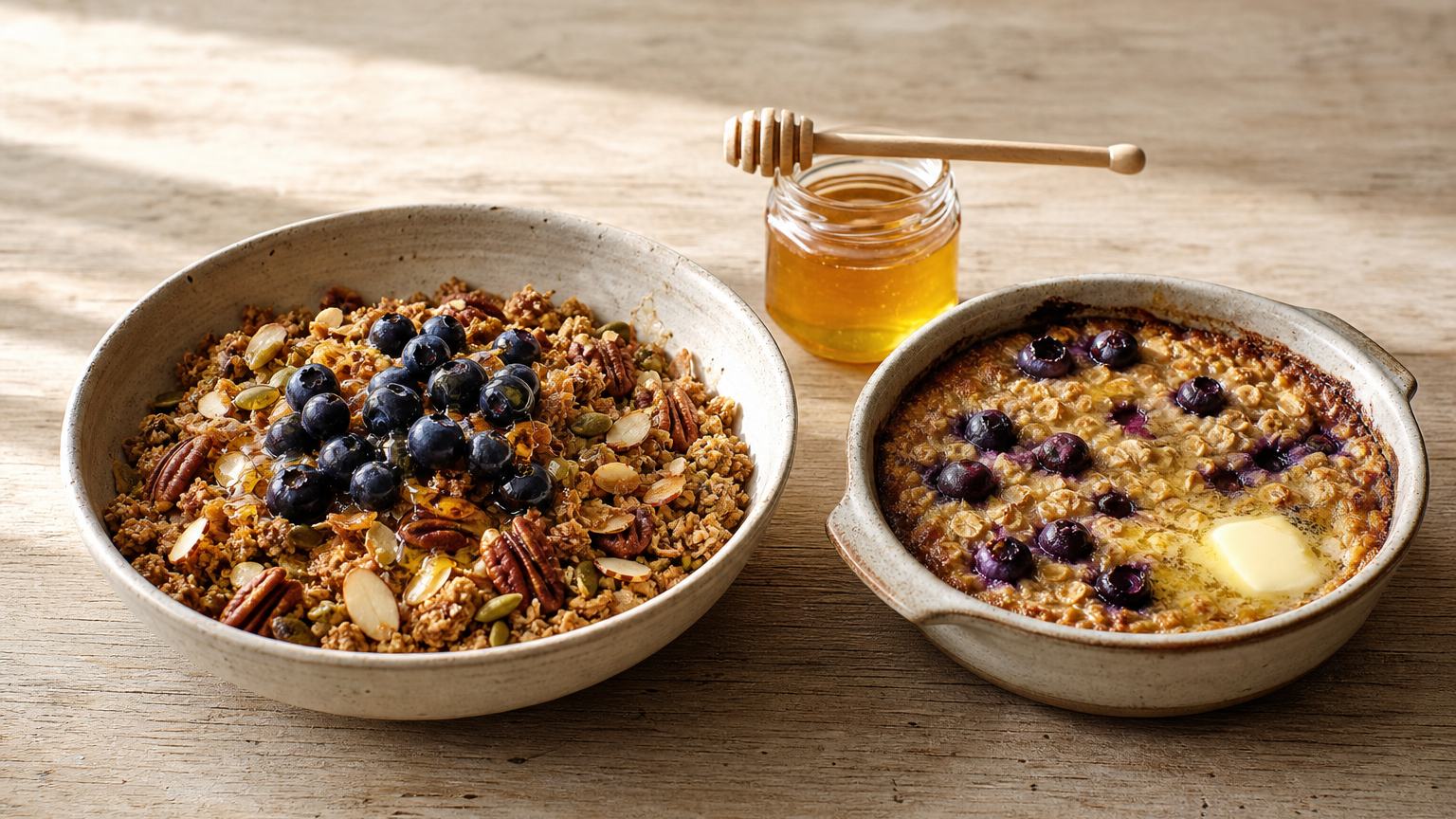
Muesli and granola both start with oats or other grains mixed with fruit and nuts. The difference is what happens next. Muesli is uncooked, soaked in milk or yogurt and eaten cold or left overnight to soften (the bircher style). Granola is baked with fat and a sweetener until the oats cluster and crisp. Both are worth making at home, and both improve significantly on most shop-bought versions.
Why make it yourself
Shop-bought granola typically contains more sugar and oil than you need, often to compensate for the flavour lost in industrial-scale baking. Making it at home takes 10 minutes of prep and 20 minutes in the oven. The flavour is noticeably better because the nuts and oats toast properly in a shallow layer rather than steaming.
On the sugar question: commercial muesli is often marketed as healthy but can contain as much added sugar as breakfast cereals. Making your own lets you control exactly how sweet it is, use a sweetener you prefer (honey, maple syrup, or none at all), and skip the additives. Many shop-bought granolas also use refined vegetable oils as the fat base; making your own lets you use a more flavourful oil (coconut oil adds a distinctly tropical note) or a smaller amount of good olive oil.
How granola works
Granola gets its crunch from two things: the starch in the oats gelatinising and setting during baking, and the sugars in the sweetener caramelising. The fat (oil or butter) distributes heat evenly and helps everything stick together into clusters.
The keys to good granola:
- Spread it thin and press it flat. A shallow, even layer bakes more consistently than a thick pile. Pressing it gently before baking encourages clusters.
- Low temperature, longer time. 160-170°C for 20-25 minutes gives more even browning than a hot oven. Granola can go from golden to burnt fast; watch the last 5 minutes closely.
- Don't stir during the last few minutes. Stirring once halfway through is fine for even browning, but leaving it alone at the end lets the clusters set. It firms up as it cools.
- Coconut and nuts brown faster than oats. If your mix contains flaked coconut or chopped nuts, keep the temperature lower.
Customising granola
Once you have the basic ratio (nuts/grains + fat + sweetener), granola becomes easy to adapt. A reliable base: roughly 200 g dry ingredients (oats, nuts, seeds, coconut) to 2 tablespoons fat and 2 tablespoons liquid sweetener for two servings. Add-ins that work: dried cranberries, raisins, freeze-dried raspberries, cacao nibs, vanilla, cardamom, or orange zest. Add fruit and chocolate after baking, not before, to prevent burning.
For a plain oat granola (the most versatile version): 160 g rolled oats, 2 tablespoons olive oil or melted butter, 2 tablespoons honey, a pinch of salt, 30 minutes at 165°C. That's it.
The two recipes
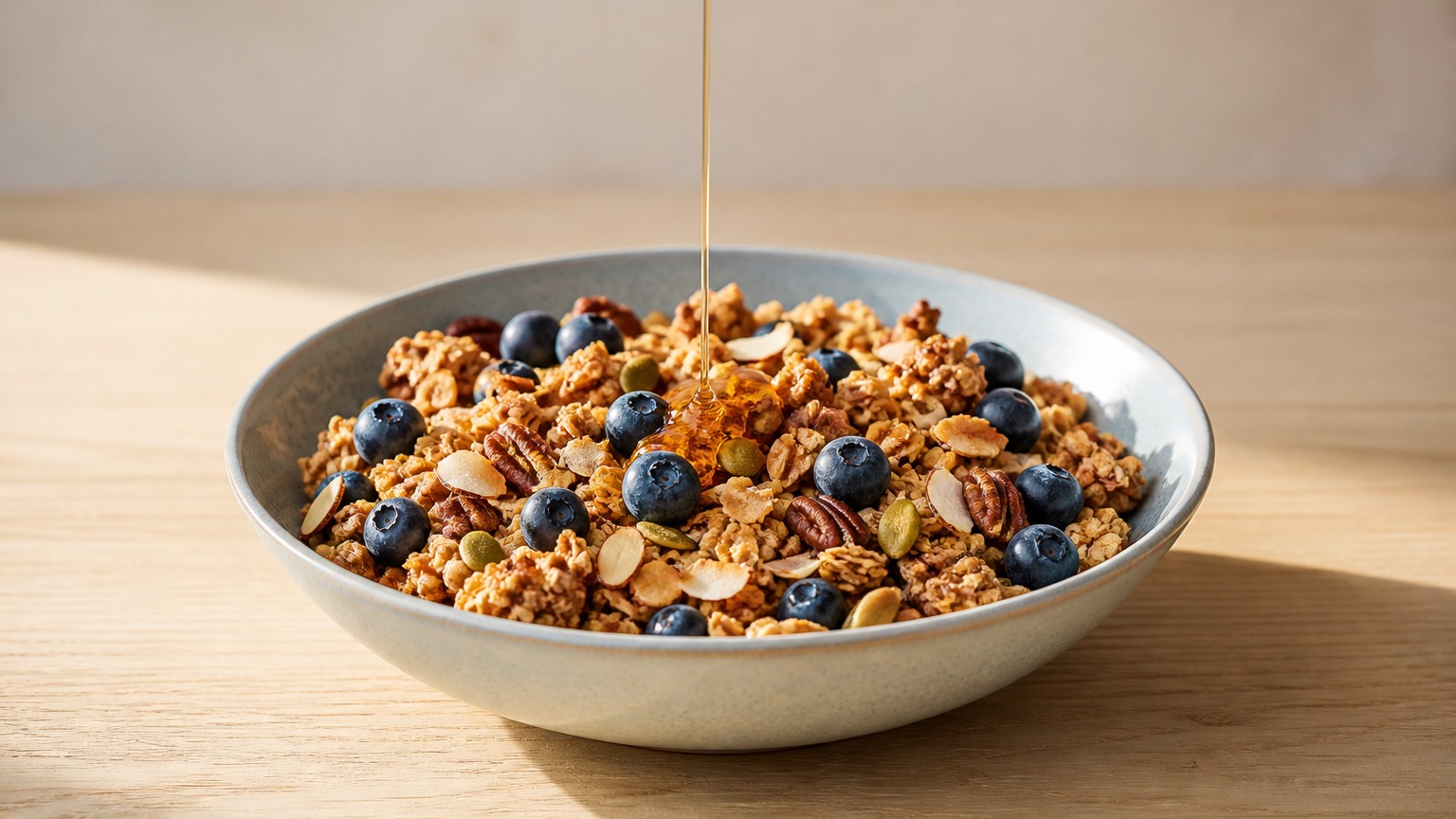
The coconut granola is grain-free (paleo-style): almonds, pecans, pumpkin seeds, and coconut flakes, baked with honey and coconut oil. At 747 calories per serving it's calorie-dense from the nuts and fat, which is part of why it's so filling.
The baked oatmeal is the opposite in approach: whole rolled oats baked with egg and milk, sweetened naturally with ripe banana and honey. It comes out tender rather than crunchy, more like a slice of warm cake than a bowl of cereal. Eat it warm from the dish or let it cool and cut it into bars for the week ahead.
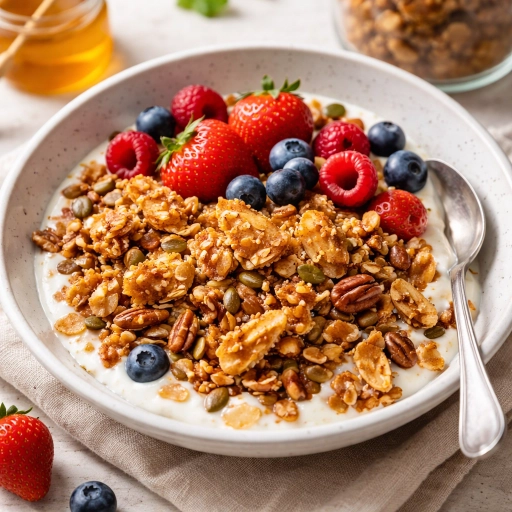
Coconut Granola
This coconut granola is crisp, fragrant, and richly toasted, with buttery pecans, crunchy almonds, and pumpkin seeds bound together by honey and coconut oil. It delivers deep nutty flavor and warm cinnamon in a simple, beginner-friendly grain-free breakfast or snack.
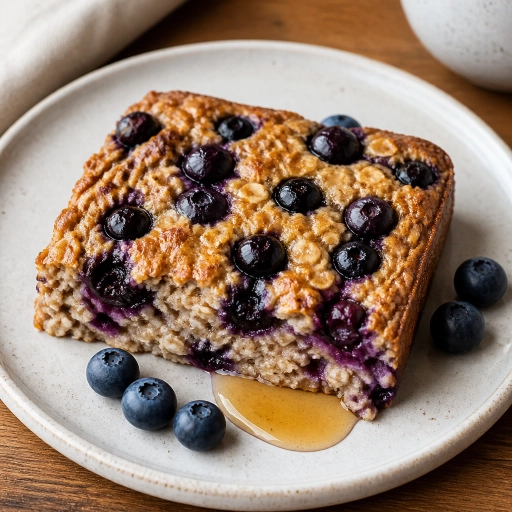
Baked Oatmeal
This baked oatmeal comes out tender in the center with lightly golden edges, sweetened naturally with banana, blueberries, and a little honey. Cinnamon and vanilla give it a warm bakery-style aroma, while the oats make it hearty enough for a satisfying breakfast.
Allergens and food safety
The coconut granola contains tree nuts (almonds, pecans). Anyone with a nut allergy should substitute pumpkin seeds, sunflower seeds, or leave nuts out entirely. The baked oatmeal contains dairy (milk, butter) and egg (raw egg risk during prep: wash hands after handling the shell, and bake fully until the egg is set through). Check labels on rolled oats if buying for someone with coeliac disease; oats are naturally gluten-free but are often processed on shared equipment with wheat and may carry a cross-contamination warning.
Granola stores well in an airtight jar at room temperature for 2-3 weeks, provided it's completely cool before sealing. Baked oatmeal should be refrigerated if not eaten the same day and used within 3-4 days.
Making cold muesli (the bircher way)
Bircher muesli is the uncooked approach: raw rolled oats, grated apple, a handful of nuts and dried fruit, soaked overnight in milk or yogurt. The soaking softens the oats and begins breaking down some of the phytic acid, which improves mineral absorption. No baking required; prep time is 5 minutes the evening before. Use a ratio of about 50 g oats to 150 ml liquid per person, add the fruit and nuts, and refrigerate overnight. It keeps for two days in the fridge.
For plant-based versions, any milk alternative works well for soaking.
Looking for more breakfast ideas that work for the week? Gourmate builds personalised meal plans including breakfast. Find out how the recipe discovery works.