
Filipino Chicken Adobo (Adobong Manok)
Filipino chicken adobo is bone-in thighs braised in soy, vinegar, garlic and bay until dark and glossy. Here is the classic Manila-style method.
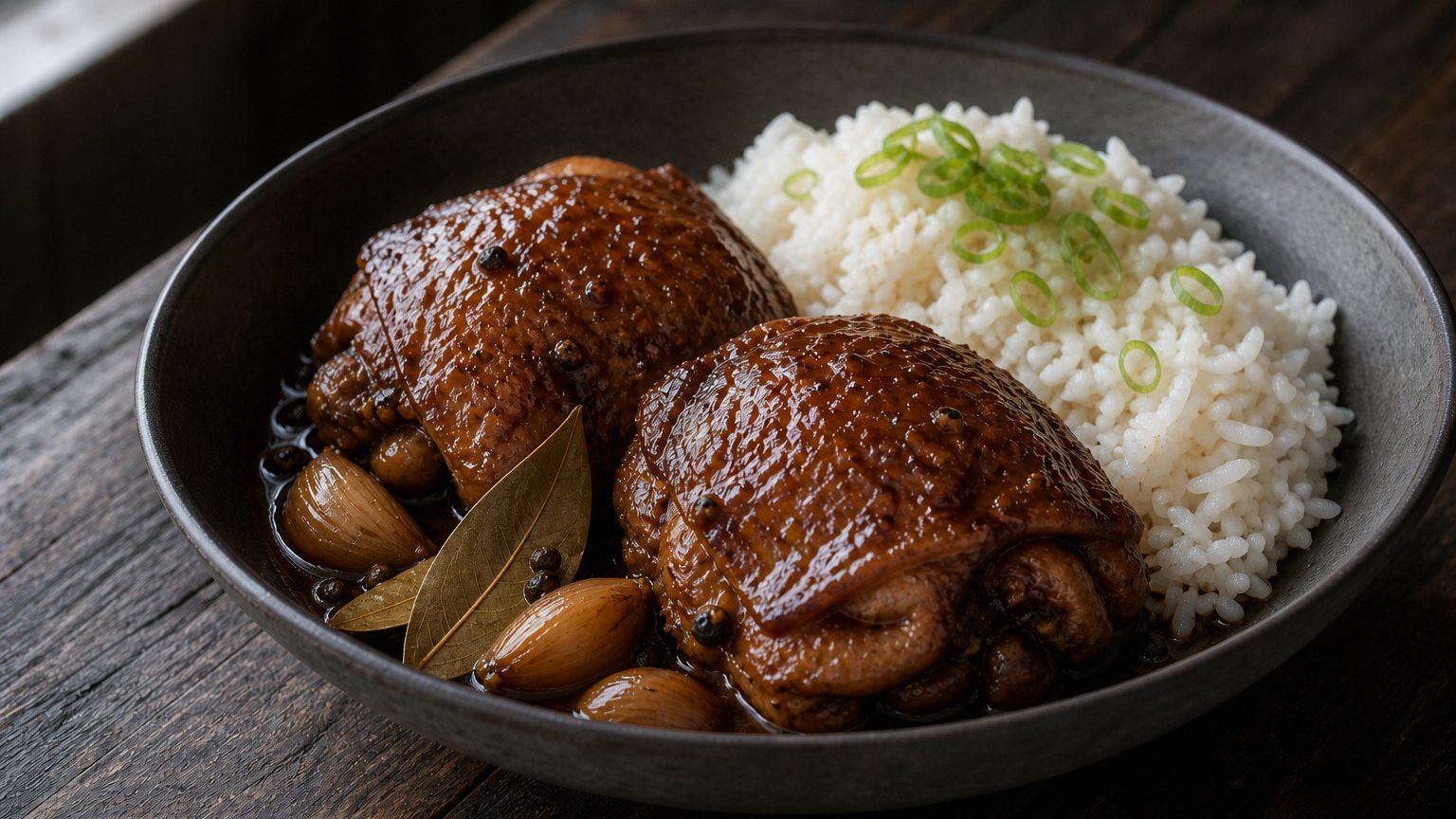
Chicken adobo is the dish many Filipinos will name if you ask for the national one, and every family cooks it a little differently. At its heart it is chicken braised in vinegar, soy sauce, garlic, bay and black pepper until the sauce turns dark and glossy. This is the Manila-style version most people picture, no coconut milk, and it is often traced to a way of keeping meat before refrigeration. This cooked version still belongs in the fridge, though: the vinegar and soy flavour it, they do not make it shelf-stable.
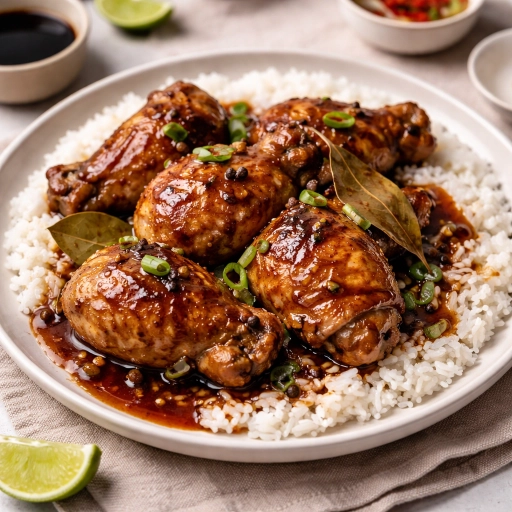
Adobong Manok
Tender, bone-in chicken thighs are braised in a dark, glossy sauce of soy sauce, cane vinegar, garlic, peppercorns, and bay leaves. Steamed rice balances the adobo’s deeply savory, tangy flavor.
Adobo is a method, not one recipe
The name is Spanish, but the vinegar-and-salt technique behind it is older, and adobo is widely described as growing out of a way to preserve food. Because of that, there is no single correct recipe: soy became common, coconut milk turns up in some regions, and some cooks add sugar while others never would. This is the version most people picture: soy sauce, vinegar, a lot of garlic, whole peppercorns and bay, with 900 g of bone-in, skin-on chicken thighs. It serves three at around 760 calories and a generous 47 g of protein a serving on Gourmate's per-serving estimate.
Thighs are the right cut here. They stay moist and forgiving through the braise, where chicken breast would dry out and go stringy. Bone-in and skin-on gives you more flavour and a sauce with more body, though you can pull the skin off after browning if you would rather cut the fat.
The one technique that matters
The move most cooks swear by: after the vinegar goes into the pan, let it come up to a simmer for a couple of minutes before you stir. The traditional wisdom is that this takes the raw, harsh edge off the vinegar before it mixes through, and whatever the exact chemistry, it is how the dish is usually made. Stir it in hard from the start and it can taste sharply of raw vinegar rather than the mellow, savoury tang adobo is meant to have.
The other move is browning. Sear the chicken skin-side down first, in a single layer so it colours rather than steams, before any liquid goes in. That deepens the colour and flavour of the finished sauce, the same reason a good pan sauce starts with browning.
Cooking the chicken adobo
Marinate the thighs for five minutes in the soy sauce with half the crushed garlic, the peppercorns and bay. Heat a little oil in a wide heavy pan over medium-high heat, then lift the chicken from the marinade and let the excess drip off, so the skin sears instead of steaming. Brown it skin-side down for five to six minutes, then two minutes on the other side, in batches if the pan is crowded, and return all the pieces before the liquid goes in. Turn the heat down, add the rest of the garlic for half a minute so it does not burn, then pour in the reserved marinade, the vinegar and 120 ml of water. That raw-chicken marinade is safe here because it now comes up to a simmer and cooks; leave it undisturbed for the first couple of minutes. Turn the chicken skin-side up, stir in the brown sugar if using, partially cover, and simmer gently for 18 to 20 minutes, then uncover and reduce for five to seven minutes more, spooning the sauce over until it is dark and clings to the meat. In a wide pan it reduces faster, so judge it by how glossy and thick the sauce looks rather than by the clock.
Chicken has to be cooked through, and colour is not a reliable test in a dark sauce. The USDA sets the safe minimum for poultry at 74°C (165°F), so probe the thickest thigh, keeping the tip off the bone, before you start reducing; if it is under, cover and simmer it longer, then check again. Handle the raw chicken on its own board, and wash your hands, the board, the knife, the tongs and the marinating bowl in hot soapy water afterwards. Do not rinse the raw chicken, since that splashes bacteria around the sink rather than removing them. Our note on Salmonella in the kitchen covers where the real risk sits.
Soy is salt, so taste before you add more
Sixty millilitres of soy sauce is a lot of salt on its own, and it concentrates further as the sauce reduces. That is why you taste the sauce right at the end, after it has thickened, and only then decide whether it needs anything. Adding salt at the start is how adobo turns from savoury to punishing, which our guide to salting food well explains. Soy sauces vary a lot in saltiness, so treat the amount as a starting point rather than a fixed rule.
The optional teaspoon of brown sugar is not there to make the dish sweet. It softens the vinegar's edge and helps the sauce look glossy as it reduces, which is why it earns its place even though you will not taste it as sweetness.
Serving, and why it is better the next day
Serve the chicken over steamed white rice with the reduced sauce spooned generously on top, and pull out the bay leaves first. Rice is not a side here so much as the point: it is what carries the salty, sour, garlicky sauce.
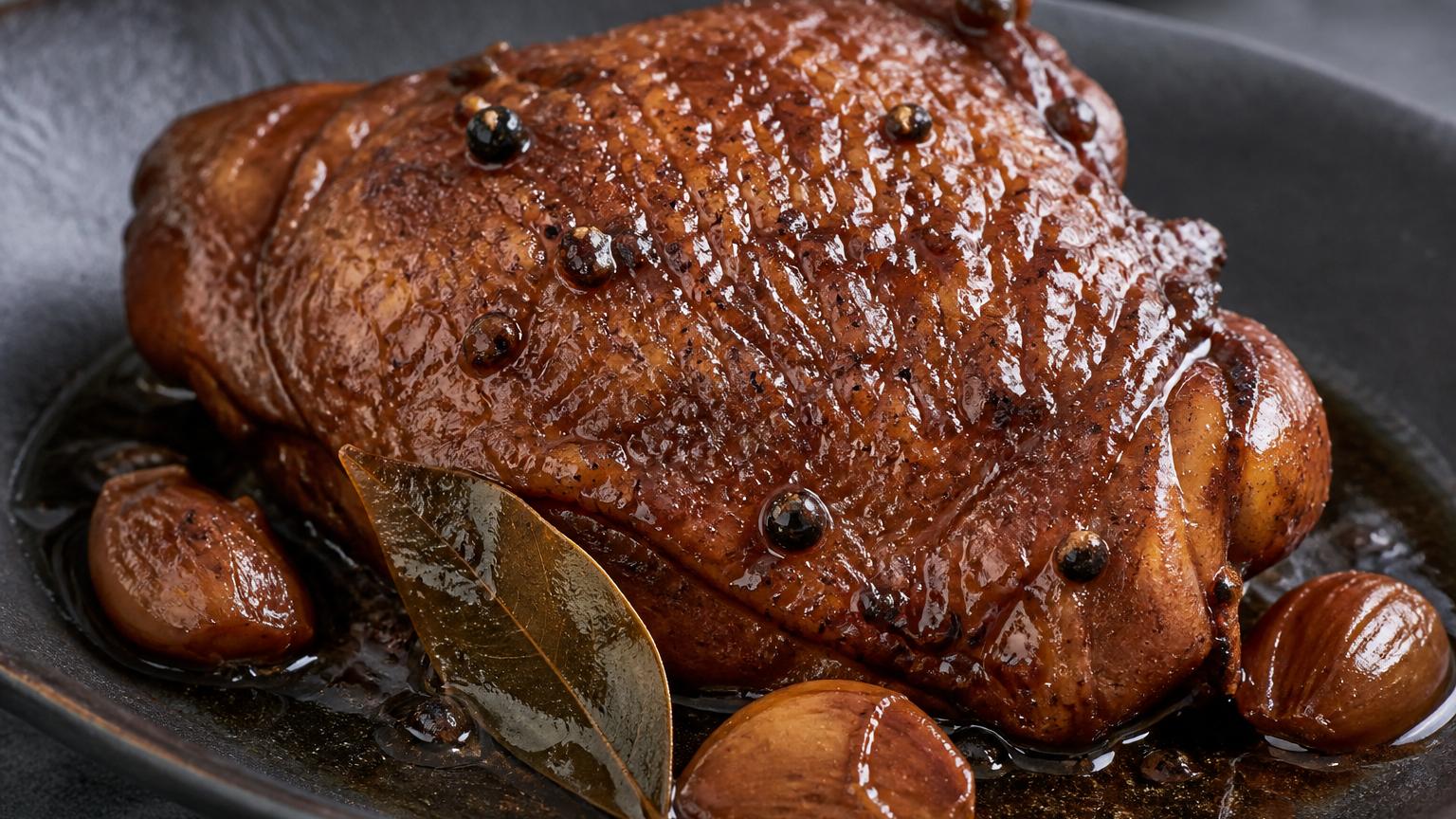
Adobo is one of those dishes many people find better the day after, once the vinegar and soy have settled into the meat. Cool leftovers in a shallow container, refrigerate within two hours, use them within three to four days, and reheat to 74°C, steaming right through. It also freezes well, which our guide to what freezes well covers, so a double batch is worth it.
Allergens and swaps
Both flagged allergens come from one bottle. Soy sauce contains soy, and most kinds are brewed with wheat, which is the allergen to declare and also the source of the gluten. For coeliac disease, swap a soy sauce or tamari labelled gluten-free and check the label, since not all tamari is. That takes out the wheat and gluten but not the soy, so it is no help for a soy allergy. The dish is dairy-free as written, with no egg or nuts of its own, though packaged sauces can carry cross-contact warnings worth reading.
The one swap worth naming is the cut. Bone-in thighs give the best sauce and are hard to overcook, but boneless chicken breast works if that is what you have: simmer it more gently, around ten to twelve minutes, and pull it at 74°C, because it has none of the thigh's forgiveness.
The thing I like about chicken adobo is how little it asks for how much it gives back. A short list of pantry ingredients, mostly one pan, and a rule about when to stir the vinegar, and you get a dish people cook their whole lives and still argue about.
Gourmate can scale this recipe to your table, translate it, and flag the allergens before you cook.