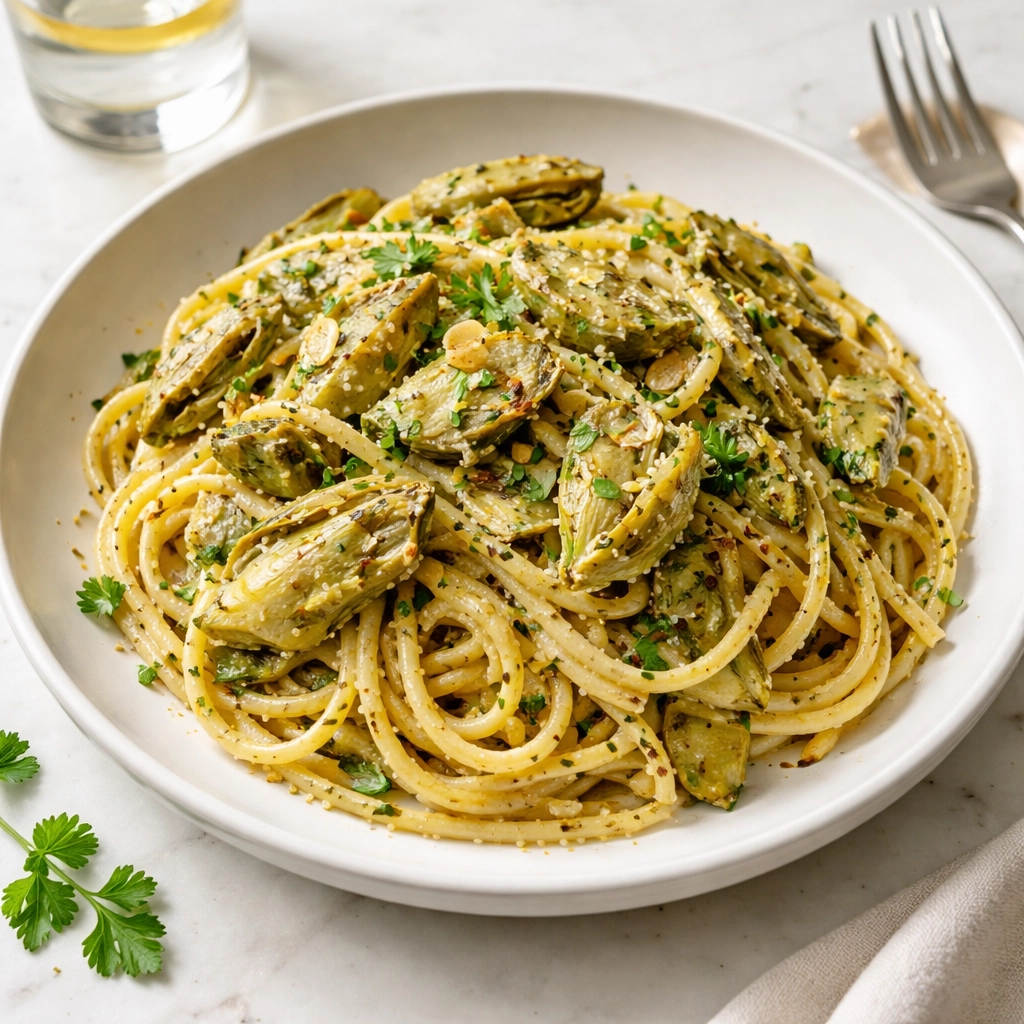
Cacio e Pepe with Artichokes
Pasta with artichokes, pecorino, and black pepper
Silky artichokes make this cacio e pepe feel a little extra special without adding fuss. The peppery, glossy cheese sauce clings to every strand of spaghetti, while lemon keeps the whole dish bright and lively.
Nutrition · per serving
Ingredients
10 itemsPasta and vegetables
Cheese emulsion
Tips
- •For the smoothest sauce, grate the Pecorino very finely on a microplane or the smallest holes of a box grater.
- •If you can find baby artichokes, use 5 to 6 instead of 2 large ones, they are quicker to prep and often more tender.
- •A wide skillet makes tossing easier and gives the pasta a better glossy finish for serving and filming.
- •Serve with a simple bitter-leaf salad or a glass of sparkling water with lemon for a classic, balanced meal.
Steps
- 1
Fill a large bowl with cold water and squeeze in the juice from half the lemon. Bring a large pot of well-salted water to a boil for the spaghetti. Set out a warm serving bowl if you have one, it helps the cheese stay glossy later.
1 lemon - 2
Trim the artichokes down to the pale hearts: remove the tough outer leaves, trim the tops, peel the stems, and cut away any fibrous dark green parts. Halve them, scoop out any choke, then slice thinly. As you work, drop the slices into the lemon water to prevent browning. Thinly slice the garlic and chop the parsley.
2 medium, about 700 g total globe artichokes2, thinly sliced garlic cloves1 tbsp finely chopped flat-leaf parsley - 3
Lift the artichokes from the water and pat them dry very well so they sauté rather than steam. In a wide skillet over medium heat, warm the olive oil. Add the garlic and cook for 20 to 30 seconds until fragrant but not coloured, then add the artichokes, fine sea salt, and 1 tsp of the black pepper. Cook for 10 to 12 minutes, stirring often, until the artichokes are tender and silky with light golden edges. If the pan looks dry before they soften, add a splash of water and cover for 1 to 2 minutes.
2 medium, about 700 g total globe artichokes3 tbsp extra-virgin olive oil2, thinly sliced garlic cloves1 1/4 tsp, plus more for the pasta water fine sea salt2 tsp, plus more to finish freshly ground black pepper - 4
Meanwhile, cook the spaghetti in the boiling water until just shy of al dente, usually 1 to 2 minutes less than the packet suggests. Before draining, reserve the hot pasta cooking water.
180 g spaghetti120 to 180 ml, as needed hot pasta cooking water - 5
Place the finely grated Pecorino Romano in a bowl. Add 60 ml of the hot pasta cooking water a little at a time, stirring constantly to make a thick, smooth paste with no lumps. This lower-temperature emulsion helps prevent the cheese from clumping.
90 g, very finely grated Pecorino Romano120 to 180 ml, as needed hot pasta cooking water - 6
Add the drained spaghetti to the skillet with the artichokes. Add about 60 ml more pasta water and toss over low heat for 30 to 60 seconds so the pasta finishes cooking and absorbs the flavour. Turn off the heat before adding the cheese mixture, this is the key to a glossy sauce rather than stringy cheese.
180 g spaghetti120 to 180 ml, as needed hot pasta cooking water - 7
Add the cheese emulsion and toss vigorously, adding a little more pasta water as needed until the sauce turns creamy and lightly coats every strand. Add the remaining 1 tsp black pepper, the zest from the remaining half lemon, and most of the parsley. Taste and adjust the seasoning; Pecorino is salty, so extra salt is rarely needed.
120 to 180 ml, as needed hot pasta cooking water2 tsp, plus more to finish freshly ground black pepper1 lemon1 tbsp finely chopped flat-leaf parsley - 8
Twirl the pasta into warm bowls, spoon over the artichokes, and finish with the remaining parsley and a little extra black pepper. Serve immediately while the sauce is glossy and fluid.
1 tbsp finely chopped flat-leaf parsley2 tsp, plus more to finish freshly ground black pepper
Origin & History
Cacio e pepe is one of Rome’s most iconic pasta dishes, traditionally made with pasta, Pecorino Romano, black pepper, and starchy water. This variation folds in artichokes, another beloved ingredient in Roman cooking, especially in spring, giving the dish a more vegetable-forward character while keeping its essential character intact.
Pregnancy
OKNo specific concerns.
Breastfeeding
OKNo specific concerns.
Do even more with Gourmate
Cook this recipe in Gourmate — your AI meal planning app.
Plan Meals
Weekly planner at a tap
Ask Questions
Chat with your AI chef
Adjust Recipe
Scale servings & swap ingredients
Cook Mode
Step-by-step guidance
Kitchen Timers
Built-in timers & alerts
Grocery List
Auto-generated shopping lists