Poi
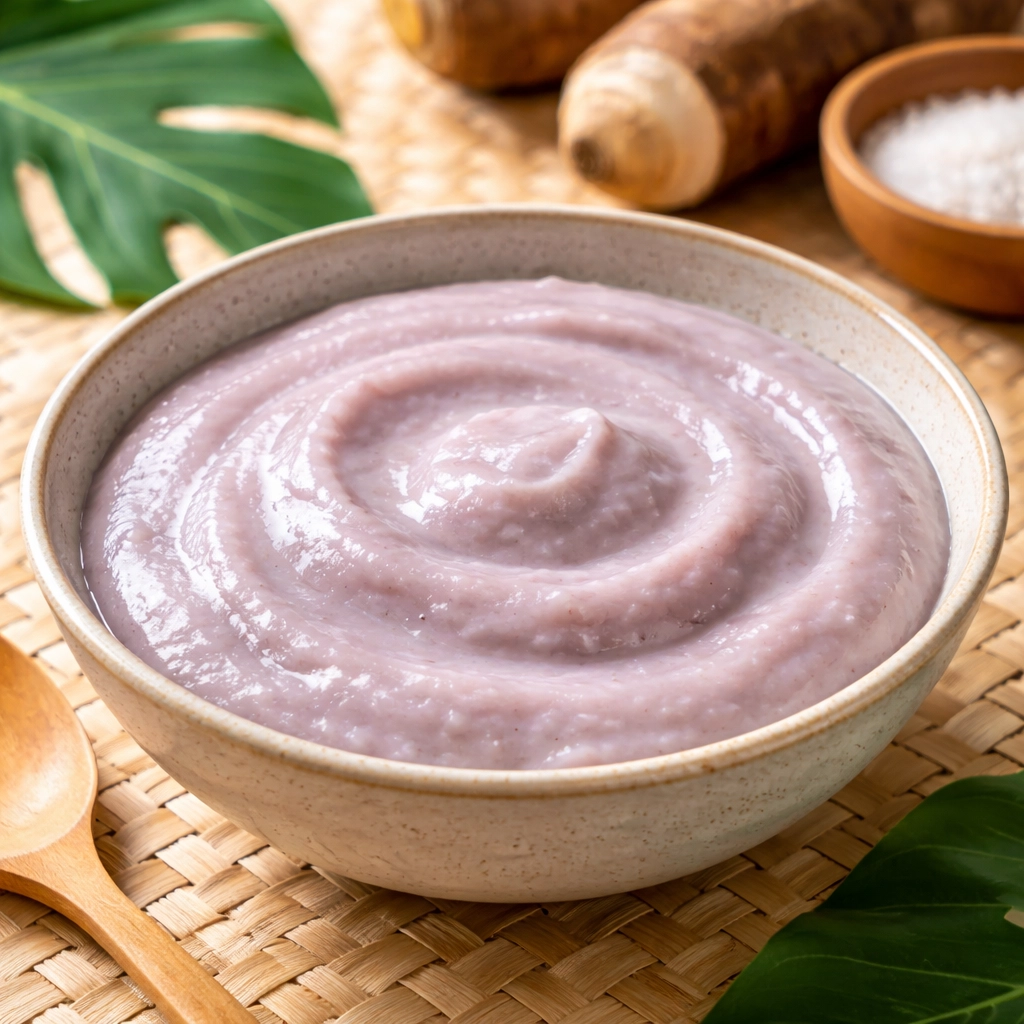
Poi is a smooth, pale purple to lavender taro paste with a gentle earthy flavor and silky, pudding-like texture. Freshly made it is mild and comforting; after resting, it develops the lightly tangy character prized in traditional Hawaiian eating.
Safety Warning
Raw or undercooked taro can irritate the mouth, throat, and skin due to naturally occurring calcium oxalate crystals. Cook taro thoroughly until completely tender before mashing and eating.
Nutrition · per serving
Ingredients
2 itemsPoi base
Tips
- •Wear gloves if your skin is sensitive; raw taro can irritate the hands because of calcium oxalate crystals.
- •If using a food processor or blender, work while the taro is still hot for the smoothest texture.
- •Fresh poi is mildly sweet and earthy; after fermentation it becomes pleasantly sour and more fluid.
- •Serve as a simple side dish, breakfast starch, or light snack.
Steps
- 1
Peel the taro thoroughly, removing all brown skin and any fibrous spots, then cut it into even 3 cm chunks so it cooks at the same rate.
500 g taro root, peeled and cut into 3 cm chunks - 2
Place the taro in a steamer over boiling water and steam for 18-22 minutes, until a knife slides in easily and the pieces are completely tender. Fully cooked taro is essential for a smooth, pleasant poi.
500 g taro root, peeled and cut into 3 cm chunks180-240 ml water - 3
Transfer the hot taro to a bowl or mortar. Mash, pound, or blend it while gradually adding 180 ml water until a thick, smooth paste forms. Add a little more water as needed to reach a spoonable pudding-like consistency; traditional poi can be thicker or looser to taste.
500 g taro root, peeled and cut into 3 cm chunks180-240 ml water - 4
For fresh poi, serve warm or at room temperature right away. For a more traditional tangy flavor, cover and let it stand at cool room temperature for 12-24 hours before eating, then stir in a splash of water if it has thickened too much.
Origin & History
Poi is a foundational staple of Native Hawaiian cuisine, traditionally made by steaming or baking taro and pounding it into a smooth paste. Its texture and flavor vary depending on how much water is added and how long it is allowed to ferment, and it has long held deep cultural and ceremonial importance in Hawaii.
Do even more with Gourmate
Cook this recipe in Gourmate — your AI meal planning app.
Plan Meals
Weekly planner at a tap
Ask Questions
Chat with your AI chef
Adjust Recipe
Scale servings & swap ingredients
Cook Mode
Step-by-step guidance
Kitchen Timers
Built-in timers & alerts
Grocery List
Auto-generated shopping lists