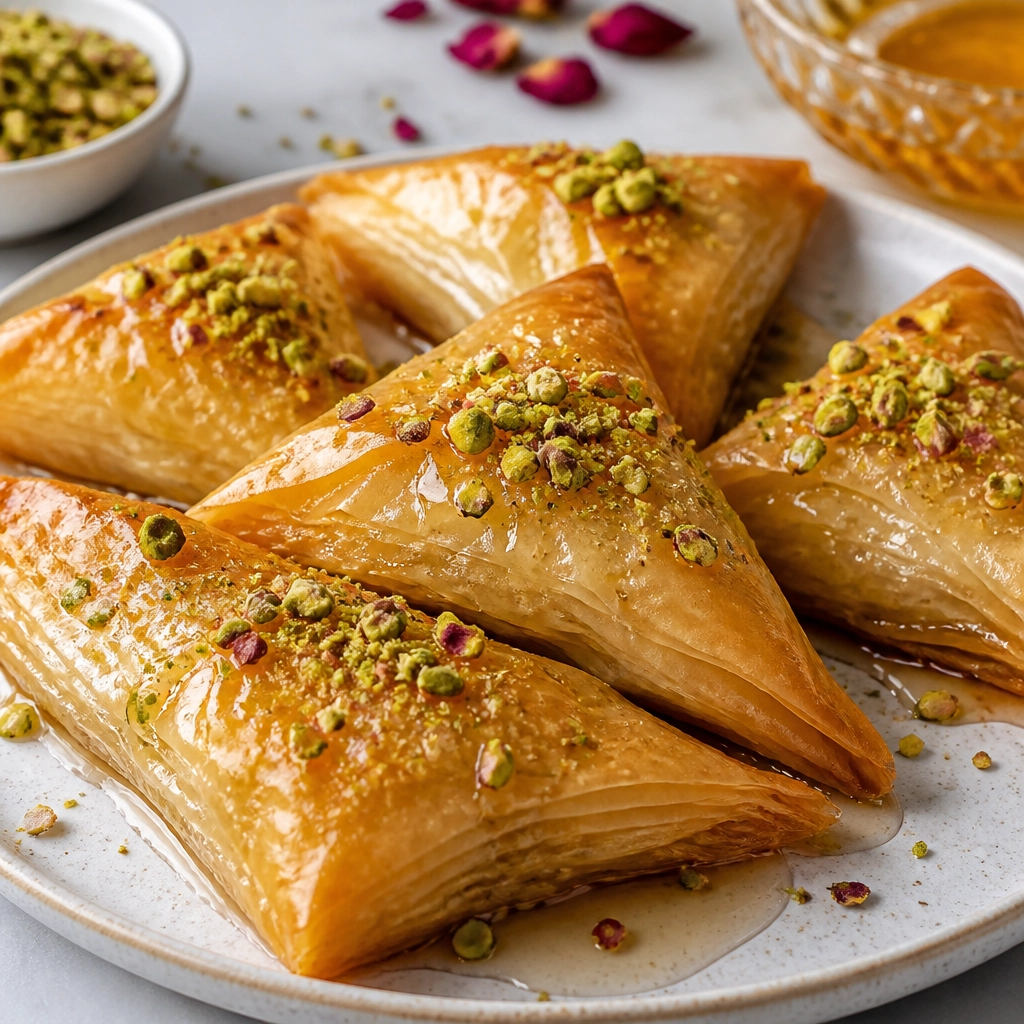
Warbat
Warbat are crisp, buttery filo pastries filled with silky ashta and finished with fragrant rose syrup and pistachios. The contrast of flaky layers, cool floral sweetness, and rich cream makes them luxurious yet surprisingly light to eat.
Nutrition · per serving
Ingredients
13 itemsRose syrup
Ashta filling
Pastry assembly
Tips
- •For the best texture, the syrup must be cool and the pastries hot; this helps the layers stay crisp rather than turning soggy.
- •If mastic is unavailable, omit it; the filling will still be good, though slightly less traditional in aroma.
- •Use filo straight from the fridge only after it has sat for 15-20 minutes at room temperature, otherwise it may crack when folded.
- •Warbat are best eaten the day they are baked, ideally within a few hours.
Steps
- 1
Preheat the oven to 200°C. Start the syrup first so it has time to cool: combine the granulated sugar, water, and lemon juice in a small saucepan. Bring to a boil over medium heat, then simmer for 3-4 minutes until slightly thickened. Remove from the heat and stir in the rose water and orange blossom water. Pour into a bowl and leave to cool completely.
100 g granulated sugar60 ml water1 tsp lemon juice1 tbsp rose water1 tsp orange blossom water - 2
Make the ashta filling: in a saucepan, whisk the whole milk, double cream, cornstarch, granulated sugar, and crushed mastic until smooth with no lumps. Set over medium heat and cook, whisking constantly, until the mixture thickens to a soft pastry-cream consistency, about 4-6 minutes. When the whisk leaves clear trails, it is ready. Transfer to a shallow bowl and let it cool for 5 minutes so it firms slightly but is still pipeable or spoonable.
250 ml whole milk100 ml double cream20 g cornstarch25 g granulated sugar1 small pinch mastic, finely crushed - 3
Lay 1 sheet of filo on a work surface and brush lightly with melted butter. Top with a second sheet and brush again, then add a third sheet and brush once more. Cut the stack into 4 equal squares. Repeat with the remaining 3 filo sheets and more butter to make 8 squares total. Keep the filo covered with a barely damp towel while you work so it does not dry out and crack.
6 sheets (about 180 g) filo pastry70 g unsalted butter, melted - 4
Place about 1 heaped tablespoon of ashta filling in the center of each square. Fold each square diagonally into a triangle, then press only the two short outer edges lightly to keep the filling enclosed while leaving a little room for expansion. Arrange the pastries on a lined baking tray and brush the tops generously with the remaining butter.
6 sheets (about 180 g) filo pastry70 g unsalted butter, melted250 ml whole milk100 ml double cream20 g cornstarch25 g granulated sugar1 small pinch mastic, finely crushed - 5
Bake for 16-18 minutes until the warbat are deeply golden, crisp, and flaky. If needed, rotate the tray in the last 5 minutes for even coloring. The pastries should feel light and audibly crisp when tapped.
- 6
As soon as the pastries come out of the oven, spoon or drizzle some cooled rose syrup over them; do not soak heavily if you want to keep maximum crispness. Scatter with the chopped pistachios and serve warm, with extra syrup on the side.
100 g granulated sugar60 ml water1 tsp lemon juice1 tbsp rose water1 tsp orange blossom water25 g unsalted pistachios, finely chopped
Origin & History
Warbat is a classic Levantine pastry, especially associated with Lebanon and Syria, where delicate filo is shaped around rich cream or nut fillings and finished with perfumed syrup. It is commonly found in pastry shops during festive periods such as Ramadan, when syrup-soaked desserts are especially popular.
Do even more with Gourmate
Cook this recipe in Gourmate — your AI meal planning app.
Plan Meals
Weekly planner at a tap
Ask Questions
Chat with your AI chef
Adjust Recipe
Scale servings & swap ingredients
Cook Mode
Step-by-step guidance
Kitchen Timers
Built-in timers & alerts
Grocery List
Auto-generated shopping lists