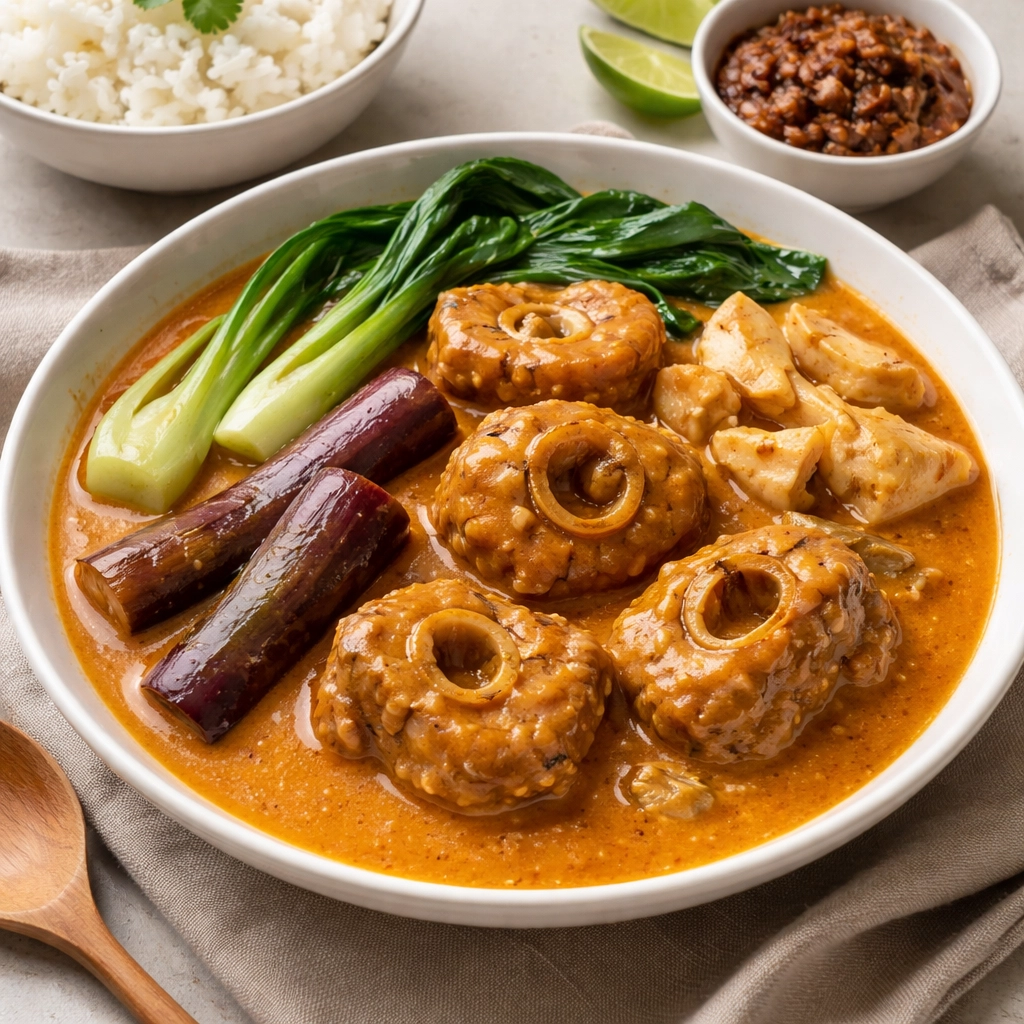
Kare-Kare
Kare-kare is a luxurious, deeply savory oxtail stew wrapped in a velvety peanut and annatto sauce. Tender meat, silky eggplant, crisp-tender bok choy, and banana blossom make it hearty yet balanced, while pungent bagoong on the side gives the classic salty contrast that defines the dish.
Nutrition · per serving
Ingredients
21 itemsKarne at sabaw
Gulay
Sarsa ng mani
Bagoong para ihain
Tips
- •Using a pressure cooker is the only realistic way to make oxtail kare-kare close to the 60-minute target; stovetop braising would take much longer.
- •If preferred, grind the peanuts slightly coarse for a more traditional texture.
- •Do not boil the peanut sauce hard once thickened, or it can catch on the bottom and turn greasy.
- •Serve with steamed rice; the salty bagoong is meant to be eaten in small amounts with each bite of stew.
Steps
- 1
Put the oxtail, water, onion, crushed garlic, salt, and oil into a pressure cooker. Lock the lid and cook under high pressure for 35 minutes, then quick-release carefully. The meat should be tender enough to pierce easily with a fork but still hold its shape. Skim excess fat from the surface, then strain and reserve 500 ml broth for the sauce; keep the oxtail warm.
900 g oxtail, cut into small sections1.5 L water120 g onion, quartered20 g garlic, crushed6 g fine salt10 ml neutral oil - 2
While the oxtail cooks, make annatto water by soaking the annatto seeds in warm water for 10 minutes, pressing and swirling them to extract a deep orange color. Strain and discard the seeds. Finely grind the roasted peanuts in a food processor until sandy and beginning to clump; do not over-process into oily peanut butter.
10 g annatto seeds80 ml warm water120 g roasted peanuts, unsalted - 3
Toast the glutinous rice flour in a dry pan over medium heat for 2-3 minutes, stirring constantly, until lightly beige and nutty-smelling. This removes any raw flour taste and helps the sauce thicken smoothly.
18 g glutinous rice flour - 4
Heat 15 ml neutral oil in a wide pan over medium-high heat. Sear the eggplant until lightly browned and just tender, about 3-4 minutes; remove. In the same pan, add the bok choy and cook for 1-2 minutes until bright green and wilted but still crisp. Add the banana blossom for 1 minute just to heat through. Set all vegetables aside separately so they keep their color and texture.
180 g Japanese eggplant, cut into 5 cm lengths180 g bok choy, halved lengthwise120 g banana blossom, drained and cut into chunks15 ml neutral oil - 5
In a clean pot, whisk the reserved oxtail broth with the ground peanuts, annatto water, toasted glutinous rice flour, fish sauce, and black pepper. Bring to a gentle simmer over medium heat, whisking well so the flour does not lump. Cook for 5-7 minutes until the sauce is thick, glossy, and rich enough to coat a spoon.
500 ml oxtail broth from the pot120 g roasted peanuts, unsalted10 g annatto seeds80 ml warm water18 g glutinous rice flour10 ml fish sauce1 g freshly ground black pepper - 6
Add the cooked oxtail to the peanut sauce and simmer gently for 3-4 minutes to let the flavors meld. Stir carefully to avoid breaking the meat. Taste and adjust with a little more fish sauce or broth if needed; the finished sauce should be savory, peanut-rich, and softly thick, not pasty.
900 g oxtail, cut into small sections500 ml oxtail broth from the pot10 ml fish sauce - 7
For the bagoong, heat 5 ml oil in a small pan over medium heat. Sauté the minced garlic for 20-30 seconds until fragrant, then add the shrimp paste and brown sugar. Cook for 1-2 minutes, stirring, until lightly caramelized and aromatic. Serve in a small dish alongside the stew.
5 ml neutral oil5 g garlic, minced60 g bagoong alamang (shrimp paste)4 g brown sugar - 8
Arrange the eggplant, bok choy, and banana blossom around or over the kare-kare, then serve immediately with the bagoong on the side. For the best presentation, keep some vegetables partly above the sauce so their colors remain visible.
180 g Japanese eggplant, cut into 5 cm lengths180 g bok choy, halved lengthwise120 g banana blossom, drained and cut into chunks60 g bagoong alamang (shrimp paste)
Origin & History
Kare-kare is a celebrated Filipino stew known for its rich peanut sauce, colorful vegetables, and traditional pairing with bagoong alamang. Its exact origin is debated, with links drawn to pre-colonial peanut stews and later influences from Kapampangan and Moro culinary traditions. Today it is a festive dish often served at family gatherings and special occasions.
Do even more with Gourmate
Cook this recipe in Gourmate — your AI meal planning app.
Plan Meals
Weekly planner at a tap
Ask Questions
Chat with your AI chef
Adjust Recipe
Scale servings & swap ingredients
Cook Mode
Step-by-step guidance
Kitchen Timers
Built-in timers & alerts
Grocery List
Auto-generated shopping lists