
Blood Sugar and Food: How What You Eat Affects Glucose Levels
How different foods raise blood glucose, what glycemic index actually measures, and how meal composition changes the post-meal response. Research-grounded.
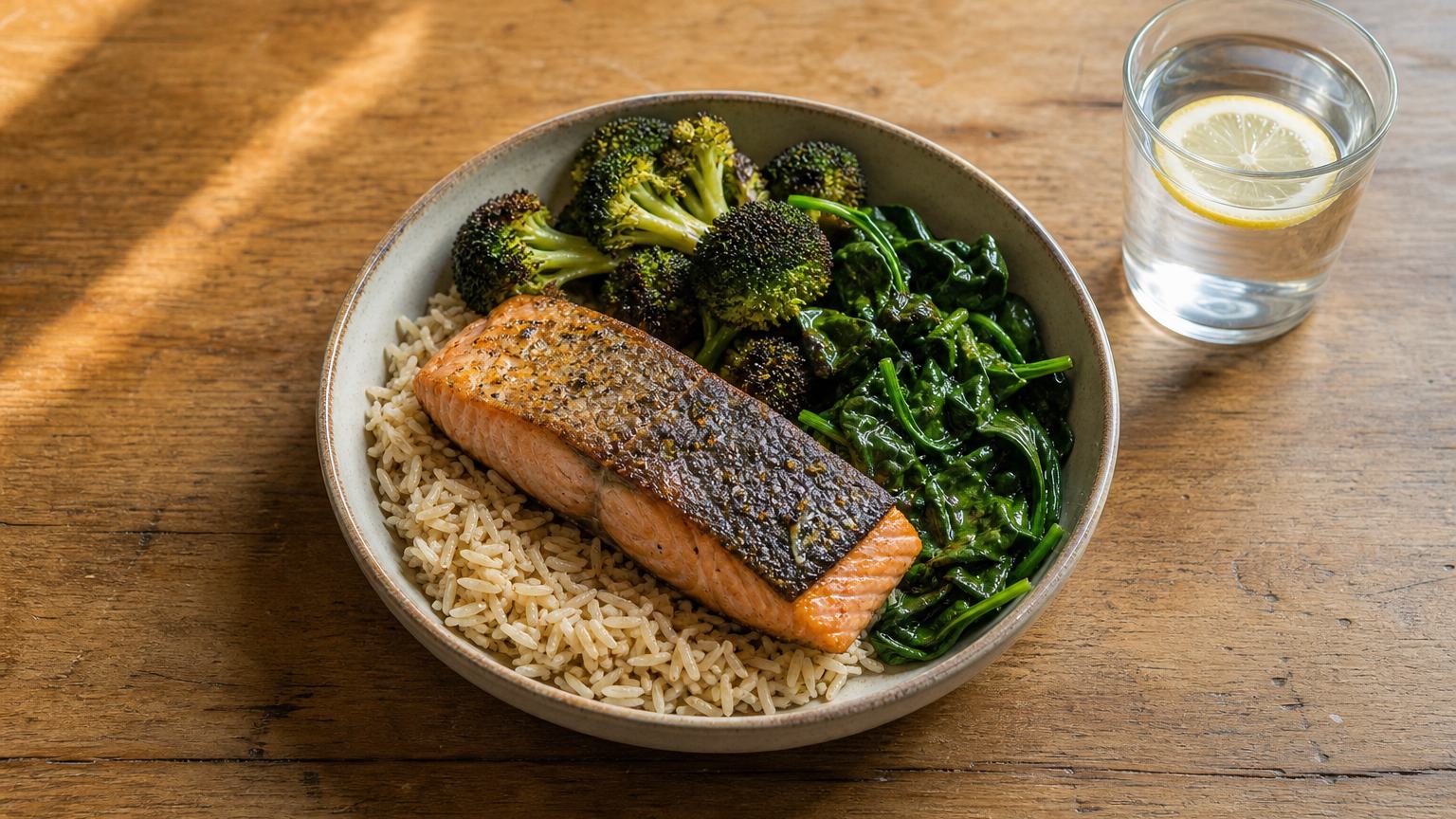
Blood sugar has moved from a topic primarily associated with diabetes management into wider mainstream interest, partly through wearable continuous glucose monitors (CGMs) and partly through growing public awareness of how energy levels, hunger, and long-term metabolic health relate to what you eat. Understanding the basics is useful regardless of whether you wear a sensor.
Here's what the research actually shows, and what it means in practical terms for how you put meals together.
What happens when you eat carbohydrates
When you eat carbohydrates, digestible starches and sugars are broken down into monosaccharides and absorbed into the bloodstream, causing blood glucose to rise. (Dietary fibre is not digested into glucose; it passes through largely intact, which is relevant to how it affects the glucose response.) Your pancreas releases insulin in response, which helps cells absorb the glucose. Blood glucose rises, then returns toward a baseline over a period of time.
The speed and height of that rise depends on several things: the type and amount of carbohydrate, the presence of fibre, fat, and protein in the same meal, and individual metabolic differences.
The glycemic index and why glycemic load is more useful
The glycemic index (GI) was developed in the early 1980s by David Jenkins and colleagues at the University of Toronto to rank foods by how fast they raise blood glucose compared to pure glucose. A 1981 paper in the American Journal of Clinical Nutrition established the framework that's still used today.
High-GI foods (score above 70) raise blood glucose quickly; low-GI foods (below 55) raise it more slowly. White bread, white rice, and most sugary drinks score high; lentils, most vegetables, and whole grains tend to score low or moderate.
The limitation is that GI doesn't account for how much of a food you actually eat. Watermelon has a high GI, but a typical serving contains so little carbohydrate that the actual glucose impact is small. This is why glycemic load (GL) is generally more useful: it multiplies the GI by the carbohydrate content of a standard serving divided by 100. A low-GL meal is the more informative target.
What fibre, protein, and fat do
A carbohydrate-rich food eaten alone produces a different glucose response than the same carbohydrate eaten as part of a mixed meal. Three factors consistently lower and flatten the post-meal glucose curve:
Fibre (especially soluble fibre) slows carbohydrate absorption by forming a gel in the gut that slows the passage of food. Oats, lentils, beans, and psyllium are high in soluble fibre. The how to eat more fibre post covers the mechanisms in more detail.
Protein slows gastric emptying (how quickly food leaves the stomach), which means carbohydrates enter the small intestine more gradually. Adding a protein source to a starchy meal measurably reduces the peak blood glucose.
Fat similarly slows gastric emptying. A meal with fat alongside carbohydrates typically produces a lower, later glucose peak than the same carbohydrates without fat.
The practical implication: a plain bowl of rice produces a different response than rice with chicken, vegetables, and a spoon of olive oil, even when the rice portion is identical.
Individual variation
A significant finding from continuous glucose monitor research is that people respond very differently to the same foods. A 2015 study in Cell by Zeevi et al. enrolled 800 participants and used continuous glucose monitors to record blood glucose responses to standardised meals and free-living eating over one week, alongside gut microbiome analysis and other personal data. The results showed substantial variation in blood glucose responses to the same foods across different individuals, suggesting that population-level GI tables describe an average of responses that can differ considerably person to person.
The takeaway isn't that GI rankings are useless, but that they're a guide, not a guarantee. Someone who finds white rice consistently causes a large spike might do better with a different carbohydrate source; someone else might find the spike minimal. CGMs are increasingly available to non-diabetic people who want to see their personal responses, though interpreting the data requires context.
What this means for meal planning
Important: if you use insulin or take glucose-lowering medication, do not make significant changes to carbohydrate intake without discussing it with your GP or diabetes care team first. Changes in carbohydrate intake can affect medication dosing and carry a hypoglycemia risk.
For everyone else, no food needs to be avoided to manage post-meal glucose responses. A few compositional habits tend to help:
- Include a protein source at every main meal (eggs, fish, chicken, legumes, dairy)
- Add vegetables or a side salad that contributes fibre
- Use whole grains rather than refined grains where practical
- Avoid large carbohydrate portions on their own without protein or fat alongside
These habits align with the general principles of the Mediterranean diet, which has been extensively studied in relation to metabolic health. The diet's emphasis on legumes, whole grains, olive oil, fish, and vegetables naturally produces lower average glycemic loads than a diet based on refined carbohydrates.
If you have diabetes or are monitoring blood sugar under medical advice, dietary changes should be discussed with a GP or diabetes care team, not just derived from general guidelines.
Looking for meal ideas that naturally combine protein, fibre, and good carbohydrates? Gourmate builds a personalised meal plan around your tastes. Find out how the recipe discovery works.