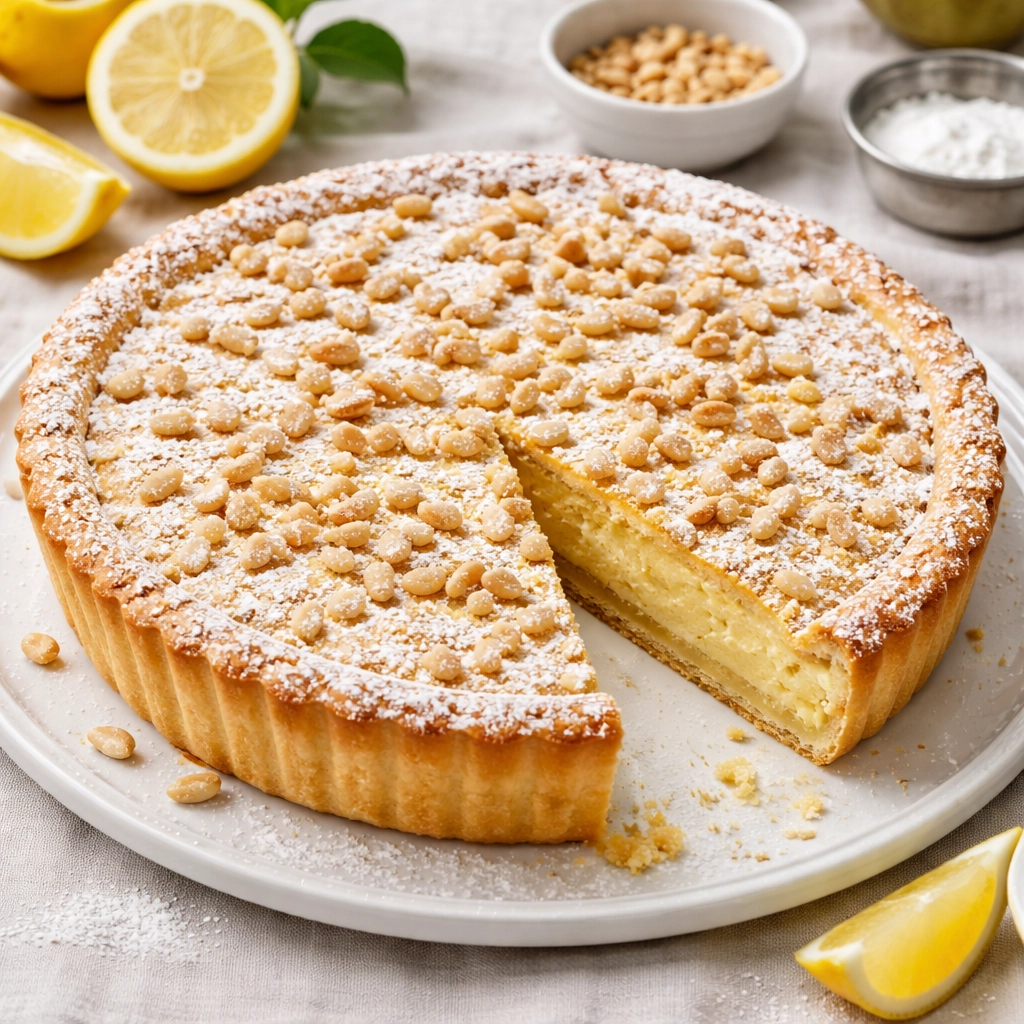
Torta della Nonna
Tuscan lemon pastry-cream tart
A crisp sweet shortcrust shell filled with silky lemon-scented pastry cream, covered with a second pastry layer, toasted pine nuts and a veil of icing sugar. Make-ahead friendly and ideal chilled.
Nutrition · per serving
Ingredients
19 itemsPasta frolla (sweet shortcrust)
Crema pasticcera (lemon pastry cream)
Assembly and topping
Tips
- •Make-ahead: dough can be refrigerated 24 hours or frozen one month; custard keeps 48 hours refrigerated. Assemble day before for best texture.
- •Almond substitution: fold 30 g ground almonds into the dough (id 8) and reduce flour by same weight for a frangipane‑lean shortcrust flavour.
- •If you cannot use pine nuts, swap with flaked almonds or toasted chopped hazelnuts (note: nuts change allergen profile).
- •To avoid a soggy base, ensure the blind-baked shell is pale and dry before filling and avoid over-wetting the dough when rolling.
Steps
- 1
Bring ingredients out briefly so butter is cold but pliable; preheat oven to 180°C (fan 160°C/350°F) and butter a 22–24 cm tart tin with removable base.
- 2
Make the pasta frolla: rub the cold butter into the flour and sugar with fingertips until mixture resembles coarse breadcrumbs, leaving some pea‑size butter pieces.
150 g unsalted butter, cold, cubed250 g plain (all-purpose) flour80 g caster (superfine) sugar - 3
Stir in the lemon zest and pinch of salt; mix the egg yolks and whole egg lightly, add to the flour mixture and gather quickly to form a smooth dough; if using ground almonds fold them in at this stage.
1 tsp (from 1 lemon) lemon zest (dough)pinch fine salt2 (≈36 g) egg yolks (dough)1 whole egg (dough)30 g (optional substitution for up to 50 g of flour) ground almonds (optional, for almond shortcrust) - 4
Flatten into a disc, wrap in clingfilm and chill at least 30 minutes (can be refrigerated up to 24 hours, or frozen).
- 5
While dough chills, make the pastry cream: split vanilla if using pod or measure extract, and warm the milk with the lemon zest and vanilla until steaming but not boiling.
500 ml whole milk1 tsp (from 1 lemon) lemon zest (cream)1 tsp vanilla extract - 6
Whisk the egg yolks with the sugar until paler, then whisk in the cornstarch to a smooth paste.
4 egg yolks (cream)100 g caster (superfine) sugar40 g cornstarch - 7
Temper the yolk mixture by pouring a little hot milk into it while whisking, then return everything to the pan over medium heat and stir constantly.
500 ml whole milk4 egg yolks (cream) - 8
Cook the custard, stirring continuously, until it reaches 82–85°C on an instant‑read thermometer or until it thickens, becomes glossy and a spoon or spatula left in the cream leaves a clear trail when you draw your finger through it; allow it to bubble very briefly once to fully cook the starch and eggs.
- 9
Remove from heat and stir in the butter and lemon zest until smooth, strain into a bowl, press clingfilm directly onto the surface to prevent skin forming and cool to room temperature, then refrigerate at least 2 hours until fully chilled (this is a fresh dairy-and-egg custard and must be refrigerated).
30 g unsalted butter1 tsp (from 1 lemon) lemon zest (cream) - 10
Prepare the tart shell: roll out two-thirds of the chilled dough on a lightly floured surface to fit the tin base and sides (reserve remaining third for the top), then line the tin with the dough, trim the edges and chill in the tin for 10 minutes.
- 11
Line the shell with baking parchment and fill with baking beans or rice; blind-bake at 180°C (fan 160°C) for 15 minutes to set the shell.
≈300 g baking beans or raw rice (for blind-baking) - 12
Carefully remove the parchment and weights and bake the shell a further 8–10 minutes until pale golden and dry to the touch (this two-stage blind-bake prevents a soggy base); remove from oven and cool slightly in the tin.
≈300 g baking beans or raw rice (for blind-baking) - 13
Turn oven down to 170°C (fan 150°C). Spoon the chilled pastry cream (prepared earlier) into the warm-but-not-hot tart shell, smoothing the surface.
- 14
Roll the reserved dough to a disc slightly smaller than the tart, place it over the cream to cover, press the edges to seal and trim, then brush the top with the beaten egg and scatter the pine nuts evenly.
1, beaten egg for egg wash40 g pine nuts - 15
Bake the assembled tart at 170°C for 10–12 minutes until the top is golden and the nuts lightly toasted; the short time sets the top pastry and toasts the pine nuts without overcooking the custard.
40 g pine nuts - 16
Cool the tart completely in the tin to room temperature, then refrigerate for at least 2 hours (best overnight) before slicing—the tart must be completely cool and the custard chilled before serving.
- 17
Just before serving, lift from the tin, dust generously with icing sugar and slice with a hot dry knife for clean cuts.
30 g for dusting icing (confectioners') sugar
Origin & History
Torta della Nonna is a classic Tuscan dessert dating from early 20th century domestic cuisine, a simple home-baked tart of lemon-scented crema and a crisp shortcrust. It became popular across Italy as an emblem of comforting, resourceful ‘grandmother’ cooking.
Pregnancy
OKNo specific concerns.
Breastfeeding
OKNo specific concerns.
Do even more with Gourmate
Cook this recipe in Gourmate — your AI meal planning app.
Plan Meals
Weekly planner at a tap
Ask Questions
Chat with your AI chef
Adjust Recipe
Scale servings & swap ingredients
Cook Mode
Step-by-step guidance
Kitchen Timers
Built-in timers & alerts
Grocery List
Auto-generated shopping lists