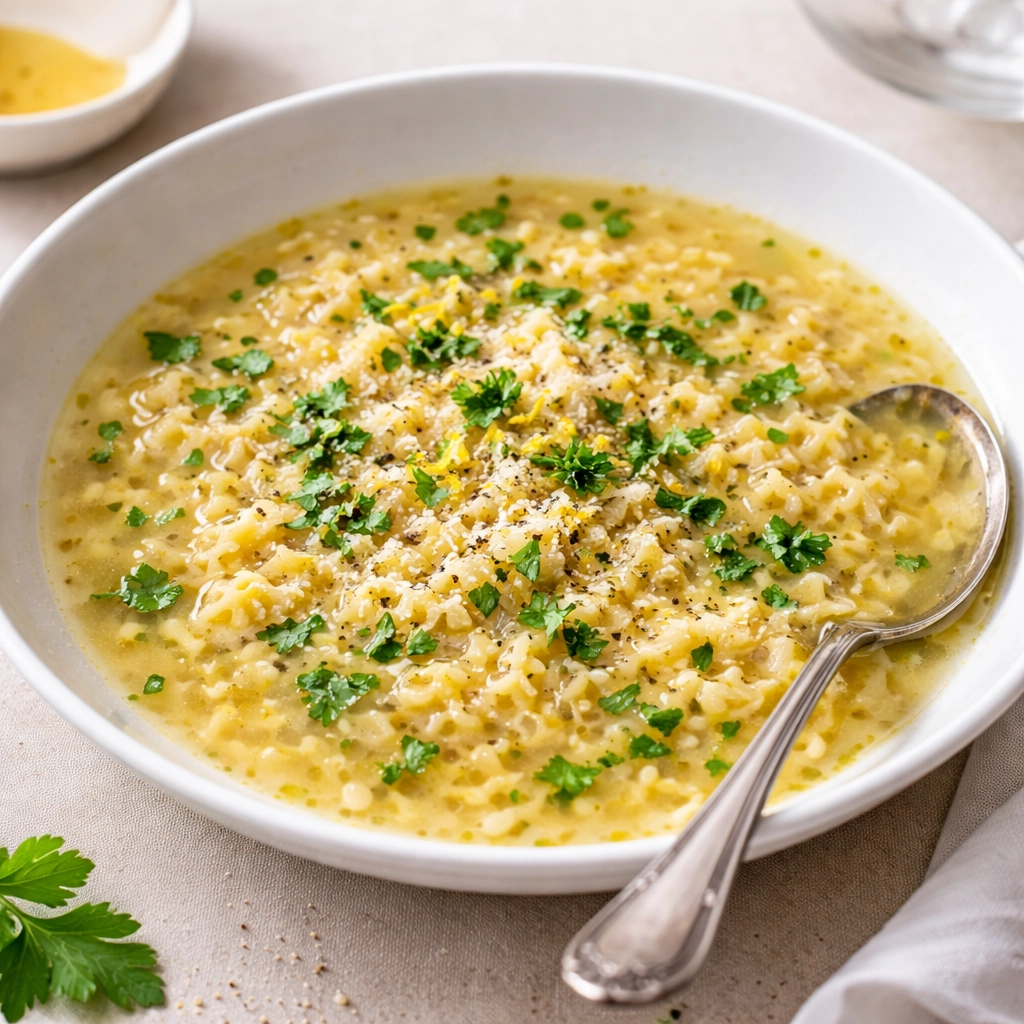
Brodo di Parmigiano con Uovo, Pastina e Limone
This is a light yet deeply savory Italian broth with the concentrated aroma of Parmigiano, brightened by lemon and warmed with black pepper and nutmeg. Tiny pasta and silky egg make it comforting enough for supper, while the clear golden broth keeps it refined and delicate.
Nutrition · per serving
Ingredients
14 itemsBrodo di Parmigiano
Pastina e finitura
Tips
- •Scrape and rinse the Parmesan rind well before using; it should be free of wax or outer grime.
- •If you want an even clearer broth, simmer very gently and avoid stirring during extraction.
- •A few extra shavings of Parmigiano can be added at the table, but keep it light so the broth stays elegant rather than heavy.
- •Tiny pasta shapes work best; avoid larger pasta, which overwhelms the delicate broth.
Steps
- 1
Put the water, Parmigiano rind, halved onion, parsley stems, peppercorns, and salt into a medium saucepan. Bring just to a boil over medium-high heat, then immediately lower to a gentle simmer. Skim any foam if needed. Simmer uncovered for 18 minutes, pressing the rind down occasionally so it stays submerged and releases flavor without turning the broth cloudy.
1 litre water120 g Parmigiano Reggiano rind, scraped clean80 g small onion, halved10 g flat-leaf parsley stems1 tsp black peppercorns1/4 tsp fine sea salt - 2
While the broth simmers, bring a small pot of lightly salted water to the boil and cook the pastina until just al dente according to the package time, usually 6-8 minutes. Drain and set aside. Cooking the pasta separately keeps the broth clear and prevents excess starch from dulling the flavor.
80 g small pasta (pastina, stelline, or tiny ditalini) - 3
In a bowl, whisk the eggs with the grated Parmigiano, lemon zest, lemon juice, black pepper, and nutmeg until smooth. This mixture should be fluid but thick; if it seems very stiff, whisk in 1 tablespoon of hot broth later before adding it to the pot.
2 medium eggs30 g Parmigiano Reggiano, finely grated1 tsp lemon zest, finely grated2 tsp lemon juice1/2 tsp freshly ground black pepper1/8 tsp freshly grated nutmeg - 4
Strain the broth through a fine sieve into a clean saucepan, pressing lightly on the onion and rind to extract liquid but not forcing solids through. Discard the solids. Return the clear broth to low heat; it should be steaming but not boiling.
- 5
Add the cooked pastina to the hot broth. Take the pan off the heat and, while whisking gently in one direction, slowly pour in the egg mixture. The residual heat will thicken the eggs into delicate ribbons and a silky body; if the broth boils, the eggs will curdle instead of emulsifying.
80 g small pasta (pastina, stelline, or tiny ditalini)2 medium eggs30 g Parmigiano Reggiano, finely grated1 tsp lemon zest, finely grated2 tsp lemon juice1/2 tsp freshly ground black pepper1/8 tsp freshly grated nutmeg - 6
Taste and adjust with a pinch more salt or a few drops more lemon if desired. Ladle into warm bowls and finish with the chopped parsley. Serve immediately while the broth is glossy and the pasta still has a little bite.
10 g flat-leaf parsley leaves, finely chopped
Origin & History
Brothy soups enriched with cheese, egg, and pasta are part of the cucina povera tradition of northern and central Italy, where cooks stretched modest ingredients into deeply satisfying meals. Using Parmigiano rinds to flavor broth is a classic no-waste technique, especially associated with Emilia-Romagna and nearby regions where the cheese is central to daily cooking.
Do even more with Gourmate
Cook this recipe in Gourmate — your AI meal planning app.
Plan Meals
Weekly planner at a tap
Ask Questions
Chat with your AI chef
Adjust Recipe
Scale servings & swap ingredients
Cook Mode
Step-by-step guidance
Kitchen Timers
Built-in timers & alerts
Grocery List
Auto-generated shopping lists