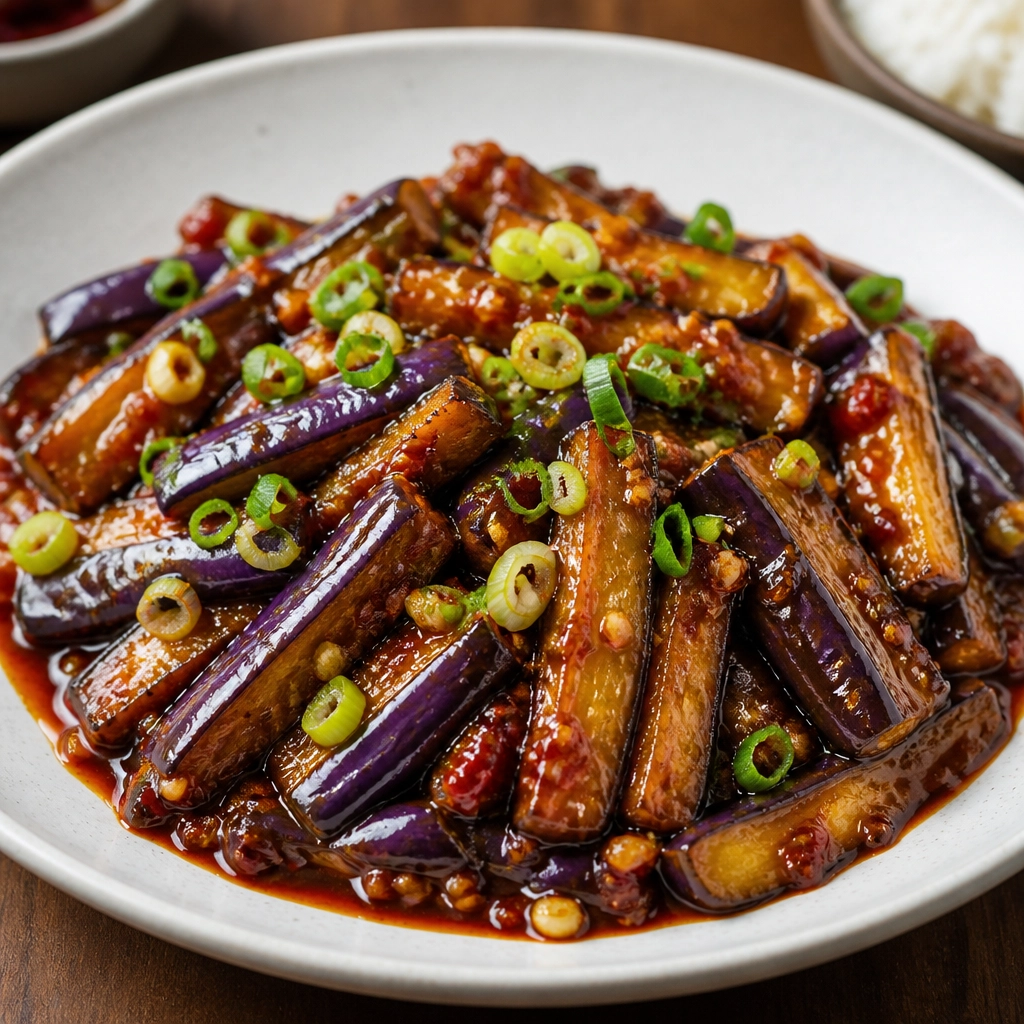
Yu Xiang Qie Zi
This braised eggplant is glossy, tender, and full of bold Sichuan flavor from doubanjiang, garlic, ginger, and chili oil. The sauce clings to each silky piece with a perfect balance of savory heat, subtle sweetness, and a gentle tang.
Nutrition · per serving
Ingredients
14 itemsEggplant and aromatics
Sauce
For cooking and finishing
Tips
- •Chinese eggplant is ideal because it becomes silky quickly, but globe eggplant also works; cut it slightly smaller and allow an extra 1-2 minutes of cooking if needed.
- •Doubanjiang varies in saltiness and heat. Taste the sauce before serving and, if needed, add a splash of water to soften strong salinity rather than more soy sauce.
- •For a more traditional, slightly meatier umami note while staying vegetarian, use a vegetarian doubanjiang if available.
- •Serve with plain steamed jasmine rice or short-grain rice to balance the bold sauce.
Steps
- 1
Cut the eggplant into bite-size batons about 5 cm long and 1.5 cm thick. Finely chop the garlic and ginger. Slice the scallions, keeping the white and green parts separate so the whites can flavor the oil first and the greens stay fresh for garnish.
500 g eggplant4 cloves (16 g), finely chopped garlic10 g, finely chopped ginger2 stalks (30 g), thinly sliced, whites and greens separated scallions - 2
In a small bowl, stir together the doubanjiang, light soy sauce, dark soy sauce, chili oil, sugar, Chinkiang black vinegar, cornstarch, and water until the cornstarch is fully dissolved. Mixing it now prevents lumps and helps the sauce thicken quickly in the pan.
25 g doubanjiang15 ml light soy sauce5 ml dark soy sauce10 ml chili oil8 g sugar10 ml Chinkiang black vinegar5 g cornstarch120 ml water - 3
Heat a large skillet or wok over medium-high heat. Add the neutral oil, then add the eggplant in a single layer as much as possible. Cook for 6-8 minutes, turning every 1-2 minutes, until the eggplant is softened and lightly browned on several sides. If the pan looks dry before the eggplant softens, lower the heat slightly rather than adding much more oil.
20 ml neutral oil500 g eggplant - 4
Push the eggplant to the sides of the pan. Add the garlic, ginger, and scallion whites to the center and stir-fry for about 30 seconds until fragrant but not browned. Add the doubanjiang sauce mixture and stir well, scraping the bottom of the pan so the fermented bean paste blooms into the oil.
4 cloves (16 g), finely chopped garlic10 g, finely chopped ginger2 stalks (30 g), thinly sliced, whites and greens separated scallions25 g doubanjiang15 ml light soy sauce5 ml dark soy sauce10 ml chili oil8 g sugar10 ml Chinkiang black vinegar5 g cornstarch120 ml water - 5
Bring to a simmer and cook for 2-3 minutes, gently tossing the eggplant until the sauce is glossy and thick enough to coat each piece. The eggplant should be silky and tender all the way through; if a piece still feels spongy in the center, cook 1-2 minutes longer.
500 g eggplant25 g doubanjiang15 ml light soy sauce5 ml dark soy sauce10 ml chili oil8 g sugar10 ml Chinkiang black vinegar5 g cornstarch120 ml water - 6
Turn off the heat and drizzle in the toasted sesame oil. Scatter over the scallion greens and serve immediately, ideally with steamed rice.
5 ml toasted sesame oil2 stalks (30 g), thinly sliced, whites and greens separated scallions
Origin & History
Yu Xiang Qie Zi is a Sichuan-style eggplant dish built on the famous yu xiang, or 'fish-fragrant,' flavor profile, which traditionally uses pickled chili, aromatics, vinegar, and savory seasonings rather than actual fish. The style comes from Sichuan cooking, where layered salty, spicy, sweet, and tangy flavors are used to make vegetables deeply satisfying.
Do even more with Gourmate
Cook this recipe in Gourmate — your AI meal planning app.
Plan Meals
Weekly planner at a tap
Ask Questions
Chat with your AI chef
Adjust Recipe
Scale servings & swap ingredients
Cook Mode
Step-by-step guidance
Kitchen Timers
Built-in timers & alerts
Grocery List
Auto-generated shopping lists