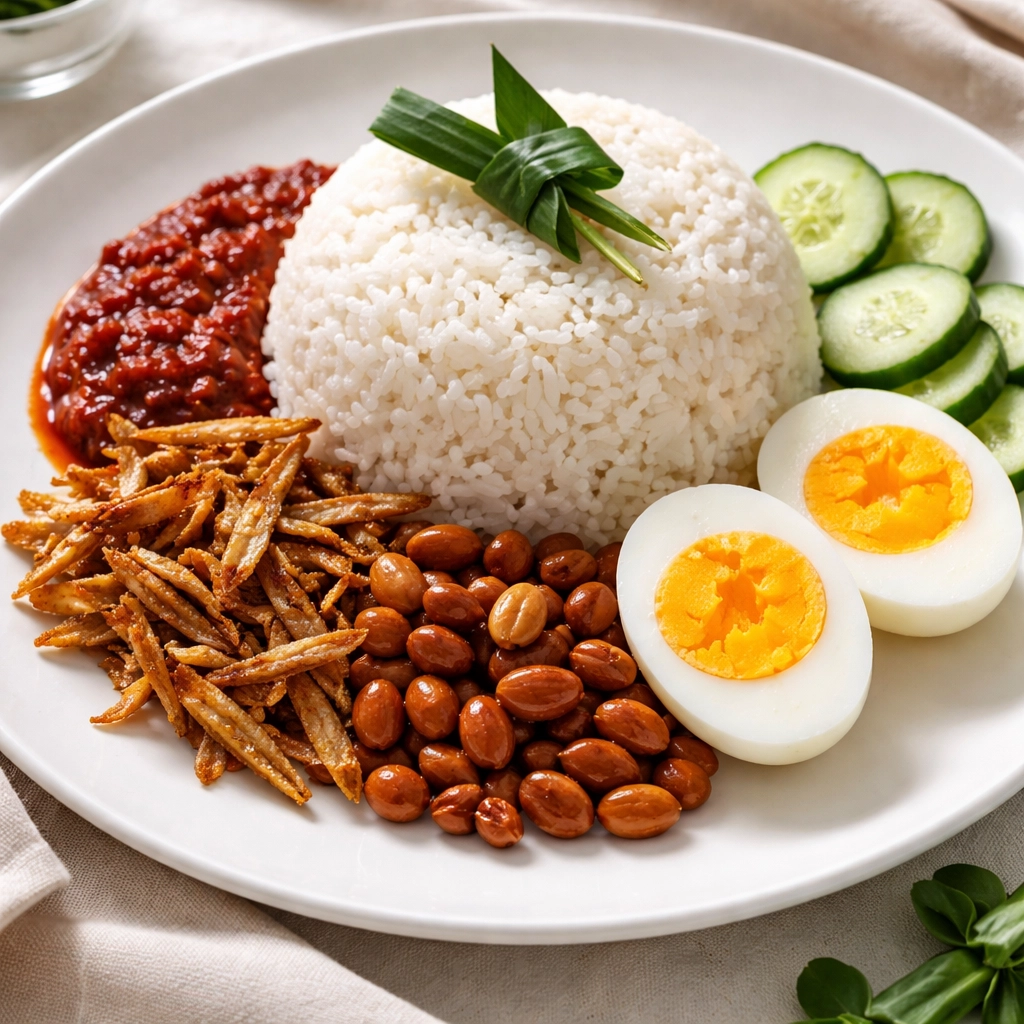
Nasi Lemak
Nasi lemak is a deeply comforting plate of fragrant coconut rice served with spicy-sweet sambal, crisp anchovies, roasted-fried peanuts, cool cucumber, and boiled egg. The contrast of creamy rice, fiery sambal, and crunchy toppings makes every bite rich, balanced, and unmistakably satisfying.
Nutrition · per serving
Ingredients
20 itemsNasi lemak rice
Quick sambal
Crispy accompaniments
Fresh and boiled sides
Tips
- •For a true 30-minute version, use a rice cooker or a tight-lidded pot and cook the sambal and toppings while the rice cooks.
- •If pandan leaf is unavailable, the dish will still be good, but pandan gives the rice its signature fragrance.
- •Rinse and dry the anchovies thoroughly before frying to reduce splattering and ensure they turn crisp rather than chewy.
- •You may strain and reuse the frying oil for savory dishes after it cools.
- •Traditionally, nasi lemak is often served with fried chicken or rendang, but this classic simple plate is complete on its own.
Steps
- 1
Rinse the jasmine rice in several changes of water until the water runs almost clear. Drain well. Put it in a small pot or rice cooker with the coconut milk, water, pandan leaf, sliced ginger, and salt. Start cooking immediately; if using a pot, bring just to a gentle simmer, cover tightly, lower the heat, and cook until the liquid is absorbed and the rice is tender.
180 g jasmine rice200 ml coconut milk120 ml water1 pandan leaf, knotted10 g ginger, sliced3 g salt - 2
At the same time, place the eggs in a small saucepan, cover with water, bring to a boil, then simmer for 8 minutes for firm but not chalky yolks. Transfer to cold water to stop the cooking. Peel when cool enough to handle.
2 large egg - 3
While the rice and eggs cook, make the sambal. Blend or pound the soaked dried chilies, sliced shallot, and garlic with the sambal oelek, tamarind paste, palm sugar, water, and salt into a coarse paste. A slightly textured sambal tastes more traditional than a completely smooth one.
60 g shallot, thinly sliced10 g garlic, sliced12 g dried red chilies, soaked and drained20 g sambal oelek10 g tamarind paste12 g palm sugar60 ml water2 g salt - 4
Heat 15 ml neutral oil in a small pan over medium heat. Fry the sambal paste, stirring often, until it darkens slightly, smells sweet-hot, and the oil begins to separate, 6-8 minutes. If it catches, lower the heat and stir in a spoonful of water. The finished sambal should be thick, glossy, and balanced between spicy, sweet, and tangy.
15 ml neutral oil60 g shallot, thinly sliced10 g garlic, sliced12 g dried red chilies, soaked and drained20 g sambal oelek10 g tamarind paste12 g palm sugar60 ml water2 g salt - 5
In a small saucepan or wok, heat the 250 ml neutral oil over medium heat. Fry the peanuts first until lightly golden and crisp, about 3-4 minutes; remove and drain. In the same oil, fry the dried anchovies until crisp and aromatic, about 1-2 minutes. Drain very well. Frying them separately keeps both evenly cooked and prevents the anchovies from over-browning.
40 g raw peanuts40 g dried anchovies, rinsed and well dried250 ml neutral oil - 6
Slice the cucumber. Halve the boiled eggs. When the rice is done, let it stand covered for 5 minutes, then fluff gently with a fork, removing the pandan leaf and ginger so the grains stay distinct.
120 g cucumber2 large egg1 pandan leaf, knotted10 g ginger, sliced - 7
Serve the nasi lemak by mounding the coconut rice onto plates. Spoon the sambal alongside, then add the crispy anchovies, peanuts, boiled egg halves, and cucumber. Serve immediately so the anchovies stay crisp against the soft, fragrant rice.
180 g jasmine rice60 g shallot, thinly sliced10 g garlic, sliced12 g dried red chilies, soaked and drained20 g sambal oelek10 g tamarind paste12 g palm sugar40 g dried anchovies, rinsed and well dried40 g raw peanuts2 large egg120 g cucumber
Origin & History
Nasi lemak is widely regarded as one of Malaysia’s national dishes, traditionally eaten for breakfast but now enjoyed at any time of day. Its roots lie in Malay home cooking, where rice cooked in coconut milk was paired with sambal and simple accompaniments such as ikan bilis, peanuts, egg, and cucumber. Over time, regional and modern versions have expanded the toppings while keeping the fragrant coconut rice at the center.
Do even more with Gourmate
Cook this recipe in Gourmate — your AI meal planning app.
Plan Meals
Weekly planner at a tap
Ask Questions
Chat with your AI chef
Adjust Recipe
Scale servings & swap ingredients
Cook Mode
Step-by-step guidance
Kitchen Timers
Built-in timers & alerts
Grocery List
Auto-generated shopping lists