
How to Make Crispy Chicken Wings at Home
The technique behind crispy oven-baked Buffalo wings: baking powder skin treatment, 230°C heat, buttery hot sauce, and blue cheese dip. No deep fryer needed.
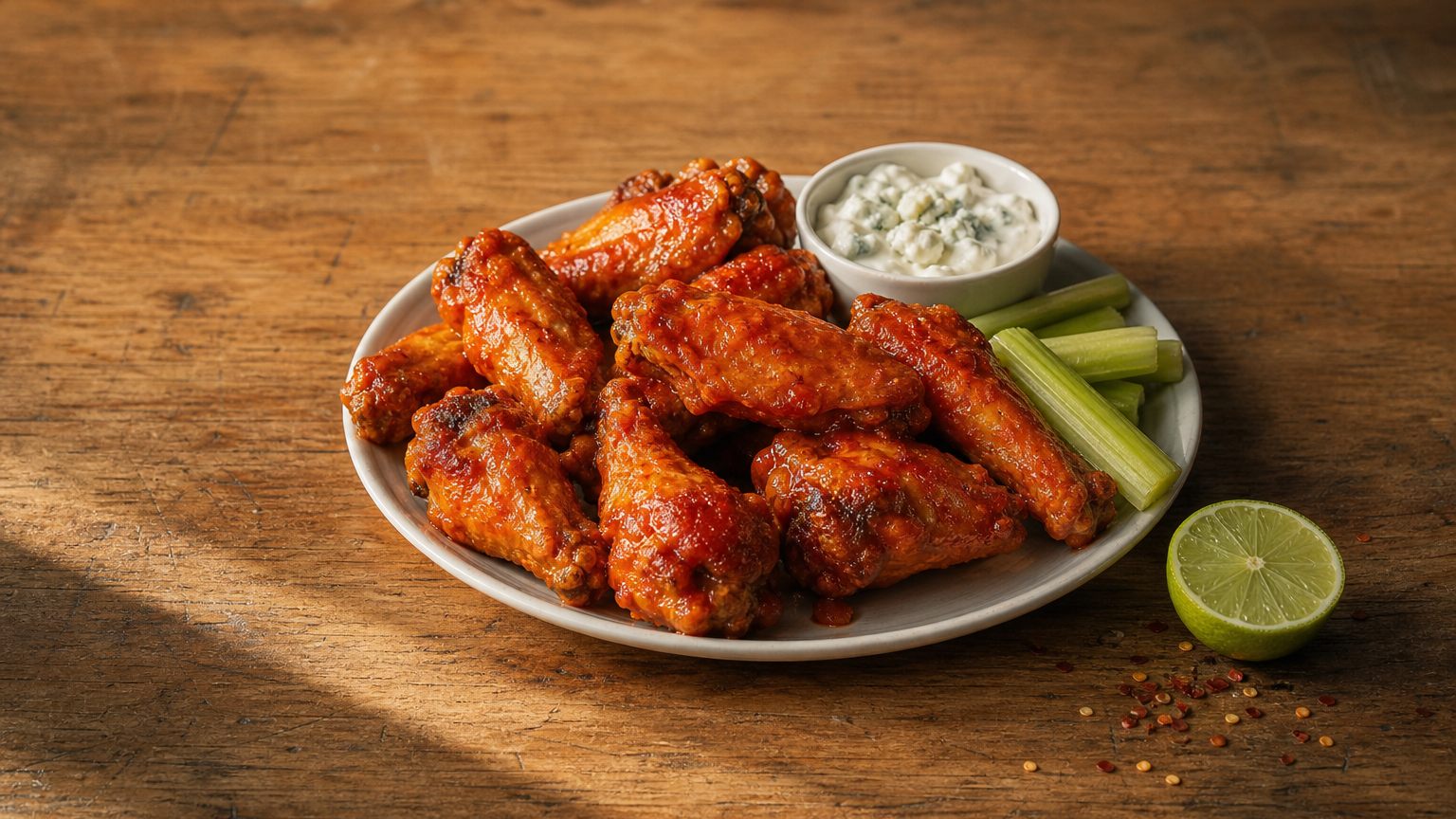
National Chicken Wing Day (July 29 in the US) passes every year with surprisingly little home cooking, mostly because wings have a reputation as deep-fryer food. The technique that fixes that is already in most kitchens: baking powder, a very hot oven, and dry skin. The result is crispy without the oil.
Here's how it works, and the recipe that inspired most home versions: the Buffalo wing, created at the Anchor Bar in Buffalo, New York, in the 1960s.
Why baking powder makes wings crispy
The baking powder trick is the most reliable advance in home wing cooking. It works because baking powder is alkaline, and alkaline environments accelerate the Maillard reaction in the skin, the same process that browns and crisps meat. The powder also draws moisture to the surface and creates tiny bubbles under the skin as it heats, which leads to that characteristic blistered, crackling texture.
This only works with baking powder, not baking soda. Baking soda is much stronger and will leave an unpleasant metallic taste. The correct ratio is about 8 grams of baking powder per 900 grams of wings.
Getting the skin dry
Moisture is the enemy of crispiness. Steam forms between the skin and the pan instead of crisping, and the result is soft and pale. Pat the wings very dry with kitchen paper before seasoning, and if time allows, leave them uncovered on a rack in the fridge for 30 minutes to an hour before cooking. The drier the skin before the oven, the crispier the result after.
A rack over the baking sheet also helps: hot air circulates under the wings instead of the bottom surface sitting in rendered fat.
The oven temperature and timing
The wings need serious heat: 230°C/450°F. At lower temperatures, the fat renders before the skin has a chance to blister, and you get soft skin that looks done before it is. The recipe calls for 20 minutes on the first side, then a flip, then 15 more minutes. The total 35 minutes of cook time is a guide for typical wings: check the actual temperature with a probe thermometer. The thickest part of the meat should reach 74°C/165°F before serving.
The sauce
Classic Buffalo sauce is three ingredients: Frank's RedHot sauce, unsalted butter, and a small amount of white wine vinegar. The proportions matter. Too much butter and the sauce goes greasy and loses its heat; too little and it doesn't coat. The recipe uses 80 ml of hot sauce to 40 g of butter, with 5 ml of vinegar to brighten it. Warm the sauce gently until the butter melts: don't boil, or it can separate.
Toss the wings in the sauce immediately before serving, not before, or the skin softens.
The recipe
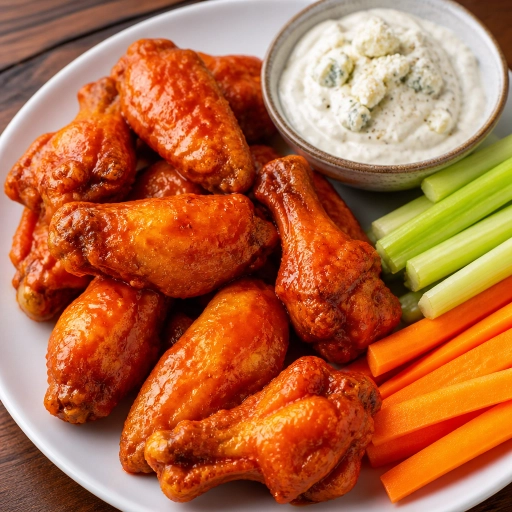
Buffalo Wings
These Buffalo wings come out crisp and deeply golden from the oven, then get coated in a tangy, buttery hot sauce that clings to every bite. Served with cool blue cheese dip and crunchy vegetables, they deliver the classic spicy-creamy contrast with beginner-friendly technique.
Gourmate estimates 1,105 calories and 72 g of protein per serving for two. The numbers are high because this recipe uses whole wings with skin, not breast meat. That's part of what makes them good.
Allergens and food safety
The Buffalo sauce contains dairy (butter). The blue cheese dip contains dairy (blue cheese, sour cream) and egg (mayonnaise). The hot sauce contains chili peppers, which are in the nightshade family. Check labels if any of these are relevant dietary restrictions.
Raw chicken carries Salmonella and Campylobacter. Both bacteria are destroyed by adequate cooking heat. The key precautions:
- Keep raw wings separate from any food that won't be cooked
- Wash hands, the board, and any utensils that touched the raw chicken before using them for anything else
- Use a meat thermometer to confirm the thickest part of the wing reaches 74°C/165°F before serving
- Don't reuse the marinade or any liquid that touched raw chicken unless it's been brought to a full boil
The blue cheese dip uses mayonnaise, which is made with egg. Commercial mayonnaise is generally made with pasteurised egg and presents a low Salmonella risk, but if you're making dip for someone pregnant, very young, elderly, or immunocompromised, confirm your brand uses pasteurised egg or choose a dip without raw egg.
Variations beyond Buffalo
Buffalo is the starting point, not the only option. The baking powder and high-heat technique is the same for any wing style.
Honey garlic: skip the hot sauce, use 3 tablespoons of honey, 2 tablespoons of soy sauce, 3 cloves of garlic, and a teaspoon of sesame oil reduced briefly in a pan until slightly sticky. Toss just before serving.
BBQ: swap the Buffalo sauce for your preferred BBQ sauce. Applied the same way: just before serving, not before the oven.
Dry rub only: skip the sauce entirely. Smoked paprika, garlic powder, brown sugar, salt, and cayenne, tossed on the raw wings before roasting. Crispy and lightly sweet, no dairy.
Looking for more weekend cooking ideas? Gourmate personalises recipe suggestions around your tastes. Find out how the recipe discovery works.