
Cottage Cheese Recipes: High Protein, Easy, and Underrated
Why cottage cheese is one of the most useful high-protein ingredients in the kitchen, how to use it in both sweet and savoury dishes, and two simple recipes that show it at its best.
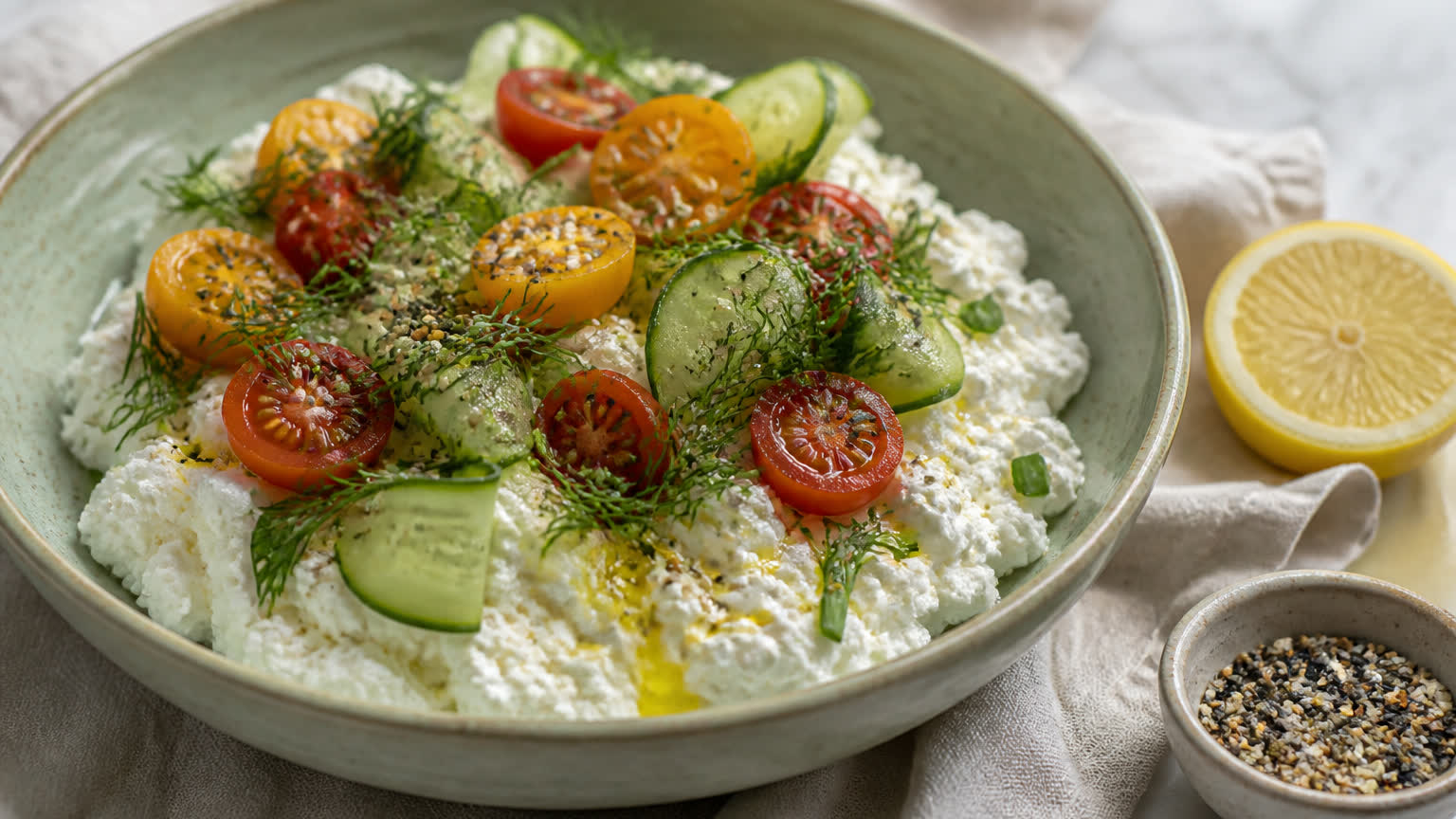
Cottage cheese is one of the most protein-dense foods in a regular supermarket. Per 100 g, low-fat cottage cheese contains around 11-12 g of protein at roughly 80-100 calories. For comparison: Greek yogurt is around 10 g protein per 100 g; chicken breast is about 31 g per 100 g but at three times the calorie density per gram of protein.
Cottage cheese is also fast. A cottage cheese bowl requires no cooking. The most involved cottage cheese recipe is one where you blend it smooth and use it as a sauce or dip, which takes 2 minutes with an immersion blender.
The main reason cottage cheese is underused: texture and temperature. Many people encounter it cold and lumpy, which is not the most appealing introduction. Blended smooth or used in a warm dish, it behaves very differently.
Why cottage cheese is having a moment
Cottage cheese consumption in the US dropped sharply between the 1970s and early 2000s, largely replaced by Greek yogurt as the preferred high-protein dairy product. In recent years, particularly following social media interest in high-protein eating, cottage cheese has returned as a staple in home kitchens. Part of this is nutritional: it has comparable protein to Greek yogurt but is typically lower in calories and fat per serving.
The other factor is versatility. The TikTok and Instagram cottage cheese trend in 2023-2024 demonstrated that blended cottage cheese could replace ricotta in pasta sauces, replace sour cream in dips, and form the base of no-bake "cheesecakes". The trend moved cottage cheese from the health food shelf (where it had been positioned since the 1960s as a diet food) into mainstream cooking.
The nutritional case is straightforward: cottage cheese is predominantly casein protein (the slow-digesting milk protein), which makes it a practical protein source before sleep for people focused on muscle protein synthesis overnight. Some bodybuilders have eaten cottage cheese before bed for this reason for decades; the trend just made the practice mainstream.
How to use cottage cheese
As a high-protein base for bowls. Served at room temperature with vegetables, herbs, and seasoning, it works as a savoury bowl base similar to labneh or ricotta. The savory bowl recipe below is this approach.
Blended as a sauce or dip. An immersion blender turns cottage cheese smooth and glossy in 30 seconds. Blended cottage cheese can replace sour cream, ricotta, or cream cheese in most contexts: as a dip, as a sauce base, stirred into pasta, or spread on toast. The texture is closer to ricotta than to sour cream: slightly denser and less tangy.
In baked goods. Cottage cheese adds moisture and protein to pancakes, muffins, and quick breads without changing the flavour noticeably. A tablespoon of blended cottage cheese added to a pancake batter raises the protein content without affecting the outcome.
As a sweet bowl. Combined with fruit, honey, and nuts, cottage cheese works as a high-protein dessert or snack. The lower fat content means it's less indulgent than Greek yogurt-based desserts but functionally similar.
What to look for when buying
Low-fat (1-2%) is the highest protein-to-calorie ratio. Full-fat cottage cheese has more fat and slightly more calories but slightly less protein per 100 g. The texture of full-fat is richer and slightly creamier, which is noticeable when eating it plain.
Small curd vs large curd. This is mostly a texture preference. Large curd (the typical American style) holds its shape better; small curd is softer and closer to a puree. Either works in cooked dishes.
Fresh vs pasteurized. Most commercial cottage cheese is pasteurized and safe at room temperature for limited periods. It should still be refrigerated until use and consumed within the use-by date. Once opened, use within 5-7 days and keep refrigerated.
Savory cottage cheese bowl (22g protein, 5 minutes)
A no-cook, high-protein bowl that works as a quick breakfast, light lunch, or snack. The everything bagel seasoning adds flavour complexity without requiring separate spices. The bowl can be varied by changing the vegetables: radishes, roasted peppers, or a soft-boiled egg all work alongside the base recipe.
The seasoning tip: add lemon juice and salt to the cottage cheese before plating rather than on top. This distributes the acidity and salt more evenly.
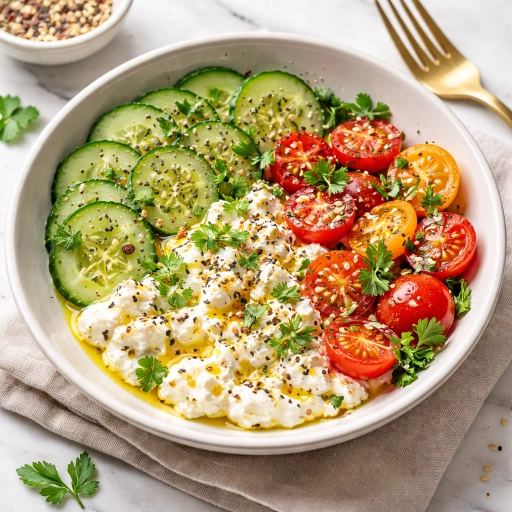
Savory cottage cheese bowl
A quick, no-cook high-protein bowl: creamy cottage cheese brightened with lemon, topped with crisp cucumber, sweet cherry tomatoes and aromatic herbs, finished with olive oil and everything bagel seasoning. Ready in minutes and naturally gluten-free.
Rice cakes with cottage cheese and cucumber (14.5g protein, 5 minutes)
A lighter version of the same approach: cottage cheese spread over crisp rice cakes, with thinly sliced cucumber and fresh dill. This format works well as a snack or light lunch.
The key technique: drain the cottage cheese briefly if it's very wet (tip: a fine-mesh sieve for 5 minutes) so the topping doesn't make the rice cake soggy immediately. If you're eating straight away, this matters less; if you're packing them for later, the drainage step is worth doing.
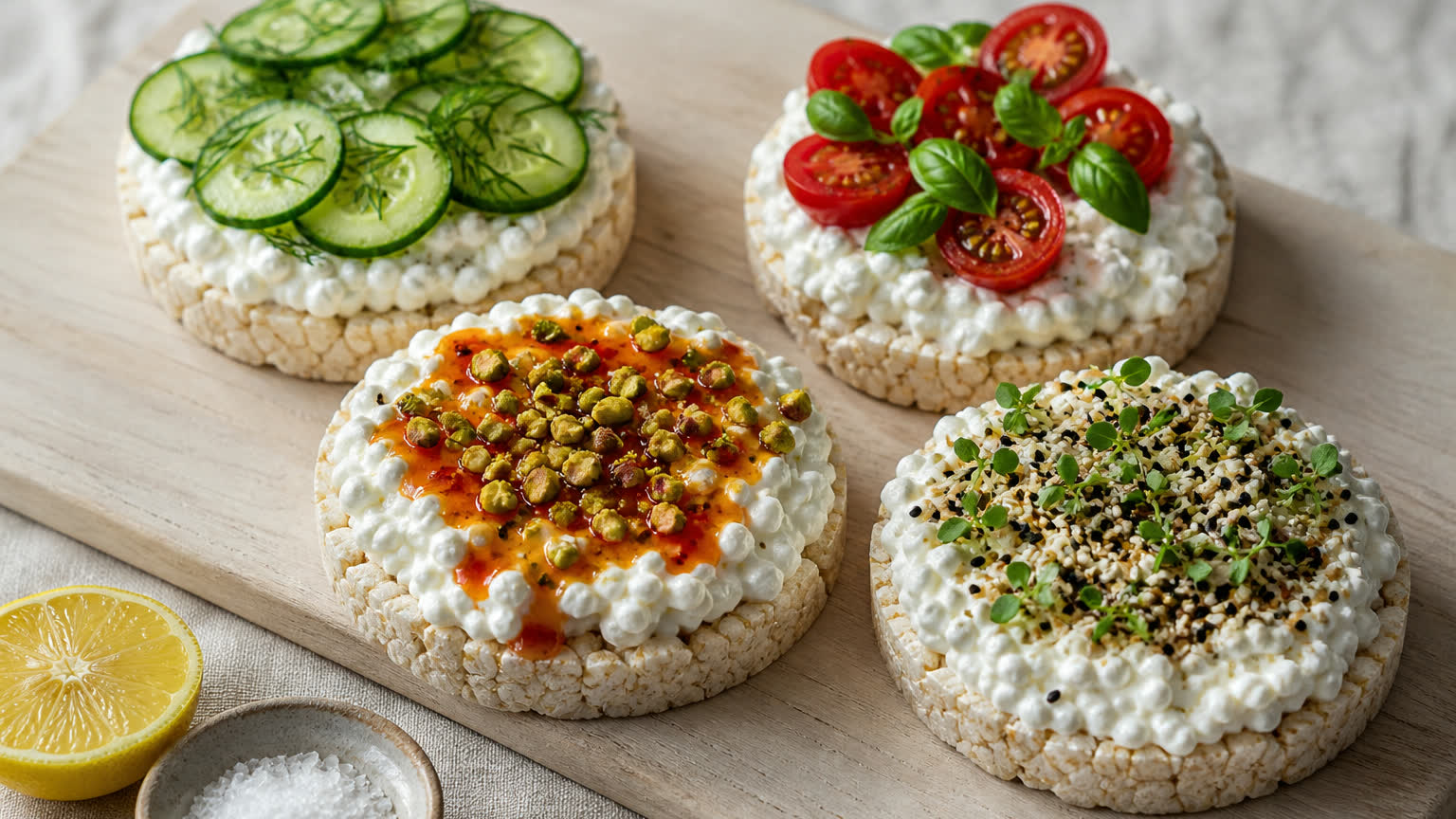
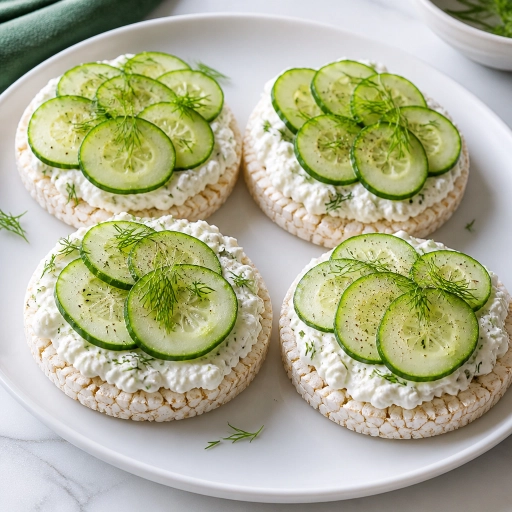
Rice Cakes with Cottage Cheese and Cucumber
These rice cakes are crisp, cool, and creamy, with a fresh dill aroma and a clean black pepper finish. The low-fat cottage cheese adds satisfying protein, while cucumber keeps the topping light and refreshing.
How much protein per serving
The recipes above deliver 14.5-22 g of protein per serving. Combined with eggs, the savory bowl reaches 24-30 g. As part of a full meal rather than a standalone snack, the rice cakes pair well with a boiled egg (6 g) and a handful of edamame (11 g per 100 g) to reach 30+ g.
Storage and food safety
Cottage cheese is a perishable dairy product. Keep refrigerated at or below 4°C. Do not leave at room temperature for more than 2 hours. After opening, consume within 5-7 days.
Avoid double-dipping: use a clean spoon to serve and do not return uneaten portions to the container. Cross-contamination from utensils can cause early spoilage.
Cottage cheese has a mild, slightly acidic smell when fresh. Any strong smell (sour, ammonia-like) or visible mould means it should be discarded.
Allergens
Both recipes above contain dairy (cow's milk). Check the everything bagel seasoning label: most contain sesame (a regulated allergen in both the US and EU).
Rice cakes are often gluten-free but may be processed in facilities that also handle wheat. Check the label if you're cooking for someone coeliac or with wheat allergy.
Looking for more high-protein breakfast and snack ideas? Gourmate personalises meal suggestions around your protein targets. Find out how the recipe discovery works.