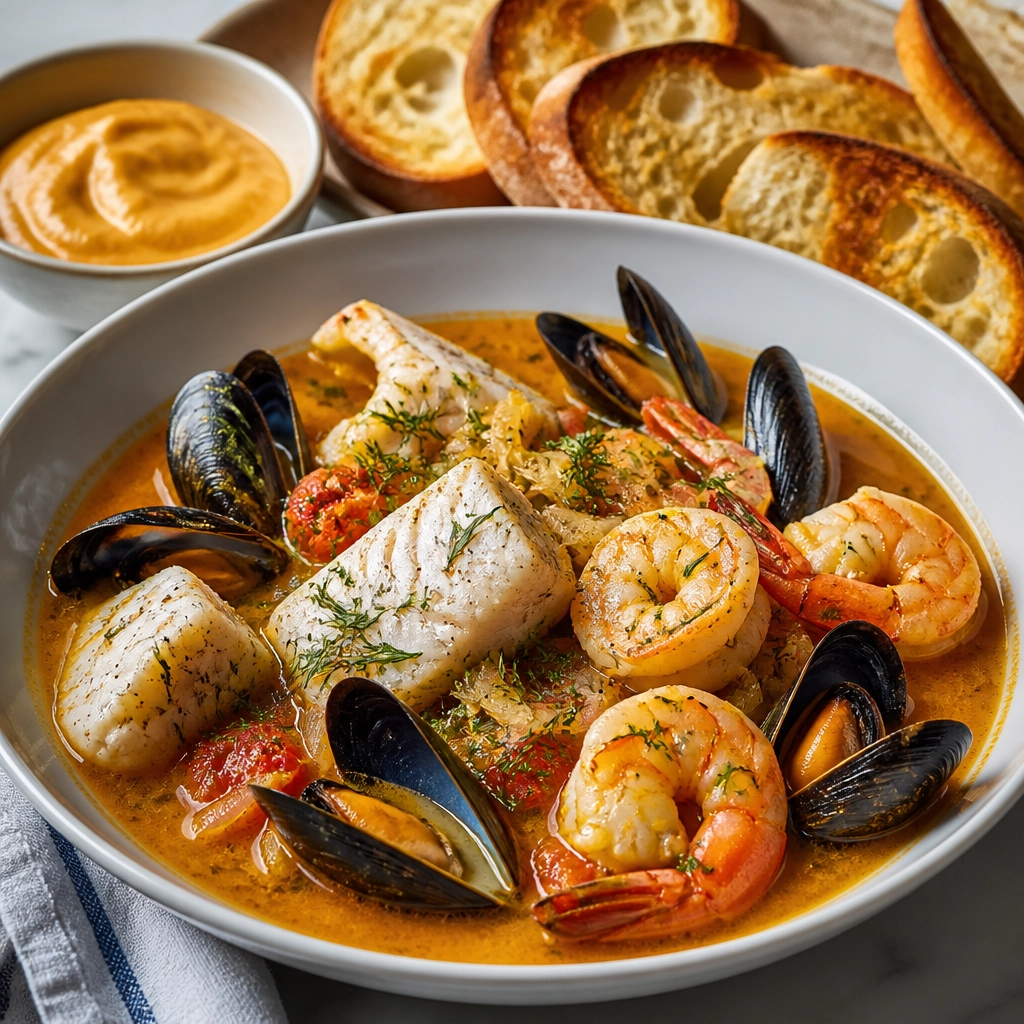
Bouillabaisse
This bouillabaisse is fragrant with saffron, fennel, tomato, and citrus, with a clear but richly flavored broth supporting tender sea bass, sweet shrimp, and briny mussels. The fiery-golden rouille and crisp toasted baguette turn it into a dramatic, deeply satisfying seafood feast.
Safety Warning
Use only very fresh seafood and keep it refrigerated until cooking. Discard any mussels that are cracked before cooking or that do not open after cooking; do not leave the egg-based rouille at room temperature for extended periods.
Nutrition · per serving
Ingredients
29 itemsSeafood and fish
Broth base
Rouille
To serve
Tips
- •For a 60-minute version, use good-quality ready fish stock and pre-roasted peeled pepper for the rouille.
- •Use a wide pot rather than a deep one so the seafood cooks evenly and the fish pieces stay intact.
- •Do not boil the fish hard once added; a gentle simmer keeps sea bass tender and prevents the mussels from toughening.
- •If you want an even more traditional depth, add a small piece of dried orange peel or a splash of pastis, but keep it subtle.
- •Serve with a simple fennel salad or boiled potatoes if you want a fuller Provençal-style meal.
Steps
- 1
Prepare all ingredients before you start: slice the onion, fennel, and leek; mince the garlic; dice the tomatoes; cut the sea bass into large bite-size chunks; check the mussels and discard any cracked ones or any that stay open when tapped. Keep the fish and shellfish chilled until needed. Toast the baguette slices until crisp.
200 g yellow onion, finely sliced250 g fennel bulb, finely sliced, fronds reserved120 g leek, white part only, finely sliced20 g garlic cloves, minced300 g ripe tomatoes, peeled, seeded, and diced500 g sea bass fillets, skinless, cut into large chunks1 kg mussels, cleaned and debearded160 g baguette, sliced and toasted - 2
Start the broth base. In a wide heavy pot over medium heat, warm the olive oil. Add the onion, fennel, and leek with a pinch of the salt and cook for 8-10 minutes, stirring often, until softened but not browned; gentle sweating builds sweetness without muddying the broth. Add the garlic and cook 30 seconds until fragrant.
45 ml olive oil200 g yellow onion, finely sliced250 g fennel bulb, finely sliced, fronds reserved120 g leek, white part only, finely sliced8 g fine sea salt20 g garlic cloves, minced - 3
Stir in the tomato paste and cook for 1 minute to caramelize slightly. Add the diced tomatoes, white wine, saffron, orange zest, bay leaf, thyme, black pepper, and cayenne. Simmer for 2 minutes, then pour in the hot fish stock. Bring to a lively simmer and cook uncovered for 15 minutes, skimming if needed, until the vegetables are fully tender and the broth is aromatic and lightly concentrated.
30 g tomato paste300 g ripe tomatoes, peeled, seeded, and diced150 ml dry white wine0.25 g saffron threads2 strips orange zest1 bay leaf4 sprigs fresh thyme2 g black pepper1 g cayenne pepper1.2 L fish stock, hot - 4
While the broth simmers, make the rouille. In a tall jug or bowl, combine the egg yolk, grated garlic, Dijon mustard, soaked saffron with its liquid, roasted red bell pepper, lemon juice, and salt. Blend, then slowly drizzle in the olive oil until thick and glossy. It should be spoonable, like a loose mayonnaise; if too thick, loosen with 1-2 teaspoons of warm water. Chill until serving.
1 egg yolk1 garlic clove, finely grated5 g Dijon mustard0.05 g saffron threads, soaked in 15 ml hot water80 g red bell pepper, roasted, peeled, and chopped10 ml lemon juice2 g fine sea salt120 ml olive oil - 5
Remove the orange zest, bay leaf, and thyme stems from the broth. Taste and adjust seasoning. Add the mussels, cover, and cook for 3 minutes, shaking the pot once or twice. When they begin to open, add the shrimp and sea bass, gently submerging them in the broth. Simmer uncovered for 3-4 minutes more, just until the shrimp turn pink, the fish flakes at the edges, and the mussels are fully opened. Discard any mussels that remain closed.
1 kg mussels, cleaned and debearded300 g raw shrimp, peeled and deveined500 g sea bass fillets, skinless, cut into large chunks - 6
Rest the bouillabaisse off the heat for 2 minutes so the seafood settles and the saffron perfume blooms. Ladle the broth and seafood into warm shallow bowls. Top with chopped fennel fronds and serve immediately with toasted baguette and rouille alongside, encouraging diners to spread the rouille on the bread or stir a little into the broth.
10 g reserved fennel fronds, chopped160 g baguette, sliced and toasted
Origin & History
Bouillabaisse comes from the port city of Marseille, where fishermen originally made it from unsold rockfish simmered with aromatics and saffron. Over time it evolved from a humble boat-side soup into one of Provence's most celebrated dishes, often served with toasted bread and rouille. Modern versions commonly use a mix of fish and shellfish while preserving its signature saffron-fennel character.
Do even more with Gourmate
Cook this recipe in Gourmate — your AI meal planning app.
Plan Meals
Weekly planner at a tap
Ask Questions
Chat with your AI chef
Adjust Recipe
Scale servings & swap ingredients
Cook Mode
Step-by-step guidance
Kitchen Timers
Built-in timers & alerts
Grocery List
Auto-generated shopping lists