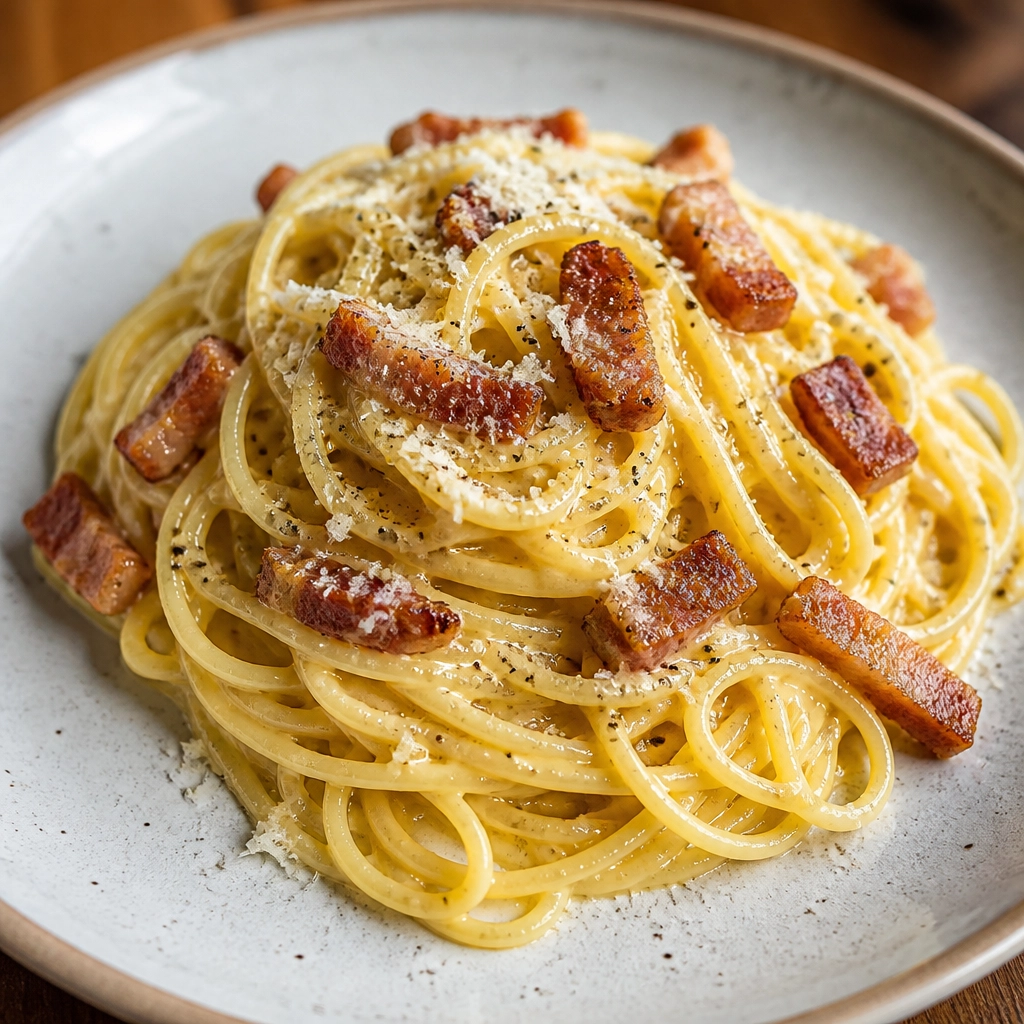
Spaghetti alla Carbonara
Spaghetti alla Carbonara is glossy, peppery, and deeply savoury, with a silky sauce made only from eggs, Pecorino Romano, rendered guanciale fat, and starchy pasta water. The finished dish should be creamy without cream, with crisp-edged guanciale and a bold bite of black pepper.
Nutrition · per serving
Ingredients
8 itemsPasta water
Carbonara sauce
Tips
- •Do not add cream, butter, garlic, or onion for a classic Roman-style carbonara.
- •Finely grate the Pecorino Romano so it melts smoothly into the egg mixture instead of clumping.
- •If you are nervous about curdling the eggs, mix the pasta and sauce in the warm bowl rather than the skillet, adding hot pasta water gradually while tossing.
- •Guanciale is traditional; pancetta can work in a pinch, but the flavour will be less distinctly Roman.
Steps
- 1
Bring the water to a rolling boil in a large pot, then add the fine sea salt. Use less salt than for many pasta dishes because Pecorino Romano and guanciale are already salty.
4 litres water24 g fine sea salt - 2
While the water heats, cut the guanciale into 5–7 mm batons or small lardons, keeping both the lean and fatty parts. This size lets the fat render slowly while the edges become crisp.
160 g guanciale - 3
In a large heatproof mixing bowl, whisk the whole egg, egg yolks, Pecorino Romano, and black pepper into a thick paste. Set the bowl near the stove so it warms slightly, but do not place it over direct heat.
1 whole large egg, about 50 g whole egg4 large egg yolks, about 72 g egg yolks100 g Pecorino Romano, finely grated2 tsp, freshly ground black pepper - 4
Put the guanciale in a cold wide skillet and cook over medium-low heat for 6–8 minutes, stirring occasionally, until the fat has rendered and the pieces are golden with crisp edges. If it browns too fast, lower the heat; you want melted fat for the sauce, not burnt guanciale.
160 g guanciale - 5
Add the spaghetti to the boiling water and cook until just al dente, usually 1 minute less than the package time. Stir during the first minute to prevent sticking.
400 g spaghetti - 6
Just before draining, reserve at least 250 ml of the starchy pasta cooking water. Keep the guanciale and its rendered fat warm, but turn off the heat if the pasta is not ready yet.
- 7
Transfer the al dente spaghetti directly into the skillet with the guanciale and toss for 30–60 seconds over low heat to coat the pasta in the rendered fat. Remove the skillet from the heat before adding the egg mixture; this is the key step that prevents scrambling.
400 g spaghetti160 g guanciale - 8
Scrape the egg and Pecorino mixture over the hot pasta off the heat, tossing rapidly with tongs. Add reserved pasta water a splash at a time, tossing continuously, until the sauce turns glossy and creamy and lightly coats every strand. If it seems too thick, add more pasta water; if it seems loose, keep tossing off heat for a few seconds.
1 whole large egg, about 50 g whole egg4 large egg yolks, about 72 g egg yolks100 g Pecorino Romano, finely grated2 tsp, freshly ground black pepper - 9
Serve immediately on warm plates, making sure each portion gets guanciale and sauce. Carbonara waits for no one: it is best eaten as soon as the sauce is silky and hot.
Origin & History
Carbonara is strongly associated with Rome and the surrounding Lazio region, where guanciale, Pecorino Romano, eggs, and dried pasta are pantry staples. Its modern form became widely known in the mid-20th century, though its exact origin is debated; today it is one of the emblematic pastas of Roman cooking.
Do even more with Gourmate
Cook this recipe in Gourmate — your AI meal planning app.
Plan Meals
Weekly planner at a tap
Ask Questions
Chat with your AI chef
Adjust Recipe
Scale servings & swap ingredients
Cook Mode
Step-by-step guidance
Kitchen Timers
Built-in timers & alerts
Grocery List
Auto-generated shopping lists