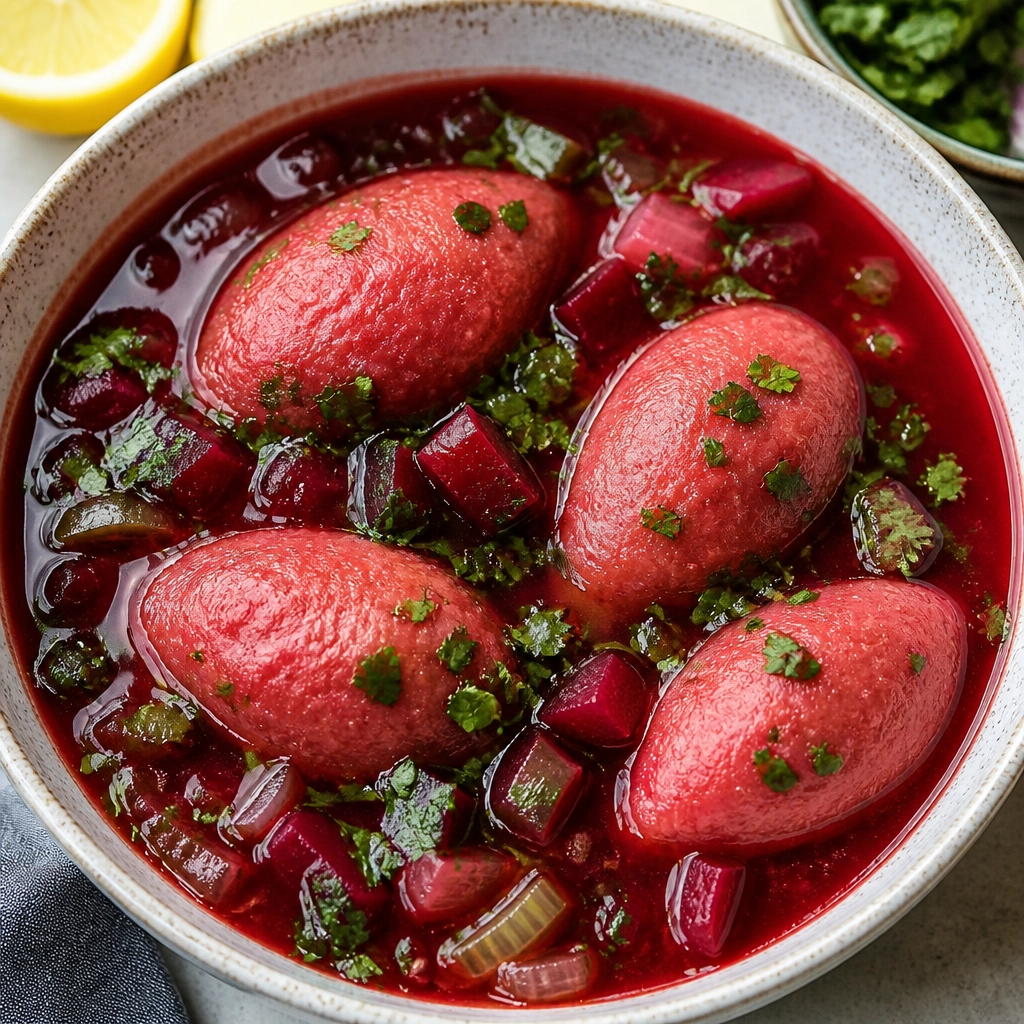
Kubeh Selek
Kubeh Selek is a striking bowl of tender semolina dumplings filled with warmly spiced lamb, simmered in a ruby-red beet broth brightened with lemon and herbs. The soup is earthy, lightly tangy, and deeply comforting, with each dumpling soaking up the fragrant broth while staying delicately firm.
Nutrition · per serving
Ingredients
24 itemsKubeh dough
Lamb filling
Beet broth
Herb finish
Tips
- •For the best texture within 60 minutes, use fine semolina rather than coarse semolina; coarse semolina needs a longer hydration.
- •Keep the broth at a gentle simmer once the dumplings go in. A hard boil can split the shells.
- •If you want a brighter, more sour soup, add an extra 5-10 ml lemon juice just before serving.
- •Wet hands are the key shaping tool for kubeh dough; avoid dusting with much flour.
- •Serve with extra lemon wedges and a small salad of herbs, onion, and cucumber if desired.
Steps
- 1
Start the kubeh dough so the semolina can hydrate: in a bowl, combine the fine semolina, plain flour, and salt. Add the water and neutral oil, mix until a shaggy dough forms, then knead 2-3 minutes until smooth. Cover and let it rest while you prepare the filling and broth; the rest makes the dough easier to shape and less likely to crack.
180 g fine semolina20 g plain flour4 g salt140 ml water10 ml neutral oil - 2
Make the filling: heat the neutral oil in a small frying pan over medium heat. Cook the onion until softened and lightly golden, 5-6 minutes. Add the minced lamb, breaking it up well, and cook until no longer pink and any released liquid has mostly evaporated. Stir in the ground turmeric, ground coriander, salt, and black pepper, and cook 1 minute more. Spread the filling on a plate and cool it quickly for 10 minutes; a cool filling is much easier to enclose neatly.
10 ml neutral oil80 g onion, very finely diced180 g minced lamb2 g ground turmeric2 g ground coriander3 g salt1 g black pepper - 3
Meanwhile, build the broth: in a medium pot, heat the neutral oil over medium heat. Add the onion and celery stalks and cook 4-5 minutes until beginning to soften. Add the garlic cloves and ground turmeric and stir for 30 seconds until fragrant. Add the beetroot, vegetable stock or water, salt, and black pepper. Bring to a boil, then lower to a steady simmer and cook 20 minutes, until the beetroot is just tender but not collapsing.
15 ml neutral oil100 g onion, sliced100 g celery stalks, sliced8 g garlic cloves, sliced2 g ground turmeric300 g raw beetroot, peeled and cut in 2 cm cubes1 litre vegetable stock or water7 g salt1 g black pepper - 4
Shape the kubeh: divide the rested dough into 8 equal pieces and keep your hands lightly wet. Flatten one piece into a thin disc in your palm, rotating and pressing from the center outward so the middle is thin but not torn. Place about 1 heaped teaspoon of lamb filling in the center, then pinch and smooth the dough around it to form an oval dumpling with no cracks. Repeat with the remaining dough and filling. If the dough sticks, wet your fingers rather than adding extra flour; flour makes the exterior heavier.
180 g fine semolina20 g plain flour4 g salt140 ml water10 ml neutral oil180 g minced lamb80 g onion, very finely diced2 g ground turmeric2 g ground coriander3 g salt1 g black pepper10 ml neutral oil - 5
Season the broth with the lemon juice, then lower the heat so the liquid is at a gentle simmer, not a rolling boil. Slip in the kubeh one by one. Cook 12-15 minutes, turning the pot gently once or twice rather than stirring vigorously, until the dumplings float and the semolina shells are tender but still hold their shape.
30 ml lemon juice - 6
Finish and serve: add the fresh coriander and fresh mint to the broth for the last 1 minute of cooking. Taste and adjust seasoning if needed. Ladle the beet broth and kubeh carefully into warm bowls, making sure each serving gets 4 dumplings and plenty of beet, celery, and herbs.
15 g fresh coriander, chopped8 g fresh mint, chopped
Origin & History
Kubeh selek is a beloved soup of Iraqi-Jewish origin that became deeply rooted in Israeli home cooking. The dish pairs semolina dumplings stuffed with meat with a vividly colored beet broth, and many families maintain their own shaping, seasoning, and souring traditions. It is especially associated with Sabbath and holiday tables, where patient handwork is part of the ritual.
Do even more with Gourmate
Cook this recipe in Gourmate — your AI meal planning app.
Plan Meals
Weekly planner at a tap
Ask Questions
Chat with your AI chef
Adjust Recipe
Scale servings & swap ingredients
Cook Mode
Step-by-step guidance
Kitchen Timers
Built-in timers & alerts
Grocery List
Auto-generated shopping lists