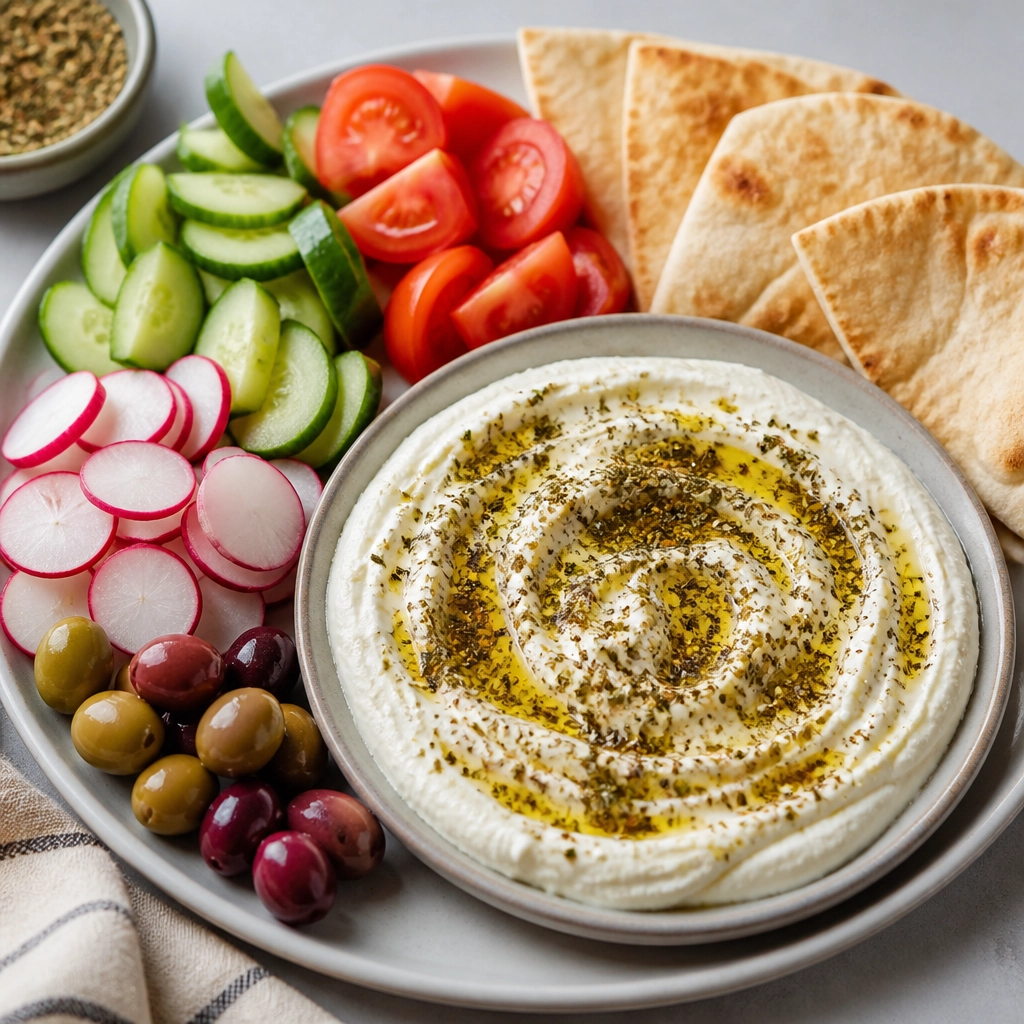
Labneh with Za'atar
This dish is cool, creamy, and tangy, with fragrant za'atar and rich olive oil pooling into the swirls of thick labneh. Crisp vegetables, briny olives, and warm pita turn it into a fresh, effortless mezze plate that feels generous despite being very simple.
Nutrition · per serving
Ingredients
9 itemsLabneh plate
Vegetables and olives
To serve
Tips
- •For the best texture, use thick labneh rather than regular yogurt; if needed, chill it well before serving so it holds its shape.
- •A pinch of sumac or a few mint leaves can be added on top, but keep the garnish light so the za'atar remains the main flavor.
- •If you want to keep the dish gluten-free, replace the pita with gluten-free flatbread or serve only with vegetables.
Steps
- 1
Wash and dry the cucumber, tomatoes, and radishes. Slice the cucumber into half-moons, cut the tomatoes into bite-size wedges, and thinly slice the radishes. Arrange the vegetables and olives on a serving plate or board for easy dipping and scooping.
120 g cucumber160 g tomatoes80 g radishes60 g mixed olives - 2
Spread the labneh onto a shallow plate or small serving dish, using the back of a spoon to make broad swirls and a few wells. This creates places for the olive oil and za'atar to settle instead of sliding off.
250 g labneh - 3
Sprinkle the labneh evenly with the fine sea salt and za'atar, then drizzle over the extra-virgin olive oil. Taste a small edge and add a pinch more salt only if needed; olives and za'atar can already be salty.
1/4 tsp fine sea salt2 tsp za'atar30 ml extra-virgin olive oil - 4
Warm the pita briefly until soft and pliable, either in a dry pan for about 30 seconds per side or in a microwave for 10-15 seconds wrapped in a clean towel. Serve the labneh immediately with the vegetables, olives, and warm pita for scooping.
2 small (about 120 g total) warm pita bread
Origin & History
Labneh is a cornerstone of Levantine and Israeli home cooking, made by straining yogurt until it becomes thick, tangy, and spreadable. It is commonly served for breakfast or as part of a mezze table, often finished simply with olive oil and za'atar. This style of serving highlights the region's love of dairy, herbs, olives, and fresh vegetables.
Do even more with Gourmate
Cook this recipe in Gourmate — your AI meal planning app.
Plan Meals
Weekly planner at a tap
Ask Questions
Chat with your AI chef
Adjust Recipe
Scale servings & swap ingredients
Cook Mode
Step-by-step guidance
Kitchen Timers
Built-in timers & alerts
Grocery List
Auto-generated shopping lists