Foul Moudammas
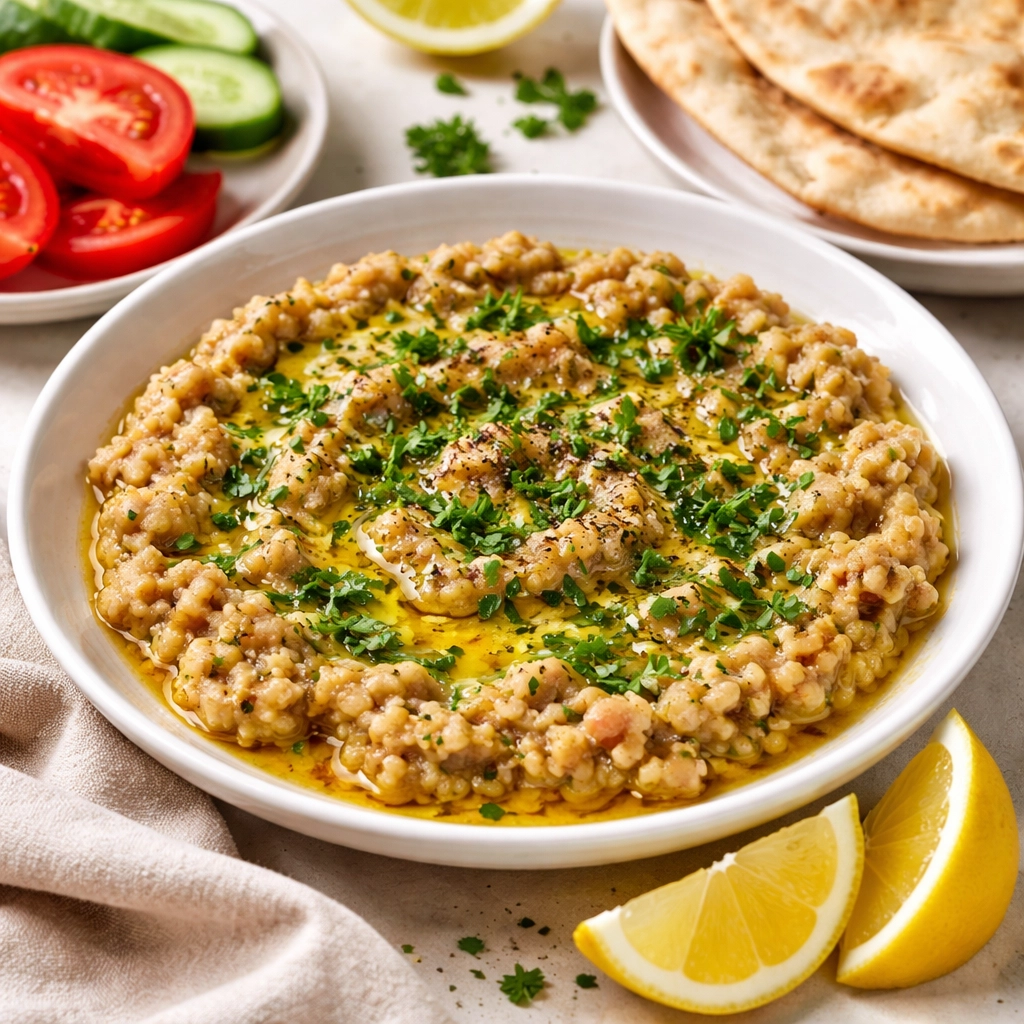
Foul Moudammas is a warm, comforting mash of fava beans brightened with lemon, garlic, and cumin, then finished with plenty of olive oil and fresh parsley. This version is hearty yet fresh, with a rustic texture that is perfect for scooping up with soft flatbread.
Nutrition · per serving
Ingredients
12 itemsFoul
To finish and serve
Tips
- •Using canned fava beans makes this beginner-friendly dish achievable well within 30 minutes; if using dried beans, they require soaking and long simmering and will greatly increase the cooking time.
- •For a looser, more spoonable foul, stir in a splash of hot water before serving; for a thicker dip-like texture, mash a little longer.
- •A pinch of chili flakes is a common variation, but the classic lemon-cumin-garlic balance is the heart of the dish.
- •Serve with tomato, radish, cucumber, or olives for a fuller mezze-style meal.
Steps
- 1
Drain the fava beans. Finely mince the garlic and chop the parsley. Warm the flatbread briefly in a dry pan or low oven just until soft and pliable; keep covered so it stays tender.
480 g canned fava beans, drained2 cloves (10 g) garlic, finely minced2 pieces (120 g) flatbread15 g flat-leaf parsley, finely chopped - 2
Put the drained fava beans and water in a small saucepan over medium heat. Cook for 5-6 minutes, stirring occasionally, until the beans are heated through and start to soften. If the pan looks dry, add 1-2 tablespoons more water; the mixture should stay loose enough to mash.
480 g canned fava beans, drained60 ml water - 3
Add the minced garlic, lemon juice, ground cumin, fine salt, black pepper, and the 30 ml olive oil to the pan. Mash the beans with a potato masher or the back of a spoon to your preferred texture: traditionally it should be coarse, not completely smooth. Cook for 2-3 minutes more, stirring, until creamy and fragrant. Taste and adjust with a little more lemon or salt if needed.
2 cloves (10 g) garlic, finely minced30 ml lemon juice1 tsp (2 g) ground cumin1/2 tsp (3 g) fine salt1/4 tsp (0.5 g) black pepper30 ml extra-virgin olive oil - 4
Spoon the warm foul into shallow bowls or plates. Make a slight well in the center, drizzle over the remaining 15 ml olive oil, and scatter with the chopped parsley. Serve immediately with the warm flatbread and lemon wedges on the side.
15 ml extra-virgin olive oil15 g flat-leaf parsley, finely chopped2 pieces (120 g) flatbread2 wedges lemon wedges
Origin & History
Foul moudammas is one of the oldest bean dishes in the eastern Mediterranean and is widely eaten across the Arab world, especially for breakfast. In Lebanon, it is often served warm with olive oil, lemon, and parsley, alongside bread and fresh vegetables. The dish reflects a long tradition of simple, nourishing legume cookery built on pantry staples.
Do even more with Gourmate
Cook this recipe in Gourmate — your AI meal planning app.
Plan Meals
Weekly planner at a tap
Ask Questions
Chat with your AI chef
Adjust Recipe
Scale servings & swap ingredients
Cook Mode
Step-by-step guidance
Kitchen Timers
Built-in timers & alerts
Grocery List
Auto-generated shopping lists