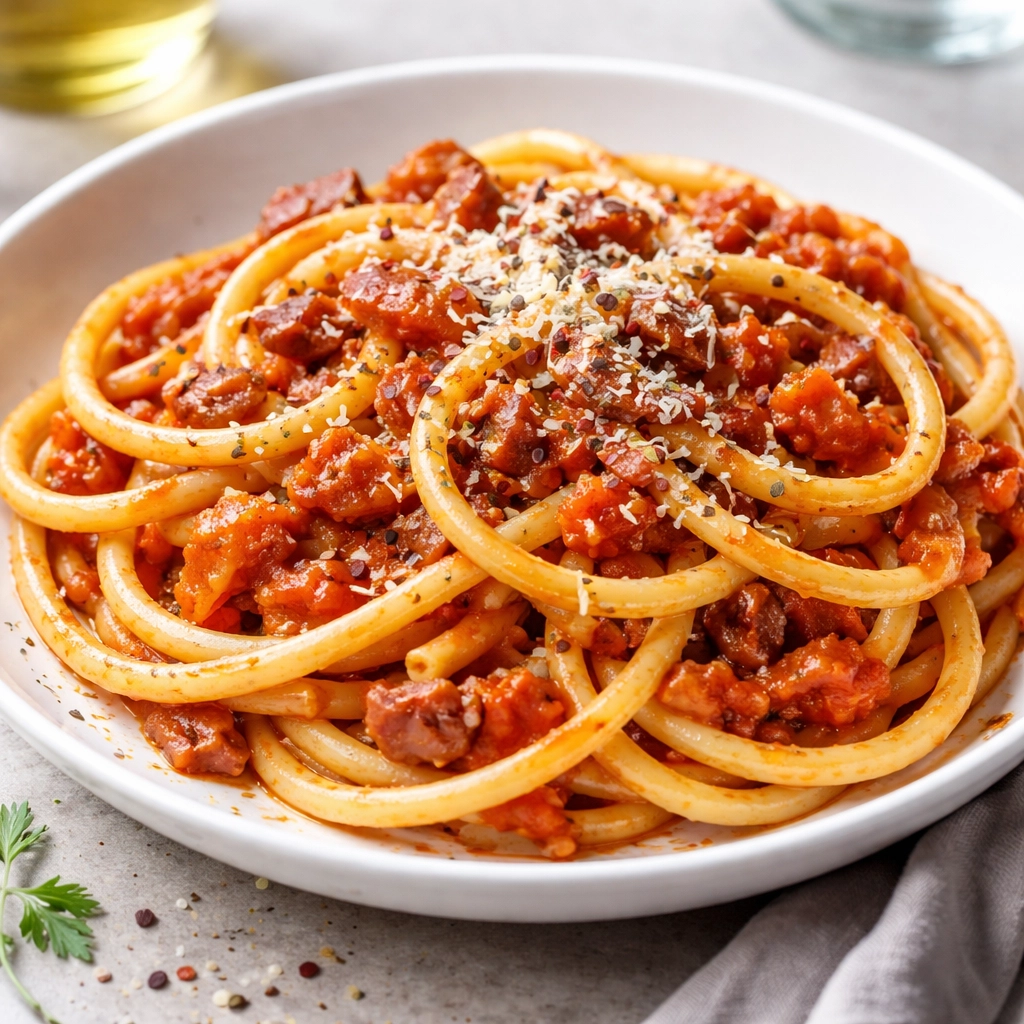
Bucatini all'Amatriciana
Bucatini all'Amatriciana is a bold, comforting Roman pasta with a savory tomato sauce enriched by rendered cured pork, chili, and sharp pecorino romano. The hollow strands catch the glossy sauce beautifully, giving each bite a balance of sweet tomato, salty pork, and peppery cheese.
Nutrition · per serving
Ingredients
12 itemsPasta e acqua
Sugo all'amatriciana
Tips
- •For the most traditional version, use only guanciale and omit the pancetta and onion; this version keeps the user's requested ingredients while staying close in spirit to the classic.
- •Do not add extra salt to the sauce before tasting: guanciale, pancetta, pecorino, and salted pasta water already provide significant seasoning.
- •If the pork browns too fast, lower the heat. Slow rendering gives better texture and a sweeter, cleaner flavor.
- •A little pasta water helps the tomato, pork fat, and cheese bind into a silky sauce.
Steps
- 1
Bring the water to a boil in a large pot. Salt it with the fine salt. While the water heats, cut the guanciale and pancetta into short batons about 5 mm thick, finely slice the onion, and crush the peeled whole tomatoes by hand or with a fork into a coarse sauce.
2.5 L water18 g fine salt70 g guanciale40 g pancetta40 g yellow onion240 g peeled whole tomatoes - 2
Set a wide frying pan over medium heat. Add the guanciale, pancetta, and extra-virgin olive oil, then cook gently for 4-5 minutes until the fat renders and the meat is lightly crisp at the edges but not dark. Add the onion and chili flakes and cook for 2 minutes more, stirring often, until the onion softens and turns translucent.
70 g guanciale40 g pancetta5 ml extra-virgin olive oil40 g yellow onion1 g dried chili flakes - 3
Pour in the dry white wine and let it bubble briskly for 1 minute, scraping the pan so the reduced wine picks up the rendered pork flavor. Add the crushed tomatoes and black pepper, lower to a lively simmer, and cook for 8-10 minutes until the sauce thickens slightly and the fat begins to emulsify into the tomato.
40 ml dry white wine240 g peeled whole tomatoes1 g freshly ground black pepper - 4
Cook the bucatini in the boiling salted water until just shy of al dente, usually 1-2 minutes less than the package time. The center should still have a slight bite, because it will finish in the sauce.
180 g bucatini2.5 L water18 g fine salt - 5
Transfer the bucatini directly to the pan of sauce with a small splash of pasta water clinging to it. Toss over medium heat for 1-2 minutes until the sauce coats the pasta and the bucatini is fully al dente. If needed, loosen with another spoonful of pasta water; the sauce should look glossy, not watery or dry.
180 g bucatini - 6
Turn off the heat and add most of the pecorino romano, reserving a little for serving. Toss vigorously so the cheese melts into the sauce without clumping. Divide between warm bowls, finish with the remaining pecorino, and serve immediately.
35 g pecorino romano, finely grated
Origin & History
Amatriciana comes from Amatrice in Lazio and is one of the great Roman pasta sauces. The canonical version is built on guanciale, tomato, pecorino romano, and chili, though small local and household variations exist. It is closely related to gricia, the older tomato-less pasta from the same tradition.
Do even more with Gourmate
Cook this recipe in Gourmate — your AI meal planning app.
Plan Meals
Weekly planner at a tap
Ask Questions
Chat with your AI chef
Adjust Recipe
Scale servings & swap ingredients
Cook Mode
Step-by-step guidance
Kitchen Timers
Built-in timers & alerts
Grocery List
Auto-generated shopping lists