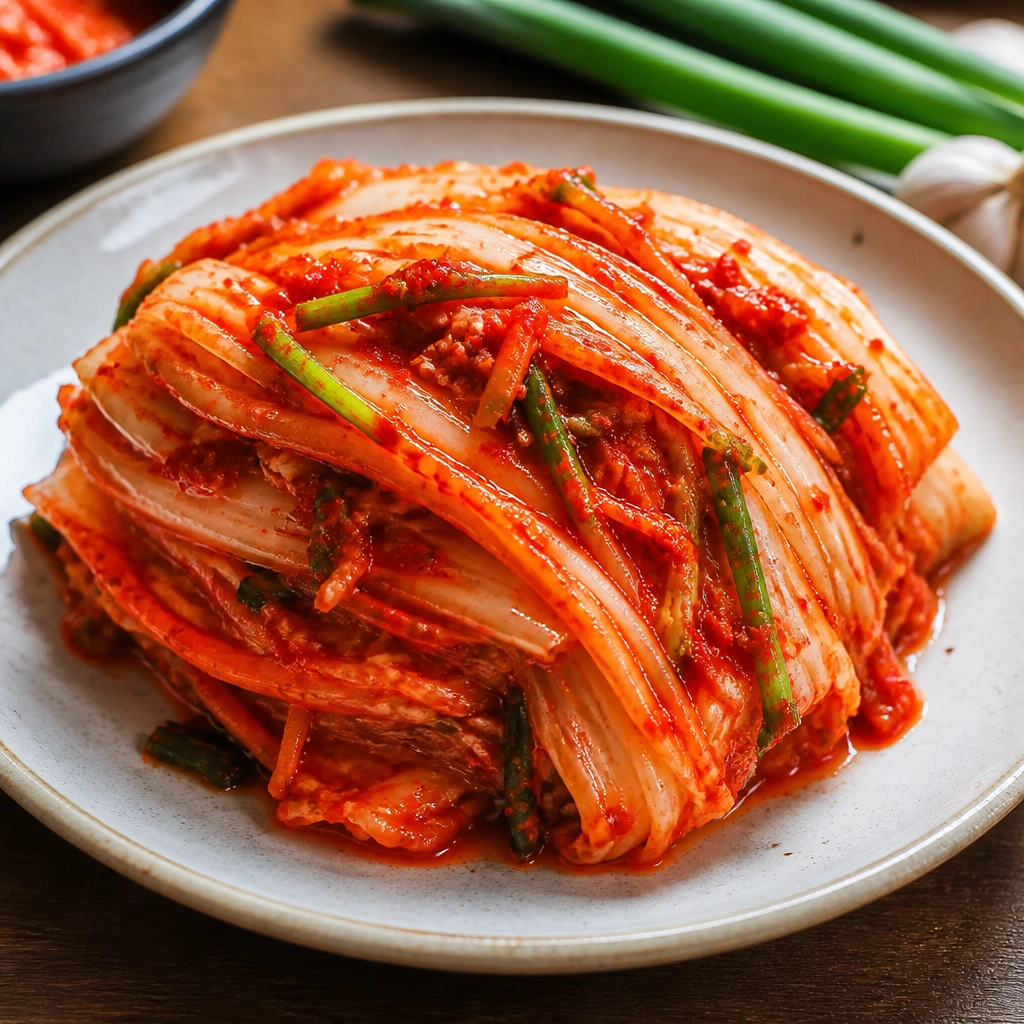
Baechu Kimchi
Baechu Kimchi is crisp, juicy, spicy, and deeply savory, with layers of garlic, ginger, chili, and fish sauce woven through tender napa cabbage leaves. Even when freshly made, it tastes bright and punchy; after a short fermentation, it develops the complex tang and gentle fizz that make kimchi irresistible.
Nutrition · per serving
Ingredients
10 itemsSalted cabbage
Kimchi paste
Tips
- •For a more traditional texture, use coarse gochugaru made specifically for kimchi rather than finely ground chili powder.
- •If you want faster fermentation, leave the packed kimchi at cool room temperature for 12-24 hours before refrigerating; open the jar daily to release built-up gas.
- •Always use clean utensils when removing kimchi from the container to keep the fermentation clean and stable.
- •Serve as banchan, with rice, grilled meats, or chopped into stews, pancakes, or fried rice.
Steps
- 1
Trim the napa cabbage, keeping the core attached enough to hold the leaves together, then split it lengthwise into quarters. Dissolve the coarse sea salt in the water in a large bowl or basin. Soak the cabbage in the brine, rubbing a little extra brine between the thicker white stems. Let it stand for 30 minutes, turning once halfway, until the white parts are flexible but not limp.
1 kg napa cabbage80 g coarse sea salt1.2 litres water - 2
While the cabbage brines, cut the Korean radish into fine matchsticks, slice the spring onions into 3-4 cm lengths, finely grate or mince the garlic, and grate the ginger. Keeping the radish thin helps it season quickly and distribute evenly through the kimchi.
120 g Korean radish60 g spring onions20 g garlic10 g fresh ginger - 3
Make the kimchi paste by mixing the gochugaru, fish sauce, and white sugar in a bowl. Add the radish, spring onions, garlic, and ginger, and toss until everything is evenly coated. The mixture should look moist and vivid red; if it seems dry, let it sit 5 minutes for the chili flakes to hydrate.
35 g gochugaru30 g fish sauce8 g white sugar120 g Korean radish60 g spring onions20 g garlic10 g fresh ginger - 4
Drain the cabbage well and rinse it briefly under cold water 2-3 times to remove excess surface salt. Let it drain for 5 minutes. The leaves should taste seasoned but not aggressively salty. If very salty, rinse once more.
1 kg napa cabbage - 5
Wearing gloves if desired, spread the kimchi paste between each cabbage leaf, concentrating a little more paste near the thicker stem ends. Pack any remaining radish mixture around and inside the quarters, then fold each quarter into a compact bundle.
1 kg napa cabbage35 g gochugaru30 g fish sauce8 g white sugar120 g Korean radish60 g spring onions20 g garlic10 g fresh ginger - 6
Pack the kimchi tightly into a clean non-reactive container or jar, pressing down to reduce air pockets. Leave a little headspace because liquid will rise as it ferments. For a fresh, lightly fermented kimchi suitable within the time limit, rest at room temperature for 10 minutes, then refrigerate. It can be eaten immediately, but the flavor will deepen after 1-3 days in the fridge.
Origin & History
Baechu kimchi is one of Korea's most iconic fermented dishes and became especially widespread after napa cabbage cultivation and chili pepper use became firmly established in Korea. It is central to Korean home cooking, seasonal preservation, and communal kimjang traditions, where families prepare large quantities of kimchi together for the colder months.
Do even more with Gourmate
Cook this recipe in Gourmate — your AI meal planning app.
Plan Meals
Weekly planner at a tap
Ask Questions
Chat with your AI chef
Adjust Recipe
Scale servings & swap ingredients
Cook Mode
Step-by-step guidance
Kitchen Timers
Built-in timers & alerts
Grocery List
Auto-generated shopping lists