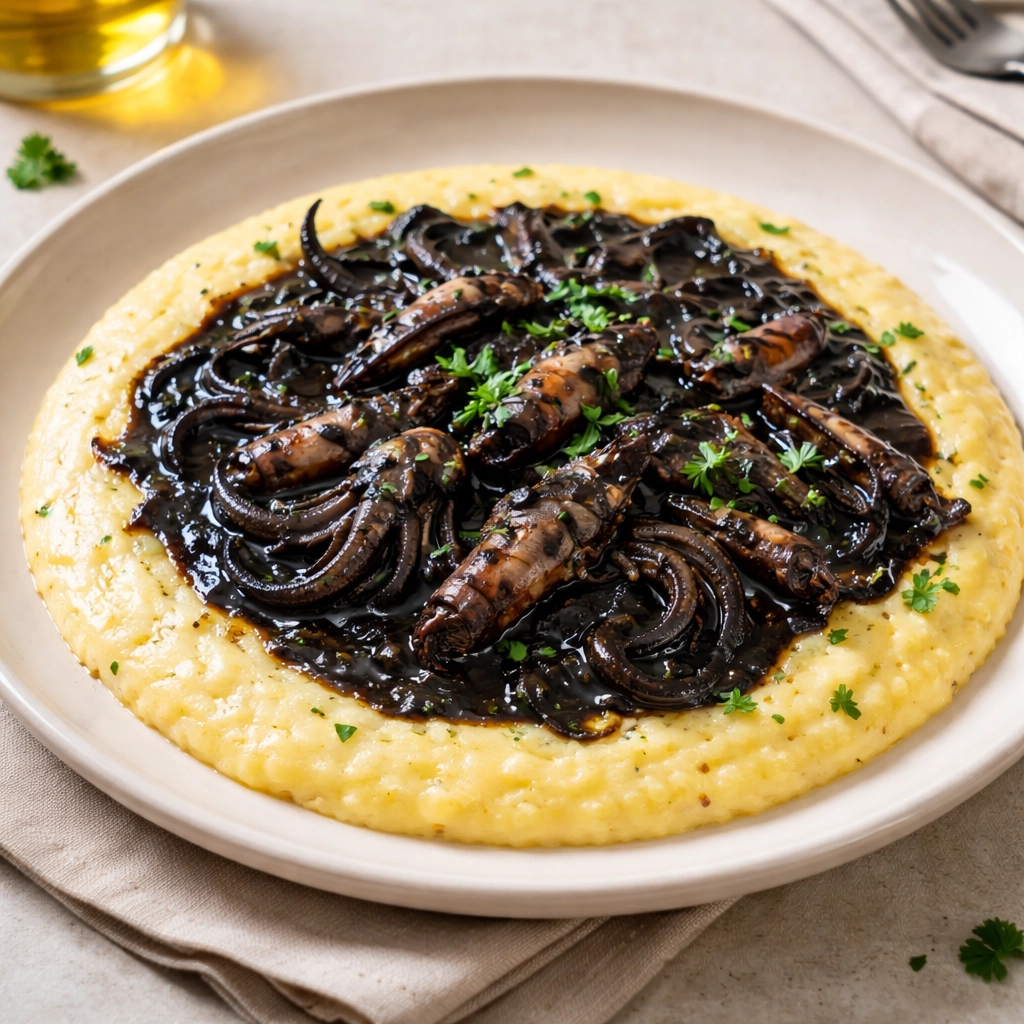
Seppie al Nero con Polenta
Tender strips of cuttlefish are gently braised in a glossy, inky sauce scented with onion, garlic, white wine, and a little tomato. Served over soft polenta, the dish is deep, marine, savory, and unmistakably Venetian.
Nutrition · per serving
Ingredients
15 itemsSeppie al nero
Polenta morbida
Tips
- •If you have whole fresh cuttlefish with ink sacs, clean them carefully over a bowl so none of the ink is lost; strain the ink through a fine sieve if gritty.
- •Do not brown the onion or garlic deeply; a pale soffritto keeps the sauce elegant and allows the ink's marine flavor to dominate.
- •Cuttlefish can become tough if undercooked and then tender again with further cooking. Slice evenly and simmer until you reach the tender stage.
- •For a more traditional Venetian finish, serve with grilled or set polenta instead of soft polenta, but soft polenta is ideal within the 45-minute limit.
- •Use a non-reactive or well-seasoned pan and protect light-colored utensils and boards, as squid or cuttlefish ink stains strongly.
Steps
- 1
Bring a medium saucepan of water for the polenta to a boil, and set a wide saute pan over medium heat for the cuttlefish. Pat the cuttlefish dry, then slice the bodies into strips about 1 cm wide and halve larger tentacles. Keep the pieces fairly even so they braise uniformly.
500 g cleaned cuttlefish, bodies and tentacles560 ml water - 2
Add the olive oil for the seppie to the saute pan. When warm, add the diced onion with a small pinch of the salt and cook for 4-5 minutes until soft and translucent, not browned. Stir in the garlic and cook for 30 seconds, just until fragrant.
30 ml extra-virgin olive oil120 g yellow onion, finely diced2 cloves garlic cloves, thinly sliced4 g fine sea salt - 3
Add the chopped tomato and cook for 2-3 minutes until it begins to break down and lose its rawness. Pour in the white wine, raise the heat slightly, and simmer for about 1 minute to cook off the harsh alcohol while keeping the winey aroma.
120 g ripe tomato, peeled and finely chopped100 ml dry white wine - 4
Add the cuttlefish to the pan and toss for 1 minute to coat it in the soffritto. Stir in the cuttlefish ink, black pepper, remaining salt, and the water or fish stock. Reduce to a lively simmer, cover partially, and cook for 18-20 minutes, stirring occasionally, until the cuttlefish is tender and the sauce is glossy and nearly black. If it tightens too much, add a splash more water; the finished sauce should be spoonable, not dry.
500 g cleaned cuttlefish, bodies and tentacles8 g cuttlefish ink sacs or prepared cuttlefish ink1 g freshly ground black pepper4 g fine sea salt150 ml water or light fish stock - 5
While the cuttlefish braises, salt the boiling water for the polenta. Whisk in the quick-cooking polenta in a steady stream to prevent lumps, lower to medium-low, and cook for 5-6 minutes, whisking often, until thick and creamy. Finish with the olive oil for shine and a softer texture.
140 g quick-cooking polenta560 ml water4 g fine sea salt10 ml extra-virgin olive oil - 6
When the cuttlefish is tender, uncover and simmer 1-2 minutes if needed to concentrate the sauce. Turn off the heat and fold in most of the parsley, reserving a little for garnish. Taste and adjust seasoning; the dish should be savory, slightly briny, and balanced by the sweetness of onion and tomato.
8 g flat-leaf parsley, finely chopped - 7
Spoon the soft polenta onto warm plates, making a shallow bed. Top with the seppie al nero and its sauce, then finish with the remaining parsley. Serve immediately while the polenta is loose and the cuttlefish is at its most tender.
8 g flat-leaf parsley, finely chopped
Origin & History
Seppie al nero is a classic dish of Venice and the wider Veneto, where cuttlefish have long been abundant in the Adriatic lagoon. The ink, once valued as much for thrift as for flavor, is used to create a dark, briny sauce that is traditionally paired with polenta, another staple of northern Italian cooking.
Do even more with Gourmate
Cook this recipe in Gourmate — your AI meal planning app.
Plan Meals
Weekly planner at a tap
Ask Questions
Chat with your AI chef
Adjust Recipe
Scale servings & swap ingredients
Cook Mode
Step-by-step guidance
Kitchen Timers
Built-in timers & alerts
Grocery List
Auto-generated shopping lists