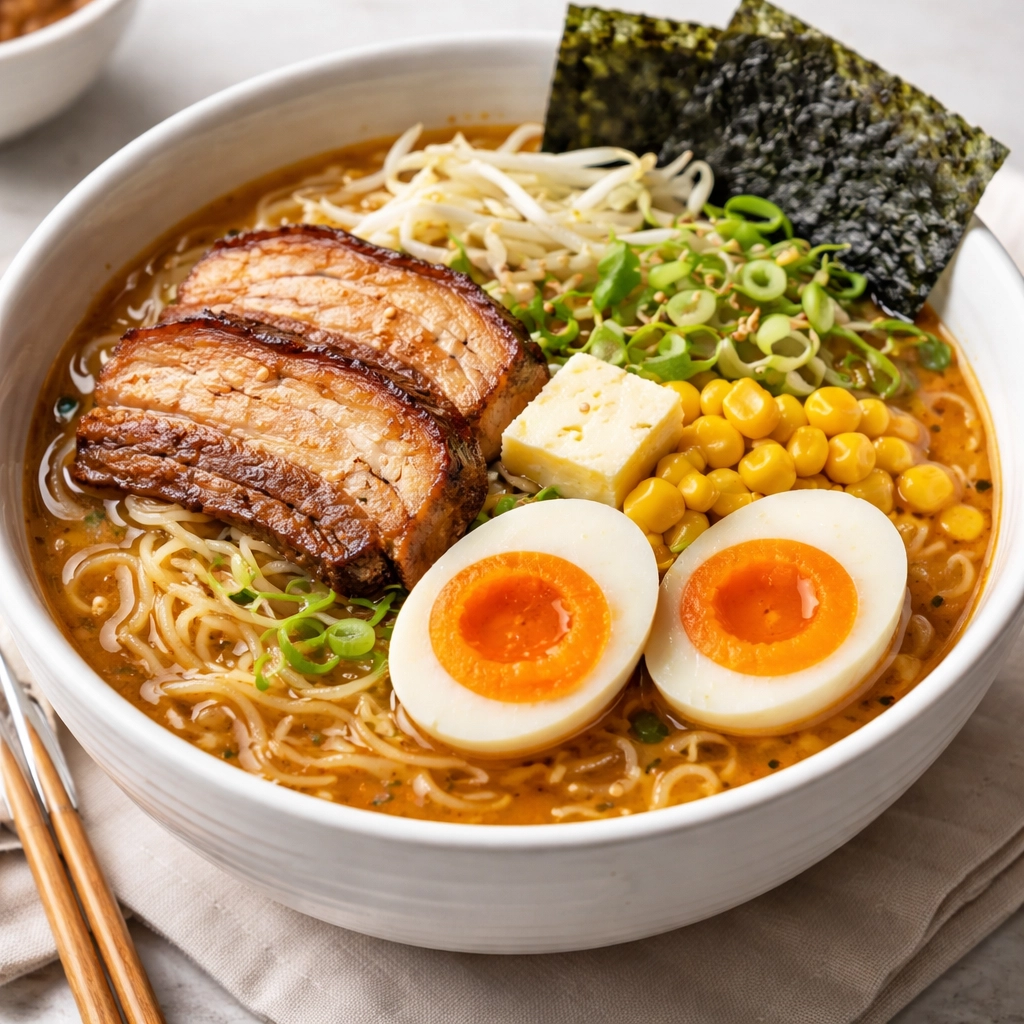
Miso Ramen
This miso ramen is rich, savoury, and deeply comforting, with a full-bodied broth layered with sweet miso, garlic, ginger, and sesame. Tender chashu pork, sweetcorn, butter, bean sprouts, nori, and jammy soft egg make each bowl taste luxurious and satisfying.
Nutrition · per serving
Ingredients
28 itemsChashu pork
Soft eggs
Miso broth
Noodles and toppings
Tips
- •For the best 45-minute version, use good-quality fresh ramen noodles and prepared chicken stock.
- •If you want a deeper shop-style broth, replace 200 ml of the stock with unsalted pork or bone broth if available.
- •Doubanjiang is not universal in all miso ramen styles, but a small amount adds the spicy savoury depth common in many modern ramen shops.
- •You can marinate the peeled eggs for 15-30 minutes in a spoonful of the warm pork braising liquid if you have extra time.
- •Warm the serving bowls with hot water before assembling so the broth stays hotter longer.
Steps
- 1
Put the eggs into a saucepan, cover with water, and bring to a boil. Once boiling, cook for 6 1/2 minutes for jammy soft eggs. Immediately transfer to cold water to stop the cooking; peel once cool enough to handle.
2 large eggsenough to boil and cool water - 2
While the eggs cook, slice the pork belly into 4 thick slices for faster braising and better bowl presentation. In a small saucepan, combine the soy sauce, mirin, sake, sugar, crushed garlic, sliced ginger, and water. Add the pork, bring to a gentle simmer, cover loosely, and cook for 22-25 minutes, turning once, until the pork is tender but still sliceable and the liquid is slightly reduced. Rest the pork in the braising liquid off the heat for 5 minutes so it stays juicy.
300 g pork belly, skinless30 ml soy sauce20 ml mirin20 ml sake8 g caster sugar2 garlic cloves, lightly crushed10 g fresh ginger, sliced250 ml water - 3
Start the broth while the pork simmers. Heat the neutral oil in a pot over medium heat. Add the minced garlic and grated ginger and cook for 30-45 seconds until fragrant but not browned. Stir in the white miso, red miso, and doubanjiang, and cook for 1 minute to bloom their flavour.
10 ml neutral oil3 garlic cloves, finely minced10 g fresh ginger, finely grated50 g white miso30 g red miso10 g doubanjiang - 4
Whisk in the soy sauce and sake, then gradually add the chicken stock, whisking well so the miso dissolves smoothly with no lumps. Bring just to a gentle simmer, then add the milk and sesame oil. Keep the broth below a boil for 8-10 minutes; boiling can dull the miso and split the milk.
15 ml soy sauce15 ml sake800 ml chicken stock100 ml whole milk5 ml toasted sesame oil - 5
Bring a separate pot of water to a boil for the noodles. In the last 1-2 minutes of broth cooking, add the sweetcorn and bean sprouts to the broth just to heat through and stay crisp.
100 g sweetcorn kernels100 g bean sprouts - 6
Cook the fresh ramen noodles according to the package, usually 2-3 minutes, until springy and just tender. Drain well and divide between 2 deep bowls. Undercook slightly if needed, because the noodles will continue to soften in the hot broth.
260 g fresh ramen noodles - 7
Lift the pork from its liquid and slice if needed. Ladle the hot broth, corn, and sprouts over the noodles. Top each bowl with 2 slices of chashu pork, half a soft egg, 10 g butter, sliced spring onions, a half sheet of nori, and a sprinkle of sesame seeds.
300 g pork belly, skinless100 g sweetcorn kernels100 g bean sprouts2 large eggs20 g unsalted butter2 spring onions, thinly sliced2 half sheets nori sheets5 g toasted sesame seeds - 8
Serve immediately while the broth is very hot and the noodles are bouncy. Encourage diners to melt the butter into the broth before eating for the classic rich finish.
Origin & History
Miso ramen originated in Sapporo, Hokkaido, in the mid-20th century, where hearty noodle soups were adapted to the region's cold winters. The rich miso-based broth became especially popular when paired with butter, corn, and robust toppings, creating the now-iconic northern style of ramen.
Do even more with Gourmate
Cook this recipe in Gourmate — your AI meal planning app.
Plan Meals
Weekly planner at a tap
Ask Questions
Chat with your AI chef
Adjust Recipe
Scale servings & swap ingredients
Cook Mode
Step-by-step guidance
Kitchen Timers
Built-in timers & alerts
Grocery List
Auto-generated shopping lists