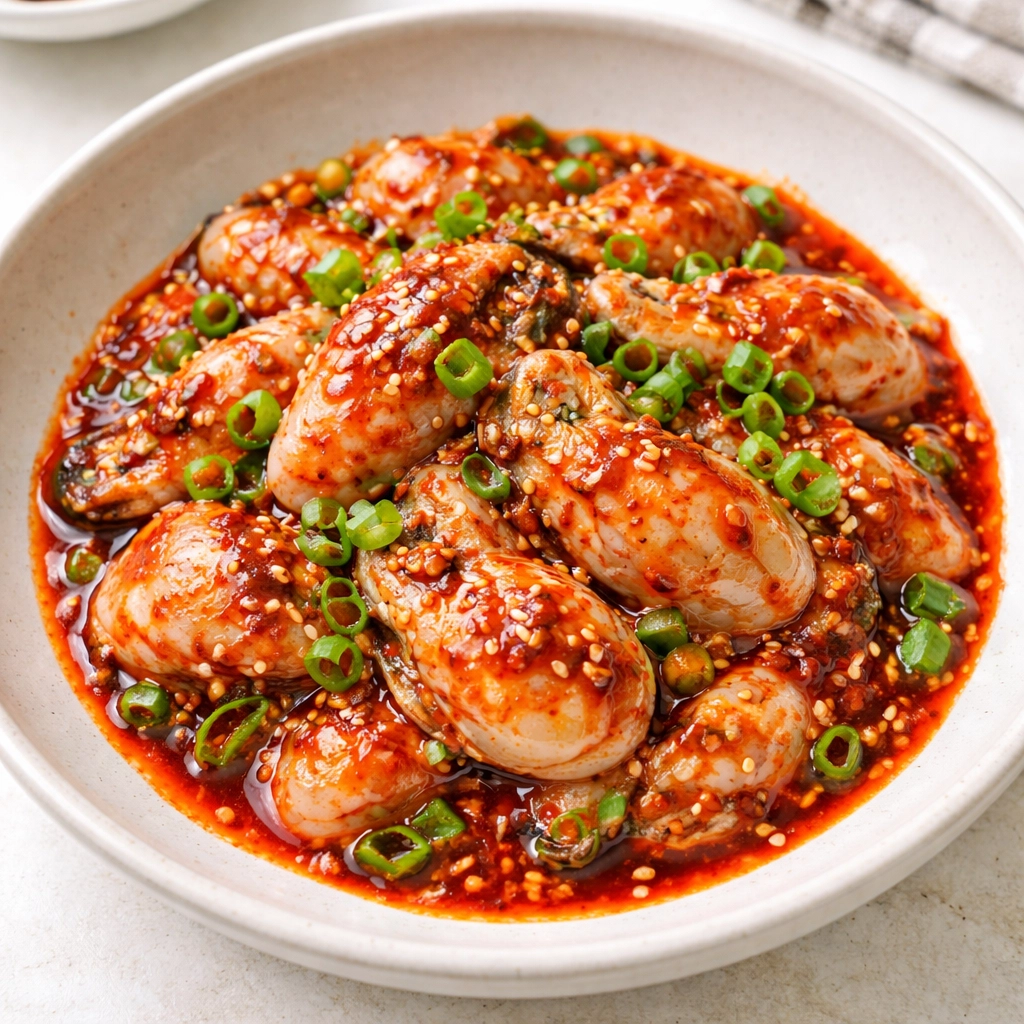
Gul Jeot
Gul Jeot is a bright, briny oyster dish coated in a vivid red seasoning of gochugaru, garlic, ginger, and sesame. It is cool, tender, spicy, and deeply savory, with a clean ocean flavor balanced by fresh spring onion and a touch of sweetness.
Safety Warning
This dish contains raw oysters, which can carry harmful bacteria or viruses and may cause serious illness, especially for pregnant people, older adults, young children, and anyone immunocompromised or with liver disease. Use only very fresh, properly refrigerated oysters from a trusted source and consume immediately.
Nutrition · per serving
Ingredients
11 itemsOyster base
Seasoning paste
Tips
- •For a beginner-friendly version, buy professionally shucked oysters from a trusted fishmonger and keep them below 4 C until serving.
- •If the oysters release a lot of liquid after draining, pat them very lightly with paper towel before seasoning.
- •This quick version is designed for immediate eating, not long fermentation.
- •A few drops of maesil-cheong or extra sugar can soften the heat if your gochugaru is very sharp.
Steps
- 1
Rinse the chilled oysters very gently in the cold water with the fine sea salt, swishing just enough to remove any grit. Drain well in a sieve, then let them sit for 2 minutes so excess water drips away; watery oysters will dilute the seasoning.
300 g shucked raw oysters, well chilled5 g fine sea salt500 ml cold water - 2
In a medium bowl, mix the gochugaru, garlic, ginger, fish sauce, toasted sesame seeds, sesame oil, spring onion, and sugar into a loose red paste. Stir until the sugar dissolves and the gochugaru is evenly moistened.
18 g gochugaru12 g garlic, finely minced5 g ginger, finely grated20 g fish sauce6 g toasted sesame seeds5 ml sesame oil25 g spring onion, finely sliced4 g sugar - 3
Add the drained oysters to the seasoning paste and fold very gently with a spoon or clean gloved hand until every oyster is coated. Avoid overmixing so the oysters stay plump and intact.
300 g shucked raw oysters, well chilled18 g gochugaru12 g garlic, finely minced5 g ginger, finely grated20 g fish sauce6 g toasted sesame seeds5 ml sesame oil25 g spring onion, finely sliced4 g sugar - 4
Taste a little of the seasoning from the bowl and adjust only if needed: Gul Jeot should be briny, spicy, lightly sweet, and aromatic. Transfer to a chilled serving dish and serve immediately, or rest for 5 minutes in the refrigerator for the flavors to meld slightly.
- 5
Serve cold as a small banchan with warm rice, or alongside other Korean dishes. Eat the same day for the best texture and freshness.
Origin & History
Gul Jeot is a Korean jeotgal, a family of salted seafood dishes that have long been used as both side dishes and flavoring ingredients. Oyster versions are especially appreciated in coastal regions during the cold months, when oysters are sweetest and safest. Unlike fully fermented jeotgal, this quick household style is often mixed and eaten fresh.
Do even more with Gourmate
Cook this recipe in Gourmate — your AI meal planning app.
Plan Meals
Weekly planner at a tap
Ask Questions
Chat with your AI chef
Adjust Recipe
Scale servings & swap ingredients
Cook Mode
Step-by-step guidance
Kitchen Timers
Built-in timers & alerts
Grocery List
Auto-generated shopping lists