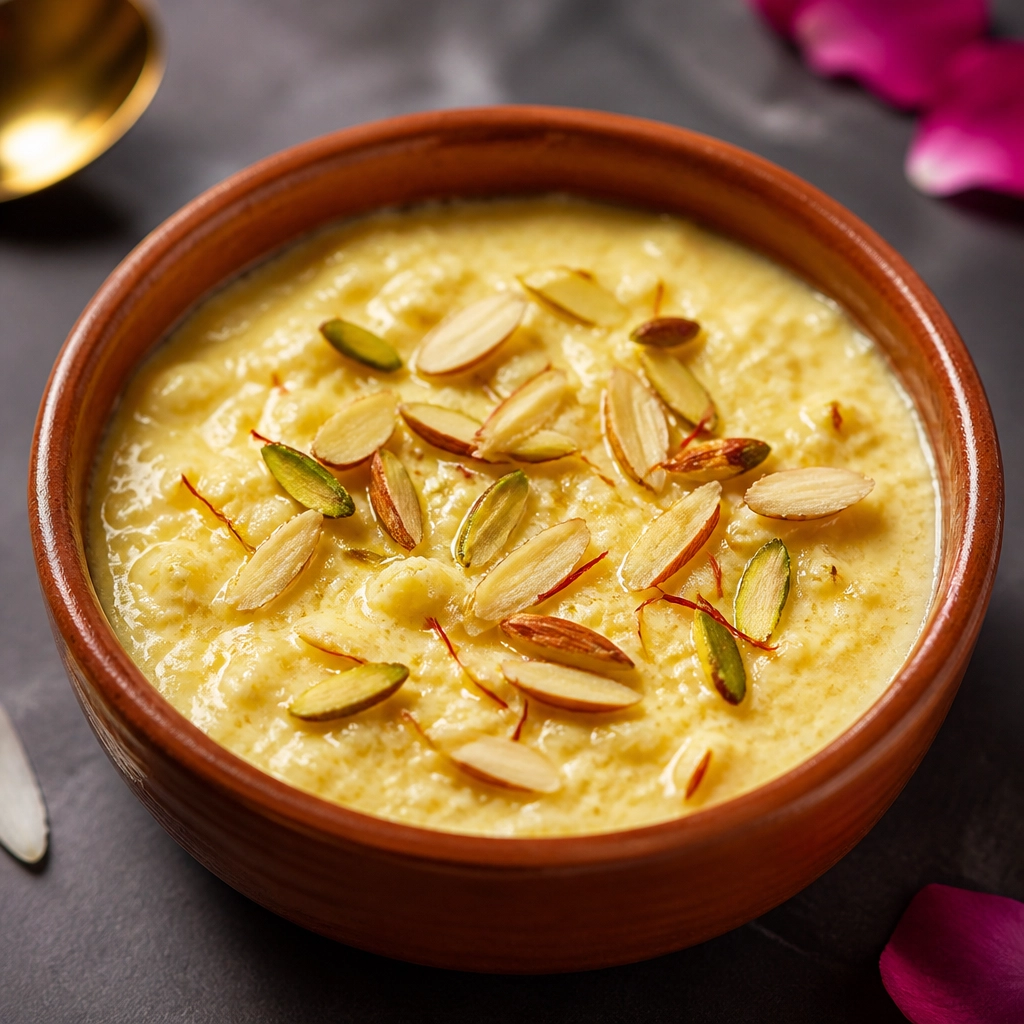
Rabri
Rabri is a luscious, slow-reduced milk dessert with a creamy body and delicate layers of milk solids throughout. Fragrant with cardamom, saffron, and a hint of rose water, it finishes with a nutty crunch from almonds and pistachios.
Nutrition · per serving
Ingredients
7 itemsRabri base
Nut garnish
Tips
- •Use the widest pan you have; more surface area speeds evaporation and helps fit the recipe into 45 minutes.
- •Do not boil aggressively after the milk reduces, or the milk solids can become grainy instead of soft and creamy.
- •For a richer festive version, chill fully before serving; cold Rabri tastes thicker and more luxurious.
- •If using very potent saffron, start with a pinch less to avoid overpowering the milk.
Steps
- 1
Pour the full-fat milk into a wide, heavy pan and bring it just to a boil over medium heat, stirring often so the bottom does not catch. Once it boils, lower to a steady gentle simmer.
1.5 litres full-fat milk - 2
Add the lightly crushed green cardamom pods and saffron strands. Simmer uncovered for 28-32 minutes, stirring every 2-3 minutes and gently scraping the cream solids that form on the sides of the pan back into the milk. This repeated scraping creates Rabri's characteristic flaky, layered texture. Reduce until the milk is roughly one-third of its original volume and looks thick but still pourable.
4, lightly crushed green cardamom pods0.15 g saffron strands - 3
Add the sugar and stir until fully dissolved, about 2 minutes. Continue simmering for 3-5 minutes more until the Rabri lightly coats the spoon; it will thicken further as it cools.
70 g sugar - 4
Turn off the heat, remove the cardamom pods if you prefer a smoother finish, and stir in the rose water. Let the Rabri cool for 10 minutes so the flavour settles.
5 ml rose water - 5
Transfer to serving bowls and garnish with the sliced almonds and pistachios. Serve warm, at room temperature, or chilled if you have extra time.
15 g, thinly sliced almonds15 g, thinly sliced pistachios
Origin & History
Rabri is a classic North Indian milk sweet associated with festive meals, temple offerings, and sweet shops across regions such as Uttar Pradesh and Rajasthan. It is traditionally made by slowly reducing milk and repeatedly collecting the malai, giving the dessert its signature rich, layered texture. The dish is often served on its own or alongside sweets such as jalebi and malpua.
Do even more with Gourmate
Cook this recipe in Gourmate — your AI meal planning app.
Plan Meals
Weekly planner at a tap
Ask Questions
Chat with your AI chef
Adjust Recipe
Scale servings & swap ingredients
Cook Mode
Step-by-step guidance
Kitchen Timers
Built-in timers & alerts
Grocery List
Auto-generated shopping lists