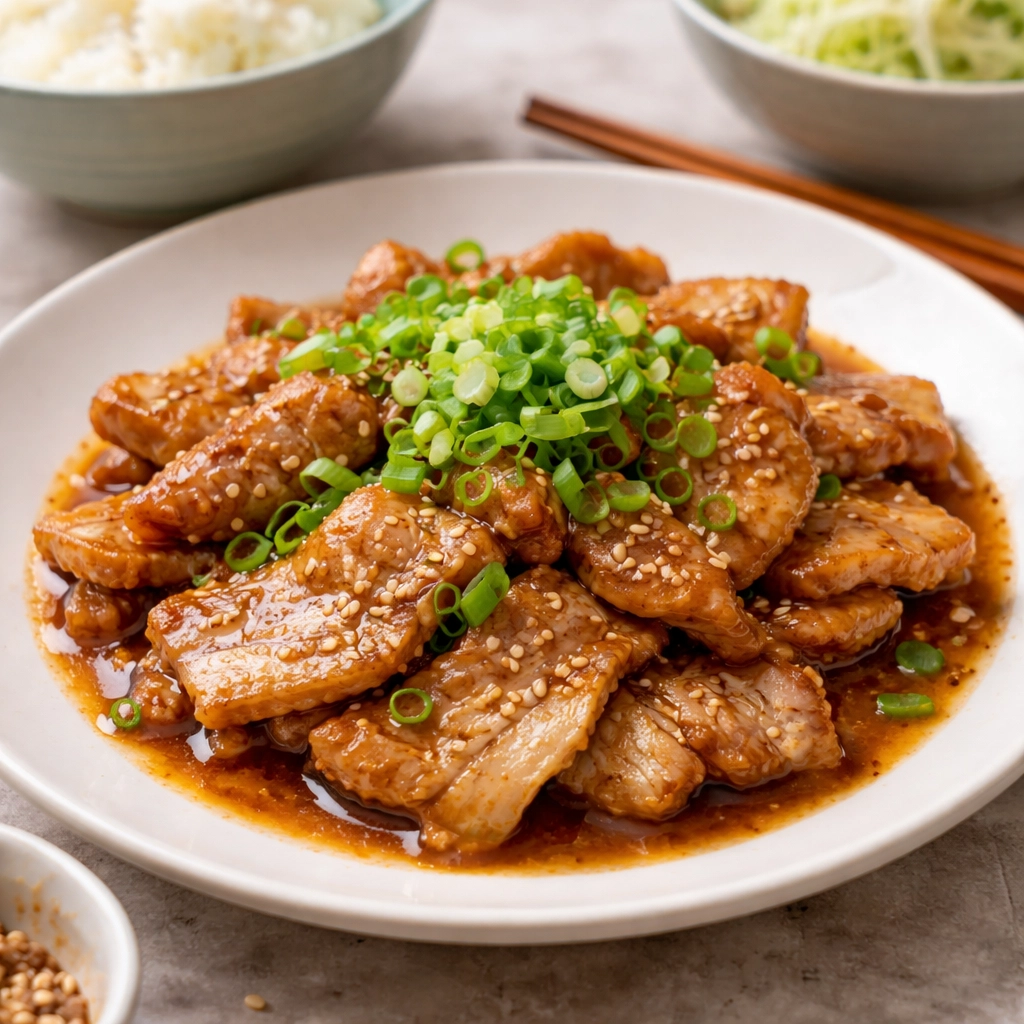
Shoga Yaki
Shoga yaki is savory, sweet, and warmly aromatic from fresh ginger, with glossy slices of pork coated in a fast pan sauce. This beginner-friendly version uses pork belly for extra richness and delivers bold flavor in just minutes.
Nutrition · per serving
Ingredients
9 itemsPork and aromatics
Shoga tare
Tips
- •If your pork belly is cut thick, stretch the timing by 1-2 minutes so the fat renders properly; very thin shabu-shabu style slices cook in well under 2 minutes.
- •For a less rich classic version, you can substitute thinly sliced pork loin for part or all of the belly.
- •Keep the heat fairly high once the sauce goes in so it reduces quickly and stays shiny instead of simmering into a salty broth.
Steps
- 1
Slice the spring onion, grate the ginger, and separate the pork belly slices so they cook quickly and evenly. In a small bowl, mix the soy sauce, mirin, sake, sesame oil, sugar, and half of the grated ginger until the sugar dissolves.
2 spring onion, thinly sliced20 g fresh ginger, finely grated300 g thinly sliced pork belly30 ml soy sauce30 ml mirin15 ml sake5 ml sesame oil5 g sugar - 2
Heat a large frying pan over medium-high heat. Add the neutral oil, then lay in the pork belly in a single layer. Fry for 2-3 minutes, turning once, until the fat starts to render and the edges lightly brown. Cook in batches if needed rather than overcrowding the pan.
5 ml neutral oil300 g thinly sliced pork belly - 3
Add the remaining grated ginger to the pan and stir for about 10 seconds until fragrant. Pour in the sauce mixture and cook for 1-2 minutes, turning the pork to coat, until the sauce becomes glossy and slightly reduced. The pork should be fully cooked and the sauce should cling lightly rather than pool thinly in the pan.
20 g fresh ginger, finely grated30 ml soy sauce30 ml mirin15 ml sake5 ml sesame oil5 g sugar300 g thinly sliced pork belly - 4
Transfer to plates, spoon over any remaining sauce, and scatter with the sliced spring onion. Serve immediately, ideally with steamed rice and a crisp cabbage salad.
2 spring onion, thinly sliced
Origin & History
Shoga yaki is a classic Japanese home-style dish built around pork cooked with ginger, soy sauce, and sweet rice seasonings. It became especially popular in the 20th century as pork consumption increased in Japan, and it remains a staple of teishoku set meals and everyday family cooking.
Do even more with Gourmate
Cook this recipe in Gourmate — your AI meal planning app.
Plan Meals
Weekly planner at a tap
Ask Questions
Chat with your AI chef
Adjust Recipe
Scale servings & swap ingredients
Cook Mode
Step-by-step guidance
Kitchen Timers
Built-in timers & alerts
Grocery List
Auto-generated shopping lists