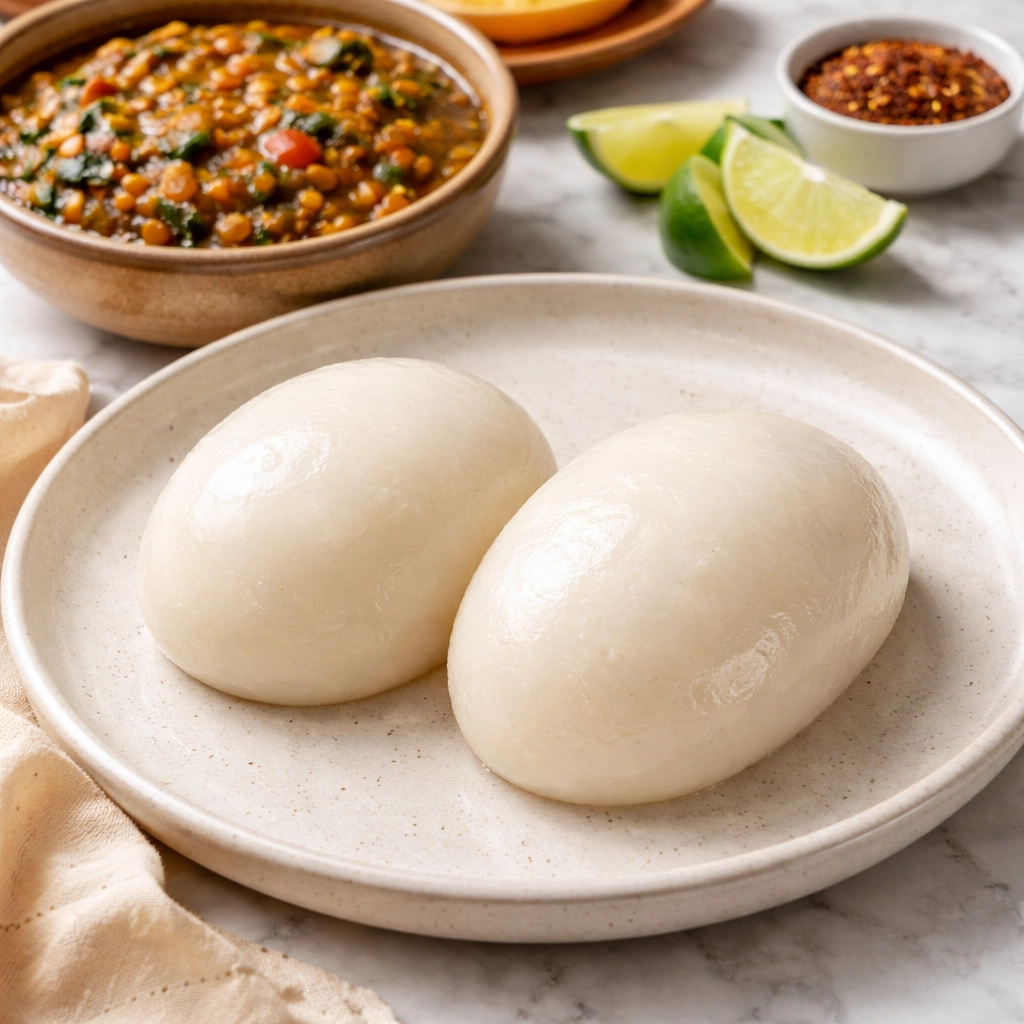
Fufu
Fufu is a smooth, stretchy, mildly flavored cassava staple with a soft, comforting texture. Properly made, it is glossy and elastic, perfect for pinching off and dipping into bold, savory soups and stews.
Nutrition · per serving
Ingredients
3 itemsCassava base
For shaping and serving
Tips
- •For a beginner-friendly quick version, cassava flour works far faster than peeling, boiling, and pounding fresh cassava.
- •Stir continuously once the slurry hits the hot water; this is the key to a smooth, stretchy texture.
- •If you want a softer fufu, beat in 1-2 tablespoons more hot water at the end.
- •Fufu is best served immediately with egusi-style vegetable stew, okra soup, or other savory West African soups.
Steps
- 1
Measure the cassava flour and water. Set a medium saucepan and a sturdy wooden spoon or heatproof spatula nearby, because once the mixture starts thickening you will need to stir continuously.
200 g cassava flour500 ml water - 2
Pour 350 ml of the water into the saucepan and bring it just to a boil over medium heat. Keep the remaining 150 ml water separate.
500 ml water - 3
Reduce the heat to low. In a bowl or jug, whisk the cassava flour with the remaining 150 ml water until completely smooth and lump-free. This slurry helps the fufu cook evenly and prevents dry clumps.
200 g cassava flour500 ml water - 4
Slowly pour the cassava slurry into the hot water, stirring constantly. Cook over low heat for 4-6 minutes, stirring and folding firmly, until the mixture turns glossy, very thick, and pulls away from the sides of the pan. If it feels too stiff to smooth out, wet the spoon with a little warm water and keep beating until elastic.
200 g cassava flour500 ml water30 ml warm water - 5
Cover and let the fufu rest off the heat for 2 minutes. This short rest allows the starch to finish hydrating and makes the texture more uniform.
- 6
Wet your hands lightly with some of the warm water, then shape the hot fufu into 2 smooth balls or quenelle-like mounds. Serve immediately while warm, traditionally alongside a soup or stew for dipping and swallowing rather than chewing.
30 ml warm water
Origin & History
Fufu is a staple food across much of West and Central Africa, with many regional versions made from cassava, yam, plantain, or fermented grains. Cassava-based fufu became especially widespread in areas where cassava was adopted as a major staple crop. It is traditionally paired with richly flavored soups and stews and eaten by hand.
Do even more with Gourmate
Cook this recipe in Gourmate — your AI meal planning app.
Plan Meals
Weekly planner at a tap
Ask Questions
Chat with your AI chef
Adjust Recipe
Scale servings & swap ingredients
Cook Mode
Step-by-step guidance
Kitchen Timers
Built-in timers & alerts
Grocery List
Auto-generated shopping lists