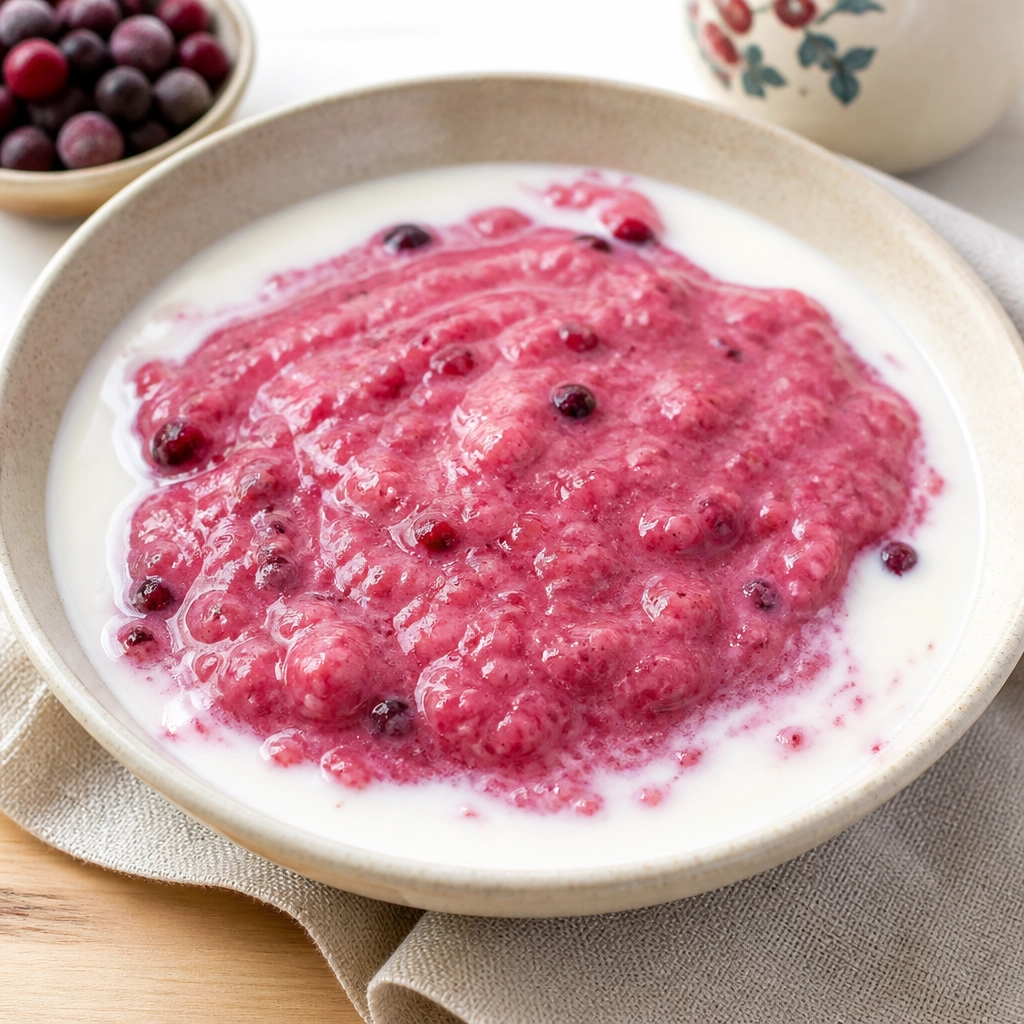
Marjapuuro
Marjapuuro is a comforting semolina porridge tinted bright pink-red from simmered berries and balanced between tart and sweet. Served warm with cold milk, it is creamy, light, and deeply aromatic, making a simple but satisfying breakfast or supper dish.
Nutrition · per serving
Ingredients
6 itemsBerry porridge
To serve
Tips
- •A mix of tart berries such as lingonberries, cranberries, raspberries, or blackcurrants gives the best balance; sweeter berries may need a little less sugar.
- •For an extra smooth texture, press the cooked berry mixture through a sieve before adding the semolina, though the rustic version is more traditional and faster.
- •This porridge continues to thicken as it stands, so serve promptly for the creamiest consistency.
- •If you want it sweeter for children or dessert-style serving, increase the sugar to 40 g.
Steps
- 1
Rinse the berries if fresh; if frozen, use them straight from the freezer. Put the mixed berries, water, sugar, and salt into a medium saucepan. Bring to a boil over medium-high heat, stirring once or twice, then cook for 3-4 minutes until the berries have softened and the liquid is vividly colored.
250 g mixed berries, fresh or frozen500 ml water30 g sugar1 g salt - 2
Lightly crush the berries with a spoon or potato masher to release more juice and flavor. Reduce the heat to medium so the liquid is simmering steadily, not furiously boiling; this helps the semolina cook evenly without clumping.
250 g mixed berries, fresh or frozen - 3
While whisking constantly, sprinkle in the fine semolina in a thin stream. Keep whisking for 2-3 minutes, then switch to a spoon and cook for another 3-4 minutes, stirring often, until the porridge thickens to a smooth, creamy consistency. It should mound softly on the spoon but still be loose enough to pour.
60 g fine semolina - 4
Take the saucepan off the heat and let the porridge stand for 2 minutes. This short rest finishes the semolina gently and slightly thickens the texture; if it becomes too thick, loosen it with 1-2 tablespoons of hot water.
- 5
Divide the warm marjapuuro between 2 bowls and serve immediately with cold milk poured around or over the top.
200 ml cold milk
Origin & History
Marjapuuro is a berry porridge long associated with the northern home-cooking traditions shared across Finland and Russia, especially in regions where wild berries are abundant. Versions thickened with semolina became popular because they are inexpensive, filling, and showcase preserved or frozen berries during the long cold season.
Do even more with Gourmate
Cook this recipe in Gourmate — your AI meal planning app.
Plan Meals
Weekly planner at a tap
Ask Questions
Chat with your AI chef
Adjust Recipe
Scale servings & swap ingredients
Cook Mode
Step-by-step guidance
Kitchen Timers
Built-in timers & alerts
Grocery List
Auto-generated shopping lists