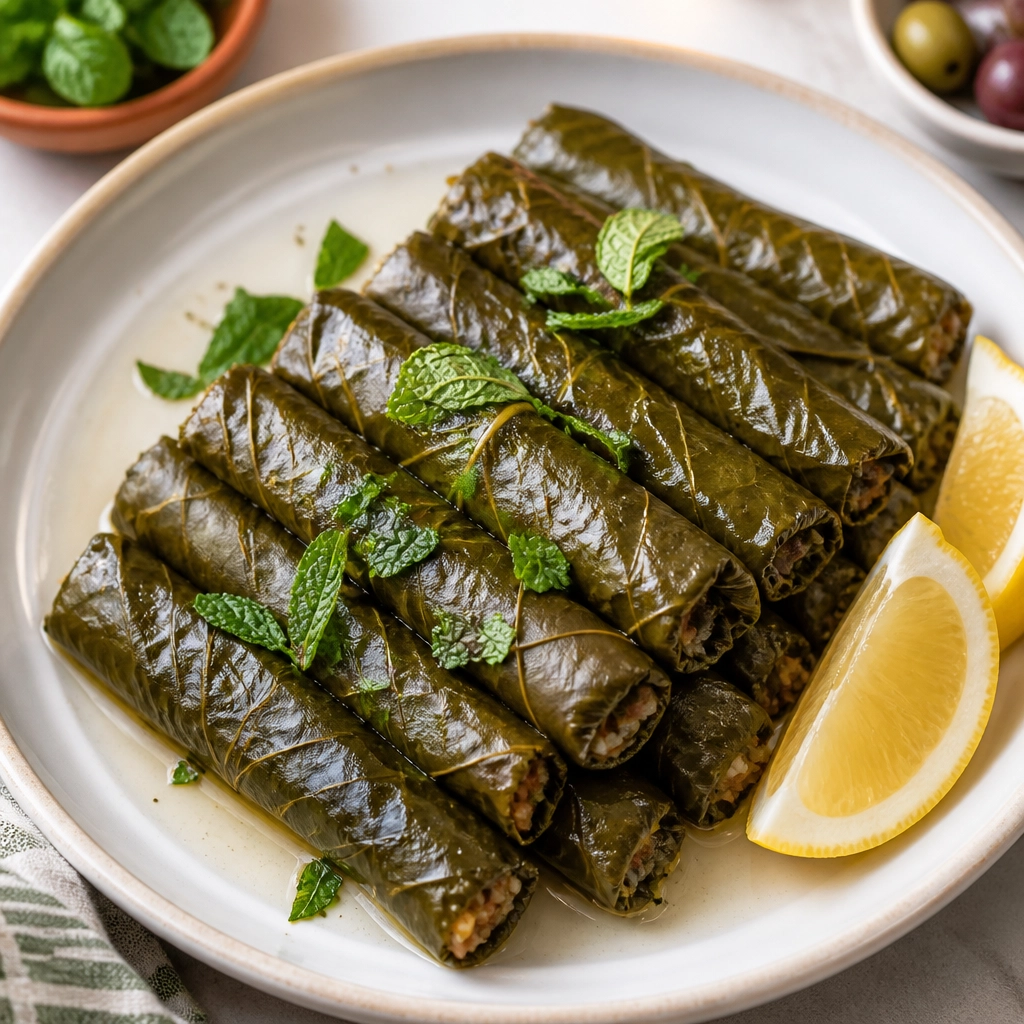
Yalanji
Yalanji is a delicate dish of vine leaves tightly rolled around a fragrant filling of rice, tomato, onion, parsley, mint, and allspice. The finished rolls are tender, lemony, and richly perfumed with olive oil, making them ideal as a mezze plate or light main.
Nutrition · per serving
Ingredients
19 itemsFor the filling
For rolling and cooking
To finish
Tips
- •If your vine leaves are very large, cut them in half and make smaller rolls for a more traditional slender shape.
- •Short-grain rice gives the best tender, cohesive filling; avoid parboiled rice, which cooks unevenly in this dish.
- •For the brightest flavor, let the finished yalanji cool to warm room temperature before serving.
- •A heavy pot and tightly packed rolls are key to preventing unraveling during cooking.
Steps
- 1
Rinse the short-grain rice under cold water until the water runs mostly clear, then drain well. Set it in a bowl and let it stand while you prepare the vegetables; this removes excess surface starch so the filling stays separate rather than gummy.
120 g short-grain rice - 2
Blanch the drained vine leaves in simmering water for 1 minute if they taste very salty or feel stiff, then drain and let them cool enough to handle. Trim any tough stems. Keep any torn leaves; they are useful for lining the pot.
170 g jarred vine leaves, drained - 3
Make the filling by combining the drained rice, finely diced tomato, finely diced onion, chopped parsley, chopped mint, minced garlic, ground allspice, fine salt, black pepper, extra-virgin olive oil, and lemon juice. Mix thoroughly so the rice is evenly coated; the oil helps the grains cook evenly inside the leaves.
120 g short-grain rice180 g tomato, very finely diced100 g onion, very finely diced25 g flat-leaf parsley, finely chopped10 g fresh mint, finely chopped2 cloves (8 g) garlic, minced1 g ground allspice4 g fine salt1 g black pepper35 ml extra-virgin olive oil25 ml lemon juice - 4
Line the bottom of a medium heavy pot with a layer of tomato slices and any torn or extra vine leaves. This protects the rolled leaves from direct heat and adds flavor to the cooking liquid.
120 g tomato, sliced170 g jarred vine leaves, drained - 5
Lay one vine leaf shiny-side down with the stem end facing you. Place about 1 heaped teaspoon of filling near the stem end, fold the bottom over the filling, fold in the sides, and roll tightly into a slim cylinder. Do not overfill; the rice needs room to expand. Repeat with the remaining leaves and filling.
170 g jarred vine leaves, drained120 g short-grain rice180 g tomato, very finely diced100 g onion, very finely diced25 g flat-leaf parsley, finely chopped10 g fresh mint, finely chopped2 cloves (8 g) garlic, minced1 g ground allspice4 g fine salt1 g black pepper35 ml extra-virgin olive oil25 ml lemon juice - 6
Arrange the rolled vine leaves seam-side down in the pot in snug concentric layers. Drizzle over the olive oil and lemon juice, then add the water and fine salt. The liquid should come just up to the top layer; add a splash more water only if needed.
25 ml extra-virgin olive oil30 ml lemon juice250 ml water1 g fine salt - 7
Place a heatproof plate directly over the rolls to keep them compact. Bring the pot to a gentle simmer over medium heat, then reduce to low, cover, and cook for 35 minutes. Check once near the end: the leaves should look olive-green and tender, and a test roll should show rice that is cooked through with no hard center.
- 8
Remove the pot from the heat and let the yalanji rest, covered, for 10 minutes. This allows the rolls to finish absorbing liquid and firm up, making them easier to unmold without tearing.
- 9
Carefully transfer the yalanji to a serving plate. Spoon over a little of the pot juices if you like, garnish with fresh mint leaves, and serve warm or at room temperature with lemon wedges for squeezing.
4 g fresh mint leaves2 wedges lemon wedges
Origin & History
Yalanji is a Levantine style of stuffed vine leaves, especially beloved in Lebanon and Syria, where it is often prepared without meat and served as part of a mezze spread. The name is linked to the Turkish word 'yalanci,' meaning 'false' or 'imitation,' referring to versions made without meat but full of herbs, rice, olive oil, and lemon.
Do even more with Gourmate
Cook this recipe in Gourmate — your AI meal planning app.
Plan Meals
Weekly planner at a tap
Ask Questions
Chat with your AI chef
Adjust Recipe
Scale servings & swap ingredients
Cook Mode
Step-by-step guidance
Kitchen Timers
Built-in timers & alerts
Grocery List
Auto-generated shopping lists