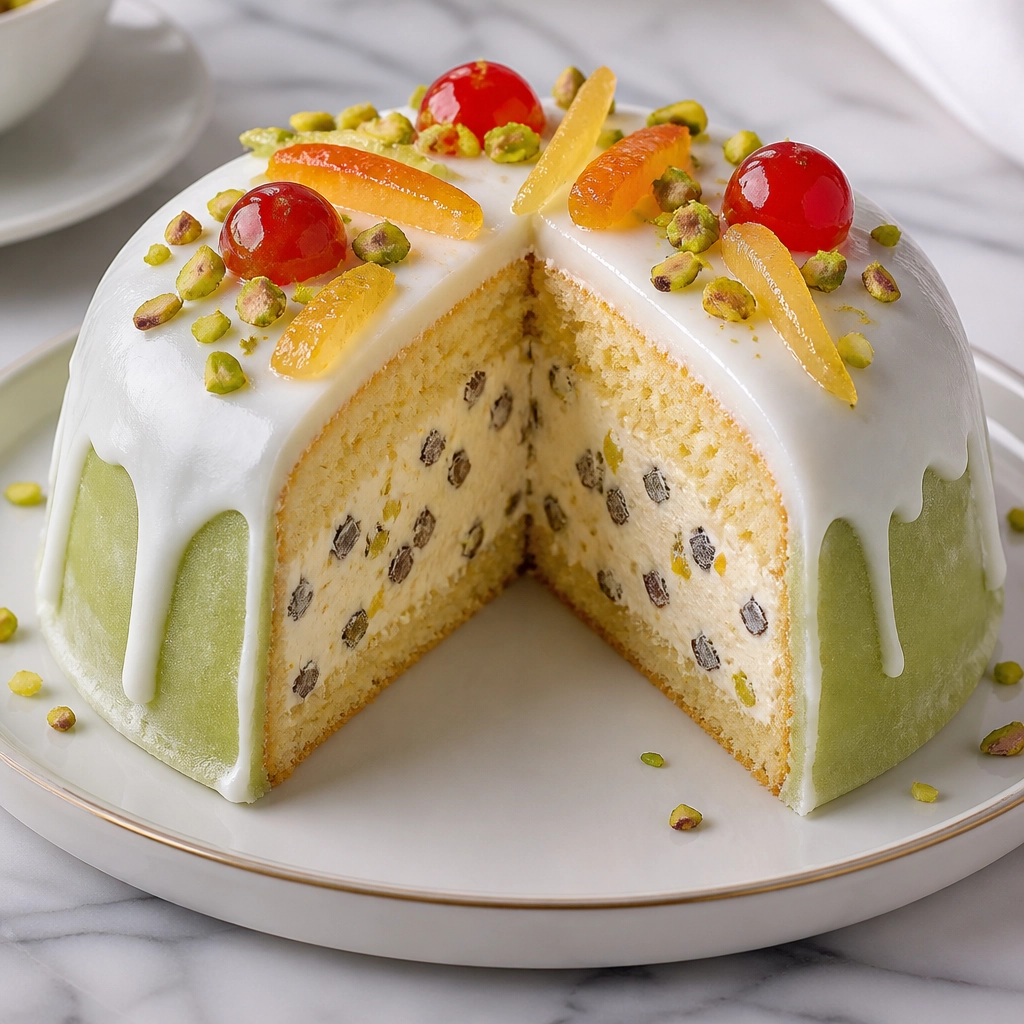
Cassata Siciliana
Cassata Siciliana is a rich, ornate sponge cake layered with sweet ricotta studded with candied fruit and dark chocolate, then wrapped in marzipan and finished with a snowy icing glaze. This small-format version keeps the classic Sicilian character: creamy, fragrant, citrusy, and beautifully decorative.
Nutrition · per serving
Ingredients
23 itemsPan di Spagna
Ricotta filling
Marzipan lining
Syrup
Glassa e finitura
Tips
- •For the best texture, drain ricotta in a sieve for at least a few hours beforehand; the recipe time assumes this is already done.
- •If sheep's milk ricotta is unavailable, use full-fat cow's milk ricotta, but drain it very thoroughly.
- •A metal mixing bowl chilled for 5 minutes helps the ricotta filling firm faster.
- •Cassata is traditionally larger and more elaborate; this version keeps the classic flavour profile in a size suitable for 2 generous portions.
- •Use a serrated knife for the sponge so the thin layers do not tear.
Steps
- 1
Preheat the oven to 180C conventional. Butter a 14 cm round cake tin and line the base with baking paper. This small tin gives enough height for neat cassata layers.
5 g unsalted butter, for tin - 2
Make the sponge: whisk the egg and caster sugar in a bowl over barely warm water for 3-4 minutes until slightly warm, then whip with an electric mixer for 5-6 minutes until very pale, thick, and tripled in volume. Sift in the plain flour, cornstarch, and salt, then fold gently with a spatula so you do not knock out the air.
2 medium egg60 g caster sugar50 g plain flour10 g cornstarch1 pinch fine salt - 3
Pour the batter into the prepared tin and bake for 18-20 minutes, until golden and the centre springs back lightly when pressed. Cool in the tin for 5 minutes, then turn out onto a rack to cool completely.
- 4
While the sponge bakes, make the syrup: simmer the water, caster sugar, and orange zest for 2 minutes until the sugar dissolves. Remove the zest and let the syrup cool; it should be lightly sweet, not sticky.
60 ml water25 g caster sugar2 strips orange zest - 5
Prepare the filling: pass the drained ricotta through a fine sieve or press it with a spatula until smooth. Mix in the icing sugar and vanilla extract, then fold in the chopped dark chocolate and diced mixed candied peel. Chill briefly so the filling firms up and spreads cleanly.
250 g sheep's milk ricotta, well drained70 g icing sugar2 ml vanilla extract25 g dark chocolate, finely chopped35 g mixed candied peel, finely diced - 6
Knead the marzipan with the finely ground pistachios until evenly green-speckled. Dust the work surface with the icing sugar and roll the marzipan into a thin sheet about 2-3 mm thick. Cut strips to line the sides of a 12 cm bowl or small mould that will shape the cassata.
120 g marzipan10 g pistachios, finely ground10 g icing sugar, for dusting - 7
Trim the cooled sponge. Slice it horizontally into 2 thin layers, then cut one layer into strips and pieces to fit the bottom and gaps of the mould. Line the mould sides with the marzipan strips first, then fit sponge pieces in the base. Brush the sponge lightly with syrup; moisten it well but do not soak it or the cassata will slump.
120 g marzipan60 ml water25 g caster sugar2 strips orange zest - 8
Fill the mould with the ricotta mixture, pressing gently to eliminate air pockets while keeping the marzipan in place. Cover with the remaining sponge layer and brush again with a little syrup. Press lightly to compact everything into an even dome.
250 g sheep's milk ricotta, well drained70 g icing sugar2 ml vanilla extract25 g dark chocolate, finely chopped35 g mixed candied peel, finely diced60 ml water25 g caster sugar2 strips orange zest - 9
Rest the cassata in the refrigerator for 15 minutes so it sets enough to unmould cleanly. Invert onto a serving plate.
- 10
Make the icing by stirring the icing sugar with the water until smooth and thick but pourable. Spread it over the top, letting a little drip naturally down the sides. Decorate immediately with candied cherries, candied orange peel, candied citron, and chopped pistachios before the icing sets.
120 g icing sugar18 ml water20 g candied cherries20 g candied orange peel15 g candied citron10 g pistachios, chopped - 11
Slice with a sharp knife wiped clean between cuts and serve slightly cool. The texture should be soft and creamy inside, with a neat marzipan edge and a bright sugary finish.
Origin & History
Cassata Siciliana is one of Sicily's iconic celebration cakes, shaped by centuries of Arab, Norman, and Spanish influence. Ricotta, candied fruit, sugar, and marzipan reflect the island's historic abundance of sheep's milk dairying, citrus, and almond cultivation. The ornate glazed version became especially associated with Palermo and festive tables.
Do even more with Gourmate
Cook this recipe in Gourmate — your AI meal planning app.
Plan Meals
Weekly planner at a tap
Ask Questions
Chat with your AI chef
Adjust Recipe
Scale servings & swap ingredients
Cook Mode
Step-by-step guidance
Kitchen Timers
Built-in timers & alerts
Grocery List
Auto-generated shopping lists