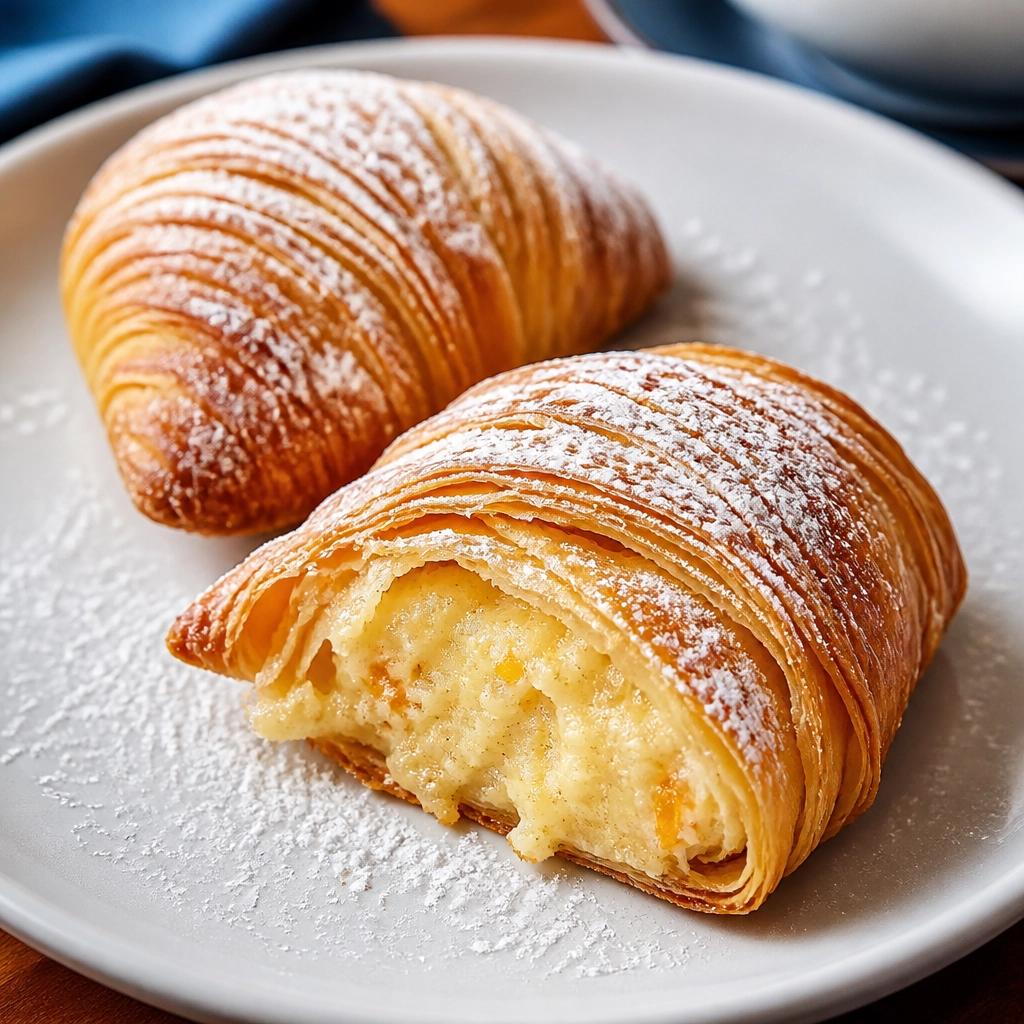
Sfogliatelle
Sfogliatelle are crisp, flaky shell-shaped pastries with delicate concentric layers that shatter lightly when bitten. Inside is a fragrant filling of ricotta and semolina scented with citrus, cinnamon, and orange blossom, creating a rich but balanced Neapolitan classic.
Nutrition · per serving
Ingredients
18 itemsDough
Laminating fat
Semolina-ricotta filling
For finishing
Tips
- •Traditional sfogliatelle are extremely labor-intensive; this small-batch version keeps the authentic flavor and shape while fitting a shorter timeline.
- •Drain the ricotta well before using, or the filling may become too wet and leak during baking.
- •A pasta machine makes it much easier to achieve the very thin dough needed for crisp, defined layers.
- •Serve with espresso or strong black coffee for a classic Neapolitan pairing.
Steps
- 1
Preheat the oven to 210°C conventional heat. Line a baking tray with parchment. In a bowl, mix the strong white flour, fine sea salt, honey, and water into a very firm dough. Knead for 8-10 minutes until smooth and elastic; the dough should feel tight rather than soft, which helps create distinct layers.
150 g strong white flour3 g fine sea salt5 g honey65 g water - 2
Shape the dough into a small rectangle and roll it through a pasta machine, or with a rolling pin, gradually thinning it to about 1-2 mm. If using a machine, work progressively through thinner settings without adding much flour; excess flour prevents the layers from bonding correctly.
- 3
Lay the sheet on the work surface and spread the softened lard over the entire surface in a very thin, even film. Starting from the short end, roll the sheet up as tightly as possible into a compact log, pulling gently as you roll to keep tension. Wrap and chill for 15 minutes so the fat firms up and the log slices cleanly.
90 g lard, softened - 4
Meanwhile, make the filling. In a small saucepan, bring the whole milk just to a simmer. Rain in the fine semolina while whisking constantly, then cook over low heat for 2-3 minutes until very thick and pulling from the sides of the pan. Scrape onto a plate and let it cool for a few minutes so it becomes just warm, not hot.
125 g whole milk40 g fine semolina - 5
In a bowl, combine the ricotta, caster sugar, egg yolk, orange peel, candied orange peel, ground cinnamon, orange blossom water, vanilla extract, and a pinch of fine sea salt. Beat until smooth, then work in the warm semolina mixture until fully combined. The filling should be thick enough to hold its shape; if loose, chill briefly before piping or spooning.
120 g ricotta, well drained60 g caster sugar1 egg yolk10 g orange peel, very finely chopped20 g candied orange peel, very finely chopped1 g ground cinnamon5 g orange blossom water2 g vanilla extract1 pinch fine sea salt - 6
Cut the chilled dough log into 6 equal pieces. Working one piece at a time, hold it with the spiral facing up and use your thumbs to press from the center outward, forming a thin conical shell with visible layers. Keep the center slightly thicker so it does not tear. If the dough softens too much, chill it for a few minutes before continuing.
- 7
Fill each shell with a generous spoonful of semolina-ricotta filling, then press the edges together just enough to enclose the filling while keeping the classic shell shape. Arrange on the prepared tray with space between them.
- 8
Brush the pastries lightly with the beaten egg. Bake for 22-25 minutes, rotating once, until deeply golden brown and crisp with clearly separated ridges. Proper color is essential: pale sfogliatelle will taste doughy rather than shatteringly crisp.
1 egg, beaten - 9
Let the sfogliatelle rest on the tray for 5 minutes to set the layers and allow the filling to stabilize. Dust with icing sugar just before serving. They are best eaten warm, when the shell is crispest and the filling is fragrant.
10 g icing sugar
Origin & History
Sfogliatelle originated in southern Italy and became especially associated with Naples, where they remain one of the city's most iconic pastries. The shell-like form and layered dough are believed to have evolved from convent baking traditions before becoming a beloved specialty in pastry shops throughout Campania.
Do even more with Gourmate
Cook this recipe in Gourmate — your AI meal planning app.
Plan Meals
Weekly planner at a tap
Ask Questions
Chat with your AI chef
Adjust Recipe
Scale servings & swap ingredients
Cook Mode
Step-by-step guidance
Kitchen Timers
Built-in timers & alerts
Grocery List
Auto-generated shopping lists