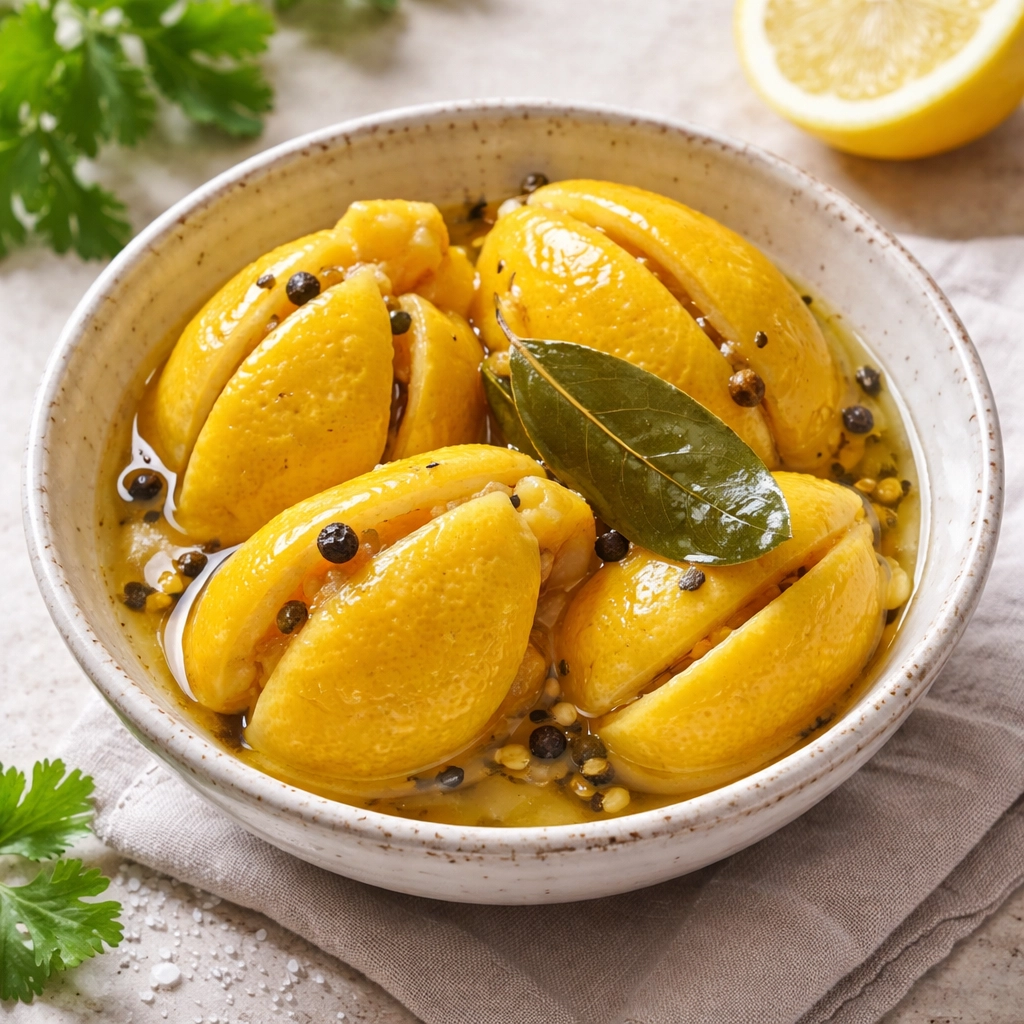
Hamd Mraqqad
These salt-cured lemons become intensely fragrant, softly textured, and deeply savory-sour over time. The peel turns tender and aromatic, adding a bright, complex punch to Moroccan dishes in a way fresh lemon cannot.
Nutrition · per serving
Ingredients
7 itemsLemon preserve
For the jar
Tips
- •This is a preserving recipe: hands-on time is short, but the curing time is essential and cannot be reduced realistically.
- •Use unwaxed lemons, since the peel is the part most often used in cooking.
- •Always keep the lemons submerged in brine; top up with a little extra lemon juice if needed.
- •A little preserved lemon goes a long way in tagines, dressings, grain salads, and chopped herb relishes.
- •Once cured, the jar keeps well in the refrigerator for several months if handled with clean utensils.
Steps
- 1
Sterilise the jar and lid by rinsing them with boiling water, then let them drain and air-dry while you prepare the lemons. This helps the preserve keep clean during its long cure.
as needed boiling water for sterilising1 clean 500 ml glass jar with lid - 2
Scrub the lemons well and dry them. Trim off any stem ends. Cut each lemon lengthwise into quarters, but stop about 1 cm from the base so each lemon stays attached and opens like a flower.
4 (about 480 g) small unwaxed lemons - 3
Open each lemon and pack the cut surfaces generously with the sea salt, using most of it inside the fruit. Press the salted lemons tightly into the jar one by one; as you press, they should begin releasing juice. Sprinkle in any salt that falls onto the board.
4 (about 480 g) small unwaxed lemons60 g fine sea salt1 clean 500 ml glass jar with lid - 4
Tuck in the bay leaf and black peppercorns, then pour in the fresh lemon juice. Press the lemons down firmly so they are as submerged as possible; if needed, use a clean spoon to compact them. The salt and juice should rise around the fruit.
1 bay leaf1 tsp black peppercorns120 ml fresh lemon juice1 clean 500 ml glass jar with lid - 5
Seal the jar and leave it at cool room temperature for 24 hours, then refrigerate and cure for at least 3 weeks, turning the jar occasionally to redistribute the brine. The lemons are ready when the rinds look slightly translucent and feel tender. Before using, discard the flesh if desired and rinse the rind lightly to remove excess salt.
1 clean 500 ml glass jar with lid
Origin & History
Hamd mraqqad, or preserved lemons, are a cornerstone of Moroccan cooking, especially in tagines, salads, and braised dishes. The technique reflects North African preserving traditions that use salt and citrus to extend the life of seasonal produce while developing deep, distinctive flavor.
Do even more with Gourmate
Cook this recipe in Gourmate — your AI meal planning app.
Plan Meals
Weekly planner at a tap
Ask Questions
Chat with your AI chef
Adjust Recipe
Scale servings & swap ingredients
Cook Mode
Step-by-step guidance
Kitchen Timers
Built-in timers & alerts
Grocery List
Auto-generated shopping lists